Industrial Storage Systems & Dynamic Gravity Flow Solutions
Precision-engineered cold-rolled steel structures certified to CE and ISO 9001:2015 benchmarks, designed for rigorous high-throughput operational cycles.
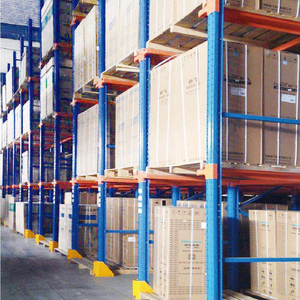
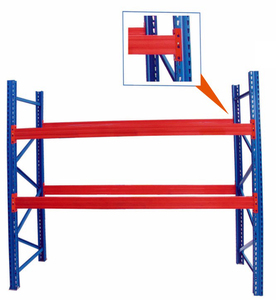
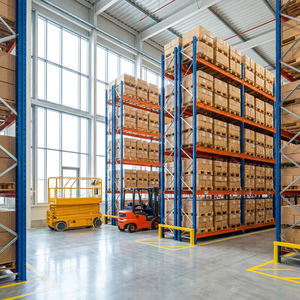
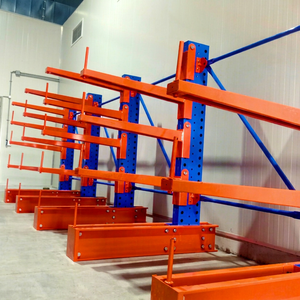
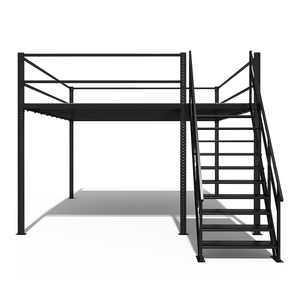
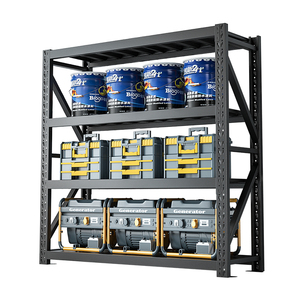
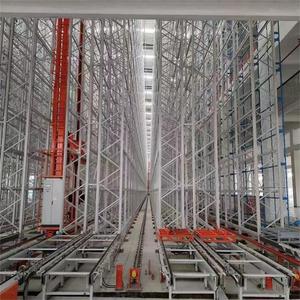
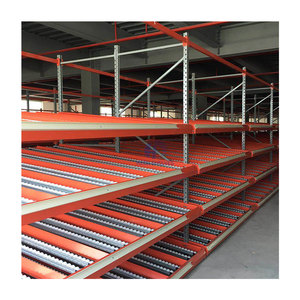
Engineering Overview: Demystifying Gravity Feed Pallet Racking Systems
In modern intralogistics, real estate land acquisition costs and cold-chain operational expenses demand maximum spatial volumetric efficiency coupled with pristine stock management. A Gravity Feed Pallet Racking System, also widely classified across industrial engineering as Pallet Flow or Live Storage Racking, utilizes inclined roller tracks set within a rigid steel framework to mobilize palletized merchandise strictly through gravitational potential energy. By transforming dead forklift aisles into live dynamic accumulation lanes, facilities routinely unlock up to 60% to 80% higher density than conventional selective racking layouts.
Operating upon an uncompromising FIFO (First-In, First-Out) inventory logic, pallets are placed into the loading end (replenishment face) tilted at a calculated gradient—typically ranging between 2.5% and 4.0%—and glide smoothly toward the discharge face (picking face). As soon as the downstream front pallet is retrieved, succeeding pallets advance automatically under gravity control, eliminating the latency of interior aisle navigation, reducing mechanical vehicle run-times, and ensuring strict chronological rotation essential for food, dairy, pharmaceuticals, fast-moving consumer goods (FMCG), and agro-industrial exports.
Core Structural Mechanics & Safety Engineering
Unlike static rack frameworks, gravity feed dynamic systems represent an advanced interplay between structural civil mechanics and kinetic machine engineering. The dynamic momentum of a pallet weighing from 500 kg to over 1,500 kg rolling down a 30-meter track must be precisely regulated to prevent catastrophic front-end impacts, load tipping, or structural fatigue.
Centrifugal Speed Controllers
Direct mechanical governors mounted inside roller assemblies adjust hydraulic friction proportionally to speed, guaranteeing terminal speeds do not exceed a safe 0.25 to 0.3 meters per second regardless of pallet weight variations.
Pallet Separation Separators
Heavy-duty mechanical latch separators physically isolate the leading discharge pallet from trailing back-pressure, ensuring forklift drivers safely elevate the front pallet without lateral binding forces or friction lockup.
Entry Guidance & End Stops
Flared steel entry funnels align erratic pallet entries seamlessly into wheel centers, while shock-absorbing mechanical end-stops absorb remaining kinetic energy without stressing the underlying upright columns.
Technical Comparison: Dynamic Storage Methodologies
Warehouse logistics planners frequently compare Gravity Flow Racking with competing high-density methodologies such as Drive-In, Push-Back, and Automated Radio Shuttle Racks. The following engineering comparison clarifies optimal operational use cases:
| Storage System Type | Stock Rotation Rule | Aisle Requirements | Forklift Site Entry | Relative Capital Cost | Optimal Industry Applications |
|---|---|---|---|---|---|
| Gravity Feed (Pallet Flow) | Strict FIFO (100%) | 2 (Loading & Discharge) | Zero Internal Access | Medium - High | Perishables, Cold Rooms, Dairy, High-Velocity FMCG |
| Drive-In Racking | Strict LIFO (Last-In) | 1 Operating Aisle | Drives Deep into Rack | Low - Medium | Bulk Raw Materials, Non-perishable Seasonal Storage |
| Push-Back Rack | Strict LIFO (Carts) | 1 Operating Aisle | Aisle Operating Only | Medium | 2 to 6 Pallets Deep, Multiple SKUs with Fast Access |
| Radio Shuttle System | FIFO or LIFO Selectable | 1 or 2 Depending on Plan | Shuttle Traverses Rails | High (Robotics) | Ultra-Deep Cold Storage, Automated Buffer Warehousing |
Future Procurement Trends in Gravity Feed Pallet Racking
Procurement directors and facility design engineers are adapting to dynamic economic disruptions, higher automation adoption, and decarbonization mandates. Over the next five years, gravity feed racking procurement is transitioning through four decisive evolutionary trends:
1. Modular Integration with AMRs & AGVs
Procurement teams are ordering discharge faces calibrated with optical photoelectric stops and laser-guided positioning fixtures, facilitating seamless interface with Autonomous Mobile Robots (AMRs) for automated pallet extraction.
2. Hybrid Cold-Resistant Polymer Formulations
Cold chain facilities (-25°C to -30°C) demand specialized roller bearings and polymer blends that avoid cold brittleness, grease crystallization, and premature track fracturing under cyclical thermal swings.
3. Carbon Footprint & Eco-Finishing Mandates
Global standards favor continuous zero-discharge pickling, phosphating, and electrostatic powder coatings free of heavy metals and VOCs, backed by documented ISO 14001 and RoHS environmental verifications.
Enterprise Manufacturing Capabilities: Guangzhou Heda Shelves Co., Ltd.
Selecting an industrial racking manufacturer requires strict vetting of engineering pedigree, raw metallurgical integrity, automated roll-forming precision, and global logistics execution. Guangzhou Heda Shelves Co., Ltd. delivers direct factory capabilities honed over 25 years of global intralogistics supply:
Certified Metallurgy
Fabricated exclusively from high-grade prime cold-rolled steel coils (Q235B & Q345B) meeting verified CE Certificate No. 2435-CPR-8605159 structural integrity standards.
ISO 9001:2015 Process
30,000 square meter factory utilizing CNC multi-station continuous roll-forming lines, automated laser robotic cutting, and continuous electrostatic powder baking.
Free 3D & CAD Design
In-house senior structural engineers deliver customized warehouse CAD layout schematics, FEM static load simulations, and seismic stability calculations within 24 hours.
Containerized Export Packing
Export experience across 120+ nations, featuring bundle-labeled pallet packaging optimized for container volume utilization and fast job-site sorting.
Frequently Asked Questions: Global Sourcing & Technical Procurement
Q: What pallet bottom designs are compatible with gravity feed tracks?
Hardwood, engineered composite, or plastic pallets with continuous flat bottom skids or full-perimeter perimeter bases perform ideally. Pallets with warped, split, or missing bottom deck boards can stall or track erratically; for multi-pallet variability, full-width cylindrical steel rollers or multi-wheel lanes are custom-engineered.
Q: How is proper lane decline calculated across various product payloads?
Typical track inclination ranges between 2.5% and 4.0% (approximately 30 to 45 mm per linear meter). Our engineering department determines the exact grade based on the customer's maximum and minimum gross pallet weights, roller friction coefficients, and operational temperature ranges.
Q: Can gravity flow systems be installed in high-seismic active zones?
Yes. By analyzing local geotechnical floor slab depth, concrete compressive strength, and regional seismic spectral acceleration parameters, our structural team configures oversized heavy-duty baseplates, reinforced cross-bay horizontal bracing, and certified chemical anchor bolts.
Q: What surface treatment guarantees anti-corrosion life in high-humidity facilities?
Components undergo an automated ten-stage pre-treatment featuring hot acid pickling, zinc phosphating, and electrostatically applied epoxy-polyester powder coat baked at 180°C to 200°C. For deep blast freezers or coastal port regions, full hot-dip galvanizing is supplied.
Q: How do you prevent crushing damage on long gravity accumulation runs?
We engineer centrifugal speed retarders at every pallet position interval along the lane, combined with a positive automatic pallet separator at the unload station. This mechanical isolation blocks line pressure, allowing forklifts to lift the leading pallet safely without jamming.
Q: What technical parameters are required to receive a customized 3D design and quotation?
Supply the warehouse building architectural CAD (clear ceiling height, column matrix, obstacle clearances), detailed pallet specifications (length, depth, height, weight range), forklift model and mast lift capability, and target daily SKU picking volume.
Accelerate Your Warehouse ROI with Engineered Flow Solutions
Connect directly with our senior structural engineers for a comprehensive site plan review, free CAD layout generation, load calculation documentation, and competitive factory-direct pricing.