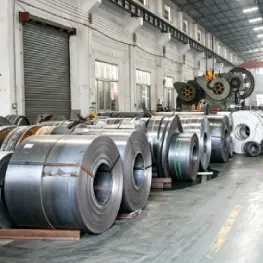
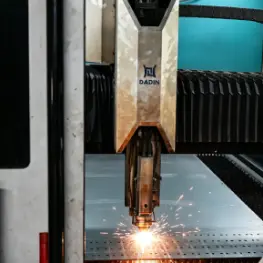
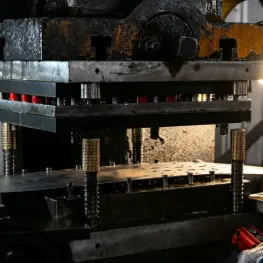
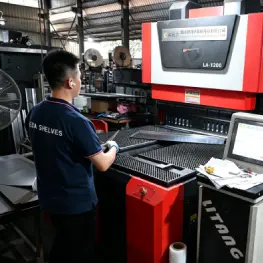
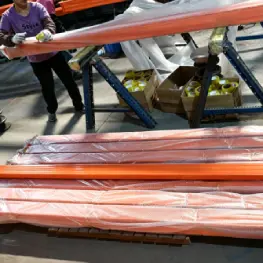
Cantilever racking represents the premier mechanical engineering solution for storing long, bulky, and irregularly shaped inventory—such as structural steel beams, PVC and carbon steel pipes, engineered timber packs, aluminum extrusions, sheet metal, and bar stock. Unlike traditional selective pallet racking, cantilever systems omit frontal vertical columns. This unobstructed horizontal frontage permits direct side-access for materials of varying dimensions without the hazard of restrictive upright collision.
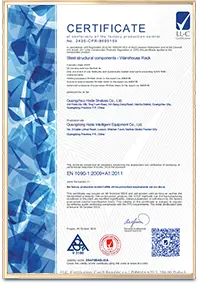
At Guangzhou Heda Shelves Co., Ltd., every heavy-duty cantilever installation begins with precision structural profiling. Heavy-duty applications (loads exceeding 1,000 kg per arm level up to 3,500+ kg per arm) demand rigid static analysis under FEM 10.2.02 and ANSI MH16.5 standards. The entire structural chain—comprising base plates, upright columns, cantilever arms, longitudinal bracing, and horizontal tie-bars—must be designed to balance deflection parameters against localized yielding.
| Structural Metric | Roll-Formed Steel Cantilever | Hot-Rolled Structural (I-Beam) Cantilever |
| Primary Material Grades | High-tensile cold-rolled Q235B to Q355B coil | Hot-rolled wide flange beams (H-Beam / I-Beam Q235B/Q345B) |
| Max Load Capacity per Arm | 300 kg – 1,000 kg (Uniformly Distributed Load) | 1,000 kg – 3,500+ kg per arm |
| Impact Resistance Profile | Moderate; suitable for controlled forklift operations | Extreme; high structural mass absorbs heavy forklift impacts |
| Arm-to-Column Connection | Hairpin cotter pins or bolted wedge brackets | Grade 8.8 / 10.9 structural bolts or heavy shear pins |
| Best Industrial Fit | Light lumber, plastic conduit, light metal extrusions | Heavy structural steel, steel coils, heavy pipes, precast concrete |
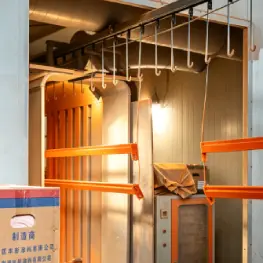
| Corrosion Protection Options | Electrostatic powder coating (60–80 microns) | Heavy electrostatic powder coat or Hot-Dip Galvanizing (80–120 microns) |
Understanding Cantilever Deflection & Safety Factors
When engineering a heavy-duty system, Arm Deflection Limits (typically constrained to L/200 or L/300, where L is arm length) are critical to ensure forklifts can place and retrieve loads without catching lower levels. A downward pitch under load is unacceptable; therefore, Guangzhou Heda Shelves Co., Ltd. builds in an intentional upward manufacturing camber of 1° to 2° at the arm bracket connection. When the full rated tonnage is placed on the arm, it settles into an exact perpendicular plane, preventing accidental material rollover.
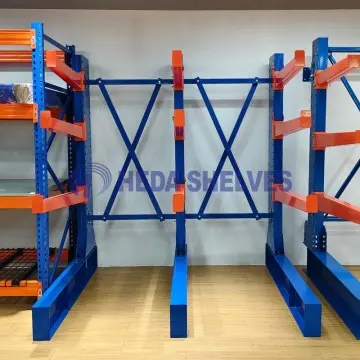 Heavy Duty Flagship