Featured Industrial Warehouse Storage Systems
High-tensile cold-rolled steel solutions designed to international seismic and loading standards (FEM, RMI, AS4084-2023). Fully customizable OEM/ODM configurations.
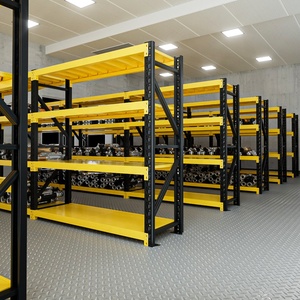
Shibang Light & Middle Storage Industrial Shelves
- Capacity: 150 - 800 kg / level
- Steel Grade: Certified Q235B Cold Rolled
- Pitch Pitch: 50mm Boltless Adjustable
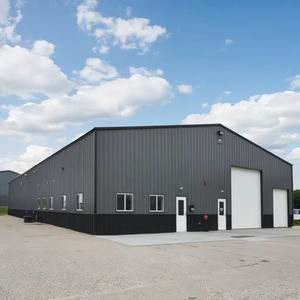
1000sqm Quick-Build Prefabricated Steel Structure Warehouse
- Wind Resistance: Up to 120 km/h
- Main Frame: Q355B H-Section Steel
- Erection Speed: Modular Pre-punched
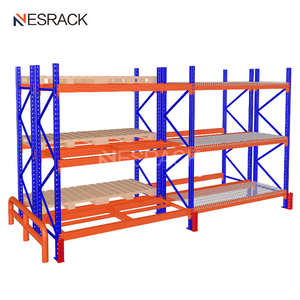
Heavy Duty 4-Layers Pallet Rack (500-3000kg)
- Loading: 500 - 3000 kg / level
- Upright Profile: 80x60 to 120x95 mm
- Safety Locks: Spring Locking Mechanism
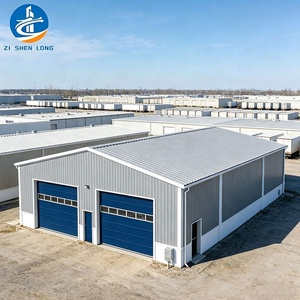
Commercial Hangar & Factory Steel Structure Buildings
- Clear Span: Column-Free Interior Layouts
- Treatment: Epoxy Rich Primer + Topcoat
- Certification: CE, ISO 9001:2015
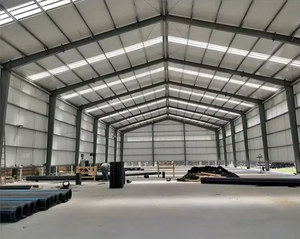
Hygienic Steel Structure Building For Food Factories
- Food-Grade: Dust-Proof Sealed Panels
- Insulation: PIR/PU Cleanroom Core
- Drainage: Anti-Corrosive Built-In Gutters

Industrial Steel Structure Workshop & Warehouse
- Crane Integration: 5T - 20T Overhead Crane
- Roof Pitch: Tailored for Heavy Rainfall
- Packaging: Export Sea-Worthy Steel Strapping
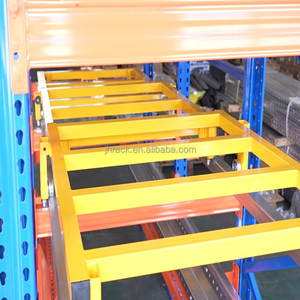
High-Density Push Back Heavy Duty Pallet Rack
- Depth Capacity: 2 to 6 Pallets Deep
- Principle: LIFO Dynamic Nested Carts
- Space Efficiency: +75% Floor Utilization
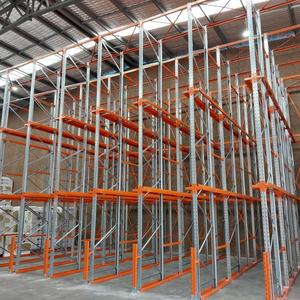
AU Standard High-Capacity Steel Pallet Racking
- Standard: AS4084-2023 & FEM 10.2.02
- Beams: Roll-Formed Double-C Interlock
- Finish: High Micron Epoxy Powder Coated
Why Global Procurement Teams Choose Our OEM Racking Solutions
From initial finite element analysis (FEA) structural simulations to container-maximized ocean dispatch, our integrated production lines ensure flawless execution.
Free 3D Layout & Seismic FEA Engineering
Before steel coil processing begins, our 300+ technical staff create comprehensive CAD layouts, 3D spatial renders, and seismic deflection calculations. Compliant with strict seismic zones across Central America, Southeast Asia, and Pacific Rim corridors.
Certified Metallurgy & Regulatory Compliance
All load-bearing members utilize certified prime Baosteel and Shougang Q235B and Q355B hot-rolled coils. We maintain valid CE Certification (No. 2435-CPR-8605159), ISO 9001:2015 accreditation (No. 18624Q00169R0M), and full RoHS heavy-metal compliance for food and pharma supply chains.
10-Stage Anti-Corrosion Surface Finishing
Tropical, coastal, and temperature-controlled facilities require extreme rust protection. Our automatic finishing lines execute acid pickling, zinc phosphating, twin-spray deionized rinsing, and thermosetting epoxy powder coating (60–90µm), alongside hot-dip galvanizing options.
Custom OEM/ODM Extrusion & Profile Punching
We manufacture custom teardrop, butterfly, diamond, and slotted hole profiles with custom pitches (50mm, 75mm, 76.2mm). Private labeling, branded upright caps, custom color palettes (RAL standard), and bespoke footplate anchor configurations are engineered to client specs.
Container-Maximized Ocean Packaging
Racking export requires specialized bundling to eliminate transit distortion. Uprights and beams are nested with high-density protective foam separators, reinforced steel strapping, and sequenced loading plans. Every container features bill-of-lading matching tags for swift customs processing.
Turnkey Lifecycle Technical Guidance
Overseas projects receive end-to-end engineering supervision: complete bilingual structural assembly manuals, step-by-step 3D video tutorials, and dedicated virtual engineering troubleshooting. On-site technical supervision is available for mega-distribution hubs.
Industrial Storage Systems: Mechanical & Spatial Comparison
Data-driven technical overview to evaluate pallet density, handling logistics, and structural attributes across high-velocity B2B facilities.
| System Configuration | Inventory Rotation | Floor Utilization (%) | Typical Payload (kg/pallet) | Handling Equipment Required | Seismic Feasibility |
|---|---|---|---|---|---|
| Selective Pallet Racking | 100% Selectivity (FIFO) | 40% - 50% | 500 - 4,000 kg | Standard Counterbalance / Reach Truck | Excellent (Universal Anchor Bracing) |
| Drive-In Racking System | High-Density Batch (LIFO) | 70% - 80% | 800 - 2,000 kg | Narrow Reach Truck with Guide Rails | Requires Top & Back Structural Bracing |
| Push-Back Cart Racking | Dynamic Flow (LIFO) | 65% - 75% | 500 - 1,500 kg | Standard Counterbalance Forklift | High (Inherent Gravity-Fed Rigidity) |
| Radio Shuttle Automation | Semi-Automated (FIFO/LIFO) | 80% - 88% | 500 - 2,500 kg | Forklift + Smart Radio Mother/Child Cart | Superior (Heavy Guide Rail Interlocking) |
| Heavy-Duty Cantilever | Unobstructed Linear Access | 50% - 60% | 500 - 3,000 kg / Arm | Side Loader / Heavy Reach Truck | Engineered T-Base Solid Bolted Anchors |
| Rack-Supported Mezzanine | Multi-Tier Manual Picking | Up to 200% (Added Floor) | 300 - 1,000 kg / m² Floor | Conveyors, Vertical Lifts, Pallet Jacks | Strict Portal Frame Structural Ties |
The Paradigm Shift in Industrial Storage Procurement (2025–2030)
Modern warehousing is navigating historic supply chain restructuring. Industrial land costs in key logistical nodes worldwide have surged by more than 35% over the past four years, transforming warehouse height and vertical cube optimization into the most critical metrics in supply chain real estate. Procurement managers are systematically abandoning obsolete single-level floor stacking in favor of engineered high-density configurations. Furthermore, the global integration of Automated Storage and Retrieval Systems (ASRS) and autonomous mobile robots (AMRs) mandates unprecedented manufacturing tolerances in racking cold-roll forming, requiring beam deflection ratios tighter than 1:200 and vertical upright plumb tolerances under 1.5mm per 10 vertical meters.
Simultaneously, international sustainability standards are reshaping metallurgy sourcing. Tier-1 enterprise buyers now prioritize low-carbon electric-arc furnace (EAF) steel production and powder coating chemistries certified free of VOCs and TGIC cross-linkers. From an engineering standpoint, nearshoring initiatives across Latin America, Eastern Europe, and North America have magnified demand for modular racking systems that can be rapidly repurposed, disassembled, and expanded without structural compromise. HEDA Shelves addresses this evolutionary imperative through standardized column-to-beam connectors that accommodate changing warehouse throughput, enabling businesses to pivot seamlessly from bulk batch storage to e-commerce split-case carton picking.
Seismic Structural Engineering & Extreme Environment Resilience
Warehouse safety protocols have hardened significantly. Across seismically active zones such as the Pacific Ring of Fire—encompassing Central America, western South America, and Japan—procurement specifications require rigorous finite element analysis (FEA) under dynamic load conditions. Upright frames are engineered with expanded base plates, heavy-gauge floor anchoring anchors, and multi-directional bracing geometries to dissipate horizontal ground accelerations without rack frame buckling. Moreover, in tropical maritime regions characterized by excessive relative humidity and airborne salinity, conventional enamel paint fails prematurely. HEDA Shelves' automated ten-stage surface treatment integrates zinc-phosphate conversion micro-crystallization followed by electrostatic powder curing, achieving exceptional salt-spray resistance exceeding 500 hours without edge blistering.
Future Purchasing Trends Shaping Industrial Storage
Strategic engineering insights for procurement directors preparing for the next decade of intelligent logistics expansion.
Hybrid Automation Compatibility
Purchasing managers are shifting from purely static racking to shuttle-ready modular channels. By specifying universal guide-rail slots during initial installation, warehouses can incorporate automated radio shuttles and AGVs later with zero structural downtime.
Total Cost of Ownership (TCO) vs. Raw CapEx
Procurement criteria have shifted away from initial purchase price toward 15-year TCO. Key metrics now evaluate resistance to forklift collision impacts, powder coating durability against pallet friction, and standardized interchangeability of structural replacement parts.
Prefabricated Steel Structure Convergence
The boundary between warehouse building structures and internal storage is blurring. Rack-supported buildings (clad-rack structures), where racking uprights directly carry the warehouse exterior siding and roof trusses, eliminate separate structural building columns and accelerate project commissioning by 40%.
Frequently Asked Questions on OEM Shelving & Racking Procurement
Comprehensive engineering and logistical clarifications for global enterprise buyers and project contractors.
Engineering Your High-Performance Warehouse Storage Today
Submit your architectural floor plans, pallet weights, and clear ceiling heights. Our senior structural engineers deliver a comprehensive 2D CAD layout, 3D visualization, and complete quotation within 24 hours.
Get a Quote