Featured Custom OEM High Bay Storage Racks & Framing Structures
Engineered for extreme volumetric efficiency, our high-bay rack systems incorporate cold-formed premium steel coils, robotic continuous seam welding, and custom beam connectivity tailored to heavy material handling operations.
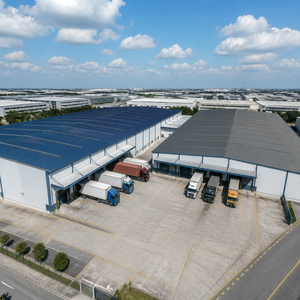
Large Scale Steel Warehouse Building High Bay Pallet Racking Storage Steel Frame Structure Design
Rack-supported high bay building integration engineered to eliminate standalone structural columns, maximizing clear internal vertical height up to 40 meters.
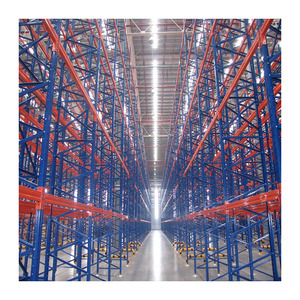
Mracking Heavy Duty Industrial Palletized Racking with a Capacity of 1000-4000kg Industrial Storage Racking
Multi-tier heavy unit storage designed with 50mm/75mm adjustable beam increments, utilizing box-beam or step-beam welded connector teeth for rigid anti-deflection.
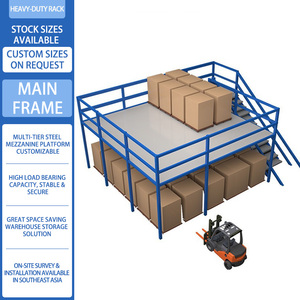
Heavy Duty Pallet Racking High Bay Warehouse Storage Pallet Rack System Cold Rolled Steel Construction Industrial Shelving
Precision omega upright sections with rolled return lips ensuring high torsional stiffness under cyclic seismic loading and heavy forklift operation.
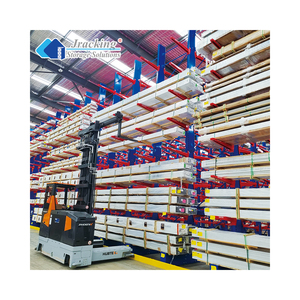
Jrackng High Capacity Heavy Duty Warehouse Storage Long Arm Cantilever Racking For Timber
Engineered for long-span bar stock, structural lumber, and extrusions. Tapered arms absorb impacts while preserving longitudinal clearance with zero front-column obstruction.
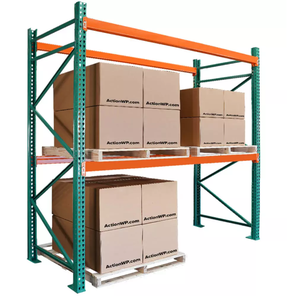
200/500/1000/3000/5000kg Per Layer Heavy-Duty Industrial Warehouse Storage Rack Shelf Steel Racking System Manufacture Factory
Modular factory-direct customization spanning medium to hyper-heavy payloads. Bolted frame structure provides compact export sea packing and swift site erection.
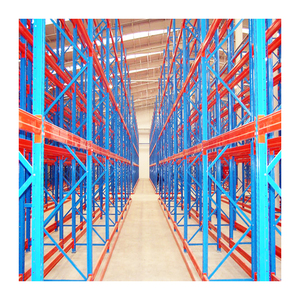
More Capacity High Rack Warehouse System Heavy Duty Pallet Racking System VNA Narrow Aisle Racks for Shelf Factory Material
Very Narrow Aisle (VNA) system reducing aisle widths down to 1.6m. Operates with wire-guided or rail-guided turret trucks for 95% space volume exploitation.
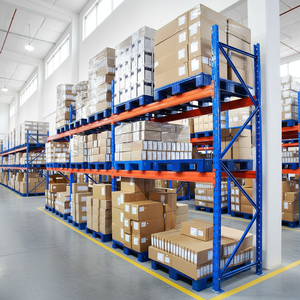
Heavy Duty Adjustable Corrosion Pallet Racking System Industrial Warehouse Storage Racks for Logistics E-commerce
Optimized for rapid parcel throughput, cold store logistics, and chemical facilities. Treated with multi-stage phosphating and thermosetting anti-corrosion barrier powder.
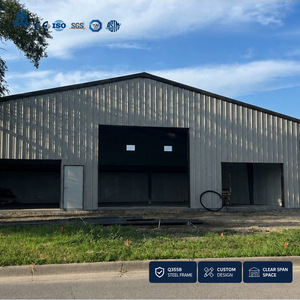
Prefabricated Steel Warehouse High Bay Storage Building Pallet Racking System Distribution Facility Space Planning
Holistic turnkey design integrating high-bay static racking with automated stacker cranes (AS/RS), cross-docking bays, and seismic floor anchor calculation sets.
Structural Integrity, Load Deflection & Seismic Design in Modern High Bay Racking
Modern automated and high-density fulfillment centers demand uncompromising precision in the design and export fabrication of high-bay racking systems. Unlike low-level shelving, high-bay installations exceeding heights of 12 to 40 meters transfer colossal static and dynamic forces down through slender upright columns to the concrete floor slab. When sourcing from an OEM custom exporter, engineering teams must evaluate more than just price per metric ton; they must inspect yield strength limits, connection node stiffness, and second-order P-Delta structural effects.
L/200 threshold (or L/300 for automated AS/RS interfaces). Failure to comply leads to mast jamming in narrow aisle turret trucks and irreversible fatigue in connector tabs.
High-Bay Steel Profile Mechanical Specification Comparison
Our OEM manufacturing facility converts hot-rolled and cold-formed continuous strip steel coils into structural sections that satisfy both European FEM 10.2.02 and American ANSI/RMI specifications. The mechanical metrics below govern our standard beam-to-column design matrix:
| Component Type | Structural Profile | Steel Grade | Yield Strength (MPa) | Elongation A5 (%) | Design Criteria |
|---|---|---|---|---|---|
| High Bay Upright | 120mm–140mm Omega Profile | Q355B (equiv. S355JR) | ≥ 355 MPa | ≥ 22% | Axial compression & torsional rigidity |
| Heavy Box Beam | Interlocking Twin C-Sections | Q235B (equiv. S235JR) | ≥ 235 MPa | ≥ 26% | Bending moment & L/200 deflection |
| Beam Connectors | 3 to 5-Claw Welded Teeth | Strenx / Low-Alloy | ≥ 420 MPa | ≥ 20% | Rotational joint stiffness (Cjh) |
| Seismic Bracing | C-Channel / Circular Hollow | Q235B | ≥ 235 MPa | ≥ 26% | Tension-compression shear dissipation |
| Foot Baseplate | 10mm–20mm Solid Hot Rolled Plate | Q355B | ≥ 355 MPa | ≥ 22% | Point-load concrete floor pressure |
Seismic Engineering for High-Risk Fault Zones
Exporting high bay storage racks across the Pacific Rim, Latin America, Southern Europe, and Central America requires meticulous dynamic modal analysis. In active seismic regions (such as Guatemala, Costa Rica, Panama, and Chile), lateral ground accelerations (PGA values ranging from 0.25g to 0.45g) amplify vertical overturning moments dramatically. Our OEM design protocols utilize finite element analysis (FEA) to verify upright punch hole degradation factors, anchor bolt pullout shear limits, and diagonal frame ductility.
Why Tier-1 Warehouse Developers Partner with HEDA Shelves
Operating since 2001 in Guangzhou, China, Guangzhou Heda Shelves Co., Ltd. is a vertically integrated OEM/ODM manufacturing facility delivering structural high-bay infrastructure globally.
30,000 m² Automated Facility
Equipped with high-speed automated roll-forming lines, computerized continuous CNC punching presses, and robotic MIG/TIG welding workstations outputting up to 30,000 metric tons monthly.
25+ Years OEM/ODM Specialization
Founded in 2001, our technical engineering board holds over two decades of structural analysis experience, executing more than 10,000 turnkey racking installations across Europe, the Americas, and Southeast Asia.
Complimentary 3D CAD & BIM Planning
Before procurement contracts are executed, our licensed civil and mechanical engineers deliver comprehensive CAD floor layouts, static load stress simulations, and 3D BIM clash detection at zero consultation cost.
Precision 10-Stage High-Bay Manufacturing Protocol
Future Procurement Trends in High Bay Storage Systems (2025–2030)
Procurement directors and supply chain VPs are recalibrating capital expenditure strategies. The convergence of industrial real estate scarcity, micro-fulfillment, and automation requires high-bay racks designed for future-ready adaptability.
Clad-Rack Building Architecture Domination
Rather than constructing a conventional pre-engineered metal building (PEB) and retrofitting internal racks, logistics developers are directly shifting procurement capital to rack-supported clad buildings. The high bay racks serve as the structural framework carrying roof trusses, wall sandwich panels, and rainwater gutters, slashing building lead times by 35% and total capital cost by 22%.
Hybrid AGV / AMR and High-Bay Aisle Integration
The traditional divide between manual reach-truck high bays and multi-million-dollar automated AS/RS is dissolving into hybrid automation. Procurements now require custom OEM floor guide profiles, ultra-flat floor tolerance baseplates, and reflector mounting channels along upright runs to support autonomous mobile robots (AMRs) operating up to 14 meters.
Decarbonized Steel & Eco-Responsible Powder Finishes
Global corporate sustainability directives are enforcing carbon accounting across logistics supply chains. Tier-1 exporters must provide verified Environmental Product Declarations (EPDs), raw coil recycled content metrics, and low-VOC heavy-metal-free electrostatic finishes that eliminate hazardous off-gassing in pharmaceutical and food-grade cold stores.
Technological Innovations Driving High Bay Racking Development
From smart IoT strain gauges embedded in critical beam joints to cold-formed ultra-high-strength steel alloys, high bay warehousing is transforming into an engineered cyber-physical structure.
Embedded Fiber-Bragg & IoT Strain Monitoring
High bay racks operating above 25 meters are increasingly deployed with continuous IoT monitoring modules. Piezoelectric load cells and optical fiber strain sensors placed along high-stress cross-bracings detect pallet overweight conditions, accidental forklift collision shocks, and foundation settling in real-time before micro-fissures propagate.
High-Strength Micro-Alloyed Cold-Formed Steels
By utilizing advanced micro-alloyed hot-rolled strips (such as niobium-titanium micro-alloyed steels), racking manufacturers achieve minimum yield strengths exceeding 420–500 MPa while maintaining superior cold-forming bend ductility. This allows for reduced steel gauge thicknesses without sacrificing ultimate buckling resistance, decreasing ocean container shipping weights significantly.
Modular Energy-Dissipating Baseplate Assemblies
To protect floor slabs during seismic episodes or high-velocity mast oscillations, next-generation high-bay systems incorporate friction-damped and elastomeric-isolated anchor assemblies. These baseplates absorb kinetic energy, preventing brittle shearing of concrete chemical anchors and preserving upright verticality under extreme emergency decelerations.
Frequently Asked Technical Procurement Questions
Essential technical, structural, logistics, and quality assurance criteria evaluated by procurement managers and structural consultants before placing overseas manufacturing orders.
Q1 How do you determine floor slab load capacity requirements for high-bay racking?
Our engineering team requires the concrete compressive strength rating (e.g., C25/30 or C30/37), slab thickness (typically 200mm–300mm), reinforcement mesh diameter, and subgrade reaction modulus (k-value). For high-bay concentrated baseplate loads exceeding 150 kN per upright, we calculate dynamic punching shear and design oversized 12mm–16mm stiffened baseplates with multi-point expansion or chemical resin anchoring.
Q2 What are the international deflection limits for high bay beam and upright designs?
Under European FEM 10.2.02 and EN 15512 specifications, horizontal pallet beam deflection must not exceed L/200 under full rated design load (where L is the beam length). For automated AS/RS facilities, tolerances are tightened to L/300 or L/400 to prevent automated shuttle positioning errors. Frame out-of-plumb vertical tolerances must stay strictly within H/500 under full operational load.
Q3 How does your factory handle custom OEM color coding, branding, and upright punch patterns?
We offer complete custom OEM profile roll-forming and custom punching dies (including teardrop, hex-hole, diamond, and European teardrop shapes). Surface coating supports custom RAL color matching (e.g., RAL 5015 Sky Blue, RAL 2004 Pure Orange, RAL 7035 Light Grey) using thermosetting TGIC-free polyester powder, alongside private-label steel stamping on beam end-plates.
Q4 How are long high-bay uprights packed to prevent damage during ocean container transit?
Uprights exceeding standard 40ft High Cube container lengths (11.8m) are designed with certified structural bolted splicing joints engineered to exceed 100% of the parent column bending resistance. Bundles are protected with edge corrugated protectors, heavy-gauge steel strapping, anti-friction timber dunnage, and sealed VCI anti-corrosion barrier wrapping to resist maritime salt condensation.
Q5 What surface treatment do you recommend for coastal or tropical high-humidity environments?
For environments characterized by high relative humidity (>75%) or proximity to maritime salt spray, standard components undergo a rigorous 10-stage pre-treatment process: hot degreasing, double acid pickling, zinc phosphating, and electrostatic epoxy-polyester powder coating (80–120 microns). For extreme open-air or sub-zero refrigeration conditions, we supply continuous hot-dip galvanized steel components conforming to ASTM A123 / EN ISO 1461.
Q6 What certifications and test reports accompany each production export batch?
Every export dispatch includes an official Mill Test Certificate (MTC) matching EN 10204 Type 3.1 certifying steel chemical composition and yield tensile strength, CE Certificate of Conformity under EN 1090-1 / CPR, ISO 9001:2015 inspection sheets, powder coating adhesion cross-hatch reports, and stamped static structural calculation notes approved by registered structural engineers.
Accelerate Your High Bay Storage Facility Project
Directly engage our structural engineering team for comprehensive warehouse footprint planning, CAD design drafts, structural load calculations, and factory-direct export container pricing.
- 24-Hour Engineering CAD Layout
- Seismic & FEM Load Analysis Included
- Direct OEM Factory Price Structure
- FOB, CIF & DDP Global Port Logistics
Connect with a Senior Technical Storage Specialist for instant structural assessment.
Get a Quote