25+
Years of Racking Engineering
30,000 m²
Smart Production Facility
30,000 t
Monthly Steel Roll Output
10,000+
Global Projects Installed
Precision Material Handling
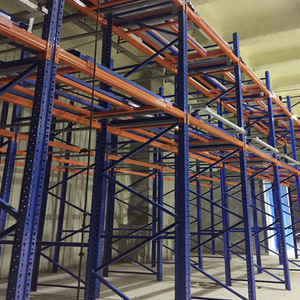
Core First-In First-Out & High-Density Storage Solutions
Custom-engineered structural steel systems optimized for inventory velocity, batch control, and dynamic SKU rotation.
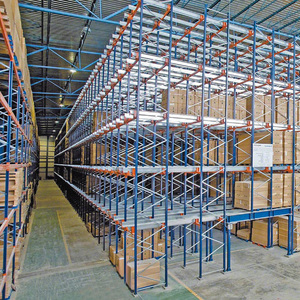
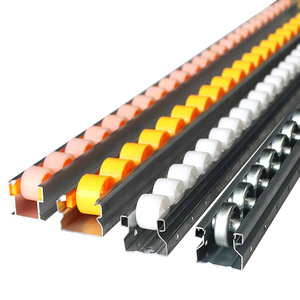
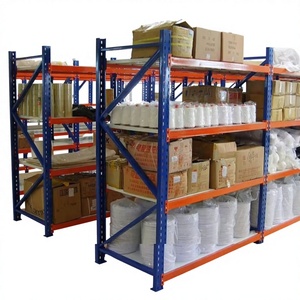
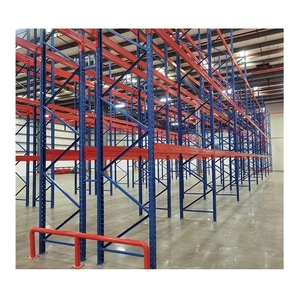
Engineering Insights: The Mechanics and Kinematics of FIFO Systems
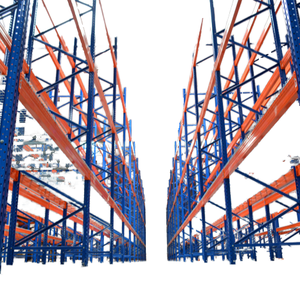
In modern supply chain architecture, First-In, First-Out (FIFO) racking systems represent the pinnacle of automated inventory lifecycle control. Unlike static or LIFO (Last-In, First-Out) setups, FIFO systems rely on controlled mechanical force—most commonly gravity-assisted incline planes or automated radio-controlled shuttle carriers—to advance pallet loads seamlessly from an entry loading bay to an opposing retrieval face.
From an engineering perspective, gravity-fed pallet flow racks operate via an inclined bed (typically angled between 2.5% and 3.5% (approx. 1.5° to 2°) depending on standard pallet bottom characteristics). The kinematics depend entirely on three integrated elements: precision cylindrical steel rollers with sealed bearings, centrifugal brake rollers positioned every pallet-length increment to prevent runaway acceleration, and mechanical entry/exit pallet separators that eliminate line-pressure on the discharge end.
Comparative Technical Matrix: FIFO Pallet Flow vs. Automated Radio Shuttle
| Evaluation Parameter | Gravity Pallet Flow (FIFO) | Radio Shuttle Racking (FIFO Mode) | Selective Racking (Standard) |
|---|---|---|---|
| Storage Density Efficiency | High (Up to 85% footprint utilization) | Ultra-High (Up to 90% footprint utilization) | Low-to-Medium (40% - 50% utilization) |
| Pallet Travel Mechanism | Passive gravity slope + mechanical brake rollers | Active robotic shuttle on heavy-duty guide rails | Manual forklift mast movement per pallet |
| Lane Depth Potential | Typically 2 to 25 pallets deep | Up to 40+ pallets deep per channel | Strictly 1 to 2 pallets deep |
| Floor Maintenance Profile | Near-zero electrical wear; roller inspect only | Lithium battery cycles; shuttle sensor checks | Zero electrical requirements |
| Cold Storage Applicability | Down to -30°C (Requires cold-rated bearings) | Down to -25°C (Requires low-temp LiFePO4 cells) | Down to -30°C standard steel coatings |
Dynamic Flow Control and Safety Engineering
Structural safety in FIFO systems hinges on mitigating dynamic shock loading. While standard selective racks endure static loads, dynamic flow racks absorb continuous horizontal kinetic energy as pallets travel downhill. Our manufacturing plants utilize Q235B and high-yield Q355B cold-rolled steel coils with optimized cross-sectional profiles. Upright columns feature Omega-beam geometry with continuous cold-roll forming, providing significant torsional resistance.
Additionally, the application of electrostatic thermosetting polyester powder coating, cured at 180°C to 200°C following comprehensive pickling and phosphating cycles, guarantees a non-porous finish exceeding 500 hours of salt spray testing. This provides crucial resistance against condensation-induced micro-corrosion prevalent in rapid-turnaround food and beverage facilities.
Market Intelligence
Future Sourcing & Procurement Trends in Racking (2025–2030)
How automation integration, environmental compliance, and seismic resilience are reshaping international procurement strategies.
⚙
Hybrid AMR & Shuttle Fusion
The boundary between static racking and mobile robotics is blurring. Forward-looking procurement demands racking frames engineered with precision tolerances (±0.5mm) capable of seamless docking with Autonomous Mobile Robots (AMRs) and automated automated crane interfaces.
- Integrated floor-level AMR guidance channels
- Optoelectronic alignment sensors on load beams
- Continuous communication with warehouse MES/WMS
☁
IoT-Driven Real-Time Load Telemetry
Intelligent procurement now assesses smart upright frames. Modern installations are embedding strain-gauge load cells and tilt sensors within beam-to-column connectors, sending real-time structural health diagnostics directly to logistics supervisors.
- Predictive deflection and stress warnings
- Forklift collision telemetry reporting
- Continuous weight distribution auditing
♻
Circular Metallurgy & Low-Carbon Steel
Global carbon border adjustments (such as CBAM) are making steel sourcing transparency mandatory. Tier-1 Chinese manufacturers are standardizing on electric arc furnace (EAF) low-emission steel and heavy metal-free powder coatings to simplify ESG verification.
- Quantified carbon footprint per ton produced
- Fully recyclable structural alloy chemistry
- RoHS-certified chemical pre-treatments
Guangzhou HEDA Shelves: Tier-1 Manufacturing Capabilities
Founded in 2001, Guangzhou Heda Shelves Co., Ltd. operates as an authority in warehouse racking engineering. Spanning a 30,000 square meter standardized production facility staffed by over 300 experienced engineers and technical fabricators, HEDA maintains an uninterrupted monthly output capacity of 30,000 metric tons of structural steel components.
Our international quality assurance protocol complies strictly with CE Certification No. 2435-CPR-8605159 and ISO 9001:2015 Management System Certification No. 18624Q00169R0M. From automated continuous slit shearing to heavy-gauge CNC hydraulic roll-forming, our 10-stage fabrication workflow guarantees structural integrity for mission-critical warehousing projects worldwide.
STEP 01
Certified Coils
STEP 02
Precision Slitting
STEP 03
CNC Punching
STEP 04
Continuous Roll Form
STEP 05
Robotic Welding
STEP 06
Mechanical Polishing
STEP 07
Multi-Stage Phosphating
STEP 08
Electrostatic Coating
STEP 09
Curing Oven Baking
STEP 10
Ultrasonic Inspection
Every export container ships complete with mill test certificates, laser-scanned dimensional tolerance reports, and load-test certificates verified under international FEM 10.2.02 and EN 15512 storage standards.
Procurement Reference
Frequently Asked Questions on Sourcing FIFO Systems
Direct technical and commercial answers for project engineers, supply chain directors, and EPC procurement leads.
Q1: How do you determine the correct slope and roller pitch for gravity FIFO flow beds?
The standard incline angle is between 2.5% and 3.5% (roughly 1.5° to 2°), but it must be tailored based on test samples of your actual pallets. Hardwood GMA/Euro pallets roll efficiently with standard rollers at 50mm–75mm pitch, whereas composite or corrugated plastic pallets require dual-bearing steel rollers or three-roller tracks to prevent localized sagging.
Q2: What certifications are required when importing Chinese heavy-duty racking systems?
Legitimate export contracts must verify CE Marking (specifically compliance with European Standard EN 15512, EN 15620, EN 15629, and EN 15635) alongside ISO 9001:2015 certified quality systems. For seismic regions (e.g., Central America, Pacific Rim), independent structural FEA calculation reports demonstrating compliance with local building codes are provided by our senior engineering division.
Q3: How does Radio Shuttle FIFO compare with Gravity Pallet Flow in cold storage environments?
Radio Shuttle eliminates human forklift travel into freezers, greatly preserving thermal barriers. However, battery performance drops below -20°C, requiring specialized low-temp lithium heating jackets. Conversely, Gravity Pallet Flow operates with zero electronics, relying solely on mechanical low-temperature greased bearings, reducing electrical maintenance risks in deep-freeze environments.
Q4: What is the typical production lead time and container packing efficiency?
Standard engineering iterations, CAD floor plans, and 3D FEA simulations are delivered within 48 to 72 hours. Factory production runs require 20 to 30 business days for standard high-volume contracts (10–25 containers). Components are bundled with protective corrugated paper and stretch film, with pre-numbered structural labels aligned with container pack lists to expedite on-site unpacking.
Q5: Can beam levels and gravity flow roller beds be adjusted after installation?
Yes. Columns are manufactured with continuous 50mm or 75mm pitch CNC punching slots. Beam elevations and drop angles on roller tracks can be adjusted mechanically during future inventory changeovers. Modular clip-in brackets allow rapid reconfiguration without requiring hot works or field cutting.
Q6: How do your engineers mitigate impact damage at the picking face?
High-turnover FIFO discharge faces experience repeated forklift mast approaches. We engineer heavy-duty wrap-around column protectors, floor-anchored steel bollards, and entry guide angles formed from 4.5mm–6.0mm structural plate steel to dissipate kinetic impacts safely away from upright load-bearing columns.
Transform Your Warehouse Floor Density & Inventory Velocity
Consult directly with our structural engineering team. Receive a complimentary 3D layout, static load calculations, and an itemized factory-direct commercial proposal within 24 hours.
Inquire Now