Heavy-Duty Pallet Flow & Warehouse Storage Systems
From high-velocity First-In-First-Out gravity flow rails to structural multi-tier mezzanine decks and corrosion-resistant wire mesh platforms, explore our core industrial catalog deployed across North American logistics operations.
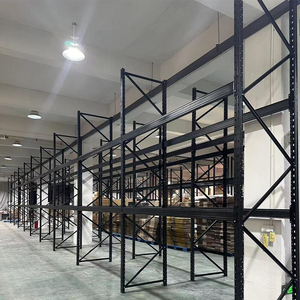
Wire Mesh Deck Pallet Racking Corrosion Resistant Dust Leakage Prevention 5-Layer Warehouse Storage
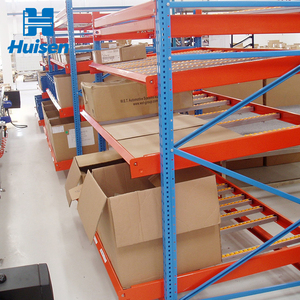
Anti-Rust Durable Steel Gravity Racks Pallet Flow Racking System Carton Shelving Warehouse OEM ODM
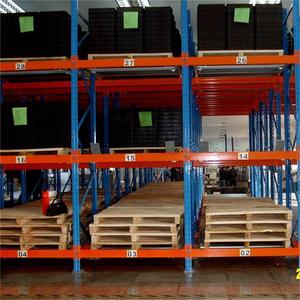
Heavy-Duty Dynamic FIFO Pallet Flow Racking 5 Steel Roller Corrosion Protected Warehouse Stacking Racks
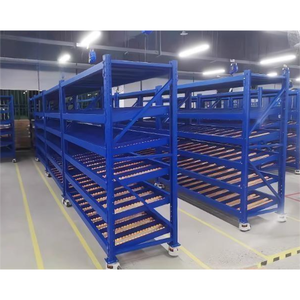
Factory Warehouse Storage 5 Durable Gravity Flow Racking FIFO Adjustable Roller Rack System
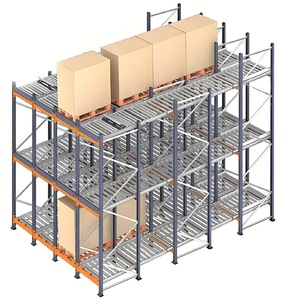
CE Certificated Wholesale Price Steel Roller Warehouse Gravity Pallet Flow Rack
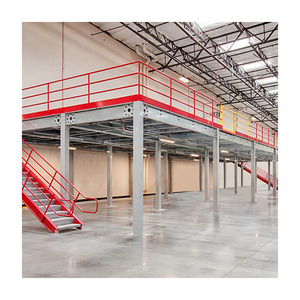
Custom Industrial Warehouse Mezzanine Floor Supplier High Quality Storage Platform Support
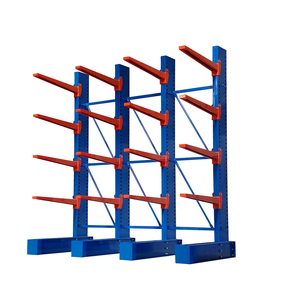
Industry Warehouse Steel Structural Pipe Rack Cantilever Rack for Pipe / Lumber Storage
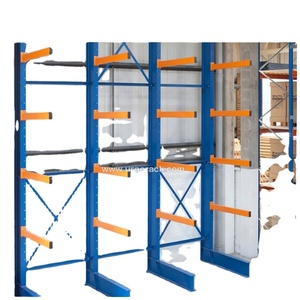
High Space Use Stainless Steel Storage Cantilever Racking with Warehouse Industrial Racks
Kinematic Gravity Flow Dynamics & Chicago Building Code Compliance
Procuring industrial dynamic racking from an overseas factory requires rigorous adherence to US structural standards and kinetic flow physics. Pallet flow racking operates on an inclined rail bed that utilizes natural gravity to move palletized unit loads from the rear loading aisle to the front discharge aisle. When designing for Midwest distribution operations handling standard GMA 48" × 40" wooden or composite plastic pallets weighing from 1,000 lbs to 3,000 lbs (450 kg to 1,360 kg), precise mechanical tuning is paramount to prevent runaway collisions, hang-ups, and structural upright deflection.
Dynamic Slope, Rollers & Centrifugal Braking
Gravity flow performance relies on calibrating static friction ($\mu_s$) versus dynamic rolling friction ($\mu_k$). For Chicagoland climate ranges—spanning humid summer ambient logistics to sub-zero freezer distribution—our factory calculates lane gradients within strict engineering tolerances:
3/8" per foot to 1/2" per foot (3.0% to 4.2% incline)Speed Limiter Interval:
Every 1 to 2 pallet positions (Centrifugal Brake Rollers)Controlled Velocity Limit:
0.25 m/s to 0.35 m/s (50 to 70 ft/min terminal speed)
Our heavy-duty rollers utilize dual-shielded, pre-lubricated low-temperature precision bearings rated down to -35°F (-37°C), avoiding cold-grease lockup common in Chicago refrigerated facilities. Furthermore, entry pallet guide flutes and structural mechanical pallet separators relieve hydrostatic line pressure on the discharge pick face, ensuring that forklift operators extract the lead pallet without wrestling the accumulated mass of rearward loads.
RMI, ANSI & City of Chicago Code (Title 14B)
Warehouse racking in Chicago, Cook County, and Will County must satisfy strict structural permitting protocols overseen by municipal building departments. Our engineering division pre-calculates structural cold-formed and hot-rolled shapes in accordance with:
| Compliance Body | Design Standard | Structural Factor |
|---|---|---|
| RMI / ANSI | MH16.1: 2012 / MH16.3 | Industrial Steel Racking Safety |
| City of Chicago | Building Code Title 14B | Seismic Design Category A/B Slab Anchoring |
| NFPA Standards | NFPA 13 / In-Rack Fire Sprinklers | Transverse & Longitudinal Flue Clearances |
| AISI Standard | NASPEC S100-16 Cold-Formed | High-Yield Steel Uprights (Q355B / 50 ksi) |
Every flow racking run exported to Chicago logistics facilities comes with complete PE-stamped calculation packages, column baseplate footprints sized for 3,000 to 4,500 PSI slab capacity, and custom wedge anchor hole patterns that meet anchor bolt spacing minimums without spalling concrete slabs.
Chicago Distribution Hubs & Industrial Application Scenarios
The Chicago metropolitan area represents North America's premier freight crossroad, connecting Class I railroads, interstate arteries, and international air cargo. Pallet flow racking solves critical real estate and velocity bottlenecks across Chicagoland's primary industrial submarkets.
Mega-Distribution & 3PL Fulfillment
Warehousing nodes in Joliet, Elwood, Romeoville, and Bolingbrook serve as the Midwest's mega-distribution powerhouse. Facilities handling consumer packaged goods (CPG) and high-turn retail buffer stock utilize our 10-deep to 20-deep pallet flow systems to minimize forklift travel aisles, eliminating up to 45% of interior access roadway.
- Automatic rotation for date-sensitive consumer retail goods
- Separate loading and unloading aisles preventing truck traffic bottlenecks
- Rugged structural entry impact frames resisting reach-truck collision
Refrigerated & Frozen Food Warehousing
From historic Chicago Stockyards cold distribution corridors to modern temp-controlled sites in Little Village, energy to chill warehouse air is costly. High-density pallet flow lines pack pallets together tightly, drastically decreasing cooled cubic footage per pallet position while ensuring strict USDA-compliant FIFO lot tracking.
- Bearings pre-packed with synthetic grease operating to -30°F
- Hot-dip galvanized roller channels preventing freeze-thaw corrosion
- High volumetric thermal mass retention reducing refrigeration utility bills
High-Land-Cost Infill Logistics
In Elk Grove Village, Des Plaines, and Schiller Park, industrial land trades at significant premiums, and existing building clear heights can be constrained. Pallet flow systems provide up to 75% higher storage density than selective racking, unlocking maximum storage capacity without paying for building expansions.
- Maximizes cubic storage in low-to-mid clear height (24'-32') facilities
- Cuts reach-truck fleet requirements by reducing redundant travel
- Integrates with carton flow picking platforms for e-commerce parcels
Chicago & Midwest Logistics Megatrends (2025–2030)
Shifting trade lanes, labor demographics, and land availability across Illinois and neighboring states are redefining how modern warehouses select dynamic storage equipment.
Escalating Infill Land & Construction Costs
With Cook County industrial replacement costs surpassing historical benchmarks, facility operators cannot justify low-density floor stacking or single-selective aisle footprints. Pallet flow racking transforms dead aisle space into active storage lanes, allowing enterprises to stay within proximity to the urban core without leasing additional satellite warehouses.
Zero-Power Passive Dynamic Automation
While fully automated crane ASRS systems demand high initial capital investments and lengthy implementation timelines, gravity pallet flow offers a practical, high-throughput alternative. Requiring zero kilowatt hours of electricity to transport unit loads, gravity flow provides passive automation resilient against power fluctuations or software failure.
Factory-Direct International Strategic Sourcing
Midwest procurement directors are increasingly bypassing intermediary rack broker markups by contracting directly with large-scale certified Chinese manufacturing plants. By pairing factory-direct steel production with domestic professional engineering review, buyers achieve significant cost advantages on enterprise storage infrastructure projects.
Factory Strengths & 10-Stage Precision Production
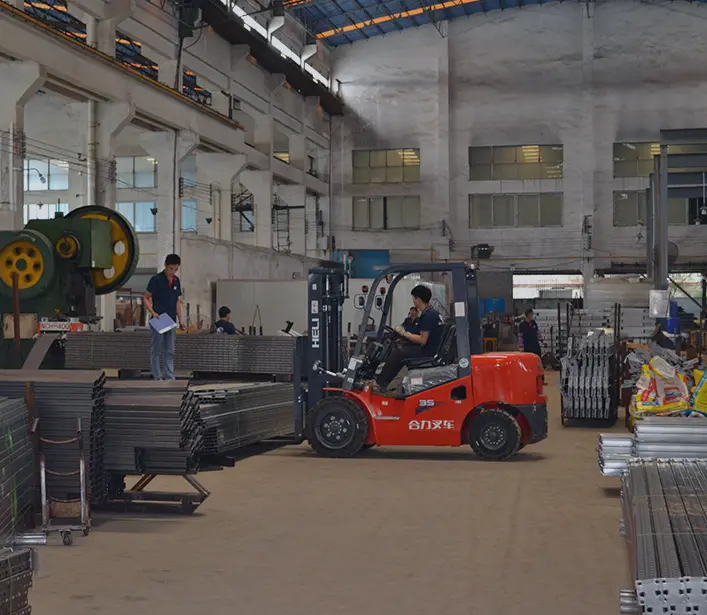
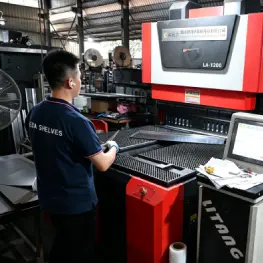
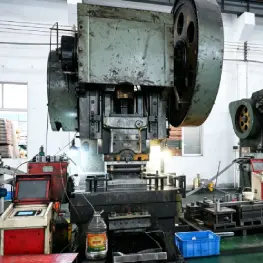
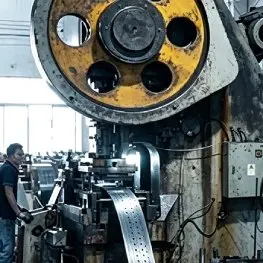
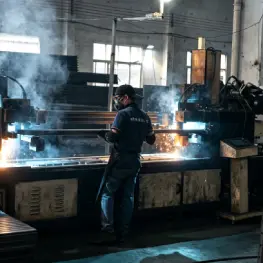
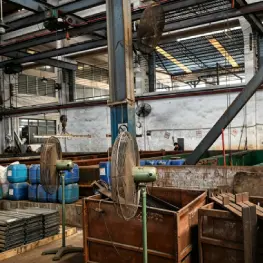
Established in 2001, Guangzhou Heda Shelves Co., Ltd. operates an advanced 30,000 m² production facility with over 300 skilled technical personnel and monthly output exceeding 30,000 tons of engineered racking.
25 Years of Precision Storage Engineering
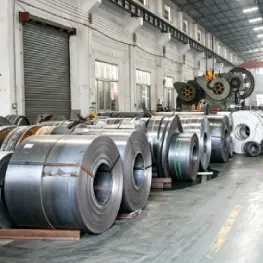
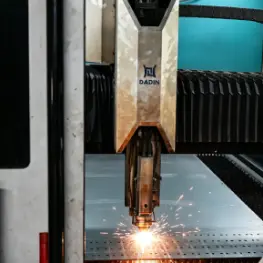
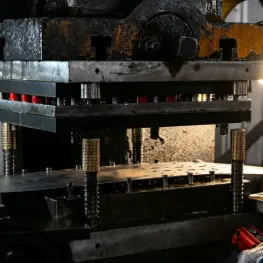
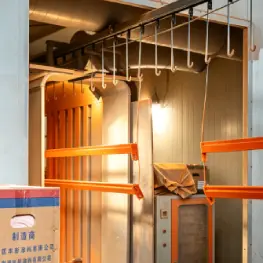
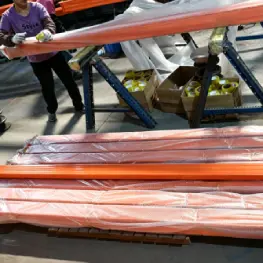
Our heavy-duty pallet flow systems are manufactured using prime cold-rolled steel coils, processed through continuous multi-station roll-forming lines, automated punching equipment, and certified robotic welding cells. We manage every step in-house—from custom tooling design to surface pre-treatment and high-durability thermosetting powder coating.
For Chicago importers and general contractors, we provide full structural engineering documentation, detailed submittal packages, anchor bolt plans, and container-optimized loading diagrams that ensure streamlined customs clearance and organized offloading at your facility.
International Quality Certifications & Structural Verification
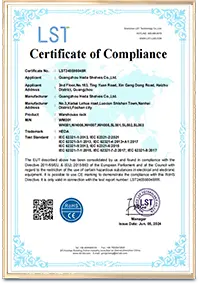
Our factory quality systems are independently audited and certified under internationally recognized quality management, safety, and metallurgical standards.



Chicago Racking Buyer FAQs
Clear answers to technical, permitting, freight, and installation questions asked by Midwest logistics directors and operations managers.
How do you ship pallet flow racking systems directly to Chicago?
We provide full container load (FCL) shipments directly from our South China production hub to Chicago intermodal terminals (BNSF Logistics Park Chicago in Elwood or Union Pacific Global IV in Joliet) via West Coast railbridge routing, or via all-water service to East/Gulf Coast ports with Midwest rail connection. Shipments are quoted CIF Chicago or DDP job site, complete with ISF filings, customs documentation, and itemized container packing lists.
Can your structural designs satisfy City of Chicago racking permits?
Yes. The City of Chicago Department of Buildings and surrounding Illinois municipalities require stamped engineering calculations reflecting RMI MH16.1 specifications, Seismic Design Category parameters, and building concrete slab load ratings. Our structural engineering department generates full 3D CAD models, structural calculations, base plate footprints, and anchor bolt pull-out calculations ready for local licensed PE review and permit filing.
How do your flow rollers perform in sub-zero Chicago cold storage?
Cold storage installations require distinct roller engineering. For blast freezers and sub-zero storage (-10°F to -25°F / -23°C to -32°C), we equip flow beds with heavy-gauge galvanized steel rollers and low-temperature synthetic grease bearings that prevent lubricant freezing. We also incorporate customized centrifugal brake controllers designed to operate consistently without hydraulic oil thickening.
What pallet types are compatible with your gravity flow roller tracks?
Our dynamic lanes are custom-engineered for GMA 48" × 40" 4-way wooden pallets, plastic pallets with bottom perimeter runners, CHEP/PECO pooled pallets, and heavy metal storage skids. For plastic or flexible bottom pallets, we utilize high-density multi-track roller arrangements or full-width roller layouts to ensure continuous bottom contact without deflection between roller gaps.
How is mechanical installation handled for Midwest projects?
Every racking system ships with comprehensive component-coded assembly drawings, 3D exploded layout views, and step-by-step installation instructions. Midwest customers frequently utilize their trusted local non-union or union mechanical installation crews. Alternatively, we provide remote engineering installation coordination via video review, or dispatch factory installation supervisors directly to your site for multi-thousand position projects.
What project details are needed to request a free 3D CAD proposal?
To design an optimized pallet flow layout, our engineers require your building footprint dimensions (length, width, unobstructed clear height to fire sprinkler heads), building column grid spacing, pallet specifications (width, depth, overall height including product, and gross weight), required lane depths (e.g., 5-deep, 10-deep, or 20-deep FIFO), forklift mast height, and anticipated daily pallet throughput.
Request an Engineered Pallet Flow Layout & Factory Proposal
Connect directly with HEDA Shelves' technical structural engineering department. Receive custom AutoCAD floor layouts, 3D visualization renders, structural load calculations, and itemized FOB or CIF Chicago pricing within 24 hours.