Featured Warehouse Racking & Material Handling Equipment
Engineered specifically for the demanding throughput standards, precise seismic criteria (KDS 41), and standardized T11/T12 pallet logistics across Gyeonggi-do, Incheon, and Busan fulfillment nodes.
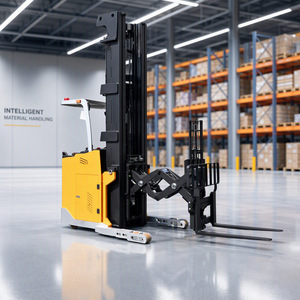 Narrow Aisle MHE
2 Ton 2.5 Ton Double Deep Reach Truck Electric Pantograph 8m 10m Lifting CE
- Capacity: 2,000 kg – 2,500 kg
- Lift Heights: Up to 10 Meters
- Designed for Double-Deep Racks
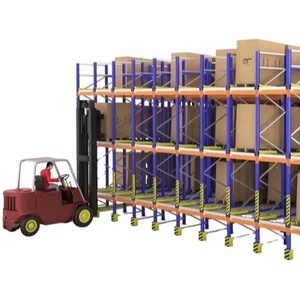 Strict FIFO Storage
Warehouse High Density Heavy Duty Gravity Pallet Racking
- Automatic Stock Rotation (FIFO)
- Braked Steel Gravity Rollers
- Ideal for Cold Chain & FMCG
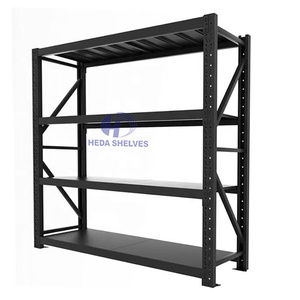 Universal Selective
Adjustable Steel Warehouse Pallet Storage Shelving Rack
- 100% Direct Pallet Accessibility
- Adjustable Pitch: 50mm / 75mm
- Compatible with Korean T11 Pallet
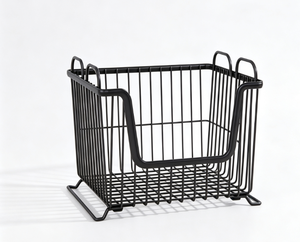 Lean Mobile Pick
Narrow-Slot Mobile Wire Storage Rack Unit with Industrial Casters
- High-Mobility Polyurethane Wheels
- Electro-Galvanized Wire Decking
- Optimal for Micro-Fulfillment Sorting
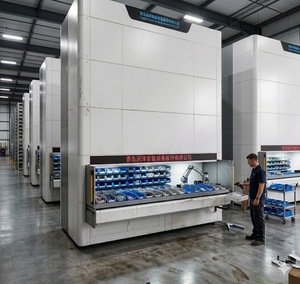 Smart Automation
Automated Vertical Lift Module (VLM) Heavy Capacity Storage System
- Goods-to-Person Micro-Dispatch
- Floor Space Reduction up to 85%
- High-Tech Semi & Pharma Suitable
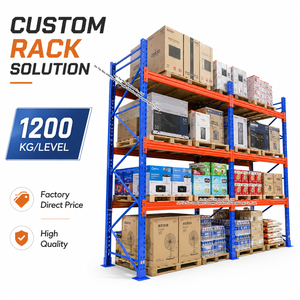 Heavy Industry Grade
1200KG Steel Heavy Duty Warehouse Pallet Storage Shelving System
- 1,200 kg – 4,000 kg Beam Capacity
- High-Yield Q355B Hot-Rolled Steel
- KDS 41 Seismic Footing Design
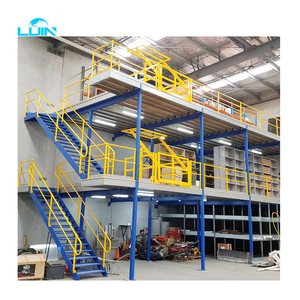 Vertical Multiplication
Warehouse Multi Level Steel Shelf Rack Support Mezzanine Platform
- 300 – 1,000 kg/m² Floor Ratings
- Doubles/Triples Operable Area
- KOSHA Safety Rail & Stairs Fitted
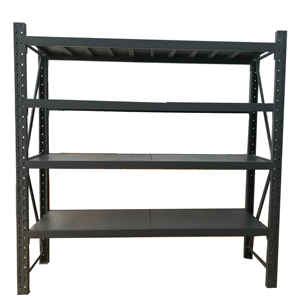 Modular Longspan
Medium Duty Bolted Steel Shelving Metal Storage Shelf Rack
- 200 kg – 800 kg per Tier
- Boltless Quick Butterfly Assembly
- Automotive & Workshop Suitable
Navigating High Land Values, Quick-Commerce, and Strict Codes
The South Korean warehousing sector has transformed into one of the world's most dense, technologically advanced logistics landscapes. International buyers and local facility directors face four interrelated pressures that dictate racking structural engineering.
Gyeonggi-do Land Premium & Height Maximization
With industrial land prices in logistics nodes like Icheon, Yongin, Anseong, and Gwangju exceeding historic highs, floor footprint expansion is rarely economically feasible. Facilities increasingly mandate 12 to 16-meter clear ceiling heights. Standard racking no longer suffices; installations demand high-precision VNA (Very Narrow Aisle) and double-deep racking profiles capable of handling multi-tier column buckling thresholds under full design payloads.
- VNA systems utilizing narrow turret trucks
- Deflection tolerances tightly held under L/350
The "Dawn Delivery" (새벽배송) Throughput Model
Pioneered by Coupang (Rocket Delivery), Market Kurly, and SSG, the Korean consumer market operates on ultra-compressed fulfillment windows. Warehouses operate continuously, requiring continuous picking agility. Gravity flow racking, carton dynamic picking rollers, and automated vertical lift modules (VLMs) have displaced static block stacking to eradicate picking delays, mis-picks, and aisle congestion during peak early-morning dispatch waves.
- Seamless integration with WMS & pick-to-light
- Divided SKU lanes for multi-item consolidated picking
Seismic Engineering Under Korean KDS 41 Standards
Following the seismic events in Gyeongju and Pohang, South Korean authorities enforce rigorous seismic compliance under the Korean Design Standard (KDS 41). Racking is legally classified as a critical building-like structural storage asset. Every upright frame, diagonal bracing, base plate thickness, and floor anchor embedment must be certified against ground acceleration parameters, preventing devastating progressive collapses during seismic ground motions.
- Heavy-duty seismic baseplates with expansion anchoring
- Engineered finite-element dynamic response testing
Cold-Chain Growth in Incheon & Busan New Port
South Korea's position as a maritime and cold-chain transshipment hub has accelerated refrigerated and deep-freeze logistics construction. Sub-zero temperatures down to -25°C introduce steel brittleness risks and condensation-induced corrosion. Racking systems deployed in these hubs require specialized low-temperature impact-resistant steel grades, coupled with galvanized components or specialized anti-freeze thermosetting electrostatic coatings.
- Deep-freeze certified high-tensile steel grades
- Radio shuttle compatibility to minimize human cold exposure
Racking Architecture Comparative Benchmark for Korean Facilities
Logistics managers and system integrators must balance floor area utilization with accessibility. The following matrix contrasts primary structural typologies configured for standard Korean industrial specifications.
| Racking Architecture | Space Density | Pallet Access | Korean Pallet Fit (T11 / T12) | Seismic Rating (KDS 41) | Ideal Korean Application |
|---|---|---|---|---|---|
| Selective Pallet Racking | Baseline (40–45%) | 100% Immediate | Dual-beam 2300mm–2700mm bay widths | Standard to Extreme High | Multi-SKU 3PLs, E-Commerce buffer zones |
| Double-Deep Pallet Rack | High (+30–35% vs Selective) | 50% Immediate (FILO) | Custom frame depths (2100mm–2300mm) | Engineered uprights required | FMCG, Dry food manufacturing, Incheon bonded hubs |
| Gravity Pallet Flow | Maximum (Up to 75%) | Strict FIFO Rotation | Precision lane roller tracking | Enhanced intermediate bracing | Cold storage, Dairy, Perishables, Coupang Fresh hubs |
| Automated VLM Systems | Ultra-Dense (+80% Volume) | Automated Delivery | Tray-based micro-loads & bins | Self-contained certified frame | Semiconductor spares, Electronics, Medical biosimilars |
| Rack-Supported Mezzanine | Multiplied (200–300%) | Full Manual Picking Tier | Integrated shelving & floor load grid | Rigid structural moment ties | Apparel, Cosmetics, Automotive aftermarket fulfillment |
Field-Tested Performance Across South Korea's Industrial Hubs
HEDA Shelves supplies custom-engineered industrial racking solutions configured for specific regional operating profiles across the Korean peninsula.
Gyeonggi-do E-Commerce Mega-Centers
In high-throughput hubs in Yongin and Icheon, multi-tier rack-supported mezzanines integrate with high-speed carton conveyors. By utilizing clear vertical heights of up to 14 meters, facilities achieve four distinct pick levels above the primary staging floor, multiplying manual picking faces without adding ground lease costs.
- Mesh decking for ceiling fire-sprinkler penetration
- Integrated safety gates and pallet drop zones
Semiconductor & Electronics Supply Clusters
Surrounding major semiconductor fabs in Pyeongtaek and Hwaseong, precision component vendors utilize Automated Vertical Lift Modules (VLM) and clean-coated micro-slotted steel shelving. Systems feature electro-static dissipative (ESD) powder finishes and automated tray containment to prevent micro-contamination of precision hardware.
- Zero-particulate electrostatic powder coating
- Dust-sealed VLM access hatches and pick sensors
Busan & Gwangyang Port Cold Stores
Maritime transshipment cold rooms operating at -22°C to -30°C near Busan New Port deploy heavy-duty gravity flow and semi-automated radio shuttle racking. Maximizing the cube reduces refrigerated volume waste, slashing per-pallet electrical chilling expenses while preserving structural integrity against thermal cycling stresses.
- Structural steel grades certified against low-temp embrittlement
- Hot-dip galvanizing for heavy condensation zones
Automotive Tier-1 Stamping & Spare Parts
Automotive supplier networks in Ulsan, Changwon, and Gwangju require rugged, high-capacity cantilever systems and heavy-duty 4,000 kg/bay pallet racking. These systems store steel coils, metal stamping dyes, exhaust assemblies, and bumpers, supported by bolted column protectors and heavy floor-mounted guide rails.
- High-capacity cold-formed and structural I-beam arms
- Impact-resistant floor armor guarding aisle corners
Why Engineering Teams & Wholesalers Trust HEDA Shelves
With over 25 years of specialized warehouse racking fabrication, Guangzhou Heda Shelves Co., Ltd. provides direct factory accountability from structural calculation to on-site assembly guidance.
Certified Quality Architecture
Every component undergoes stringent batch verification. Certified under CE Certificate No. 2435-CPR-8605159, ISO 9001:2015 No. 18624Q00169R0M, and RoHS directives. Tensile yield strength, weld integrity, and powder adhesion conform strictly with FEM 10.2.02, RMI, and Korean safety inspection mandates.
Complimentary 3D CAD & FEA Modeling
Before production begins, our 300+ engineering and technical team provides complete CAD layout drawings, full 3D spatial renderings, and Finite Element Analysis (FEA) structural deflection reports. This eliminates costly on-site dimensional clashes with warehouse building columns, ESFR fire risers, or overhead docks.
Seamless Logistics to Incheon & Busan
Export shipments feature modular bundle packing, color-coded identification tags, and itemized container packing lists optimized for standard 40ft High Cube containers. We ensure smooth customs clearance through Busan, Incheon, and Pyeongtaek, supported by RCEP and China-Korea FTA Certificate of Origin documentation.
Technical & Commercial FAQ for South Korean Importers
Answers to key engineering, regulatory compliance, customs, and operational questions asked by Korean warehouse operators and logistics system integrators.
Request an Engineered Warehouse Layout & Factory Proposal
Whether you are constructing a high-cube fulfillment center in Yongin, upgrading a cold-storage facility near Busan New Port, or sourcing container-direct racking supplies, our engineering department will deliver a space-optimized CAD layout and competitive quotation within 24 hours.
- Free 2D/3D CAD Layout Scheme
- KDS 41 Seismic Analysis Support
- Factory Direct CIF/FOB Busan/Incheon
- Full RCEP / FTA Documentation
Connect immediately with our chief storage systems consultant to review your building dimensions, pallet turnover rules, and budget profile.
Contact Us