High-Density Dynamic Systems & Heavy-Duty Solutions
Explore our certified structural steel racking configurations, heavy mobile bin solutions, and space-saving compactor bases designed for direct containerized export to Switzerland.
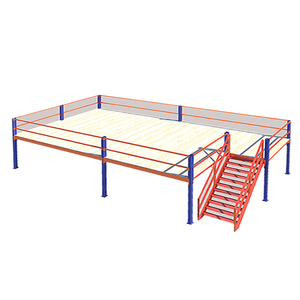
Heavy Duty Industrial Storage Warehouse Racks Pallet Racking Systems Attic Loft Mezzanine Floor Platforms
- Load Capacity: 500 - 1500 kg/m²
- Grade: Cold-Rolled Q235B / Q355B Steel
- Swiss Application: High-Bay 3PL Hubs
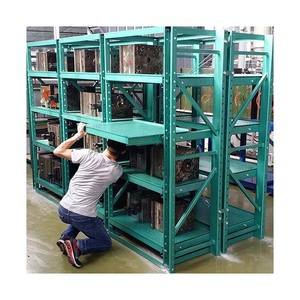
Mracking Warehouse Storage Drawer Type Mould Racks Heavy Duty Mold Racks for Warehouse Storage Mold Racks for Sale
- Drawer Capacity: 1000 - 3000 kg/drawer
- Pull-out Rate: 65% - 100% Full Extension
- Swiss Match: Precision Injection Plants
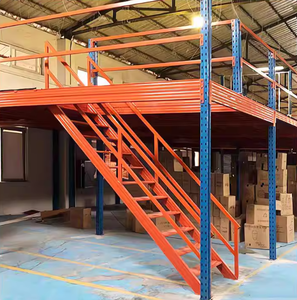
Yueyang Q235 Steel Structure High Bay Warehouse Mezzanine Racking Multi Tier Storage Shelf OEM ODM Electrostatic Powder Coated
- Surface: Epoxy-Polyester Powder Coated
- Structure: Boltless Interlocking Uprights
- Compliance: ISO 9001:2015 & CE Certified
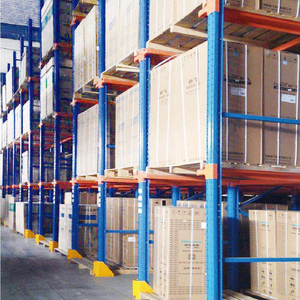
Reinforced 5 Layer Drive-In Storage Racking Heavy Duty Industrial Warehouse Cargo Shelving Units Cold Rolled Steel CE Certified
- Density Factor: Up to 85% Volume Utility
- Arm Support: Formed Unilateral / Bilateral
- Suitable for: Swiss Cold Chain & Dairy
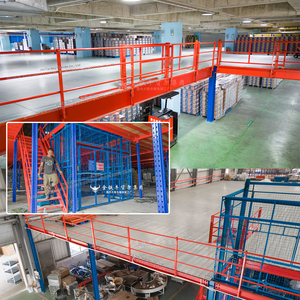
Custom I Beam Steel Structural Platform Mezzanine Floor Racking Loft for Warehouse Storage and Picking Area
- Column Grid: Clear Spans up to 8+ Meters
- Decking: Galvanized Grating / Solid Steel
- Swiss Standards: EN 1090 & SIA 261
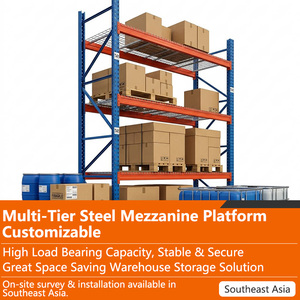
Yueyang Heavy Load Water Drop Type Clip Racking Boltless Industrial Warehouse Pallet Rack Q235 Steel Epoxy Powder Coated
- Beam Connector: Teardrop / 3-4 Hook Rivet
- Upright Profile: 80-120mm Omega Sections
- Finishes: 10-Stage Electrostatic Powder
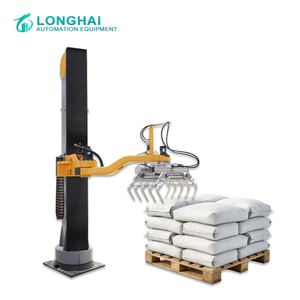
25kg 50kg Bag Column Arm Palletizing Machine Full Automatic Robotic Rotary Bag Palletizer Single Column Bags Palletizer Machine
- Payload: Bags 25-50kg | Speed: 300-600 b/h
- Control: Siemens PLC + Touchscreen HMI
- Compatibility: Automated Compactor Infeed
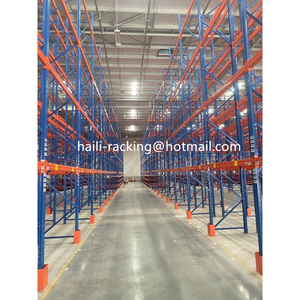
500 to 9000Kg/Layer Ce Sgs Tuv Iso Heavy Duty Mobile With Storage Bin Rack Shelving for Garage Ing Shelf Shelves
- Bay Load: 500 to 9,000 kg per carriage
- Movement: Mechanical Handwheel / Motorized
- Safety: Infrared Obstacle & Foot Guards
Overcoming High Industrial Real Estate Costs in Switzerland
In high-density Swiss commercial corridors—from the Greater Zurich Area and Basel-Stadt to the Lake Geneva region—commercial logistics square footage commands some of the steepest lease rates in Europe. Static aisle configurations represent unsustainable capital allocation.
Swiss enterprises operate within stringent spatial and environmental boundaries. With prime industrial land scarce and commercial warehouse leasing in cantons such as Zurich (Zürich), Basel-Landschaft, and Geneva (Genève) frequently exceeding CHF 180 to CHF 320 per square meter annually, operational profitability demands total volumetric optimization. Conventional static shelving allocations squander between 50% to 65% of available floor space on access aisles that remain idle during standard picking workflows.
By engineering high-density mobile shelving systems (Rollregalanlagen), our Chinese manufacturing base provides Swiss logistics directors and facility managers with a direct route to doubling on-site storage density without incurring the capital expenditure of physical building expansion or external 3PL contracts.
The Volumetric Mathematics of Compactor Racks
A standard static pallet or archiving aisle requires an aisle clear width ranging from 1,200 mm for manual push-carts up to 3,200 mm for standard counterbalanced forklifts. Mobile shelving mounts structural shelf uprights onto heavy-duty, motorized or mechanically geared wheel carriages that traverse precision-leveled steel rails embedded directly into the concrete floor.
This layout collapses all intermediate aisles into a single dynamic access corridor that opens on demand via an electronic touch-screen HMI or ergonomic mechanical handwheel. The mathematical yield is immediate: a 75% to 100% expansion of effective storage capacity within the exact same structural boundary footprint.
Beyond floor space conservation, Swiss sustainability mandates under the Energy Strategy 2050 obligate companies to reduce their primary energy consumption. In temperature-controlled environments—such as active pharmaceutical ingredient (API) bio-archives in Basel or refrigerated dairy storage in Bern—mobile shelving systems radically diminish the cubic air volume requiring refrigeration or HVAC filtration. Conditioning a compact 500 m² mobile storage envelope demands up to 40% less electrical kilowatt-hour expenditure than cooling an equivalent 1,000 m² static layout.
As direct manufacturers, Guangzhou Heda Shelves Co., Ltd. bridges high-precision Chinese industrial steel fabrication with exacting Swiss structural and dimensional tolerances. We eliminate layered European importer margins, supplying Swiss buyers with certified, factory-direct compactor infrastructure backed by comprehensive structural calculations, finite element modeling (FEM), and verified material traceability.
Technical Specification & Drive System Topology
Engineered for seamless integration into Swiss facilities, our mobile compactors incorporate dual-guided wheel carriages, laser safety curtains, and microprocessor logic boards.
Electronic Microprocessor Compactor
Equipped with low-decibel 24V/230V gear motors, soft-start / soft-stop planetary transmissions, and programmable logic controller (PLC) architecture. Fully compatible with automated optical sensors that halt carriage movement instantly if an operator or misplaced carton breaks the laser beam path.
Ergonomic Mechanical Push-Pull
Utilizes multi-stage cast iron gear reductions and an aluminum tri-spoke handwheel with retractable spinning handles. High-torque internal chains transmit motion to precision steel drive shafts, allowing an operator to displace 10,000 kg of cargo with less than 3 kg of manual effort.
Precision Rail Foundation Engineering
Machined from C45 solid cold-drawn medium carbon steel, our floor tracks feature anti-tilt structural lips that withstand eccentric seismic loadings. Available as recessed tracks grouted flush into concrete or ramp-integrated false-floor profiles that protect Swiss leased historic floors.
| System Attribute | Light-to-Medium Document Compactor | Heavy-Duty Industrial Mobile Shelving | Automated Cold-Chain Mobile Pallet Rack |
|---|---|---|---|
| Load Capacity Per Bay | 400 kg – 1,200 kg per carriage unit | 2,000 kg – 9,000 kg per mobile base | 12,000 kg – 36,000 kg per motorized tandem |
| Drive Mechanism | Manual handwheel / Low-voltage electric | High-torque electric gearmotor (0.75 kW) | Inverter-driven synchronized servo drives |
| Steel Specification | Cold-Rolled SPCC / Q235B (EN 10025) | High-Tensile Q355B Hot-Rolled & Folded | Q355B Low-Temperature Treated Alloy |
| Surface Pretreatment | 10-Stage Pickling & Phosphating | Pickling, Phosphating + Epoxy Powder (80μm) | Hot-Dip Galvanized / Anti-Corrosive Epoxy |
| Operational Temp. Range | +5°C to +40°C (Standard Archival) | -10°C to +45°C (Machinery & Stores) | -30°C to +40°C (Pharmaceutical Cold Vault) |
| Safety Interlocks | Mechanical brake lock & aisle key | Photoelectric laser sweep, pressure edges | Full Category 4 Safety PLC & E-stops |
| Applicable Standards | ISO 9001, RoHS, DIN 4102 Class A2 | EN 15095, CE 2435-CPR, FEM 10.2.07 | EN 15095, SUVA Reg. 6511, SIA 261 Seismic |
Localized Applications Across Swiss Economic Cantons
From precision micro-engineering cleanrooms in Neuchâtel to regulated pharmaceutical bio-vaults in Basel, our installations are custom-adapted to local regulatory and operational frameworks.
Pharmaceutical & Life Sciences
Regulated under strict Swissmedic and GMP Annex 11 protocols. We provide antimicrobial powder-coated compactor shelving, stainless steel chassis options, and cleanroom-certified wheel bearings that produce zero carbon particulate shedding inside ISO Class 6–8 environments.
Luxury Watchmaking & Micro-Mechanics
For fine horology manufactures in the Watch Valley (Arc Jurassien). Anti-static (ESD) coated drawers, velvet-lined component bins, and ultra-smooth magnetic rail dampening ensure high-value balance wheels, movements, and precious alloy bezels experience zero harmonic vibration.
Banking, Legal & Cantonal Archives
Ultra-dense paper document preservation systems fulfilling Swiss federal archiving standards (BGA). Options include central electronic biometric access, perimeter steel clad fire doors, automatic fire-sprinkler aisle parking modes, and DIN 4102 fire-retardant structural uprights.
High-Precision Engineering & Tooling
Heavy-duty motorized compactor bases supporting tooling dies, CNC jigs, and metal injection molds. Features integrated high-tensile pull-out mold trays carrying up to 3,000 kg per shelf, reducing overhead crane travel distances across Swiss machine-tool workshops.
Alignment with Swiss SIA Standards and SUVA Regulations
A whitepaper evaluation of the engineering requirements mandated by Swiss structural engineers, municipal building authorities, and occupational insurers.
Deploying storage systems in Switzerland requires strict compliance beyond generic international codes. The Swiss Society of Engineers and Architects (SIA) enforces distinct standards concerning load safety, structural actions, and seismic safety zones. In particular, SIA 261 (Actions on Structures) dictates that non-structural building components and industrial racking must undergo dynamic structural analysis based on regional seismic zoning—most notably across seismic Zone 1 (Plateau), Zone 2, and Zone 3b (Valais, Basel, and Central Switzerland).
Our engineering division calculates mobile compactor upright deflection, anchor shear-stress capacity, and carriage overturn moments using advanced 3D finite element analysis (FEA). We install precision overhead cross-tie portals and floor rail mechanical anti-tip claws (Anti-Kipp-Sicherungen) that mechanically interlock the rolling chassis into the solid steel rail track profile. Even under sudden floor accelerations, the system cannot jump the track or list into adjacent aisles.
Occupational safety mandates outlined by SUVA (Schweizerische Unfallversicherungsanstalt) require multi-layered fail-safe protections on all power-operated compactor installations. Under the governing European standard EN 15095 (Power-operated mobile shelving and racking), each electrical system we export to Switzerland integrates the following protective layers:
- Full-Height Optical Light Curtains: Continuous vertical infrared beams across aisle entrances that instantly interrupt motor torque when broken.
- Lower Foot-Protection Sweep Bars: Sensitive photoelectric sensors positioned 25 mm above the floor plane to detect stray items or shoe tips.
- Aisle Lockout Interlocks: Mechanical and digital key-switch isolation panels that guarantee an open aisle remains mechanically blocked while personnel inspect inventory.
Guangzhou Heda Shelves Co., Ltd. Manufacturing Authority
Operating a modern 30,000 m² smart manufacturing plant with over 300 skilled technical specialists, our production facility delivers certified quality directly to global trade gateways.
ISO 9001:2015: No. 18624Q00169R0M
Steel Coil Slitting
Prime certified Q235B/Q355B coil selection
CNC Continuous Punching
Micro-metric pitch accuracy on 50mm centers
Roll-Forming Profiles
24-pass precision cold rolling mill lines
10-Stage Pretreatment
Deep pickling, zinc phosphating, de-grease
Electrostatic Coating
Robotic powder guns & 200°C curing ovens
Multimodal Transit to Switzerland & Customs Optimization
A reliable logistics pathway connecting our South China production hubs directly to Swiss industrial distribution centers via sea, rail, and Rhine River inland navigation.
Exporting structural steel storage systems from Guangzhou or Shenzhen ports to landlocked Switzerland follows established, highly optimized intermodal trade lanes. Shipments are quoted on competitive FOB, CIF, or full DDP (Delivered Duty Paid) terms, coordinating full container loads (20GP, 40HQ) directly to designated Swiss freight bonded terminals.
Primary Inland Transit Gateways
Maritime containers discharge at primary North Sea ports—specifically Rotterdam, Antwerp, or Hamburg. From there, cargo transitions via two reliable channels:
- 1. Rhine River Barge Freight: Directly to the Port of Switzerland (Schweizerische Rheinhäfen) in Basel-Kleinhüningen and Birsfelden, offering cost-effective and carbon-efficient transport for large tonnage contracts.
- 2. SBB Cargo / Rail Freight: Direct intermodal block trains linking Rotterdam or Hamburg terminals to Swiss inland rail logistics depots (e.g., Zurich-Mülligen, Aarau, Basel Wolf).
The Switzerland-China Free Trade Agreement (FTA)
The bilateral Free Trade Agreement between Switzerland and the People's Republic of China (in effect since July 2014) confers substantial fiscal benefits on Swiss industrial buyers. Under certified Origin Declarations and EUR.1 documentation, qualifying structural steel and storage racking classifications enjoy preferential or zero custom duty tariffs upon entry into Swiss customs territory.
All component bundles are packed with steel-band strapping, heavy-gauge protective plastic shrink wrapping, and timber dunnage that fully complies with ISPM 15 phytosanitary wood treatment regulations. Container packing plans are modeled using 3D loading software to optimize container volume, ensure balanced weight distribution across container axels, and prevent transit shifting through ocean swells.
Frequently Asked Questions by Swiss Facility Engineers
Authoritative technical answers addressing floor slab integrity, local building inspections, installation protocols, and lifecycle maintenance.
Q How does floor slab capacity (kN/m²) affect mobile compactor design in Swiss buildings?
Mobile compactor bases consolidate storage weight onto concentrated rail lines rather than spreading loads uniformly. Our structural engineering team requires your building slab specification (standard Swiss industrial floors typically support 20 kN/m² to 50 kN/m²). We calculate rail spacing, sleeper plate dimensions, and rail embedment depth to distribute point loads safely across the slab without exceeding punching shear limits.
Q How do mobile shelving systems comply with Swiss municipal fire safety (VKF) guidelines?
The Association of Cantonal Fire Insurers (VKF / AEAI) regulates fire safety and sprinkler coverage. For automated or electric compactor installations, we incorporate a dedicated "Fire Parking Mode" interface. When connected to the building's central fire alarm control panel, the compactor automatically opens equal 120mm air gaps between all mobile carriages, allowing sprinkler discharge water to reach the lowest tiers unimpeded.
Q Can mobile shelving tracks be installed in leased premises without ruining the floor?
Yes. When Swiss leasing contracts prohibit cutting recessed floor channels into the concrete slab, we deploy an engineered raised modular access floor system. The steel tracks mount onto adjustable sub-frame leveling plates that sit on the existing floor, flanked by beveled aluminum approach ramps. Upon lease termination, the entire system can be dismantled leaving zero structural damage to the concrete.
Q Are your electrical systems compliant with Swiss power standards (230V / 400V, 50Hz, SEV)?
Yes. All motors, power transformers, control enclosures, and emergency stop circuits comply with Swiss Electrosuisse (SEV) requirements and standard Swiss power grids (single-phase 230V or three-phase 400V at 50Hz). Control panels feature CE, RoHS, and UL-certified industrial electrical components sourced from internationally recognized suppliers (Schneider, Siemens, Omron).
Q How is on-site mechanical installation managed within Switzerland?
We provide comprehensive bilingual (German/French/English) assembly manuals, exploded 3D CAD schematics, and numbered component packing lists. For mid-to-large installations, Swiss clients have two options: either deploy local Swiss assembly millwrights supported by our remote video engineering team, or request our experienced installation supervisors on-site to oversee track leveling, carriage alignment, and safety commissioning.
Q What lead time can Swiss enterprises expect from engineering sign-off to site delivery?
Standard custom manufacturing requires 20 to 30 working days from approved layout drawings and engineering sign-off. Ocean transit from South China to Rotterdam/Antwerp averages 28 to 34 days, with inland barge or rail haulage to Swiss distribution hubs (Basel, Zurich) requiring an additional 3 to 6 working days. We coordinate all customs transit documents in advance to ensure smooth clearance.
Optimize Your Swiss Storage Footprint with Factory-Direct Engineering
Send your building dimensions, pallet load profiles, and target throughput specifications. Our certified racking engineers will prepare a complete 2D/3D CAD layout, volumetric density report, and itemized CIF/DDP quotation within 24 hours.