High-Capacity Industrial Racking Systems for New Zealand Supply Chains
Engineered to withstand rigorous commercial distribution demands and certified to Australasian safety standards. Explore our precision-manufactured structural steel storage systems available for direct container shipping to Aotearoa.
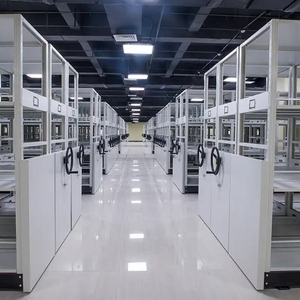
Modern Industrial Adjustable Cargo Mobile Shelving Durable Metal Iron Commercial Furniture
- High Density Compaction
- Floor-Rail Guided
- Auckland Footprint Saver
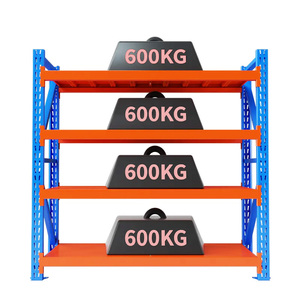
High Quality 500kg Steel Storage Racks 5-Layer Adjustable Pallet Racking Heavy Duty System
- 500kg UDL Per Shelf
- 50mm Pitch Adjustment
- Cold-Rolled Steel
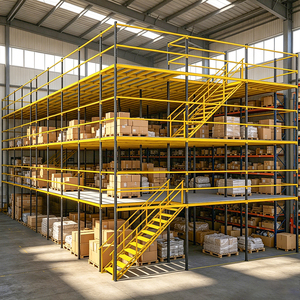
Multi Level Steel Mezzanine Platform Shelving System with Guardrail Staircase Storage
- Doubles Floor Usable m²
- Integrated Staircases
- 300-1000 kg/m² Rating
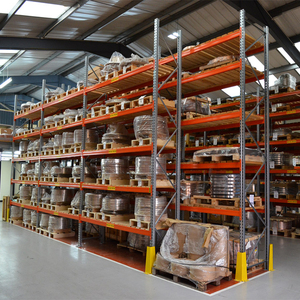
Heavy Duty Selective Pallet Steel Rack Powder Coating ESD Protection Bolted Frame
- 100% SKU Selectivity
- NZ CHEP Pallet Sized
- Anti-Static ESD Coating
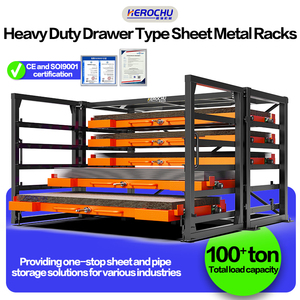
Steel Sheet Metal Storage Racks 6-Layer Drive-In Pallet Rack with Anti-Rust Finish
- FILO Bulk Batch Storage
- Cold-Store Optimized
- Heavy Continuous Rail
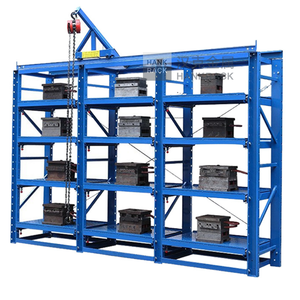
Heavy Duty Steel Mold Rack System Storage Equipment Stackable & Collapsible Design
- Up to 2000kg Per Drawer
- Slide-Out Rollers
- Safety Interlock Stops
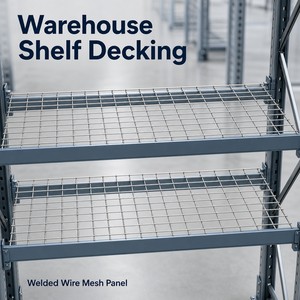
Heavy Duty Galvanized Steel Load Bearing Support Bar Drop-In Type Wire Mesh Decking Panel
- NZ Fire Sprinkler Permeable
- Reinforced Omega Channels
- Corrosion-Proof Zinc
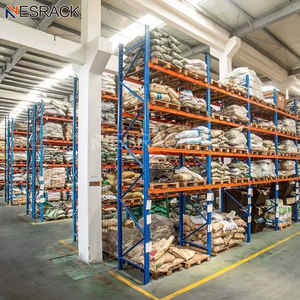
Heavy Duty Shelving 3000KGS Large Capacity Warehouse Storage Pallet Rack Shelving Unit
- 3,000 kg Beam Capacity
- Box Beam Profile
- Seismic Base Plates
Engineering Bulk Racking to AS/NZS 4084:2012 Standards
New Zealand's seismic environment requires racking systems that are not merely heavy, but scientifically engineered for structural ductility, dynamic floor slab connections, and strict compliance with the New Zealand Building Code (Clause B1 Structure).
AS/NZS 4084:2012 Certified Design
Every bulk rack upright frame, load-bearing beam, and locking connector complies with AS/NZS 4084:2012 ("Steel storage racking"). Our cold-formed structural members are calculated under limit state design methods, providing verifiable safety working loads (SWL) for uniform distributed loads (UDL) up to 4,500 kg per bay level.
Seismic Loading (NZS 1170.5) Analysis
New Zealand is divided into distinct seismic hazard zones—from low-hazard Northland to extreme-hazard Wellington and Canterbury fault corridors. Our structural engineering team calibrates frame bracings, base plate anchor configurations, and horizontal seismic acceleration coefficient ($C_d(T_1)$) ratings to satisfy territorial council consent requirements.
Producer Statement (PS1) Ready
We supply complete engineering design packages, finite element analysis (FEA) models, and material mill test certificates (MTC). These calculations facilitate Chartered Professional Engineer (CPEng) independent review to produce New Zealand Producer Statements (PS1 Design & PS3 Construction) for local city council building consents.
| Racking System Type | Typical Payload / Bay | Standard Upright Profiles | NZ CHEP Pallet Compatibility | Seismic Zone Suitability (NZS 1170.5) | Surface Treatment |
|---|---|---|---|---|---|
| Selective Pallet Racking | 1,000 kg – 4,500 kg / level | 80×60, 90×70, 100×70, 120×95 mm | 100% Direct Access (1200×1000mm) | Zone 1 to Zone 4 (Wellington/Canterbury braced) | Electrostatic Polyester Powder (60-80μm) |
| Drive-In Racking | 1,200 kg – 1,800 kg / pallet | 90×70, 100×70 mm Heavy Gauge | High Density (FILO / LIFO lane rail) | Reinforced Top & Back X-Bracing required | Powder Coated or Hot-Dip Galvanized |
| Multi-Tier Mezzanines | 350 kg – 1,000 kg / m² UDL | Custom RHS / H-Beam & Upright Columns | Floor-Over-Rack / Manual Pick Shelving | Full Structural Diaphragm Anchoring | Epoxy Primer + Architectural Topcoat |
| Mobile Compact Racking | 800 kg – 2,000 kg / bay | Heavy-Duty Guided Channel Bases | Selective Density (Single Movable Aisle) | Floor-Embedded Precision Seismic Rails | Corrosion-Resistant Industrial Powder |
| Heavy Mold & Die Shelves | 1,000 kg – 2,500 kg / drawer | Reinforced Structural Channel Columns | Direct Crane / Forklift Tooling Staging | Heavy Anchor Embedment (M16/M20 Chemical) | Impact-Resistant Baked Enamel Finish |
Tailored Storage Applications Across New Zealand's Primary Industries
From the export-intensive horticulture sectors in Hawke's Bay to the massive fast-moving consumer goods (FMCG) distribution corridors of South Auckland, our racking systems are engineered around local handling habits, pallet specifications, and environmental conditions.
FMCG & 3PL Multi-Tenant Distribution
With prime industrial square-metre rental rates surpassing historic highs across the golden triangle (Auckland-Hamilton-Tauranga), logistics providers require maximized clear-height cubic storage. Our selective and very narrow aisle (VNA) systems optimize reach-truck heights up to 14 metres.
- Configured for standard 1200 × 1000 mm New Zealand Chep and Loscam pallets.
- Heavy-duty column wrap protectors and end-of-aisle safety barriers.
- Rapid SKU rotation layout compatible with barcode & RFID tracking.
Cold Chain, Dairy & Meat Processing Exports
Canterbury's vast temperature-controlled facilities and Waikato's dairy export hubs operate blast freezers down to -28°C. Cold air cubic meterage is expensive to chill; high-density Drive-In and Radio Shuttle systems eliminate wasted aisle space while withstanding thermal shock.
- Low-temperature impact-resistant steel formulation (prevents brittle fractures).
- Hot-dip galvanized wire decking resisting condensed humidity.
- First-In Last-Out (FILO) or First-In First-Out (FIFO) density flows.
Viticulture, Horticulture & Seasonal Packaging
Wine barrel cellars and seasonal fruit produce distributors need flexible bulk storage systems. During the autumn vintage and harvest peaks, racking must support intense forklift stacking cycles and heavy liquid loads without structural fatigue.
- Specialized cradles and radius supports for oak wine barrels.
- Heavy-load pallet racking rated for bulk liquid IBC container storage.
- Removable drop-in wire decking providing variable bin storage.
Seismic-Hardened Commercial Warehousing
Following Canterbury's tectonic realignments and strict territorial council reviews, facility managers require documented engineering proof. Our racking systems for these areas incorporate enlarged structural baseplates, ductile bracing nodes, and M16 chemical anchors.
- High-ductility structural connections designed to absorb ground motion.
- Dual-anchor footplates per upright leg to eliminate shear failure.
- Full integration with warehouse concrete slab depth assessments (150-250mm).
High-Density E-Commerce & Multi-Tier Pick Modules
Restricted floor space in Wellington's harbor-constrained commercial precincts drives vertical warehouse usage. Rack-supported structural mezzanines turn empty air-space into multi-level pick towers for pharmaceutical, apparel, and hardware suppliers.
- Integrates industrial stairs, kickplates, and self-closing pallet safety gates.
- Galvanized open-steel grating or structural plywood floor options.
- Direct compatibility with carton flow lanes and gravity chutes.
Heavy Building Material & Trade Retail Racking
Kiwi timber yards, plumbing wholesalers, and building merchants require rugged, cantilevered and wide-span heavy racks capable of holding long steel extrusions, framing timber bundles, and bulk plasterboard with rapid overhead gantry or forklift access.
- Heavy cantilever columns with 1,000 kg+ load capacities per arm.
- High-visibility safety orange powder coating for trade retail drive-throughs.
- External hot-dip galvanized weather-resistant options.
Key Logistics & Warehousing Trends Reshaping New Zealand
Procuring bulk industrial racking requires forward-thinking engineering. Here is how modern New Zealand supply chain facilities are adjusting their spatial assets to balance high land values, safety audits, and automated systems.
Auckland Land Constraints & Verticality
Industrial land scarcity across Auckland and Tauranga has accelerated building clear-height requirements from the traditional 8 metres up to 13.7–16.5 metres. Racking buyers increasingly specify heavy gauge upright profiles that allow tall single-run selective bays or multi-level picking platforms without adding external building footprint.
Stringent WorkSafe NZ Auditing
WorkSafe New Zealand and local insurers have tightened inspections regarding annual rack safety audits, load notice signage, and physical frame protection. Non-compliant, undocumented second-hand racking is being phased out in favor of certified AS/NZS 4084 factory installations featuring verified engineering dossiers.
Automation & Semi-Automated Shuttle Boom
With warehouse labour shortages in regional hubs, New Zealand operators are adopting radio shuttle and automated storage and retrieval systems (ASRS). Racking tolerances for shuttle lanes require robotic roll-forming precision (±0.5mm variance) to avoid carriage jamming and operational stoppages.
Decarbonization & Green Star Facilities
New industrial developments across New Zealand target 4 to 6 Star Green Star ratings. Corporate tenants demand storage equipment manufacturers with ISO 14001 environmental certifications, zero-VOC powder coating processes, and structural steel designs that maximize raw material yield while reducing shipping tonnage carbon.
Why New Zealand Enterprise Importers Partner with HEDA Shelves
By purchasing factory-direct, New Zealand distributors, large 3PLs, and commercial developers eliminate local middleman markups while retaining full engineering control, customized roll-forming profiles, and comprehensive container packaging.
Full Automated Roll-Forming Lines
We operate in-house continuous cold roll-forming lines producing precision upright columns and box-beams. Continuous multi-station punching ensures exact 50mm and 75mm beam adjustment pitches with pristine dimensional repeatability for trouble-free site bolting.
Dual Pickling & Automated Powder Coating
To resist coastal New Zealand salt-mist air and high-humidity microclimates, our components undergo an automated 10-stage preparation process including chemical pickling, degreasing, and phosphating prior to electrostatic polyester powder coating cured at 200°C.
Direct Ocean Freight to All NZ Ports
We provide full container load (FCL 20GP/40HQ) export services on direct shipping lines connecting South China ports to the Ports of Auckland (POAL), Port of Tauranga, Napier Port, and Lyttelton Port (Christchurch), complete with itemized packing manifests.
End-to-End Quality-Controlled Manufacturing Protocol
Every beam, column, and base plate passes through strict ISO 9001:2015 audited stations before ocean export.
New Zealand Warehouse Racking Procurement FAQ
Clear, technical, and regulatory answers to the critical questions Kiwi project managers, engineers, and facility owners ask when importing commercial racking systems.
Our engineering division configures all structural cold-rolled steel profiles under the mathematical provisions of AS/NZS 4084:2012 limit state design. We evaluate buckling limits, beam-end connector moment-rotation stiffness, and frame sway under dynamic loads. We provide complete structural calculation dossiers that can be reviewed directly by your New Zealand-registered Chartered Professional Engineer (CPEng) to facilitate a Producer Statement (PS1) for local council building consent.
Yes. Unlike standard European Euro-pallets (1200×800mm) or North American GMA pallets (48×40 inches), the standard New Zealand wooden pallet is 1200mm deep × 1000mm wide (CHEP NZ / Loscam). Our selective racking frame depths are routinely engineered at 838mm or 900mm depth to allow standard pallet overhang (50mm front and rear), paired with beam lengths of 2590mm (two-pallet bay) or 3840mm (three-pallet bay) to guarantee clear forklift handling clearances.
Production for a full 40ft High Cube (40HQ) container is typically completed within 15–22 business days. Direct ocean transit from Guangzhou / Shenzhen to Ports of Auckland (POAL) or Port of Tauranga takes approximately 18–24 days, and 24–28 days to Lyttelton Port (Christchurch). We provide all documentation for customs clearance, including Commercial Invoices, Bill of Lading, Certificate of Origin, and Biosecurity packing declarations.
New Zealand has strict biosecurity import protocols enforced by the Ministry for Primary Industries (MPI). Our factory packages steel bulk racking components using all-steel strap bundles, corrugated cardboard edge protectors, and recyclable polyethylene bubble sheeting. When wooden dunnage or skids are required, we use only ISPM-15 heat-treated wood marked with verified IPPC stamps, preventing container clearance holds at Kiwi borders.
Under NZS 1170.5 criteria, baseplates must resist both horizontal shear forces and vertical uplift overturning moments during an earthquake. Our engineers determine whether mechanical wedge anchors or heavy-duty chemical injection anchors (e.g., M12 to M16 grade 8.8) are required, matched to your slab thickness (typically 150mm to 250mm, 25-35 MPa compressive strength) to avoid concrete edge-cone failure.
Yes. We offer electrostatic powder coating in any RAL code. The traditional New Zealand industrial combination is safety orange (RAL 2004) for beams and safety blue (RAL 5015) for upright frames. We can also provide bespoke corporate colors, zinc-galvanized finishes, or ESD anti-static coatings for specialized high-tech electronics and electronics distribution centers.
We supply fully itemized structural layout drawings, assembly component manifests, anchor torque specifications, and 3D step-by-step video installation guides. Clients can utilize their preferred Kiwi commercial racking installation teams, or we can coordinate remote real-time video engineering supervision to ensure your build aligns with WorkSafe NZ Approved Codes of Practice.
All structural upright columns and beam members are produced from high-tensile hot-rolled steel coil grades Q235B and Q355B (tensile strength equivalent to AS/NZS Grade 250 and Grade 350 structural steel). We provide a 10-year manufacturer structural warranty against raw material flaws, cold-roll defects, and weld joint failure under specified design loading parameters.
Request an AS/NZS 4084 Warehouse Racking Proposal
Collaborate directly with our technical design team. Supply your architectural building layout, clear apex heights, forklift turning radius, and target pallet counts—we will prepare a customized CAD floor plan, 3D render, and transparent factory-direct CIF quotation within 24 hours.
- Free 2D/3D CAD Layout Optimization
- Direct CIF Ports of NZ Costing
- Seismic Load Engineering Review
- Full FCL Container Loading Plan
Contact Our Engineering Desk
Direct communication with our senior logistics solutions specialists.
Send an Inquiry