Optimizing Cubic Utilization: The Strategic Role of Certified Racking Manufacturers
Modern global logistics centers face unprecedented pressure: escalating real estate lease costs, the explosive surge of SKU diversification in omni-channel e-commerce, and stringent seismic compliance mandates. Finding a top trusted warehouse storage racks supplier requires evaluating not just structural steel cost-per-ton, but yield-strength resilience, Finite Element Analysis (FEA) safety margins, anti-corrosive powder chemistry, and end-to-end integration with Autonomous Mobile Robots (AMRs) and automated handling equipment.
Engineered Storage Rack Systems: Heavy-Duty Applications
Explore our core certified structural racking families, manufactured from certified Q235B and Q355B high-tensile cold-rolled steel, custom-tailored to global supply chain facilities.
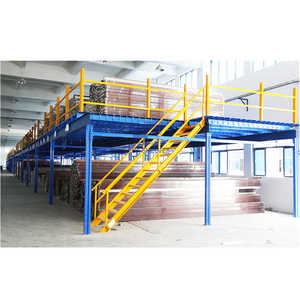
Corrosion-Resistant Bolt-Structured Powder Coating Steel Mezzanine Racks System
- Load: 300 – 1,000 kg/m²
- Structural bolt assembly, modular expansion
- Multi-tier floor decking with pick modules
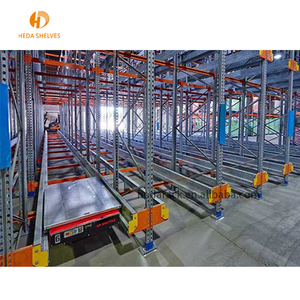
OEM High-Tech Radio Shuttle Pallet Rack Automatic Warehouse Racking System
- Lane depth: 20 – 40+ Pallet positions
- FIFO & LIFO dual-mode automation
- Sub-zero cold chain compatible (-25°C)
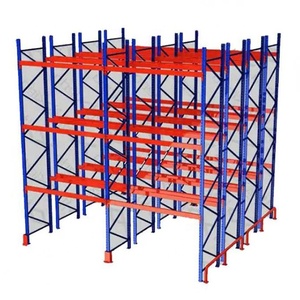
Selective Heavy Duty Pallet Racking System Design Warehouse Pallet Shelves
- 100% immediate pallet selectivity
- Beam capacities: 1,000 – 4,500 kg/tier
- Standard reach, counterbalanced compatible
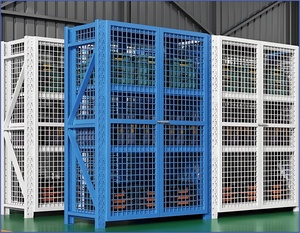
4-Layer Heavy Duty Drive-Through Pallet Rack Powder Coated Adjustable Shelves
- High-density cubic storage up to 80%
- Elimination of operating picking aisles
- Top-tie & back-braced structural rigidity
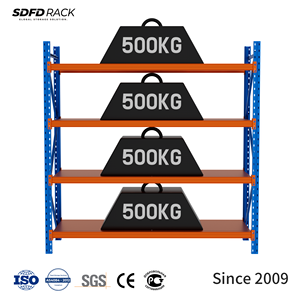
Custom 300-800kg Adjustable Steel Long Span Shelving E-commerce Shelf
- Shelf tier load: 300 – 800 kg UDL
- Boltless butterfly/teardrop slot connection
- Steel, wire mesh, or composite board deck
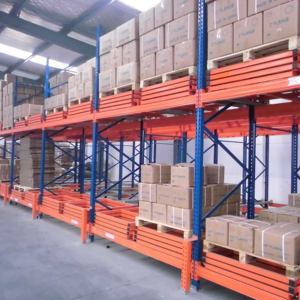
High Effective Heavy Duty Warehouse Storage Racking Push Back Pallet Rack
- Nested cart design: 2 to 6 Pallets deep
- High throughput LIFO gravity feeding
- Dedicated access face minimizes truck travel
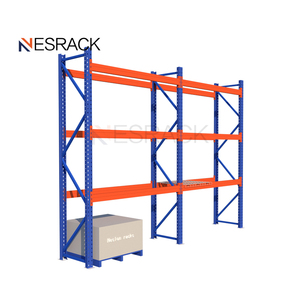
European Industrial Steel Selective Pallet Racking Shelving Multi-Level
- Compliant with EN 15512 & FEM 10.2.02
- Euro pallet (800x1200mm) dimensioned
- Ultra-durable polyester powder coat
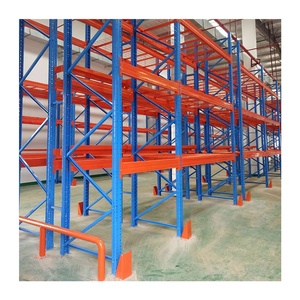
Heavy Duty Industrial Double Deep Stacking Selective Shelving Pallet Racking
- 2 Pallets deep per rack bay face
- 50% fewer aisles vs conventional selective
- Operated via pantograph reach forklifts
Need an Engineered Load Calculation or Custom Rack Sizing?
Our structural engineering desk delivers complete AutoCAD floor schemes and 3D FEA stress simulations within 24 hours.
Why Global Logistics Leaders Partner with HEDA Shelves
Operating since 2001 in Guangzhou, China, Guangzhou Heda Shelves Co., Ltd. has established a worldwide reputation for uncompromising structural safety, metallurgical rigor, and export container reliability.
25+ Years Industrial Mastery
Founded in 2001, our engineering department brings over a quarter-century of specialized manufacturing knowledge. Having completed over 10,000 major distribution center projects across 120+ nations, we design layouts that balance forklift clearance, floor slab loading, and picking velocity.
CE & ISO 9001:2015 Certified
Direct compliance with international building and safety mandates. We hold verifiable CE Certificate No. 2435-CPR-8605159, ISO 9001:2015 Registration No. 18624Q00169R0M (active through 2027), and RoHS environmental compliance, giving third-party safety assessors full transparency.
30,000 m² Hub & 30,000t Output
Our massive Guangzhou production complex deploys automated continuous roll-forming production lines, robotic multi-axis welding stations, automated laser punching presses, and an in-house chemical pre-treatment and electrostatic powder coating line with a 30,000-metric-ton monthly throughput capacity.
Complimentary 3D & CAD Design
We eliminate spatial guesswork before steel is cut. Our 300+ technical personnel provide comprehensive architectural 2D AutoCAD floor plans, pallet loading matrices, and high-fidelity 3D structural visual renders completely free of charge, coordinated directly with your on-site engineering team.
Export Logistics & Packing Care
Supplying warehouses globally requires specialized maritime packaging. Uprights, frame bracing, and box beams are wrapped in moisture-barrier film, steel-strapped with protective edge board, and custom-crated with clear manifest tracking labels to ensure damage-free transit and expedited customs clearance.
Lifelong Technical & On-Site Support
From providing step-by-step 3D assembly animation blueprints and certified load capacity beam placarding to dispatching bilingual installation supervisors to overseas job sites, HEDA delivers accountable support across the entire operational lifespan of your facility.
Structural Evolution of Heavy-Duty Warehouse Storage Racks
A rigorous examination of cold-formed steel mechanics, dynamic load distribution, and surface passivation technologies shaping contemporary racking safety standards.
1. Advanced Metallurgy & Cold-Formed Steel Upright Geometry
Industrial storage systems are structural steel frameworks subjected to intense static point-loads, cyclical forklift vibrations, and lateral dynamic forces during pallet deposition. Leading manufacturers have transitioned away from standard low-carbon commercial steel to cold-rolled high-strength micro-alloyed structural steels, principally Q235B (yield strength ≥ 235 MPa) and Q355B (yield strength ≥ 355 MPa). Cold roll-forming introduces work-hardening along the bend radii of the upright profile, substantially enhancing torsional resistance and column buckling stability.
Modern column geometry utilizes complex multi-bend omega (Ω) or multi-fluted box profiles. Unlike basic channel sections, a multi-faceted profile shifts the shear center closer to the structural centroid, dramatically mitigating torsional-flexural buckling under axial compression loads. Beam-to-column connector brackets utilize cold-stamped 3-, 4-, or 5-hook claw designs that engage with precision-punched teardrop or diamond slot patterns, establishing a rigid semi-rigid joint that actively resists moment rotational slip without shearing.
Engineering Specifications: Structural Comparison
The transition from conventional storage frameworks to high-performance engineered profiles directly alters warehouse safety margins, deflection boundaries, and seismic compliance:
| Performance Metric | Traditional Racks | HEDA High-Tensile Systems |
|---|---|---|
| Steel Yield Grade | Standard Q195 / Q215 | Certified Q235B / Q355B |
| Deflection Limit | L / 150 to L / 180 | L / 200 (FEM 10.2.02 Mandate) |
| Seismic Damping | Basic floor bolt anchor | Engineered dissipative baseplates |
| Coating Durability | Air-dry solvent paint | 10-Stage Electrostatic Powder (60-80μm) |
| Finite Element Testing | Nominal handbook data | Full 3D SolidWorks Simulation / FEA |
Understanding Beam Deflection Limits (L/200)
Under strict international standards (such as EN 15512 and RMI MH16.1), the maximum permissible vertical deflection of a pallet rack beam under design load must not exceed L/200, where L represents the clear span distance between upright columns.
For instance, on a standard 2,700 mm beam carrying two 1,200 kg pallets (2,400 kg total UDL), maximum vertical sagging is restricted to 13.5 mm. Restricting deflection prevents catastrophic dynamic dislodgement of pallet bottoms and eliminates excessive stress concentrations at the connector pin welds.
2. Passivation Chemistry & Anti-Corrosion Surface Finishing
Corrosion is an insidious driver of catastrophic racking failure, especially in tropical, coastal, and sub-zero refrigerated environments. High-quality production encompasses a strict multi-stage chemical surface treatment prior to powder deposition:
1. Hot Alkaline Degreasing to remove rolling lubricants and mill oil; 2. Water Rinse Cascades; 3. Acid Pickling to dissolve surface mill scale and iron oxides; 4. Zinc Phosphating / Zirconium Nanotech Passivation to deposit an inorganic conversion layer that chemically binds to the steel substrate; 5. Electrostatic Polyester Powder Coating cured at 180°C to 200°C for 20 minutes, yielding a cured dry film thickness (DFT) of 60 to 90 microns. For harsh, marine-coastal, or fertilizer storage facilities, full immersion Hot-Dip Galvanizing (HDG) per ISO 1461 guarantees over 50 years of sacrificial zinc barrier defense.
Future Trends in Warehouse Storage Racks Procurement
Anticipate the market forces reshaping industrial warehouse storage procurement over the next five years to safeguard long-term capital investment.
ASRS & Shuttle-Ready Engineering
Static rack installations are increasingly engineered with tighter millimeter tolerances, rail mounts, and sensor cutouts to support future conversion into automated 2D Radio Shuttle lanes, crane-based Mini-Load ASRS, or autonomous forklift navigation zones without structural rebuilds.
Seismic-Resilient Base Systems
Global seismic codes (including IBC, Eurocode 8, and Latin American structural codes) now require ductile baseplates, higher-grade expansion anchors, and vertical frame tie rods that absorb seismic acceleration wave energy without brittle connector fractures.
Decarbonized & Circular Steel
Enterprise procurement charters require verification of embodied carbon. Leading manufacturers optimize cold-roll gauge profiles to reduce net steel tonnage by 8-12% while maintaining equivalent load ratings, backed by lead-free, VOC-free thermoset powder polymers.
Impact Telemetry & Damage Defense
Procurement teams are prioritizing structural longevity over initial purchase price by bundling heavy-gauge floor-anchored column protectors, heavy-duty wrap-around bull-nose end frames, and embedded RFID/QR code inspection tracking tags on critical structural uprights.
Frequently Asked Questions by Industrial Racking Buyers
Direct technical answers addressing structural calculation, international standards compliance, site installation, and customs clearance logistics.
What parameters are mandatory to prepare an engineered rack layout?
To produce an accurate AutoCAD floor plan, load schedule, and quotation, our structural team requires: (1) Warehouse clear height to the lowest overhead obstruction (HVAC, sprinkler heads, lighting, trusses); (2) Slab thickness, rebar configuration, and concrete compressive strength (typically 25 to 30 MPa); (3) Pallet dimensions (W x D x H) including product overhang and gross weight; (4) Forklift model, mast collapsed height, maximum lift elevation, and required right-angle stacking aisle width (Ast); (5) Ambient operating temperatures (ambient, chilled, or sub-zero blast freezer).
How do you verify seismic resistance for overseas building permits?
We prepare project-specific structural design calculation calculation books in strict accordance with European FEM 10.2.02 / EN 15512 or American RMI MH16.1 specifications. By entering your site-specific ground acceleration coefficients (Ss, S1), soil site class, and importance factors into our structural software, our engineers calculate required upright wall gauges, column footprint depths, baseplate thicknesses, anchor embedment lengths, and required vertical and horizontal plan bracing.
Which finishing system should be specified for humid or coastal facilities?
For standard dry indoor ambient warehouses, our multi-stage phosphate pretreatment plus electrostatic polyester powder coating (60-80μm) provides exceptional impact scratch resistance and salt-spray defense. For warehouses within 10 km of ocean coasts, high-humidity unconditioned facilities, or chemical/fertilizer storage, we recommend enhanced epoxy-polyester hybrid primers or hot-dip galvanizing per ISO 1461, ensuring sacrificial cathodic protection against rust bleed.
How are international shipping containers loaded to prevent transit damage?
Container optimization is managed via specialized 3D packing software. Heavy upright frames and beams are bundled with timber dunnage spacers, banded with tensile steel straps, and wrapped in waterproof bubble films. Base plates, hardware bolts, safety pins, and small accessories are boxed and palletized in heavy-duty plywood cases. Every ocean container is packed with an itemized piece-mark manifest mapped to installation drawings for rapid destination unpacking.
Can rack-supported mezzanines eliminate the need to build a new warehouse?
Yes. Rack-supported mezzanine systems transform underutilized vertical airspace into high-density multi-tiered order fulfillment picking platforms. By using standard heavy-duty pallet rack uprights and intermediate support beams as the structural columns supporting heavy-gauge steel decking, bar grating, or B-deck with composite boards, you can double or triple your facility's usable square footage without the high costs, permits, and delays of commercial construction.
What warranty, load testing, and after-sales documentation are provided?
All HEDA installations include comprehensive quality dossiers comprising raw material steel mill certificates (MTC), dry film thickness (DFT) paint inspection reports, weld inspection records, full load test reports, safety operation placards showing maximum permissible tier loads, and a standard 5-to-10-year structural warranty against manufacturing defects.