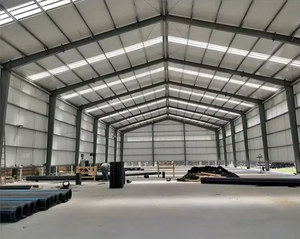
 Infrastructure
1000m² Prefabricated Industrial Steel Warehouse
Q235B / Q355B Steel
Seismic Grade
Explore heavy-duty storage equipment engineered under CE Certification No. 2435-CPR-8605159 and ISO 9001:2015 standards. Every rack configuration is structural-grade cold-rolled steel, tailored for rigorous industrial environments.
Infrastructure
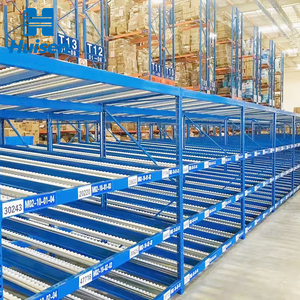 Dynamic FIFO
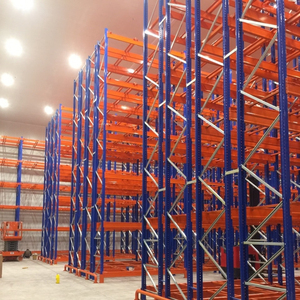 100% Selectivity
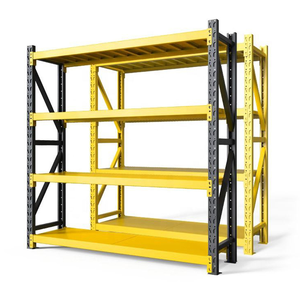 Modular Post
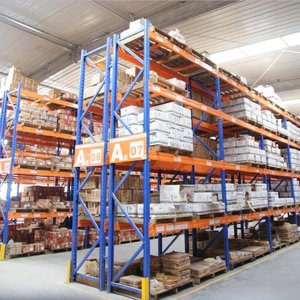 Heavy Tooling
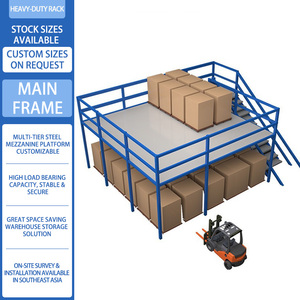 High-Bay / VNA
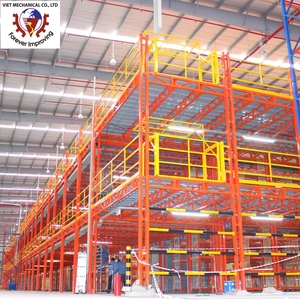 Vertical Cube
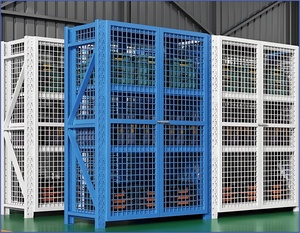 Bulk In-Rack
A comprehensive examination of aisle dimensional geometry, guide rails, mechanical deflection allowances, and floor tolerances required for modern high-throughput fulfillment.
Standard selective racking calls for clear operational corridors between 3,200mm and 3,800mm to accommodate counterbalance trucks. VNA systems compress working aisles down to 1,600mm–1,850mm using specialized articulated masts, turret trucks (VNA man-up/man-down), or wire-guided reach units.
Because VNA trucks elevate operator cabins and palletized loads above 10–14 meters in narrow aisles, minor ground variances multiply dramatically at the mast apex. Concrete slabs must be classified under defined traffic specifications.
HEDA Shelves designs VNA upright frames to counter dynamic horizontal braking forces, lateral oscillations, and cyclic seismic stresses common in seismic-prone zones like the Pacific Rim and Central America.
| System Architecture | Typical Aisle Width (mm) | Max Storage Height (m) | Floor Space Efficiency | SKU Access Rule | Guide Requirement |
|---|---|---|---|---|---|
| Standard Selective Racking | 3,200 – 3,800 | 8.0 – 10.5 | 40% – 50% | 100% Direct Selective | None |
| Very Narrow Aisle (VNA) | 1,600 – 1,900 | 12.0 – 16.5 | 75% – 85% | 100% Direct Selective | Floor Rails / Inductive Wire |
| Drive-In / Drive-Through | Dedicated Channels | 8.0 – 11.0 | 75% – 85% | LIFO / FIFO Group Access | Internal Pallet Guide Rails |
| Radio Shuttle Automation | Forklift Transfer Main Aisle | 12.0 – 18.0 | 85% – 90% | LIFO or Automated FIFO | Optical & Rail Guidance |
Market intelligence for supply chain directors, procurement executives, and operations engineers preparing for next-generation warehousing investments.
Procurement teams are moving away from manual turret trucks toward unmanned autonomous mobile forklifts (AMRs) operating inside VNA corridors. This evolution requires rack manufacturers to uphold tight manufacturing tolerances (±1.0mm upright verticality) to interface cleanly with optical sensors, LIDAR navigation, and automated WCS software platforms.
Institutional property investors and multinational tenants require certified structural design calculations before approving lease agreements. Procurement orders require steel mill test certs (MTC), verification under FEM 10.2.02, CE verification for European and Caribbean ports, and documented finite element analysis (FEA) simulating heavy pallet cycles.
In humid logistics centers—such as Panama Pacifico, Moín, Puerto Quetzal, or Asian maritime trade routes—conventional electrostatic finishes can show early edge corrosion. Progressive buyers specify high-durability epoxy-polyester hybrid powder systems cured through 10-stage pre-treatment, or hot-dip galvanized uprights for sub-zero cold stores.
From prime cold-rolled steel coils to automated multi-stage powder curing, HEDA Shelves ensures millimeter-accurate dimensional alignment across every upright column, beam connection, and base shoe.
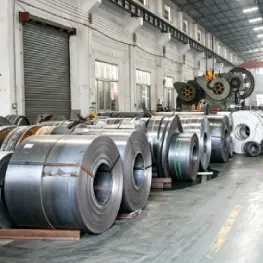 Stage 01
Certified Raw Steel
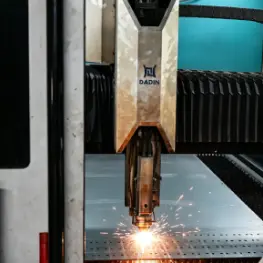 Stage 02
Precision Steel Cutting
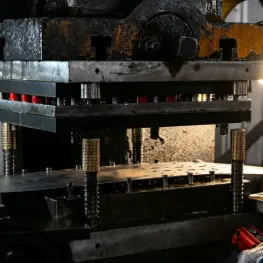 Stage 03
Automated Punching
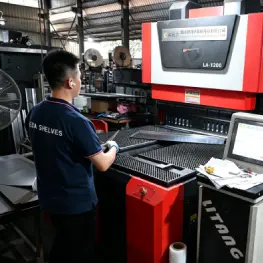 Stage 04
Cold Roll Forming
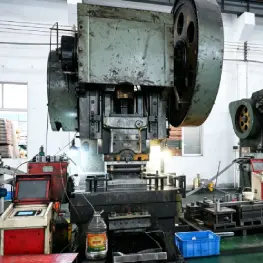 Stage 05
Profile Precision Forming
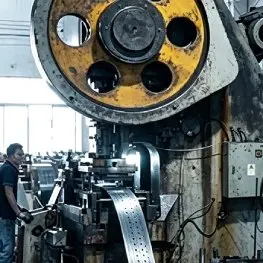 Stage 06
Mechanical Polishing
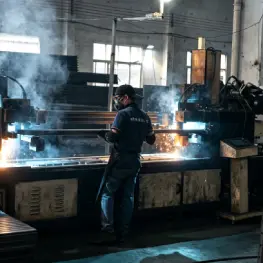 Stage 07
Robotic Welding
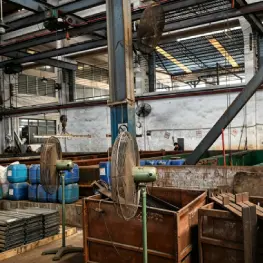 Stage 08
Pickling & Phosphating
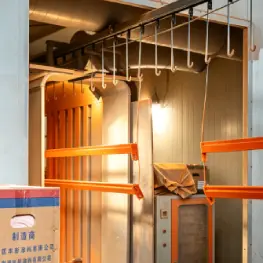 Stage 09
Electrostatic Coating
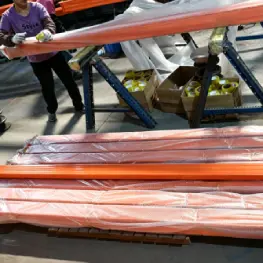 Stage 10
CMM QC & Bundling
Combining 25 years of specialized racking manufacturing with factory-direct overseas supply chain governance for reliable on-site commissioning.
HEDA Shelves operates under independently audited certifications including CE Certificate No. 2435-CPR-8605159, ISO 9001:2015 Registration No. 18624Q00169R0M, and RoHS material compliance, ensuring acceptance by commercial planning authorities worldwide.
Extensive experience with international ports—including Puerto Cortés, Balboa, Puerto Quetzal, Acajutla, Moín, Santos, San Antonio, and Caribbean terminals. Every sea container is packed with numbered piece lists to simplify customs clearance and site staging.
Complimentary CAD architectural floor plans, 3D structural modeling, and static calculations tailored to your pallet weight, building heights, column placements, and chosen forklift fleet, preventing field rework and installation delays.
Essential guidance on structural criteria, seismic compliance, and export logistics for logistics facility investments.
Our structural team requires internal clear warehouse height (under sprinkler heads or roof purlins), slab thickness and compressive capacity (e.g., 25–30 MPa), pallet dimensions including cargo overhang (W x D x H), total gross weight per load, specific forklift model turning radii or lift height, and preferred storage orientation.
We apply seismic force parameters per local regulatory standards (such as UBC-97, IBC, or Eurocode 8). Upright post gauges are increased, horizontal and diagonal bracing assemblies are strengthened, and oversize base footplates are anchored into the concrete foundation using seismic-rated structural hardware.
We configure systems for both floor-anchored structural low-profile steel guide angles (typically 100x75x8mm or 120x80x8mm) with entry lead-in funnels, and inductive wire-guidance paths cut into the concrete floor, matching your truck fleet specifications.
Our structural steel components undergo an automated 10-stage preparation process: degreasing, hot acid pickling, rinse, iron phosphating, and thermosetting electrostatic epoxy-polyester powder application. For humid, coastal, or refrigerated environments, we also offer hot-dip galvanizing.
Each delivery includes complete engineering drawings, dimensional connection maps, and bolt torque requirements. Remote engineering guidance via video conference is standard for every project, and on-site factory installation supervisors can be deployed for larger multi-tier or high-bay installations.
Standard production ranges from 15 to 25 business days depending on tonnage. Sea freight routing to primary Pacific and Caribbean ports typically adds 20 to 35 days, supported by complete bill-of-lading, packing list, certificate of origin, and certified mill test records.
Get a complete CAD layout, 3D visualization, and structural load analysis for your logistics facility. Work directly with an audited manufacturer producing heavy-duty storage solutions since 2001.