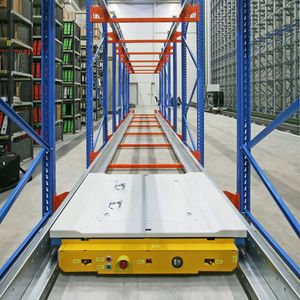
Factory-Engineered Systems
Precision Storage & Industrial Racking Recommendations
Engineered to international FEM, RMI, and ISO 9001:2015 safety standards, offering customizable stainless steel, galvanized, and powder-coated storage structures for global distribution centers.
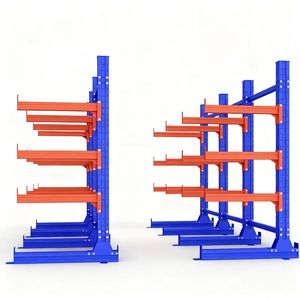
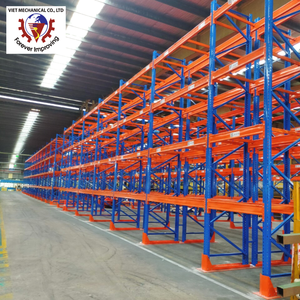
Stainless & Steel Series
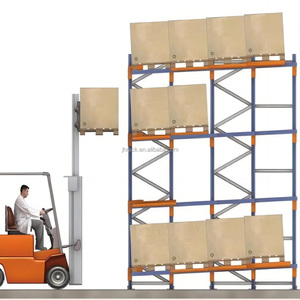
OEM Heavy Duty Steel Selective Pallet Rack Vietnam Wholesale Stainless Storage Rack
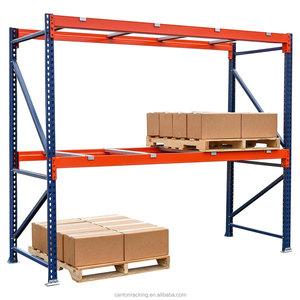
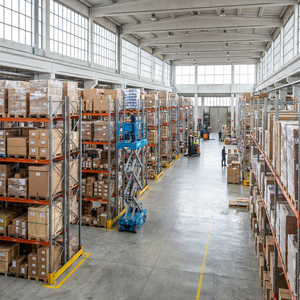
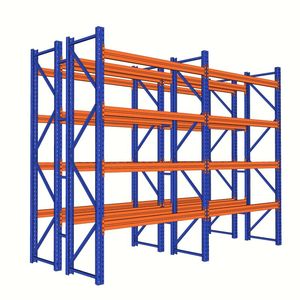
Selective Racking System
Heavy Duty Pallet Racking System Warehouse Storage Adjustable Steel Selective Rack
Metallurgical & Engineering Insight
Technical Evaluation: Stainless Steel Grades (AISI 304 vs. 316L) vs. Surface-Treated Steels
When configuring high-performance warehouse racking within corrosive, refrigerated, or strict sanitary cleanroom environments, material selection directly impacts structural longevity, lifecycle operating costs (TCO), and operational safety. While structural carbon steel (such as Q235B or Q355B) finished with electrostatic polyester powder coating delivers exceptional load-bearing performance in ambient, climate-controlled distribution facilities, specialized process environments demand austenitic stainless steels or specialized metallic hot-dip processes.
| Material Designation | Chemical Composition Profile | Corrosion Resistance Mechanism | Optimal Operating Environments | Relative Lifecycle Cost Factor |
|---|---|---|---|---|
| AISI 304 (EN 1.4301) | 18% Cr, 8% Ni, Low C | Self-passivating chromium oxide (Cr2O3) passive film | Food processing, commercial cold storage, pharmaceutical picking zones | Medium-High (15-20 yr ROI) |
| AISI 316L (EN 1.4404) | 16-18% Cr, 10-14% Ni, 2-3% Mo | Molybdenum addition resists chloride pitting and crevice corrosion | Marine logistics, seafood processing, chemical cleanrooms, cryogenic storage | High (25+ yr Longevity) |
| Hot-Dip Galvanized (HDG) | Structural Steel + Zn Metallurgical Alloy | Sacrificial zinc cathodic protection layer (85–100 µm thickness) | High-humidity distribution, agricultural chemical hubs, unheated outdoor docks | Moderate Economy |
| Thermoset Powder Coated | Pickled & Phosphated Steel + Epoxy-Polyester | Barrier coating against moisture ingress (60–90 µm DFT) | Standard dry FMCG distribution, retail 3PL logistics, dry part storage | Baseline Value |
Key Engineering Standard: In cleanrooms regulated under ISO 14644-1 or food handling facilities subject to FDA/HACCP audits, rack shelving systems cannot utilize standard open-perforated cold-formed profiles that entrap particulate matter. Our stainless storage racks incorporate full-penetration robotic continuous welds, passivated seams, and electro-polished surfaces with an average roughness (Ra) < 0.4 µm to inhibit bacterial colonization and allow vigorous CIP (Clean-in-Place) sanitization washdowns.
Strategic Procurement Analysis
Emerging Procurement Trends Shaping Industrial Racking (2025–2030)
How supply chain executives, industrial architects, and logistics procurement teams are navigating compliance, automation integration, and total lifecycle value.
1. High-Density Automation Preparedness
Buyers are shifting away from static standalone racking toward hybrid configurations ready for autonomous integration. Procurement specifications now routinely demand pallet runner tolerances compatible with automatic guided vehicles (AGVs), Autonomous Mobile Robots (AMRs), and four-way radio shuttle channels, ensuring structural frameworks do not become obsolete when automated handling lines are expanded.
2. Decarbonization & Circular LCA Metrics
Global multi-national enterprise RFQs increasingly stipulate Environmental Product Declarations (EPD). Stainless rack shelving and high-strength hot-rolled/cold-formed steel manufactured using Electric Arc Furnace (EAF) methods provide high recyclability. Buyers evaluate the total lifetime footprint, favoring suppliers with in-house wastewater neutralization and non-VOC powder coating technology.
3. Verified Structural Traceability
The prevalence of structural rack failures has driven strict adherence to third-party verification. Procurement mandates demand full mill test certificates (MTC Type 3.1) linked directly to upright column and beam batch stamps. Structural calculation packages must verify compliance with regional building codes, including AS4084, EN 15512, and ANSI/RMI MH16.1 specifications.
R&D and Technological Evolution
Technological Advancements in Modern Stainless Rack & High-Density Storage Shelving
Industrial storage engineering is no longer simply an assembly of cold-rolled profiles. Contemporary supply chain realities require advanced structural dynamics, intelligent digital integration, and modular manufacturing precision. Below are the key engineering vectors driving industrial rack innovation:
Finite Element Analysis (FEA)
Nonlinear elastoplastic finite element modeling allows engineers to simulate real-world dynamic seismic spectra, asymmetrical pallet loading, and impact events, eliminating localized stress concentrations before physical production.
Intelligent IoT Load Monitoring
Smart rack telemetry integrates piezoelectric strain gauges and fiber-optic sensors into critical upright upright bases. Real-time deflection alarms alert facility supervisors to structural overloading or hidden seismic dislocation.
Sanitary Crevice-Free Geometry
Cutting-edge pharmaceutical and food-grade stainless shelving systems replace traditional teardrop perforations with laser-welded tubular uprights, flush interlocking brackets, and antimicrobial radiused transitions that eliminate harbor points.
Modular Boltless Interlocks
Modern boltless connection designs utilize high-strength tapered connector hooks stamped from heavy-gauge structural plate, allowing rapid reconfiguration without sacrificing moment frame stiffness or lateral sway rigidity.
Manufacturer Provenance & Authority
Why International Industrial Clients Partner With Us
Combining 25 years of structural manufacturing excellence with rigorous in-house quality assurance and global logistics deployment.
2001+
Established Engineering Year
30,000m²
Advanced Factory Workshop
30,000T
Monthly Production Capacity
120+
Export Nations & Regions
Audited International Certifications
Our manufacturing protocols are certified under CE Certificate No. 2435-CPR-8605159 and ISO 9001:2015 Certification No. 18624Q00169R0M (valid through June 2027), along with comprehensive RoHS chemical compliance for global port customs clearance.
Full 3D CAD & Structural Calculations
Every commercial quote is accompanied by engineer-stamped CAD floor layouts, dynamic 3D BIM models, and comprehensive static/dynamic load calculation packages tailored to the seismic coefficient of your exact geographic coordinate.
Port-Optimized Bundling & Global Shipping
We provide factory-direct containerized export with specialized maritime timber-free skids, color-coded component tagging, and itemized container packing manifests, ensuring efficient unloading and accelerated customs clearance across major worldwide seaports.
Engineering Knowledge Base
Frequently Asked Questions: Industrial Rack Shelving Procurement
Essential guidance addressing engineering tolerances, sanitation guidelines, and seismic structural requirements for logistics decision-makers.
What load deflection ratio should we specify for heavy-duty industrial shelving?
Under international standards (such as EN 15512 and ANSI MH16.1), the maximum vertical deflection limit for load-bearing rack beams is L/200 for standard applications, or L/300 where sensitive automated retrieval units or automated shuttle cars operate. For high-density stainless shelving in food-grade cleanrooms, L/250 is widely adopted to avoid micro-pooling during washdown sanitization cycles.
How do we evaluate whether hot-dip galvanized or stainless steel is required for cold rooms?
For standard blast freezers operating at stable temperatures between -18°C and -30°C with controlled relative humidity, hot-dip galvanized structural carbon steel provides adequate corrosion defense at an economical cost. However, in cold facilities where rapid temperature cycling causes frequent dew-point condensation, where acidic chemicals or brine are present (such as seafood packing), or where strict washdowns occur, AISI 304 or 316L stainless steel is necessary to prevent zinc oxide corrosion ("white rust").
What parameters must be provided to engineer an accurate warehouse layout?
To produce an engineer-certified layout and dynamic structural calculation, your team should provide: (1) Architectural drawings showing clear height to bottom of truss, column spacing, and slab thickness/compressive strength; (2) Detailed pallet unit metrics (length, width, height, gross weight including overhang); (3) Forklift/MHE operational models with corresponding minimum aisle widths and maximum mast reach; (4) Local seismic acceleration parameters (Ss and S1); and (5) Operational throughput expectations (FIFO vs. LIFO rotation rules).
How are structural racks anchored to concrete slabs in high-seismic zones?
In seismic risk regions, baseline baseplates are replaced with engineered, oversized heavy-gauge structural plates that distribute overturning moments across multiple chemical or heavy-duty mechanical wedge anchors. Upright columns feature high-ductility steel formulations and reinforced diagonal cross-bracing configurations designed to absorb shear and lateral loads without catastrophic frame buckling.