High-Performance Pallet Racking & Industrial Shelving Systems
Engineered for rigorous warehouse throughput, extreme load thresholds, and international building code conformance. Explore our factory-direct industrial storage solutions engineered with premium structural steel.
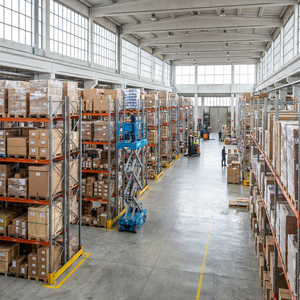
Heavy Duty Pallet Racking System Warehouse Storage Rack Adjustable Steel Selective Pallet Rack
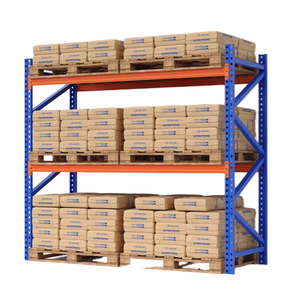
Adjustable Selective Heavy Duty Steel Display Rack Pallet Shelves Corrosion Protection
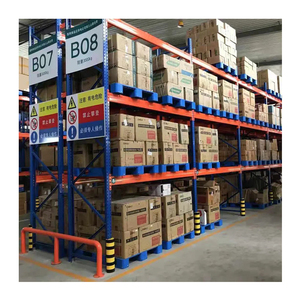
Heavy Duty Selective Pallet Rack 5 Ton Capacity Industrial Storage Shelving System
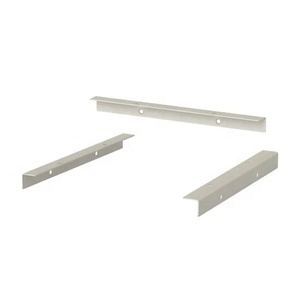
OEM Custom Metal Stamping Parts Steel Punched Shelf Rack Structural Components
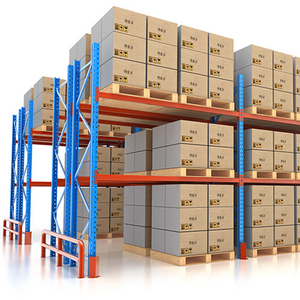
Selective Heavy Duty Warehouse Storage Rack Shelving System High-Bay Pallet Racking
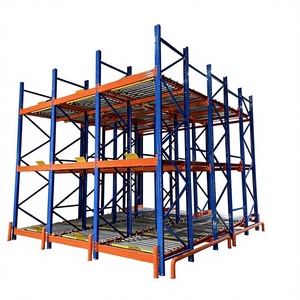
Pallet Flow Racking Gravity Roller Flow Through Rack FIFO High Density System
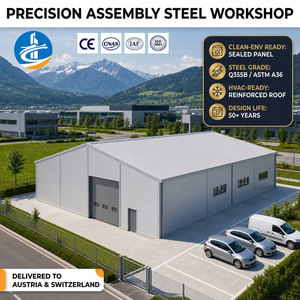
High-Bay Racking Steel Structure Warehouse for Automated AS/RS Logistics
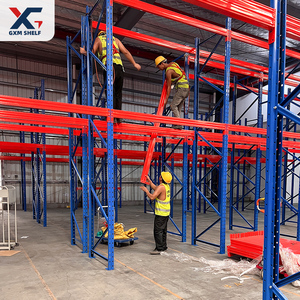
Beam Pallet Rack Heavy Duty Warehouse Racking With Engineered Wire Mesh Decks
25+ Years of Certified Racking Engineering & Global Supply Chain Stability
Operating as Guangzhou Heda Shelves Co., Ltd., we combine quarter-century structural metallurgy expertise with fully automated continuous roll-forming lines to deliver mission-critical storage assets across 120+ sovereign jurisdictions.
Rigid Structural Metallurgy
Every upright column and load-bearing beam is rolled from tested Q235B and Q355B structural coil steel. Mill certificates conform strictly to EN 10204 3.1, providing verified tensile yield limits resisting severe torsion and seismic moments.
Parametric Finite Element Analysis
Our in-house structural engineers evaluate dead loads, live loads, seismic drift, and forklift impact forces via ANSYS FEA simulations, ensuring compliance with RMI MH16.1, FEM 10.2.02, and Eurocode EN 15512 specifications prior to metal forming.
Automated Multi-Stage Finishing
Surface integrity relies on an exhaustive 10-stage pre-treatment: degreasing, hot water rinsing, acid pickling, phosphating, and electrostatic epoxy coating cured at 180°C. Tested to withstand 500+ hours salt-spray (ASTM B117) against tropical and cold-store moisture.
Full Turnkey Layout & Export Support
Beyond steel fabrication, we generate comprehensive 2D CAD spatial plans, 3D structural BIM models, and container packing topologies that reduce ocean cube loss by up to 22%, accompanied by engineer-stamped installation documentation.
Structural Load & Operational Tolerance Comparison Matrix
A rigorous architectural assessment across selective, dense-dynamic, and automated configurations to establish optimal footprint yield per cubic meter.
| Racking Architecture | Floor Space Utilization | Pallet Selectivity | Typical Beam Load Limit | Inventory Turnover Policy | Forklift Compatibility |
|---|---|---|---|---|---|
| Adjustable Selective Racking | 40% – 45% | 100% Immediate | 1,000 – 4,500 kg / level | FIFO / LIFO Adaptable | Counterbalance, Reach, VNA |
| High-Density Drive-In System | 65% – 75% | 20% – 30% Lane Batch | 1,000 – 1,800 kg / pallet | Strict LIFO (FIFO with Drive-Thru) | Standard Reach / Counterbalance |
| Gravity Pallet Flow (FIFO) | 70% – 80% | Lane Face Accessible | 1,000 – 1,500 kg / pallet | Automatic Strict FIFO | Standard Counterbalance, Reach |
| Radio Shuttle Automation | 75% – 85% | High Indexing Speed | 500 – 2,000 kg / pallet | FIFO or LIFO Programmable | Standard Forklift (Rack-Free Entry) |
| High-Bay AS/RS Clad-Rack | 85% – 95% | 100% Automated Micro-Access | 1,000 – 3,000 kg / cell | WMS Dynamic Slotting | Automated Stacker Crane / Shuttle |
The 10-Stage Manufacturing Lifecycle of Certified Storage Steel
Every racking component undergoes rigorous inspection from raw coil analysis to final export crating, ensuring flawless structural reliability under seismic and static working loads.
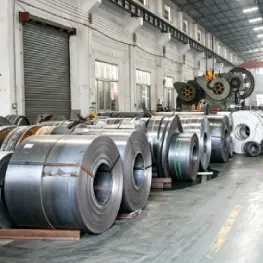
Raw Material Grading
Spectrographic analysis of prime hot/cold rolled steel coils ensuring precise carbon & manganese percentages.
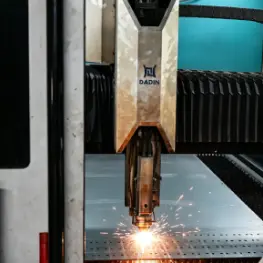
Precision Slitting
CNC slitting lines trim coils to sub-millimeter width tolerances for upright profiles and beam boxes.
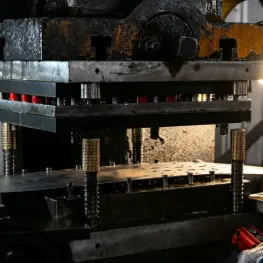
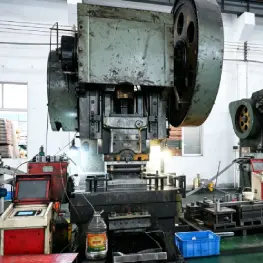
Automated CNC Punching
Continuous hydraulic stamping produces 50mm/75mm pitch tear-drop or diamond lock apertures.
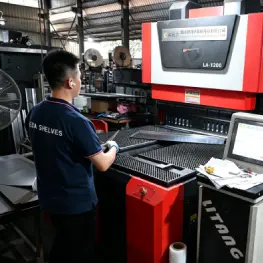
Progressive Cold Forming
18-pass dedicated roll formers produce omega-shaped uprights with multiple structural stiffener ribs.
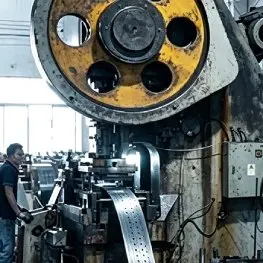
Beam Seam Forming
Interlocking twin C-channels are continuously seam-rolled to form high-moment tubular box beams.
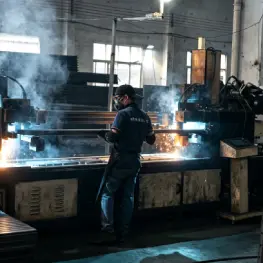
Deburring & Polishing
Automated edge-beveling and shot-peening remove microscopic micro-fissures and sharp tooling burrs.
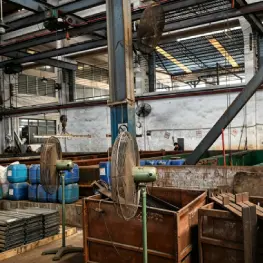
Robotized Gas Shield Welding
Multi-axis Panasonic robotic arms weld 3-to-5 claw beam connectors using AWS-certified shield gas welds.
Pickling & Phosphating
Full chemical immersion removes all mill oxidation, creating a dense zinc-phosphate molecular etching layer.
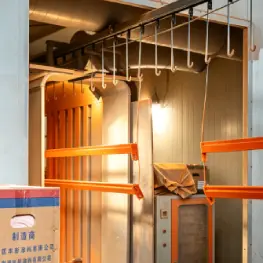
Electrostatic Powder Cure
Automatic Swiss Gema spray guns apply 60–90µm thermosetting polyester epoxy powder, baked at 180°C.
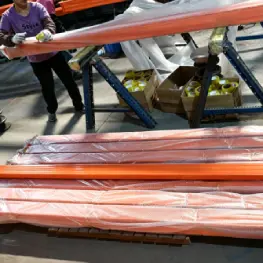
QC, Deflection & Pack
Ultrasonic thickness gauge tests, load-deflection verification, and marine export dunnage wrapping.
Next-Generation Procurement & Technological Trends Shaping 2025–2030
Strategic intralogistics planning requires aligning warehouse capital expenditure with automated robotics, dynamic software architectures, and rigorous decarbonization standards.
AS/RS Integration & AMR-Guided Shuttle Fleets
Conventional static storage is rapidly ceding ground to hybrid automated racking. 2D/4D pallet shuttles and Autonomous Mobile Robots (AMRs) require millimetric beam-level tolerance calibrations that standard manual racks cannot sustain. Upright tolerances are moving from ±2.0mm toward ultra-stringent ±0.5mm thresholds to eliminate robotic optical scanner miss-reads and pallet jamming at heights exceeding 20 meters.
- Optical sensor-aligned racking guide channels
- Zero-backlash robotic docking brackets
- Dynamic WMS automated buffer balancing
Performance-Based Dynamic Seismic Engineering
Global logistics corridors—from the Pacific Rim to European seismic fault lines—mandate dynamic non-linear response spectrum calculations. Procurement directors are replacing rudimentary static load calculations with performance-based seismic analyses that account for soil-structure interaction, structural ductility factors, base-plate post-yield elongation, and upper-level pallet shed mitigation restraints.
- High-ductility anchored seismic footplates
- Horizontal and vertical cross-bay bracing systems
- Friction damping pallet retention lips
Low-Carbon Recycled Steel & Eco-Finishes
Corporate ESG mandates and EU Carbon Border Adjustment Mechanisms (CBAM) are transforming steel procurement. Warehouse developers prioritize Electric Arc Furnace (EAF) steel with audited circular scrap content, waterborne degreasers, and low-bake VOC-free electrostatic polymer coatings that minimize the Scope 3 embodied carbon footprint of massive distribution centers without degrading corrosion resistance.
- EAF low-embodied carbon structural steel
- RoHS-compliant heavy-metal-free passivation
- 100% recyclable structural steel recovery
Essential Technical Clarifications for Commercial Buyers
In-depth responses resolving structural engineering, building regulation, corrosion protection, and international logistics challenges.
How do you establish structural deflection safety limits under maximum design load?
Under international standards (RMI ANSI MH16.1 and EN 15512), maximum permissible vertical deflection of a pallet beam under uniform static live load must not exceed L/200 (length divided by 200), though high-precision automated systems often demand L/300. When fully loaded to rated capacity, a 2,700mm beam can safely deflect no more than 13.5mm without permanent residual plastic deformation after unloading.
What differentiates cold-rolled Q235B from Q355B steel in upright column engineering?
Q235B possesses a nominal yield strength of 235 MPa, offering high ductility and cost-efficiency for low-to-mid height selective racks. Q355B provides a minimum yield of 355 MPa (~51% higher tensile threshold), making it mandatory for tall high-bay installations, heavily concentrated seismic base moment connections, and cold-storage facilities where reduced steel profile thickness minimizes unladen tare weight.
Why is pickling and phosphating superior to simple solvent wipe-down before powder coating?
Simple wiping leaves microscopic mill scale and oil residues inside the pores of the cold-rolled steel. Acid pickling dissolves oxide scales entirely, while zinc phosphating chemically converts the steel surface into an inert, micro-crystalline conversion layer. This forms an anchor pattern for the electrostatic powder coating that halts subsurface rust propagation even if the paint layer is scratched by forklift tines.
How do beam connector lock mechanisms prevent catastrophic accidental dislodgement?
Forklift operators withdrawing pallets can catch upper beam flanges with tines. Our structural beam end-connectors utilize cold-stamped 3-to-5 claw brackets backed by automated spring-loaded safety locking pins. In accordance with safety codes, these pins withstand an upward dislodgement pull-out shear force exceeding 5 kN (1,124 lbs) per connector without releasing or shearing.
What clear aisle width (AST) must be engineered for various industrial forklifts?
Clear aisle width calculations depend on truck chassis dimensions, pallet overhang, and dynamic turning radius. Standard counterbalance forklifts handling 1,000x1,200mm pallets require 3,600mm to 3,900mm aisle widths. Articulated or reach trucks operate comfortably within 2,700mm to 3,000mm, whereas Very Narrow Aisle (VNA) turret trucks utilize wire or rail-guided aisles of just 1,600mm to 1,800mm.
How do wire mesh decking systems integrate with in-rack NFPA fire sprinkler regulations?
NFPA 13 sprinkler requirements mandate that multi-tier pallet storage maintain open flues for vertical water penetration and smoke heat evacuation. Solid timber or sheet metal shelves create water umbrellas that starve lower levels of sprinkler discharge. Engineered wire mesh decks feature open mesh apertures (>50% open surface area), meeting ESFR ceiling sprinkler codes without requiring costly in-rack piping.
What container packing methods prevent sea-freight transit deformation and rust?
Longitudinal upright frames and beam bundles are strapped with non-marring PET banding onto customized steel lifting saddles. Critical contact faces are wrapped with multi-layer PE shrink film and bubble cushion. High-density moisture-absorbing silica gel bags are suspended inside every 40ft HQ container to absorb condensation crossing equatorial temperature gradients, preventing white rust during ocean voyages.
What data must the client supply for a turnkey CAD and 3D structural calculation package?
To produce an engineer-stamped proposal within 24 hours, our layout team needs: warehouse architectural drawings (dimensions, column grid spacing, usable clear height below eaves/joists), concrete slab compressive strength (e.g., 25–30 MPa) and slab thickness, pallet dimensions (W x D x H, including overhang), maximum gross pallet weight, and specifications of your current or planned forklift fleet.
Commission Your Custom Warehouse Engineering Layout Proposal
Submit your building dimensions, pallet load profiles, and throughput requirements. Our senior storage system engineers will prepare a complete 2D/3D CAD blueprint, dynamic load calculations, and an itemized factory-direct manufacturing schedule within 24 hours.