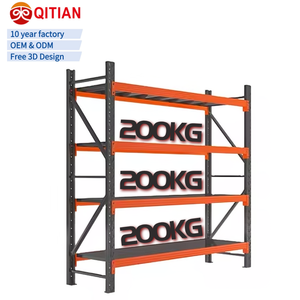
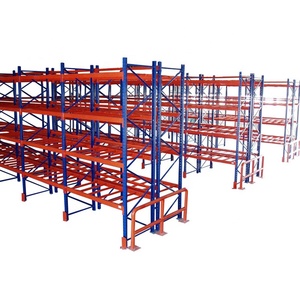
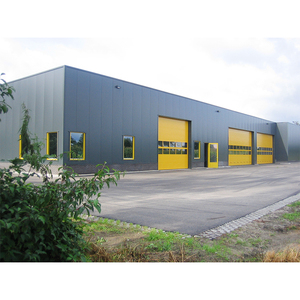
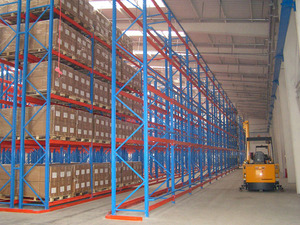
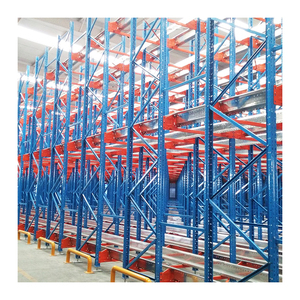
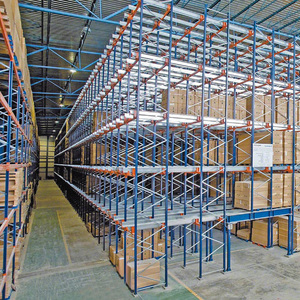
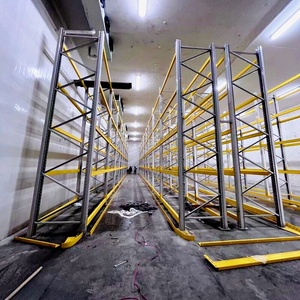
Custom Industrial Racks Steel Pallet Rack System Heavy Duty Boltless Adjustable 5-Tier Storage Rack System
- Upright Pitch: 50mm / 75mm Adjustable
- Load Capacity: Up to 4,500 kg per tier
- Safety: Drop-in safety locking pins
From standard selective pallet configurations and boltless heavy-duty racks to multi-directional push-back systems and high-density radio shuttles, our certified hardware is designed to deliver superior durability, rapid installation, and maximum volumetric efficiency.
How structural engineering breakthroughs, high-yield steel chemistry, and automated material handling integration are redefining volumetric return on investment for global distribution facilities.
Over the past two decades, warehouse logistics has transitioned from static inventory buffers to dynamic, high-velocity distribution ecosystems. Land acquisition costs across primary logistics corridors have surged globally, forcing warehouse operators to abandon wide-aisle ground stacking in favor of engineered high-bay steel racking and dense cubic storage configurations. Selecting industrial metal shelving is no longer a rudimentary hardware procurement task; it is a critical capital engineering decision that dictates order cycle speed, structural workplace safety, seismic resilience, and total operational expenditure.
Modern metal warehouse shelving relies heavily on cold-rolled high-strength structural steels such as Q235B and Q355B (equivalent to ASTM A36 and ASTM A572 Grade 50). By employing finite element analysis (FEA) during profile engineering, modern roll-forming mills produce upright columns featuring multi-bend omega profiles. These sophisticated geometries optimize the radius of gyration, increasing torsional resistance and axial compressive strength while reducing overall steel deadweight. The result is a lighter, stronger framework that handles higher dynamic seismic accelerations without structural buckling.
The structural transition toward VNA (Very Narrow Aisle) and automated satellite shuttle systems yields up to 80% theoretical space utilization compared to conventional 40% floor footprints, cutting cold room chilling cubic volumes drastically.
Engineered baseplates, ductile bracing topologies, and high-tensile anchor embedments calculated strictly to EN 15512 and RMI specifications guarantee warehouse survivability along active tectonic belts.
Millimetric roll-forming tolerances allow laser-guided vehicles (LGVs) and autonomous mobile robots (AMRs) to dock seamlessly without pallet binding, snagging, or optical sensor distortion.
Automated multi-stage immersion pickling and phosphating lines remove microscopic scale before epoxy thermoset powder baking, eliminating the danger of peel corrosion under humid maritime warehouse conditions.
Anticipating steel price fluctuations, carbon border adjustments, modular reconfigurability, and supply chain transparency.
Procurement directors across multinational 3PLs, cross-border e-commerce networks, and FMCG cold chains are shifting from transactional purchasing toward strategic, total-cost-of-ownership (TCO) supplier partnerships. In the current economic landscape, metal warehouse shelving is evaluated along four predictive dimensions:
Enterprise procurement teams avoid proprietary clip systems. The trend strongly favors universal teardrop and diamond-slot configurations that permit cross-facility beam adjustments and future expansion from open markets.
With coastal transshipment hubs and high-humidity agro-logistics experiencing rapid growth, buyers are specifying pre-galvanized or hot-dip galvanized beam steps and wire mesh decks to mitigate long-term maintenance cycles.
Procurement teams demand fully validated 3D BIM (Building Information Modeling) and CAD files upfront. This verifies sprinkler line clearances, slab column footprints, and forklift turning radiuses before metal coils are slit.
With international ocean freight volatile, optimizing container fill rates via computerized nesting layouts saves buyers thousands of dollars per 40ft high-cube container while preventing transit micro-abrasion.
Purchasing warehouse shelving on nominal steel price per kilogram often leads to hidden installation costs, beam deflection under maximum pallet loads, and customs rejection due to missing EN 10204 3.1 mill test certificates. Enterprise supply chain leaders verify structural engineering calculations, ISO 9001:2015 quality processes, and certified seismic compliance before finalizing supplier contracts.
Over 25 years of end-to-end manufacturing capability, serving tier-1 warehouses, international logistics hubs, and global distributors across more than 120 countries.
Founded in 2001 in Guangzhou, China, Guangzhou Heda Shelves Co., Ltd. has grown to become one of the world's most trusted manufacturers and exporters of heavy-duty pallet racking, industrial metal shelving, high-density shuttle systems, and rack-supported mezzanine floors. Our modern 30,000 square meter integrated manufacturing facility houses high-precision automated continuous roll-forming lines, computerized multi-station stamping presses, robotic welding stations, and an environmentally closed-loop automated electrostatic powder coating plant.
With over 300 experienced engineers, structural designers, and fabrication specialists, HEDA Shelves delivers a monthly capacity exceeding 30,000 tons of engineered steel racking. Our production quality management is governed by internationally recognized CE certifications (Certificate No. 2435-CPR-8605159) and ISO 9001:2015 standards (Certificate No. 18624Q00169R0M). From initial floor plan consulting to delivery at destination ports—such as Puerto Quetzal, Acajutla, Puerto Cortés, Balboa, and Colón—we deliver complete manufacturing transparency and turnkey peace of mind.
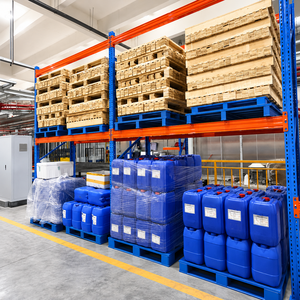
Ensuring millimeter tolerances, structural rigidity, and uniform surface protection for every exported component.
Prime certified Q235B/Q355B coils slit on high-precision computerized cut-to-length lines.
CNC multi-station punches create precision slot intervals (50mm/75mm) with zero drift.
Continuous automated cold roll-forming ensures upright and beam cross-sectional accuracy.
Automated seam welding joins beam connectors with deep penetration and zero weld spatter.
Multi-stage pickling, phosphating, electrostatic powder spray, and 200°C curing oven finish.
Direct answers to the most common questions raised by international procurement managers, logistics consultants, and warehouse facility directors.
Every shelving and pallet racking system engineered by HEDA Shelves undergoes finite element structural analysis (FEA) based on EN 15512, RMI, and AS4084 guidelines. We analyze upright axial buckling, beam deflection (strictly held to L/200 or L/250 depending on specifications), and baseplate bearing pressures against your specific concrete floor slab data (compressive strength f'c). A signed engineering calculation document is provided with your CAD submittals.
Yes. We apply an industrial-grade surface preparation protocol: acid pickling to eliminate surface rust, iron phosphating to create an anti-corrosion barrier, followed by electrostatic epoxy-polyester powder application cured at 200°C. For extreme humidity, offshore hubs, or cold storage rooms down to -25°C, we supply hot-dip galvanized components (ASTM A123 compliant) with zinc thicknesses exceeding 60-85 microns, offering decades of maintenance-free service.
To produce an optimized CAD proposal within 24 hours, our engineering team needs: 1) Architectural building drawings showing clear ceiling height, column grids, and door locations; 2) Pallet dimensions (Length x Width x Height including cargo overhang) and gross weight per pallet; 3) Forklift model, minimum turning aisle width requirement, and maximum mast lift reach; 4) Target SKU turnover profiles (FIFO or LIFO).
Heavy upright frames and beams are nested, banded with heavy-duty steel strapping, and wrapped in protective stretch film with reinforced cardboard corner guards. Small hardware items, footplates, safety pins, and bolts are crated in labeled steel-reinforced crates. Every shipping container is packed according to a 3D computerized load plan with an itemized packing list keyed directly to your installation drawing.
While both systems deliver high cubic storage density, radio shuttle racking eliminates the need for forklifts to enter storage lanes. An autonomous motorized shuttle runs along internal rails to deposit and retrieve pallets. This reduces forklift transit cycle times by up to 50%, reduces structural rack impact damage to near zero, and allows both FIFO and LIFO operations within the same facility footprint.
HEDA Shelves products are backed by CE certification (Certificate No. 2435-CPR-8605159), ISO 9001:2015 quality management system certification (Certificate No. 18624Q00169R0M), and RoHS environmental compliance. On request, we provide EN 10204 3.1 mill test certificates documenting the chemical composition and yield strength of every raw steel batch utilized in manufacturing.
Speak directly with our senior racking engineers. Receive a comprehensive warehouse layout design, structural load calculation sheet, and an itemized factory-direct export proposal within 24 hours.