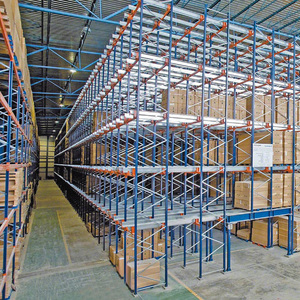
Recommended Warehouse Systems
High-Efficiency Dynamic Racking & Material Handling Equipment
Explore our precision-engineered core industrial range, encompassing high-density gravity roller lanes, automated radio shuttle bays, dense mobile archive tracks, and structural cold-formed profiles.
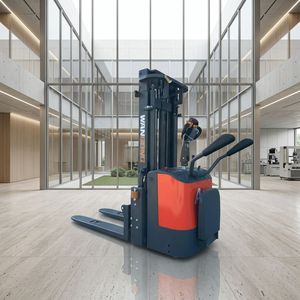
Hot Sale All Terrain Pallet Stacker 1.5ton 2Ton 4m 5m Full Electric Stand Drive Hydraulic Electric Pallet Stacker Warehouse
View Product Specs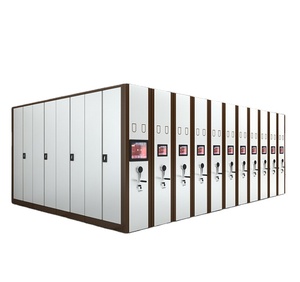
JINGYE Library Furniture Metal Mobile Book Shelving Storage Dense Frame Intelligent Mobile Shelving Archives
View Product Specs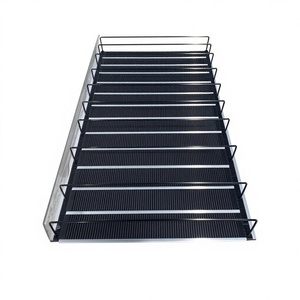
YIJIA Cold Storage Gravity Feed Roller Rack Sliding Shelf System 7 Shelves Stainless Steel Iron Acrylic Metal Customized Size
View Product Specs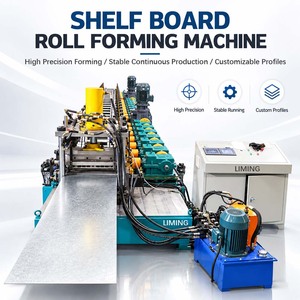
Liming Storage Rack Shelf Board Forming Machine For Steel Shelving Panel And Warehouse Equipment Production
View Product Specs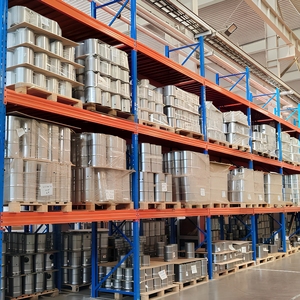
Industrial Pallet Racking Freestanding Metal Shelving with Adjustable Stacking Racks 1000KG Capacity Corrosion Protection
View Product Specs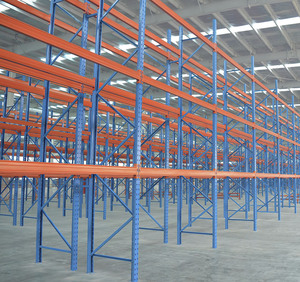
Warehouse Racking System Factory Shelf Heavy Duty Steel Cold Rolled Steel Adjustable Powder Coated Strong Load Capacity
View Product Specs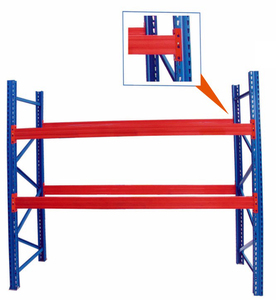
CE Certified Tear Drop Hole Heavy Duty Warehouse Rack Custom Height and Loading Capacity
View Product SpecsEngineering Architecture of Industrial Case Flow & Carton Flow Racking
Case flow racking systems—often referred to within intralogistics as carton flow racks, gravity feed roller racks, or dynamic live picking shelves—represent the benchmark mechanical solution for split-case fulfillment, fast-moving consumer goods (FMCG), pharmaceutical distribution, and automotive line feeding. Operating on an unpowered gravitational gradient, case flow tracks convert standard storage bays into high-throughput FIFO (First-In, First-Out) order staging lanes. By physically separating the replenishing aisle from the picking corridor, case flow systems eliminate travel interference, accelerate pick rates by up to 65%, and compress footprint usage by up to 40% compared to static longspan shelving.
Unlike static pallet racking or light-duty boltless shelving, dynamic carton flow beds require rigorous structural physics. Every track profile, roller bed composition, and brake mechanism must be calibrated against varying package substrates—ranging from rigid corrugated master cartons to returnable plastic containers (RPCs) and blister-pack bins. Selecting an industrial-scale manufacturing partner capable of tight cold-roll forming tolerances and certified load verification is fundamental to avoiding line jams, rack deflection, and early roller fatigue.
Key Engineering Parameter: Gravitational pitch angles must strictly match packaging weights and bottom surface friction profiles. Standard corrugated cartons typically flow optimally between a 2.5° to 3.5° gradient (3.5% - 5.5% slope), whereas plastic totes with ribbed bases or cold-room humidity condensation may necessitate an engineered slope of 4.0° to 4.5° combined with high-precision engineered polymeric skatewheels.
Critical Components of Heavy-Duty Case Flow Beds
High-performance case flow installations rely on four interdependent sub-assemblies that dictate long-term durability and operational uptime:
- Structural Bed Frames & Side Channels: Fabricated from high-tensile cold-rolled steel (grade Q235B or Q355B), punched with precision metric pitch slots to allow toolless vertical adjustment of lane dividers and roller axles.
- Skatewheel vs. Full-Width Roller Tracks: Skatewheel assemblies (configured in staggered patterns) provide superior line-tracking stability for rigid containers. Conversely, full-width steel or polypropylene rollers mounted in galvanized steel side rails are critical for soft-bottom cartons, heavy chemical cases, or irregular tote designs.
- Impact Entry Trays & Heavy-Duty Loading Shelves: Replenishment bays endure constant dynamic dropping impact. Premium factories integrate 2.0mm to 3.0mm reinforced steel lead-in hoods that absorb palletized transfer loads and protect the initial wheel tracks from fracture.
- Discharge Tilt Trays & Pick Benches: Ergonomically engineered presentations at the pick face angle the carton toward the operator at a 15° to 20° downward tilt, ensuring unhindered visual verification and rapid split-case retrieval conforming to global occupational health standards.
Manufacturing Benchmarks
Why Tier-1 Warehouse Operators Partner with HEDA Shelves
Built upon 25 years of structural engineering excellence, our manufacturing facilities produce certified dynamic racking systems that survive extreme warehouse operational demands.
Seismic-Resistant Structural Framing
Engineered upright sections and braced column footprints calculated specifically for active seismic regions, guaranteeing rack stability under full dynamic gravitational weight loading.
Tropical & Coastal Anti-Corrosion
Multi-stage pickling, phosphating, and electrostatic powder coating or optional hot-dip galvanizing, ensuring steel resilience across high-humidity, marine salt air, and cold room microclimates.
Universal Sub-Assembly Modularity
Drop-in roller tracks fully compatible with existing selective pallet rack uprights, teardrop systems, structural beams, and mezzanine pick towers without field drilling or welding.
Global Procurement & Technology Trends (2025–2030)
Procurement teams evaluating case flow and dynamic storage solutions are shifting away from standalone static equipment toward integrated dynamic cells. Modern high-volume distribution centers, particularly in automated retail distribution, direct-to-consumer e-commerce, and third-party logistics (3PL), demand that case flow systems interface cleanly with digital pick execution technologies.
1. Direct Integration with Pick-to-Light (PTL) & AMR Induction
Future-proofed case flow rack uprights are now rolled with recessed cabling conduits and pre-punched mounting flanges designed specifically for optical Pick-to-Light brackets, pick-to-voice indicators, and infrared presence sensors. Furthermore, with Autonomous Mobile Robots (AMRs) handling batch delivery and pallet take-away, case flow beds are increasingly customized with heavy-duty stop brackets that align carton presentation heights precisely with robot optical picking arms.
2. Transition to Low-Noise, Ultra-High-Molecular Polymeric Wheels
Traditional metallic skatewheels produce acoustic levels exceeding 78 dBA during continuous multi-lane loading cycles, violating modern ergonomic workplace safety standards. The new generation of heavy-duty case flow tracks incorporates glass-filled nylon, high-density polyethylene (HDPE), or ultra-high-molecular-weight (UHMW) polymers. These rollers lower running noise below 58 dBA, resist flat-spotting under stationary high-load dwell conditions, and retain chemical inertia in cold storage environments down to -30°C.
3. Modular Lane Flexibility & Dynamic SKU Re-Profiling
Rapid turnover in consumer packaged goods requires fulfillment managers to continuously change SKU lane widths without downtime. Static bolted track dividers are obsolete. Modern facilities specify full-width continuous roller beds or snap-on toolless steel divider guides. These allow operators to reconfigure a 12-meter pick face from handling 200mm cosmetic cases to 500mm beverage cartons within minutes, maximizing rack cubic utilization across peak retail cycles.
Quality Assurance Standard
10-Stage Precision Production & Structural Validation Process
From prime hot-rolled steel coils to CE & ISO 9001 certified dynamic storage assemblies, our factory enforces absolute dimensional tolerances across every manufacturing cycle.
STAGE 01
Raw Materials
Certified high-grade Q235B/Q355B coils tested for yield strength and chemical consistency.
STAGE 02
Precision Slitting
High-speed CNC slitting lines slicing master coils into precise roll-forming widths.
STAGE 03
Column Punching
Continuous automated servo punching providing pitch accuracy within ±0.1mm tolerances.
STAGE 04
Cold Roll-Forming
Multi-station cold rolling mills shaping ultra-rigid omega uprights and beam profiles.
STAGE 05
Track Forming
Specialized sheet profiling forming galvanized structural case flow side channels.
STAGE 06
Surface Polishing
Mechanical deburring and shot blasting to eliminate burrs, slag, and weld impurities.
STAGE 07
Robotic Welding
Full automated CO2 shielded welding fixtures ensuring 100% seam integrity on base plates.
STAGE 08
Pickling & Phosphating
Multi-tank chemical pretreatment creating a micro-etched, corrosion-resistant surface.
STAGE 09
Powder Coating
Electrostatic robotic spray booth baking thermoset epoxy-polyester coatings at 200°C.
STAGE 10
QC & Export Staging
Load deflection checks, bundle strapping, moisture barrier wrapping, and container packing.
Procurement Intelligence
Frequently Asked Questions: Case Flow Rack Sourcing & Engineering
Clear, uncompromised technical answers addressing real engineering calculations, port logistical terms, and site installation parameters.
How do you calculate the correct gravity pitch angle for varied carton weights?
The standard rule of thumb is a slope of 3.5% to 5.0% (approximately 35mm to 50mm of drop per linear meter of bed depth). For heavy items (>15kg), a lower incline (2.5° to 3.0°) prevents excessive impact velocity at the discharge stop. For ultra-lightweight cartons (<3kg) or corrugated trays with uneven bottoms, an angle of 3.8° to 4.5° is required, frequently paired with high-pitch roller spacing (e.g., 28mm centers) to prevent box sag between wheels.
What is the weight carrying capacity of a typical heavy-duty case flow shelf level?
Standard industrial case flow shelf levels support uniformly distributed loads (UDL) between 250 kg/m² up to 1,200 kg/m², depending on track gauge (1.2mm to 2.0mm galvanized steel) and intermediate structural cross-beam spacing. For heavy-payload automotive components or liquid container staging, reinforced multi-track assemblies can accommodate up to 2,500 kg per bay level.
Can carton flow tracks be retrofitted onto our existing selective pallet rack frames?
Yes. Our case flow shelf assemblies are engineered with universal bracket hooks that mount directly into teardrop, keyhole, diamond, or metric slot patterns of major racking manufacturers. By adding intermediate drop-in hanger beams, your existing bulk storage racking can be transformed into high-density dynamic picking lanes without altering upright building ties.
How does ambient humidity or cold store freezing impact roller track selection?
In coastal warehouses with high humidity or blast freezer cold rooms down to -30°C, zinc-plated steel ball bearings can seize due to moisture freezing. For cold chain applications, we specify synthetic stainless-steel or engineering-grade acetal resin roller bearings with food-grade low-temperature lubricants, paired with hot-dip galvanized side guide profiles to prevent rust oxidation.
What engineering data must buyers provide for a certified CAD design & layout?
To receive a verified structural proposal and 3D simulation, supply: 1) Warehouse footprint and clear ceiling height, 2) Column spacing and floor slab thickness/rebar specifications, 3) Carton dimensions (Width × Depth × Height) and weight distribution (min/max), 4) Total SKU profile and daily throughput velocity, and 5) Intended material handling methods (manual picking, reach truck, AMR).
What certifications and international standards govern your rack production?
HEDA Shelves products adhere strictly to European Norm EN 15512 (Steel static storage systems), CE Certification No. 2435-CPR-8605159, ISO 9001:2015 Quality Management System No. 18624Q00169R0M, and RoHS material compliance, ensuring structural calculations withstand rigorous insurance and municipal building audits globally.
The HEDA Shelves Advantage: Complete Intralogistics Manufacturing Control
Established in 2001 in Guangzhou, China, Guangzhou Heda Shelves Co., Ltd. has grown from a specialized shelving fabricator into a world-class manufacturing authority operating over 30,000 square meters of production space. We operate vertically integrated production chains: continuous coil slitting, cold roll-forming lines, computerized multi-axis punching, robotic welding cells, and fully automated Swiss Gema powder coating lines.
When sourcing overseas, logistics managers often face fractured communications, unverified steel compositions, and severe container stuffing losses. HEDA Shelves eliminates these risks. We provide complete factory-direct oversight: every order receives a verified structural load certificate, CAD installation schematics, clear component color-coding, and sea-freight packing designed to maximize container cube utilization and minimize handling damage. Our export track record spans over 10,000 completed warehouse installations across North America, Central & South America, Europe, Southeast Asia, and the Middle East.
Ready to Engineer Your High-Density Dynamic Storage System?
Consult directly with our senior intralogistics structural engineers. Receive a complete, itemized Bill of Materials (BOM), free 2D/3D CAD warehouse layout design, and full CIF/FOB port-ready export quotation within 24 hours.