An intelligent shuttle carriage travels along sub-lane profiles to position and retrieve pallets smoothly, minimizing forklift operating distance and rack damage.
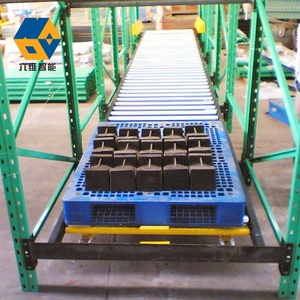
Designed with engineered roller tracks pitched at a calculated incline. Pallets glide under gravitational pull with centrifugal speed controllers ensuring controlled descent.
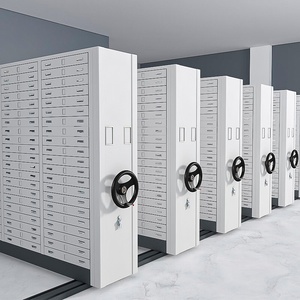
Multi-tier manual retrieval system featuring adjustable beam levels, high-rigidity upright stamping, and modular accessory compatibility for distribution hubs.
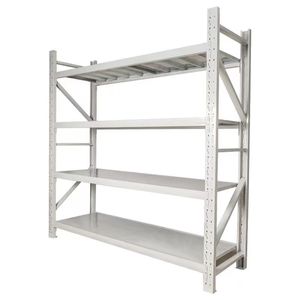
Riveted and slotted interlocking joints permit completely bolt-free installation, ideal for light industrial spare parts centers and maintenance facilities.
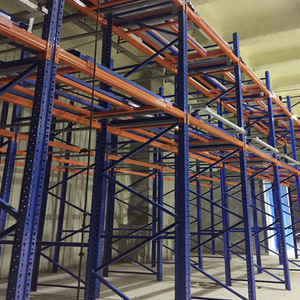
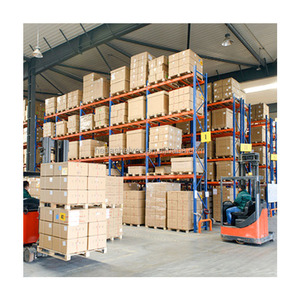
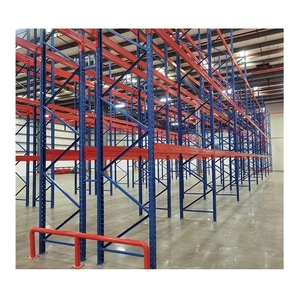
The benchmark heavy-duty selective system providing instant accessibility to every unit load. Configurable with wire mesh decks, pallet supports, and guide rails.
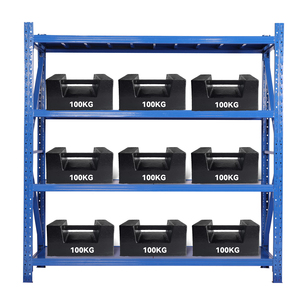
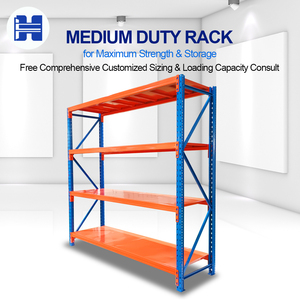
Modular 5-tier storage system featuring electrostatic powder-coated surfaces, step-beam construction, and drop-in steel or timber shelving for workshop parts.
Why Tier-1 Global Supply Chains Choose Our Racking Plant
From full coil slit testing to precision computer-numerical roll forming, our manufacturing ecosystem delivers structural compliance, seismic resiliency, and flawless dimensional repeatability.
Certified Structural Integrity
Audited under CE Certificate No. 2435-CPR-8605159 and ISO 9001:2015. All structural calculations conform to EN 15512, FEM 10.2.02, and RMI standards, verified by comprehensive Finite Element Analysis (FEA).
Full-Cycle Chemical Surface Treatment
Steel components undergo automated 10-stage immersion including degreasing, ultrasonic cleaning, acid pickling, zinc phosphating, and pure water rinsing prior to electrostatic thermoset powder curing, guaranteeing exceptional anti-corrosion life.
Engineering CAD & 3D Modeling
Every client receives custom warehouse layout designs, simulation walkthroughs, seismic baseplate anchoring patterns, and detailed beam deflection tables prepared by senior intralogistics structural engineers before raw steel cut.
Container-Optimized Export Packing
Upright frames, pallet support rails, and dynamic roller cartridges are custom-bundled with steel strapping, impact corner guards, and humidity barrier wraps, with serialized carton-level packing lists for clear customs verification.
In modern supply chain engineering, static selective pallet racking frequently falls short when handling fast-moving SKUs with non-negotiable shelf-life deadlines. When distribution center footprints are constrained by skyrocketing industrial real estate valuations, dynamic storage—specifically Gravity Roller Racks (Pallet Flow & Carton Flow)—transforms horizontal floor space into a continuous, gravity-powered physical pipeline.
1. Structural Anatomy & Kinematic Principles of Gravity Roller Systems
A roller rack operates on a simple yet highly engineered physics principle: controlled kinetic energy conversion under inclined gravity. However, executing this safely with pallet weights exceeding 1,500 kg requires exact structural balances:
Incline Gradient Engineering: The gravitational runway angle is typically set between 2.5% to 4.0% (approximately 1.5° to 2.3°), customized according to bottom-deck pallet configurations (GMA, Euro, perimeter-base wooden pallets, or plastic containers) and ambient operating temperature.
Centrifugal Speed Controller Rollers (Brake Rollers): Without velocity regulation, a 1,000 kg pallet accelerated over a 30-meter track would achieve catastrophic terminal velocity at the discharge face. Centrifugal brake rollers mechanically engage proportional internal gear friction as RPM rises, dampening pallet speed to a safe terminal velocity of 0.2 to 0.3 m/s.
Automatic Pallet Separation Devices (Time-Delay Separators): At the picking discharge interface, the backpressure exerted by multiple pallets queued in a deep lane can reach tens of thousands of Newtons, pinching the first pallet against the stop beam and risking forklift mast overload. Mechanical separators isolate the extraction pallet from succeeding loads, releasing the queue only after the lead load has cleared.
Split-Roller & Full-Width Cylindrical Roller Tracks: High-impact zinc-plated steel cylindrical rollers with precision sealed ball bearings ensure minimal rolling resistance (friction coefficients under μ = 0.03), avoiding stalled loads inside inaccessible lane interiors.
Storage System Architecture
Space Volume Utilization
Inventory Flow Principle
Throughput Rate (Pallets/Hr)
Energy Power Consumption
Capital Cost vs. Density Index
Gravity Roller Rack (Pallet Flow)
75% – 85%
Strict FIFO (First-In, First-Out)
Very High (Separate Load/Unload)
Zero Power (Gravity Powered)
Optimal High-Density ROI
Radio Shuttle Pallet Racking
80% – 90%
Flexible FIFO or LIFO
High (Automated Cart Cycle)
Low (Lithium Battery Charging)
Moderate to High CAPEX
Standard Selective Racking
35% – 45%
Pure 100% Selectivity
Moderate (Forklift Dependent)
Forklift Fuel/Battery Only
Lowest Initial CAPEX / Poor Land Use
Drive-In Pallet Racks
65% – 75%
Strict LIFO (Last-In, First-Out)
Low (Forklift Navigates Racks)
Forklift Fuel/Battery Only
Low CAPEX / High Rack Damage Rate
Push-Back Cart Racking
60% – 70%
Strict LIFO (Nested Carts)
Moderate (Front-Face Loading)
Zero Power (Gravity Fed)
Moderate System Cost
2. Eliminating Forklift-Rack Collision Hazards
A premier hidden driver behind roller rack total cost of ownership (TCO) reductions is the absolute structural separation of material loading docks from fulfillment picking lanes. In conventional drive-in systems, reach trucks enter deep racking tunnels, leading to severe upright damage, shear pin failure, and life-safety hazards. With pallet flow roller systems:
Replenishment forklifts deposit unit loads strictly at the higher charging elevation;
Order extraction forklifts pick pallets strictly from the lower discharging apron;
Aisle cross-traffic is dropped by 65%, eliminating operator collision risks and beam strikes entirely.
Strategic Forecasting
Future Procurement & Technology Trends in Dynamic Racking (2025–2030)
How automation integration, decarbonization mandates, and material science developments are transforming modern warehouse rack procurement criteria globally.
Decarbonization & Zero Power
Passive Gravitational Kinetics vs. Automated Cranes
As corporate Scope 1 and Scope 2 carbon disclosures tighten across North America and the European Union, dynamic gravity flow racks provide massive energy savings. Unlike electric AS/RS stacker cranes or automated conveyors that demand megawatts of grid power, gravity roller channels move thousands of daily tons utilizing pure physics. B2B procurement directors are choosing gravity flow modules to meet green building ratings (LEED/BREEAM) while trimming facility operational expenditures.
Robotics & AGV Synergy
Integration with Autonomous Mobile Robots (AMRs)
Roller beds are evolving from passive manual picking zones into critical transfer stations for automated mobile fleets. Future procurement contracts increasingly specify automated pallet entry guides, robotic roller interlocks, and sensor-based end-of-track buffers that integrate seamlessly with Vision-Guided Forklifts (VGF) and Autonomous Counterbalance Lift Trucks, eliminating human labor bottlenecks during peak operating hours.
Intelligent Sensors & IoT
Embedded Telemetry & Dynamic Jam Diagnostics
Leading Chinese manufacturers are embedding passive RFID and low-power vibration and load sensors into brake roller assemblies. These telemetry-enabled rollers detect pallet track slippage, uneven runner loading, and thermal expansion inside sub-zero blast freezers in real time, alerting facilities teams before a stalled pallet stops continuous order replenishment.
Procurement Due Diligence
Engineering Specification Checklist: Evaluating Chinese Racking Manufacturers
Key structural and metallurgic factors professional procurement engineers must verify before issuing production purchase orders.
Certified Base Steel Chemistry
Insist on mill test certificates verifying prime structural hot-rolled coil steel: Q235B (Yield strength ≥ 235 MPa) or Q355B (Yield strength ≥ 355 MPa). Reclaimed or sub-standard non-prime cold strip fails under seismic cyclic stresses and creates beam sag under continuous load.
Roller Shaft & Bearing Tolerance
Specify high-carbon hardened steel hex shafts mounted in precision deep-groove shielded ball bearings. Avoid cheap stamped bush rollers, which deteriorate rapidly under heavy pallet shock cycles, causing track binding and system failure.
Pre-Treatment Coating Adhesion
A 70-80 micron powder finish applied without acid pickling and phosphating will chip and peel in humid conditions. Cross-hatch adhesion testing (ISO 2409 Class 0) and salt-spray testing (ASTM B117 ≥ 500 hours) guarantee structural protection against corrosion.
Pre-Shipment Factory Assembly Testing
Require your supplier to conduct full mock-up trial assembly of roller beds and upright frames in the plant prior to container stuffing. Verify test runs of customer-specific wooden pallets with live test weights to confirm speed controller braking thresholds.
Expert Procurement Guidance
Frequently Asked Questions: Industrial Roller Racks & Global Sourcing
Answers to technical, operational, and shipping questions posed by warehouse operations directors, 3PL consultants, and procurement managers.
Q
What is the minimum and maximum lane depth possible for a gravity roller rack?
Gravity pallet flow roller channels can be engineered from 2 pallets deep (push-back or mini-flow) up to 25 to 30 pallets deep in high-throughput beverage or cold-storage environments. In lanes extending past 5 pallets deep, certified centrifugal speed controllers (brake rollers) and mechanical pallet separation separators are compulsory to regulate kinetic flow and relieve pick-face pressure.
Q
How do you prevent bottom-deck deflection or damaged wooden pallets from jamming inside deep lanes?
Our engineering process analyzes sample pallets and base-deck configurations. We specify multi-track roller alignments or full-width steel rollers spaced tightly (e.g., 50mm, 75mm, or 100mm centers) so at least three pallet runners are continuously supported by three or more rollers simultaneously. Optional guide flanges and entry funnels self-center pallets at the charge side.
Q
Can gravity roller racks operate reliably inside -25°C to -30°C cold rooms and blast freezers?
Yes. Low-temperature operations require low-viscosity, non-freezing synthetic lubricants inside the roller bearings and brake mechanisms. Furthermore, steel components are hot-dip galvanized or treated with low-temperature impact-resistant epoxy-polyester powder formulations to prevent brittle fractures and flaking under thermal cycling.
Q
What calculation standards are used for structural seismic resilience and upright load limits?
Our structural engineering team produces calculation books based on EN 15512 (European Racking Code), ANSI/RMI MH16.1 (North American Standard), and Australian AS 4084. When sizing upright profiles, baseplates, frame bracing, and chemical wedge anchor bolts, our engineers factor in local seismic zone ground acceleration (Ss and S1 coefficients), concrete floor compressive strength (f'c), and slab thickness.
Q
How does gravity flow roller racking achieve lower TCO compared to automated shuttle carts?
While radio shuttle racking offers superb density, it relies on battery management, sensitive electronic circuit boards, remote controls, and motorized drive trains that require ongoing maintenance. Gravity flow systems are completely mechanical, consuming zero electricity and operating maintenance-free for decades with minimal moving wear parts.
Q
What detailed facility specifications are required to receive a formal 3D layout and firm price quote?
We require: (1) Warehouse clear height and architectural CAD drawing with building column grids, doors, and fire sprinkler clearances; (2) Pallet dimensions (L x W x H) including overhanging load; (3) Minimum, average, and maximum gross pallet weight; (4) Pallet bottom-deck board configuration; (5) Forklift mast reach and aisle turning radius; and (6) Target SKU turnover profiles and required operating temperature.
Request a Free Engineering Layout & Project Estimate
Partner directly with Guangzhou Heda Shelves Co., Ltd.—a proven racking manufacturer with 25+ years of engineering experience, 30,000 m² production infrastructure, CE & ISO 9001 certifications, and over 10,000 successful warehouse projects worldwide. Send your warehouse floor plan to our structural engineering department for a free 2D CAD layout, 3D render walkthrough, and itemized factory-direct quote.