Engineered Heavy-Duty Industrial Racking & High-Density Storage Solutions
From standard ISO pallet load configurations to complex high-bay multi-level rack-supported architectures, explore certified industrial systems built with cold-rolled Q235B/Q355B structural steel, tailored for global intralogistics distribution centers.
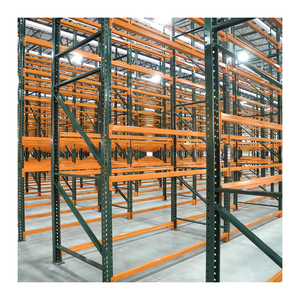
Mracking Factory Direct Sales Rear Push Racking System
Engineered nested nesting cart system running on inclined structural rails. Eliminates dedicated internal forklift aisles, increasing volumetric storage density up to 75% under LIFO inventory rotation.
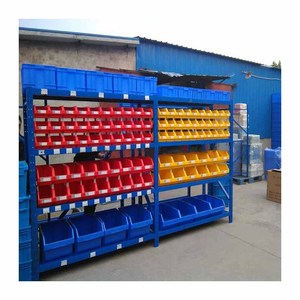
Mracking Multi-Level Light Duty Storage Bin Rack Wholesale
Precision-punched slotted uprights combined with high-grade cold-rolled steel drop-in shelves. Fully compatible with modular dividing plastic bins, designed for fast SKU picking in e-commerce fulfillment hubs.
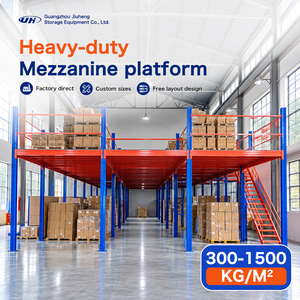
Steel Mezzanine Warehouse Heavy Duty Multi-Level Platform
Freestanding multi-tier structural steel mezzanine platform doubling or tripling facility usable surface area without civil architectural alterations. Engineered with cold-formed main/sub beams and integrated staircases.
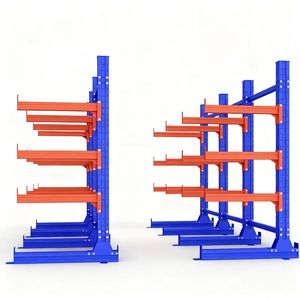
Mracking Heavy Duty Adjustable Single/Double Cantilever Rack
Column-and-arm structure purpose-built for unobstructed horizontal loading of steel pipes, structural lumber, extrusions, and heavy sheet metal. Includes adjustable arm pitch at 100mm/140mm intervals.
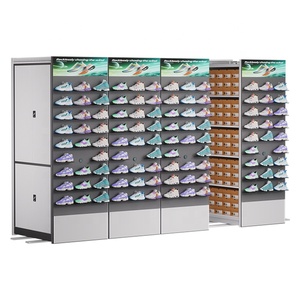
Shoes & Clothes Retail Electric Compact Mobile Shelving
Motorized sliding base shelving system operating on floor embedded guided rails. Condenses inventory into a single moveable operating aisle, yielding up to 85% footprint reduction in commercial archives and retail backrooms.
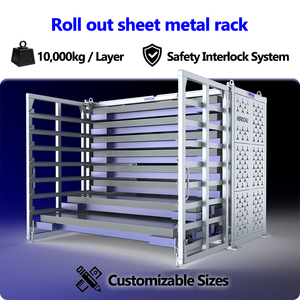
CE Certified Heavy Duty Cargo Pallet Storage Industrial Rack
Heavy-load pallet frame structure compliant with international structural codes. Manufactured using high-tensile continuous roll-formed columns with 3/4 rivet-connector beam locks to prevent dislodgement.
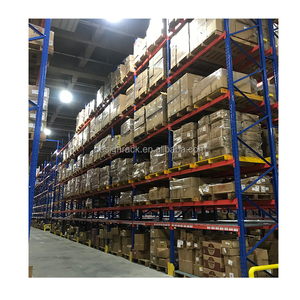
High Density Distribution Center Steel Selective Pallet Rack
The benchmark storage configuration worldwide. Enables direct individual access to every single pallet position without staging delays. Optimally sized for wide aisle, narrow aisle (VNA), or reach truck material handling.
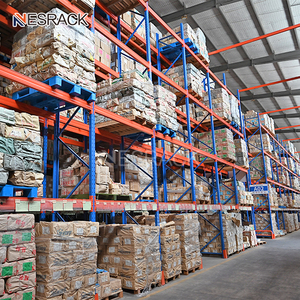
Pallet Multilevel Heavy Duty Warehouse Stacking System
Multi-tiered vertical stacking rack engineered for severe bulk-density loading requirements. Custom beam spans up to 3900mm featuring dual reinforced box profiles, optimized for heavy FMCG and industrial manufacturing reserves.
Factory-Direct Engineering & Export Scale Advantages
For over 25 years, Guangzhou Heda Shelves Co., Ltd. has delivered structural storage solutions that combine heavy-gauge metallurgical integrity with full-lifecycle global export logistics.
Verified Quality Certifications
Full compliance with CE Certification (No. 2435-CPR-8605159), ISO 9001:2015 Quality Management System (No. 18624Q00169R0M, valid to 2027), and RoHS environmental standards. Guaranteed structural safety and documentation traceability for local civil engineering sign-off.
Complimentary CAD & 3D Calculations
Our dedicated team of 300+ technical personnel and senior design engineers deliver comprehensive AutoCAD layout configurations, 3D parametric visualizations, structural static load profiles, and floor slab displacement calculations free of charge prior to manufacturing.
10-Stage Precision Fabrication
From prime Q235B steel coil slitting, multi-station automated column hole CNC punching, to continuous roll cold-forming, robotic MIG welding, 7-tank pickling/phosphating chemical pre-treatment, and electrostatic thermoset epoxy-polyester powder coating baking at 180°C.
Containerized Export Logistics
Export-standard bundles optimized specifically for 40ft High Cube (40HQ) containers. Every structural bundle is labeled with component position markings and bundled with protective corner boards, corrugated wrap, and steel straps, matching detailed packing lists for immediate customs clearance.
Evaluating the Top 10 Global Industrial Rack Storage System Exporters
A rigorous comparative evaluation based on steel metallurgy, engineering certifications (RMI / FEM / EN 15512), production throughput, and international supply chain adaptability.
In high-throughput logistics, heavy manufacturing, and third-party logistics (3PL) warehousing, selecting an industrial racking supplier goes far beyond comparing nominal price per pallet spot. Industrial storage frameworks serve as load-bearing structural skeletons that must endure dynamic forklift impacts, cyclical loading fatigue, dead-weight live-load transformations, and seismic shear forces. The global export landscape features distinct tiers of manufacturing capabilities:
| Evaluation Parameter | Tier 1: Global Integrated Manufacturers (e.g., HEDA Shelves, SSI Schaefer) | Tier 2: Regional Assembly Fabricators | Tier 3: Local Brokers / Small Job Shops |
|---|---|---|---|
| Raw Steel Grade & Yield Strength | Certified Q235B / Q355B or ASTM A1011 SS Grade 50; Mill Test Certificates (MTC) with heat tracking. Minimum yield strength ≥ 235-355 MPa. | Commercial-grade hot/cold rolled coil; intermittent mill test verification. Variable yield strength (200-220 MPa). | Uncertified secondary market coil or scrap re-rolling; high risk of internal inclusion defects and localized buckling under load. |
| International Structural Compliance | Validated Full compliance with EN 15512, RMI (ANSI MH16.1), AS 4084-2012, and CE CPR 305/2011. | Partial local standard compliance; rarely holds unified CE and ISO 9001:2015 third-party certification. | Unverified calculations; structural failure risks under seismic horizontal force coefficients. |
| Surface Pre-Treatment & Coating | Automated 7-stage immersion: Degreasing, water wash, pickling (acid rust removal), phosphating (crystal bonding), electrostatic powder cure (60-90μm). | Basic spray wipe and manual batch powder coat; sporadic dry film thickness, prone to peeling in tropical humidity. | Manual spray paint or low-cure alkyd primer; susceptible to oxidation, rust bleeding, and beam connection binding. |
| Design & Layout Engineering | Full parametric CAD, 3D structural modeling, FEA (Finite Element Analysis), dynamic seismic reaction calculations included free of charge. | Standard 2D architectural block layouts; static calculations charged as separate engineering consultancy fee. | Hand drawings or rough sketches; zero dynamic load distribution verification. |
| Export Container Packing Efficiency | Automated nesting profiles, structural pallet cradles, heavy-duty bundling preventing sea transit deformation; 99% space utilization. | Loose loading with timber blocks; medium freight damage incidence; slower offloading. | Unstrapped loose packing; high incidence of container demurrage, bent column flanges, and damaged connector hooks. |
Structural Engineering Benchmarks for Pallet Racks
Procurement teams must audit a manufacturer's compliance with beam deflection limits. Under global standards such as FEM 10.2.02 and EN 15512, the maximum permissible beam deflection under full static design load must not exceed L/200 (where L is the clear span distance between upright columns). For example, on a standard 2700mm beam carrying two 1000kg pallets, maximum allowable deflection at center span is 13.5mm, recovering completely elastically when unloaded. Industrial suppliers must submit engineering calculation sheets verifying cross-sectional modulus (Z) and moment of inertia (I) across both the X and Y axes.
Future Procurement Trends in Industrial Storage Systems (2025–2030)
How global distribution centers are shifting procurement models toward automation-ready racking, seismic resilience, green metallurgy, and total cost of lifecycle ownership.
1. Transition Toward Shuttle & AS/RS Hybrid Racking
Escalating land acquisition costs and industrial warehouse rental rates are accelerating the phase-out of conventional wide-aisle static racks in favor of semi-automated radio shuttle lanes and fully automated storage and retrieval systems (AS/RS). High-density radio shuttle frameworks achieve 80%+ cubic footprint utilization while decoupling forklift travel from internal rack bays, dramatically cutting cycle times and operational forklift mast damage.
2. Stringent Seismic Baseplate & Anchor Engineering
Facilities situated across active seismic zones (such as Central America's Pacific Rim, Southeast Asia, and southern Europe) increasingly demand site-specific seismic verification. Procurement RFQs now routinely specify dynamic response spectrum analysis according to seismic ground acceleration maps (Ss, S1). Upright baseplates require hot-rolled heavy gauge plates (8mm–16mm thickness) paired with Hilti or Fischer chemical mechanical torque anchors to resist base shear moment inversion.
3. Cold-Chain Logistics & Galvanized Metallurgical Finishes
Rapid expansion in temperature-controlled pharmaceutical cold storage, frozen agro-exports, and marine food cold chains has magnified the challenges of thermal contraction and cyclic condensation. Standard powder coats run the risk of micro-cracking below -25°C. Progressive procurement specifications require hot-dip galvanized steel components conforming to ISO 1461, ensuring minimum 55–85μm zinc layer defense against rust, chemical spillages, and extreme cryogenic peeling.
4. Scope 3 Emissions & EPD Environmental Standards
Multinational procurement mandates now factor Environmental Product Declarations (EPDs) into vendor selection matrices. International racking exporters are adopting scrap-based electric arc furnace (EAF) steel coils with reduced carbon intensity, water-soluble zero-VOC degreasing processes, and closed-loop electrostatic powder capture units that recycle up to 98% of oversprayed architectural powder.
Strategic Sourcing Insight: Modern warehouse procurement directors are shifting away from traditional transactional CapEx purchases toward lifecycle total cost of ownership (TCO) assessments. Evaluating cold-rolled steel tensile thickness, structural connector beam pins, impact protection column guards, and hot-dip galvanized finishes reduces unplanned post-installation rack maintenance budgets by up to 45% over a 10-year facility lifespan.
Frequently Asked Questions: Industrial Rack Sourcing & Export
Answers to common structural, logistics, metallurgical, and compliance questions asked by international warehouse managers and supply chain directors.
What is the structural difference between Q235B and Q355B steel in racking frames?
Q235B steel offers a minimum yield strength of 235 MPa and ultimate tensile strength of 375–500 MPa. It is the international standard for conventional selective pallet racks, light/medium shelving, and low-stress horizontal load beams. In contrast, Q355B is a low-alloy, high-strength structural steel providing minimum yield strength of 355 MPa (over 50% stronger). It is specified for critical high-load applications such as tall high-bay upright frames (exceeding 8–10 meters in height), narrow aisle (VNA) systems, structural mezzanine main support columns, and facilities located in active seismic zones where resisting dynamic lateral torsional bending is required.
How are international shipping costs, loading calculations, and container limits managed?
Industrial steel racking shipments are managed on either FOB (Free on Board) South China ports (Guangzhou/Shenzhen/Ningbo) or CIF (Cost, Insurance, and Freight) to destination ports worldwide. Because structural steel is dense, weight thresholds are reached before volumetric cubic meter capacity is exhausted. Standard 40ft High Cube (40HQ) containers accommodate up to 26 to 28 metric tons depending on the destination port and maritime shipping line limitations. Our shipping team bundles beams and nesting uprights with computer-modeled nesting diagrams to maximize freight payload, minimize loose movement, and provide labeled packing lists corresponding directly to assembly drawings.
What precise technical inputs are required to engineer an optimal layout design?
To provide an accurate AutoCAD schematic and structural proposal within 24 hours, our engineering department requires six core facility variables: (1) Architectural floor plan indicating overall building length, width, clear height under roof truss, and exact locations of building columns, slab expansion joints, and fire exit doors; (2) Detailed pallet dimensions including pallet width, depth, overall height including cargo overhang, and maximum pallet gross weight; (3) Forklift material handling equipment specifications, specifically mast reach height, collapsed mast height, and minimum right-angle stacking aisle clearance requirement; (4) Total inventory SKU count and operational turnover model (FIFO vs. LIFO); (5) Ambient operating temperature (ambient, cold room, or freezer); and (6) Any regional seismic rating requirements and slab concrete compressive strength (C20/25, C30/37).
How does HEDA handle remote installation and structural QA verification overseas?
Every manufactured racking order is backed by comprehensive 3D isometric installation manuals, component identification tags, and high-definition video walkthroughs demonstrating bolt torque tolerances, diagonal frame cross-bracing installation, beam safety locking pin engagement, and anchor tightening standards. For mid-to-large distribution center installations or multi-tier mezzanine platforms, we assign bilingual senior structural installation project supervisors on-site to direct local mechanical contractor teams, conduct beam deflection and laser plumb alignment checks, and issue final pre-commissioning certificates for municipal safety audits.