Heavy-Duty Warehouse Storage Rack Systems
Engineered to strict ISO 9001 and CE load criteria. Certified cold-rolled profile structures tailored for logistics hubs, manufacturing staging, and automated retrieval environments.
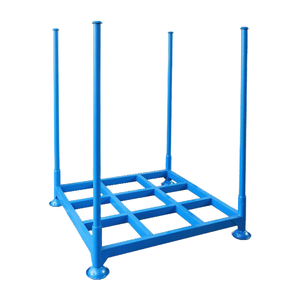
Warehousing Storage Heavy Duty Steel Fabric Multi-Level Corrosion Protection Truck Tyre Cold Storage Stacking Metal Racks
Technical Specifications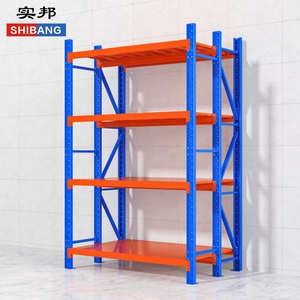
Shibang Heavy Duty Industrial Pallet Storage Racking 400kg-1500kg Capacity Per Layer Adjustable Cold Rolled Steel Corrosion Rack
Technical Specifications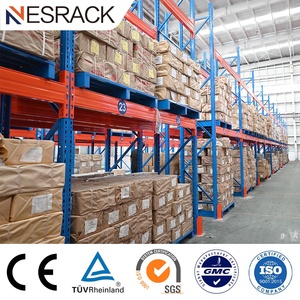
Heavy Duty Steel Multi-Level Pallet Storage Racking 1000kg/2000kg/3000kg Per Industrial Warehouse Rack Storage Shelf for Garage
Technical Specifications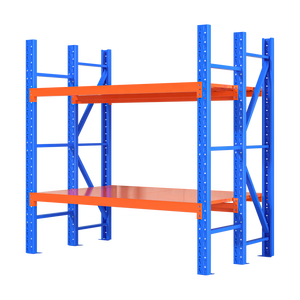
Heavy Duty Industrial Pallet Storage Racking 400kg/600kg/800kg/1500KG Capacity Per Layer Adjustable Steel Warehouse Rack
Technical Specifications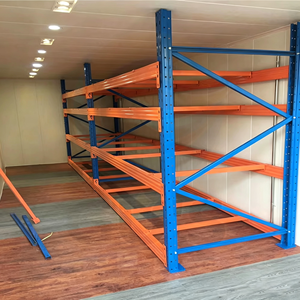
Heavy Duty Industrial Pallet Storage Racking 1000kg/2000kg/3000kg Capacity Per Layer Adjustable Steel Warehouse Rack
Technical Specifications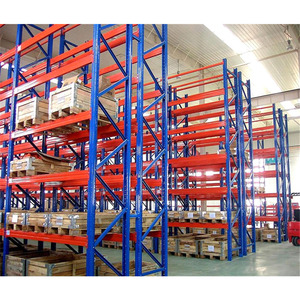
Industrial Pallet Rack 3000kg Load Steel Storage Shelving System Powder Coated Heavy Duty Racking for Warehouse
Technical Specifications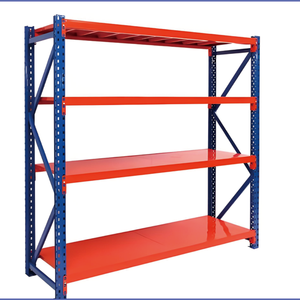
Guijie High Load Capacity 4-Layer Drive-Through Steel Warehouse Rack Powder Coated Finish Adjustable Corrosion Protected Shelves
Technical Specifications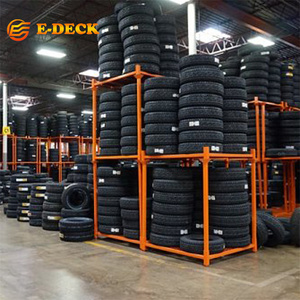
Customized Heavy Duty Metal Powder Coated Storage Steel Stacking Racks For Warehouse
Technical Specifications1. The Global Heavy-Duty Racking Procurement Landscape
Modern distribution centers, automated 3PL facilities, and manufacturing staging hubs face an unprecedented need to maximize volumetric cube efficiency. Industrial warehouse pallet racks and heavy-duty storage systems are no longer treated as passive steel furniture; they are vital, load-bearing infrastructure that dictates the operational safety, vertical clear-height capacity, and floor-level return on capital investment (ROI). In an era characterized by land scarcity, increasing seismic structural regulations, and the rapid adoption of automated material handling equipment, sourcing the right industrial storage rack manufacturer is a critical strategic decision.
Heavy-duty industrial storage racks are primarily subjected to static dead loads (structural steel deadweight), dynamic live loads (forklift operations, product pallet placement), and environmental forces (seismic accelerations, soil settle displacement, and wind force in rack-supported structures). Global procurement teams must balance unit costs against structural steel yield thresholds (Q235B vs. Q355B / ASTM A36 vs. A572 Grade 50), anti-corrosion chemical pretreatments, and adherence to international racking codes such as ANSI MH16.1, RMI (Rack Manufacturers Institute) guidelines, and EN 15512:2020 European specifications.
2. Structural Steel Mechanics: Roll-Formed vs. Structural C-Channel Racks
When engineering high-tonnage storage racks capable of supporting 1,000 kg to 5,000 kg per pallet level, specifying the correct steel profile geometry is foundational to warehouse safety. Manufacturers primarily utilize two distinct production methodologies: continuous cold roll-forming and hot-rolled structural steel fabrication.
| Evaluation Parameter | Cold Roll-Formed Steel Racks | Hot-Rolled Structural Channel Racks |
|---|---|---|
| Primary Steel Grade | Cold-Rolled Coil (Q235B, Q355B, ASTM A1011) | Hot-Rolled Structural C-Channels (ASTM A36) |
| Profile Thickness Range | 1.5 mm to 2.5 mm (Engineered ribbing for strength) | 3.0 mm to 6.5 mm (Thick, solid flanges) |
| Forklift Impact Resistance | Moderate (Requires reinforced post protectors) | Extremely High (Resists heavy direct abuse) |
| Weight-to-Capacity Ratio | High strength-to-weight; cost-effective shipping | Lower strength-to-weight; higher logistics costs |
| Seismic Plastic Deformation | High elasticity through specialized geometry slots | Rigid bolted frames; higher anchor shear demands |
| Ideal Operating Scenarios | Distribution centers, FMCG, retail, e-commerce | Heavy manufacturing, freezers, harsh outdoor yards |
Cold roll-formed steel racks dominate commercial logistics because multi-stage roll-forming lines introduce precise stiffening ribs along the column uprights and beam profiles. These stiffening ribs substantially enhance the radius of gyration ($r$), raising critical Euler buckling limits without adding dead weight. Conversely, hot-rolled structural C-channel systems excel in high-turnover cross-dock environments where frequent lift truck impacts could easily deform thinner steel members.
3. Seismic-Aware Engineering & Tropicalized Surface Chemistry
Warehouses constructed across dynamic regions—such as the Pacific Rim, Central America, the Mediterranean, or Southeast Asia—demand thorough seismic calculations. Uncalibrated racking systems run catastrophic risks of progressive collapse (domino effect) when dynamic seismic waves synchronize with the natural frequency of a loaded rack structure. Factory engineering teams model base-plate dimensions, chemical anchor bolt diameters (e.g., M12 to M18 Grade 8.8 structural anchors), horizontal/diagonal bracing geometries, and beam-to-frame connector moment capacities to safely dissipate harmonic vibrational stress.
Furthermore, steel longevity hinges entirely on factory pre-treatment and finish application. Raw commercial steel quickly oxidizes when exposed to tropical humidity, coastal marine salt fog, or sub-zero condensation cycles in cold storage facilities. Advanced factories employ a ten-stage conversion coating protocol:
- Automated Shot Blasting & Acid Pickling: Strips hot-rolled mill scale and eliminates surface rust to achieve an Sa 2.5 cleanliness rating.
- Zinc Phosphating / Zirconium Passivation: Chemically bonds a nano-ceramic crystal barrier that halts under-film rust creep if the topcoat becomes scratched during pallet handling.
- Electrostatic Thermosetting Powder Coating: Uses TGIC-free polyester powder baked at 180°C to 200°C, producing a non-porous 70–90 µm cross-linked polymer shell that delivers 500+ hours of ASTM B117 salt spray resistance.
- Hot-Dip Galvanizing (ISO 1461): Crucial for blast freezers operating at -30°C and external open-air stacking, dipping entire welded steel weldments into 450°C molten zinc to guarantee complete interior and exterior barrier protection.
4. Top 10 Heavy Duty Industrial Storage Rack Manufacturers & Factories
This benchmark analyzes the top 10 industrial storage rack manufacturing enterprises globally. Rankings reflect production volume, automated fabrication maturity, international structural validation (CE, ISO, RMI), layout engineering capability, and export adaptability.
Guangzhou Heda Shelves Co., Ltd.
China (Global Export Across 120+ Countries)With 25 years of engineering experience and a 30,000 m² state-of-the-art facility, HEDA Shelves is an internationally acknowledged titan in customized heavy-duty pallet racking, multi-tier mezzanines, and radio shuttle solutions. Capable of processing up to 30,000 tons monthly, they offer full OEM/ODM flexibility, in-house structural FEA calculations, and export-ready modular packing.
- CE (No. 2435-CPR-8605159) & ISO 9001:2015 Audited
- Free 3D CAD layout planning & static FEA modeling
- Specialized seismic upright and beam configurations
SSI Schaefer
Germany (Global Operations)A premier European leader in intralogistics and automated warehouse hardware. SSI Schaefer specializes in extreme-bay automated high-bay clad racks, carton flow setups, and end-to-end automated storage and retrieval systems (AS/RS).
- World-leading AS/RS automated integration
- Tightest dimensional roll-forming tolerances in Europe
Daifuku Co., Ltd.
Japan (Global Manufacturing)Renowned globally for turnkey material handling systems, Daifuku manufactures robust structural framing tailored for computer-controlled high-speed stacker cranes, cleanrooms, and ultra-dense cold chains.
- Highly tuned Japanese seismic-isolation engineering
- Industrial automated stacker crane structural frames
Mecalux, S.A.
Spain (Europe & Americas)Operating extensive manufacturing facilities across Spain, Poland, the US, and Mexico, Mecalux provides versatile selective, drive-in, live pallet racking, and specialized clad-rack warehouse enclosures.
- Comprehensive WMS software integration
- Dual-standard compliance: EN 15512 and RMI
Dematic (KION Group)
United States / GermanyPart of the KION Group, Dematic designs structural high-density racking frameworks that directly pair with automated guided vehicles (AGVs), sorting systems, and robotic multi-shuttle cranes.
- Precision interface for micro-fulfillment and AGVs
- Premium structural steel grades for massive payloads
Stow Group
Belgium (Pan-European Presence)Stow has expanded through dedicated automated shuttle innovation (Moviaxx) combined with high-capacity conventional pallet racking. Their automated production lines offer reliable profile repeatability.
- Proprietary radio-shuttle storage automation
- High-grade cold roll-formed upright optimization
Frazier Industrial Company
United StatesThe leading North American producer dedicated exclusively to hot-rolled structural steel C-channel pallet racking. Frazier systems are renowned in high-abuse grocery and freezer environments.
- 100% structural ASTM A36 channel construction
- Superior resilience against forklift front-post shearing
Interroll Group
Switzerland (Global Footprint)A world reference in dynamic storage systems, notably pallet flow (FIFO) and carton flow lanes. Interroll engineers speed controllers and separation rollers integrated into heavy steel racking.
- Patented magnetic speed controller rollers
- Optimized for perishable stock inventory rotation
Jungheinrich AG
GermanyLeveraging their deep background as an industrial truck manufacturer, Jungheinrich designs narrow-aisle (VNA) and multi-level rack structures configured precisely for very-narrow-aisle reach trucks.
- Precise wire-guided and rail-guided aisle geometry
- Turnkey integration with electric material handlers
Dexion (Gonvarri Material Handling)
United Kingdom / NorwayA pioneering brand in European industrial warehousing, Dexion supplies versatile heavy-duty shelving, mobile pallet racking (MOVO), and cantilever solutions for extended material profiles.
- Heavy-load mobile motorized racking carriages
- Extensive cold storage footprint throughout EMEA
5. Future Sourcing & Technological Trends (2025–2035)
B2B procurement teams must anticipate the rapid transformation taking place across modern supply chains. Racking investments require a 15- to 20-year structural design life, meaning facilities purchased today must readily support upcoming warehouse automation technologies:
Autonomous Mobile Robot (AMR) Synergy
Traditional wide-aisle configurations (3.5 m) are yielding to tight, automated aisles (under 1.8 m) navigated by AMRs and AGVs. Racking uprights must feature lower base clearances, laser-level floor leveling shims, and integrated floor-embedded QR/magnetic paths.
Rack-Clad High-Bay Buildings
Rather than erecting a building and filling it with racks, companies are increasingly choosing rack-clad buildings where the rack uprights carry the roof purlins and wall sandwich panels directly, eliminating expensive building columns.
Sensorized Structural Health Monitoring
Next-generation uprights incorporate IoT strain gauges and tri-axial vibration sensors that alert maintenance teams immediately if a reach truck delivers a critical shock load or if a bay experiences dangerous overloading.
Decarbonized Green Steel & ESG Metrics
Supply chain audits now evaluate Scope 3 carbon footprints. Manufacturers operating electric arc furnace (EAF) steel sourcing, water-based chemical rinses, and zero-VOC powder recovery lines win long-term corporate procurement contracts.
6. Comprehensive B2B Specification Checklist & TCO Evaluation
Before submitting a Request for Quotation (RFQ) to any industrial storage rack manufacturer, your project engineering team should confirm the following seven core architectural parameters to guarantee safe capacity ratings and avoid costly change orders:
- Unit Load Dynamics: Pallet dimensions ($W \times D \times H$), pallet type (Euro, GMA, Chep, custom skid), maximum pallet gross weight, and overhang allowance (typically 50 mm front/back).
- Vertical Clear Heights: Clear height to the lowest warehouse obstruction (sprinkler heads, LED fixtures, HVAC ducts, structural roof trusses).
- Floor Slab Structural Engineering: Concrete compressive strength rating ($f'c$, typically 25 to 35 MPa), slab thickness (e.g., 150 mm to 250 mm), single/double rebar placement, and sub-base compaction rating to prevent punch-through failure.
- Material Handling Equipment (MHE) Envelopes: Minimum right-angle stacking aisle width, mast lift height, collapsed mast height, turning radius, and top-tier residual capacity of your forklifts.
- NFPA 13 Fire Sprinkler Geometry: Transverse flue space (minimum 75 mm to 150 mm between pallet backs) and longitudinal flue space to ensure code-compliant water penetration from ESFR fire systems.
- Environmental Risk Factors: Seismic design category (SDC A through F), soil site class, basic wind speed (for open/semi-open docks), and temperature/humidity parameters (ambient vs. blast frozen).
- Safety Accessories Matrix: Post protectors, row spacers, pallet support bars, wire mesh drop stops, guide rails for narrow aisle operations, and load warning plaques.
Total Cost of Ownership (TCO) Assessment: Experienced operations directors know that initial steel procurement accounts for only 60% of lifetime racking system expenditure. The remaining 40% encompasses freight optimization (container nesting density), ease of assembly (boltless tear-drop vs. bolted modularity), downtime required for maintenance, and modular reconfigurability when inventory SKUs change.
7. Frequently Asked Questions by Warehouse Engineering Teams
Direct technical answers addressing the real questions raised during industrial storage rack procurement and facility upgrades.
Under both ANSI MH16.1 (RMI standard) and EN 15512 specifications, the nominal structural safety factor applied to steel yield stress ranges from 1.65 to 1.95 for cold roll-formed members. This means components are rated to resist catastrophic mechanical yield until dynamic or static forces exceed 165% to 195% of the stated maximum Uniform Distributed Load (UDL). However, intentional overloading beyond stated plaque limits violates local safety laws (such as OSHA 1910.176) and instantly voids structural certifications.
In high-seismic zones, the horizontal shear forces transfer directly into the building floor. To withstand high-acceleration forces, racking designs must incorporate larger base plate footprints (often exceeding 200 mm x 200 mm with up to 12 mm thickness), dual heavy-duty expansion or chemical adhesive anchor studs per foot, heavy-gauge bottom cross-bracing, and thicker column walls (2.0 mm to 2.5 mm). These modifications safeguard against foot uplift, frame twisting, and shear failure during seismic events.
For interior ambient warehouses in temperate areas, standard electrostatic thermoset polyester powder coating provides great durability and chemical resistance. However, for continuous high-humidity environments, coastal operations, and sub-zero blast freezers (-20°C to -30°C), hot-dip galvanized steel (HDG per ASTM A123) is strongly recommended. HDG forms an iron-zinc alloy layer that seals the steel, avoiding the risk of moisture micro-cracking and rust flaking caused by repeated freeze-thaw cycles.
While both systems eliminate interior operating aisles, Drive-In racks require forklifts to drive inside the steel structure itself, which increases loading cycle times and raises the risk of forklift mast collisions with uprights. Radio Shuttle racking uses semi-automated battery-powered shuttles to carry pallets down deep storage channels, keeping forklifts safely in the main aisle. This yields up to 40% higher pallet handling throughput, cuts equipment impact damage by 80%, and permits both FIFO and LIFO layouts.
To produce an engineering-grade layout, supply: (1) An architectural CAD plan showing perimeter columns, expansion joints, overhead utilities, and dock doors; (2) Building clear height to the lowest obstruction; (3) Pallet specifications (width, depth, height, and maximum gross weight); (4) Forklift specifications including maximum mast lift height, collapsed height, and turning radius; and (5) Throughput requirements and SKU turnover velocity.
8. Guangzhou Heda Shelves: 25 Years of Precision Racking Manufacturing
Since 2001, Guangzhou Heda Shelves Co., Ltd. has served as a direct manufacturer of high-tonnage industrial racking systems, high-density mezzanine floors, and automated storage hardware. Spanning a 30,000 m² modern manufacturing workshop with a staff of over 300 technical specialists, our production facility features automated precision roll-forming lines, computerized multi-station punching presses, robotic seam welding stations, and an advanced electrostatic powder coating plant capable of finishing up to 30,000 tons per month.
Having successfully engineered and delivered more than 10,000 warehouse projects across 120+ countries—spanning seismic regions across Latin America, high-humidity port zones in Southeast Asia, and automated e-commerce hubs throughout Europe—Heda Shelves provides direct factory-level engineering accountability. Our experienced structural engineering team provides free 3D CAD layout planning, dynamic FEA stress analysis, seismic compliance certifications, and comprehensive ocean container loading optimization to keep international logistics fully protected and on schedule.
Plan Your Warehouse Racking Project with an Engineer
Whether you need high-bay pallet racking, a drive-in cold storage setup, or a heavy-duty multi-tier mezzanine platform, our engineering team will calculate your load capacities, generate custom CAD drawings, and provide itemized factory-direct pricing within 24 hours.