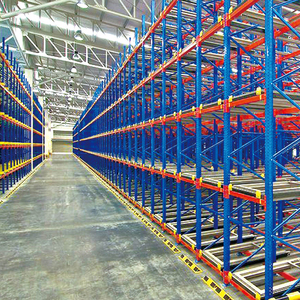
Reinforced Steel 5 Layer Push Back Pallet Racking
5-tier high-bay dynamic cart rack designed for high-turnover picking, deep storage consolidation, and impact-resistant upright upright stability.
Our OEM/ODM manufacturing facility supplies heavy-duty, multi-lane nested push-back systems built to DIN EN 15512, RMI, and FEM structural engineering standards. Designed for high volume, multi-SKU consolidation.
5-tier high-bay dynamic cart rack designed for high-turnover picking, deep storage consolidation, and impact-resistant upright upright stability.
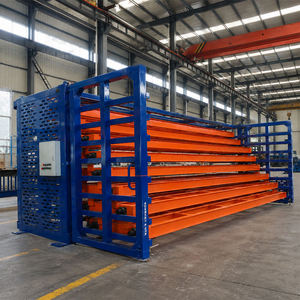
Constructed with cold-formed structural carbon steel, featuring multi-wheel heavy carriage rails and electrostatic anti-rust finish.
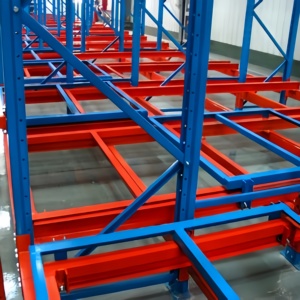
Engineered for -30°C temperature profiles, featuring freeze-resistant self-lubricating ball bearings and hot-dip galvanized rails.

Versatile utility racking framework with high modularity, heavy gauge structural tubular profiles, and custom powder-coated options.
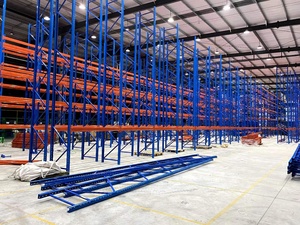
Factory-direct nested cart technology supporting 2 to 6 pallets deep per lane, delivering maximum footprint density and immediate access.
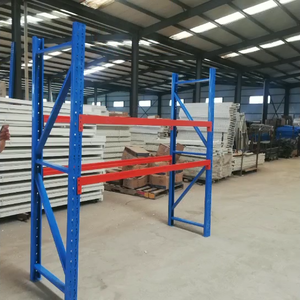
Multi-tier modular framework with adjustable beam levels, high load bearing capabilities, and hybrid pallet staging integration.
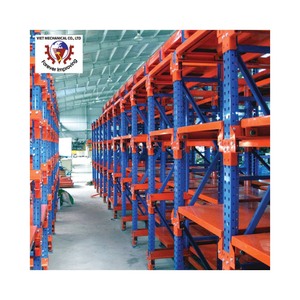
Corrosion-protected, powder-coated structural frame tested under stringent seismic and continuous cycle endurance specifications.
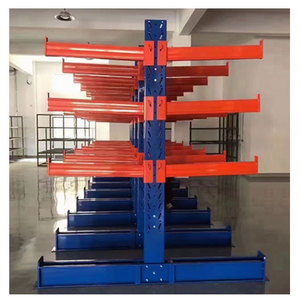
Engineered for sheet metal, tubing, and non-standard long loads. Up to 2,000kg load capacity per arm level with adjustable safety pins.
Understanding the physics behind dynamic carriage systems, load distribution, and spatial optimization in high-density facilities.
Push-back racking utilizes a series of nested rolling carts that glide across inclined structural steel rails. When loading, the forklift gently pushes the preceding pallet back to reveal the next nesting carriage.
Unlike stationary selective racks, push-back systems absorb significant horizontal kinetic vectors during pallet placement and retrieval. Upright frames are reinforced with diagonal k-bracing.
Operating on a Last-In, First-Out (LIFO) model, push-back allows 2 to 6 pallets deep storage per lane. Unlike drive-in racks where trucks enter the rack frame, push-back keeps trucks in the main aisle.
As logistics operations face unprecedented land costs, nearshoring demands, and stringent seismic requirements, industrial procurement managers are transitioning toward highly standardized, resilient dynamic racking.
Refrigerated and frozen food logistics demand maximum cube efficiency due to escalating refrigeration energy costs. Push-back racking has become the default option for temperature zones ranging from 0°C to -30°C.
Key procurement demands include specialized cold-tough steel grades resistant to embrittlement, synthetic low-temperature lubricants, and dual-layer electrostatic powder or hot-dip galvanizing finishes.
With distribution hubs expanding across seismically active zones in Central America, the Pacific Rim, and Mediterranean regions, global buyers now require certified structural calculations complying with EN 16681 and RMI standards.
Procurement criteria emphasize verified load ratings under spectral acceleration, specialized footplate anchoring, and validated dynamic deformation tolerances for nested cart assemblies.
Standard off-the-shelf configurations no longer satisfy modern logistics hubs handling non-standard Euro (1200x800mm), ISO/US (40x48 inch), and regional industrial skids within a single storage aisle.
Enterprises are bypassing intermediaries to collaborate directly with OEM/ODM production factories capable of providing fully custom cart geometries, welded safety backstops, and customized pick face arrangements.
From prime cold-rolled steel coils to corrosion-resistant finished systems, every push-back component undergoes rigorous in-house dimensional and structural quality checks.
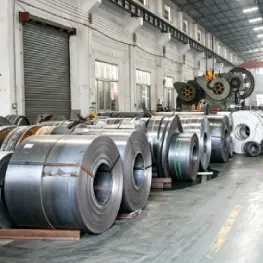
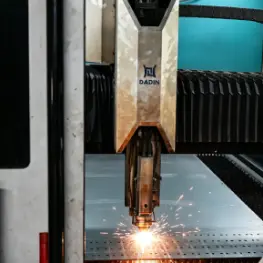
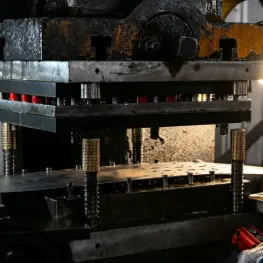
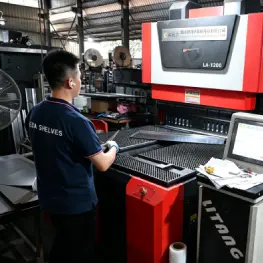
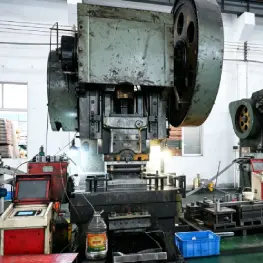
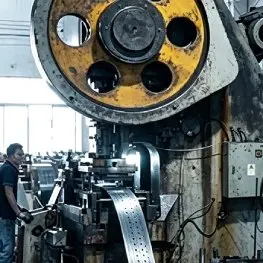
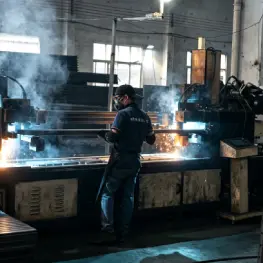
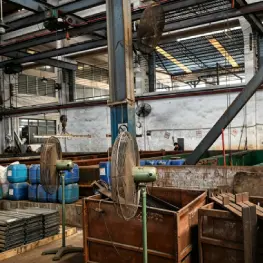
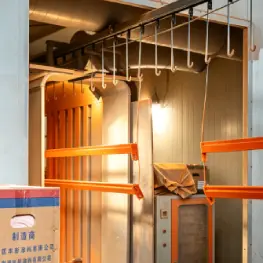
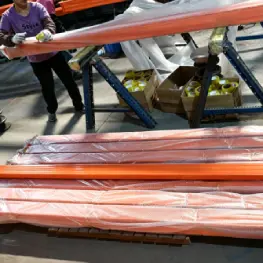
Serving world-class logistics facilities, distribution hubs, and multinational brand distributors with end-to-end reliability.
Every project starts with an engineering-first mindset. Our technical team produces detailed CAD floor plans, 3D structural models, and finite element stress simulations at zero cost prior to contract finalization.
This completely eliminates on-site alignment conflicts, ensuring perfect compatibility with aisle widths, ceiling clearances, and forklift masts.
Our production facilities maintain strict adherence to ISO 9001:2015 quality control systems (Certificate No. 18624Q00169R0M) and European CE mark compliance (No. 2435-CPR-8605159).
All finished coatings undergo mandatory salt spray resistance, cross-hatch adhesion, and impact toughness tests before dispatch.
Direct shipments from South China deep-water ports to global destinations including Central America (Puerto Quetzal, Acajutla, Puerto Cortés, Puerto Caldera, Balboa), North America, Europe, and Southeast Asia.
All components are bundled, itemized, and clearly labeled per container for expedited customs clearance and rapid site erection.
Expert answers addressing load capacities, installation, maintenance, and ordering parameters for commercial project planners.
While both provide high-density LIFO storage, push-back racking does not require forklift trucks to enter the rack structure. Forklifts operate solely in the main aisle, loading and retrieving from the front face. This reduces racking impact damage by up to 70%, cuts forklift travel time, and allows each lane to store a distinct SKU.
Standard push-back systems accommodate 2, 3, 4, 5, and 6 pallets deep per lane. Load capacities typically range from 500kg up to 1,500kg (3,300 lbs) per pallet position. Custom reinforced rolling carts and heavy steel structural channels can be engineered for specialized industrial loads exceeding 2,000kg.
Yes. Push-back racking is one of the most cost-efficient systems for cold storage and blast freezers. To ensure trouble-free operation down to -30°C, we specify low-temperature synthetic lubricants, sealed stainless-steel bearings, and either specialized epoxy powder coatings or hot-dip galvanized rails to resist moisture condensation.
Push-back racking concentrates heavy point loads on upright baseplates. We calculate exact baseplate dimensions and anchor bolt quantities based on your warehouse concrete slab thickness (typically 150mm–250mm) and local seismic spectral coefficients, ensuring full structural compliance with regional building safety codes.
Our carts are precision-welded with CNC jigging and feature integrated guide tabs, low-friction flange wheels, and physical interlocks that prevent individual carts from lifting, shifting sideways, or jumping the rails during dynamic loading. End-of-lane positive stops secure the front pallet firmly in place.
To produce an engineered proposal and CAD layout, please provide: warehouse clear height and layout drawings, column spacing, pallet dimensions (W x D x H including overhang), pallet gross weights, forklift model and maximum lift height, and intended SKU operational turnover rules.