Warehouse Pallet Flow ›
Configured for maximum cubic volume efficiency, smooth material feed, and zero operational downtime across retail stores and high-throughput distribution hubs.
A comprehensive engineering evaluation of high-density dynamic storage, nested cart dynamics, spring tension kinematics, and total cost of ownership (TCO).
Modern supply chain logistics and retail operations operate under relentless margin pressures dictated by rising urban real estate costs and escalating warehouse footprints. In response, modern material handling engineering has pivoted decisively from static, footprint-heavy storage frameworks toward dynamic, space-multiplying push rack configurations. Whether deployed as industrial multi-tier heavy-duty pallet push-back systems inside cold-storage logistics parks or miniaturized spring-actuated pusher systems along retail gondolas, the underlying kinematic objective remains uniform: eliminating wasted access corridors and maximizing immediate visual and mechanical accessibility.
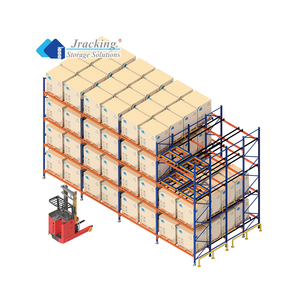
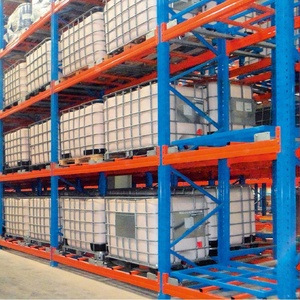
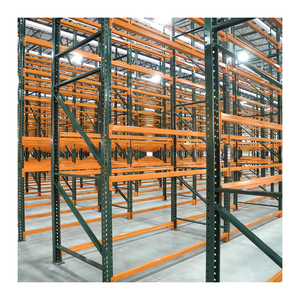
Heavy-duty industrial push back racking operates utilizing an inclined structural rail system combined with a cascading series of nested rolling carts. In a typical 2 to 6-pallet deep push-back configuration, the initial pallet is loaded by a standard counterbalanced or reach forklift onto the uppermost nested trolley. When the subsequent pallet is introduced, the forklift operator applies forward vehicular pressure, pushing the first pallet gently rearward along structural steel guidance tracks to expose the underlying cart carriage. Gravity acts as the perpetual actuator: as front pallets are retrieved during picking cycles, the trailing pallets automatically slide forward at controlled velocity to the front discharge plane.
Unlike drive-in racking frameworks—which require forklift masts to physically traverse inside the rack channels—push rack infrastructure restricts vehicle interaction purely to the exterior aisle face. This architectural boundary delivers three immediate operational dividends: it eliminates over 90% of structural column collisions, speeds up pallet cycle handling times by 30–40%, and facilitates multi-SKU selectivity across distinct vertical elevations without sacrificing high-density storage ratios.
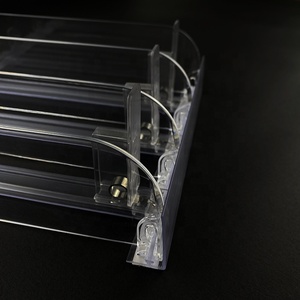
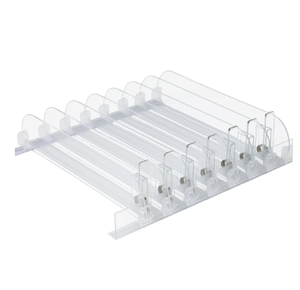
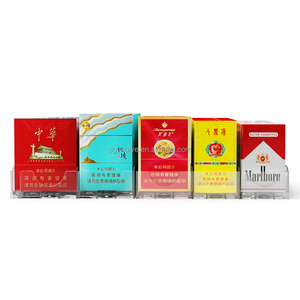
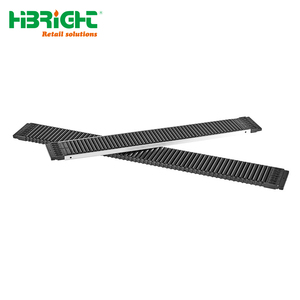
Parallel mechanical principles govern micro-level retail shelf pusher systems. Fabricated using high-durability polymers such as Polycarbonate (PC) and Polyoxymethylene (POM), paired with heat-tempered stainless-steel constant-force spiral springs (typically 2N to 12N calibration), auto-feed pushers ensure packaged inventory consistently advances to the retail shelf edge. In high-turnover categories like tobacco displays, pre-packaged beverages, cosmetics, and OTC pharmaceuticals, front-facing product orientation correlates directly to double-digit conversion surges by eliminating front-of-shelf voids and substantially minimizing retail shelf-restocking labour overheads.
| Storage Topology | Space Utilization Ratio | SKU Selectivity Index | Forklift Cycle Time | Structural Collision Risk | Optimum Use Application |
|---|---|---|---|---|---|
| Push-Back Racking (Nested Carts) | 75% – 85% Cubic Density | Medium-High (Lane Independent) | Rapid (Aisle Face Access Only) | Extremely Low (No Internal Entry) | Cold Storage, 2-6 Pallet Batches, Buffer Hubs |
| Drive-In Racking Systems | 80% – 88% Cubic Density | Low (Single SKU per Bay) | Slow (Deep Maneuvering Required) | High (Frequent Column Impacts) | Massive Single-SKU Manufacturing Staging |
| Selective Pallet Racking | 40% – 50% Cubic Density | 100% Instant Access | Moderate (Extensive Aisle Travel) | Moderate (Wide Flange Vulnerability) | High-SKU 3PL Distribution Facilities |
| Gravity Pallet Flow (FIFO) | 85% – 90% Cubic Density | Medium (Per Lane) | Rapid (Separate Load/Unload Aisles) | Low (Dedicated End Faces) | Perishable Goods, Fast-Moving Consumer Goods |
Anticipate how shifting cold-chain logistics, automated material integration, and seismic compliance standards are reshaping contract manufacturing specifications.
Global procurement teams in seismically vulnerable zones (such as Latin America, the Pacific Rim, and Southern Europe) now demand finite element analysis (FEA) validating dynamic cart behavior during horizontal ground acceleration. Modern manufacturing utilizes high-ductility Q355B cold-formed structural steel, reinforced upright profiles, and dual-direction safety stops preventing trolley derailment under transient earth loads.
As refrigerated and pharmaceutical distribution costs surge, cubic air space must be maximized. Next-generation push racks incorporate specialized low-temperature sealed bearings lubricated with aerospace-grade synthetic greases rated to -35°C. Enhanced hot-dip galvanization and multistage thermoset epoxy powder coatings prevent electrolytic rust under aggressive atmospheric condensation.
In retail displays and parts picking lines, mechanical pushers are increasingly integrated with low-power IoT micro-switches and optical load cells. Pushing mechanisms now actively trigger replenishment telemetry back to enterprise ERP software the exact moment shelf stock dips below safety thresholds, preventing lost sales in high-velocity micro-fulfillment environments.
Direct OEM/ODM industrial fabrication combining 25 years of engineering heritage, rigorous German/EU certification, and robust export freight packaging.
All fabricated uprights, cross beams, carts, and pusher components are strictly governed under verified CE Certification (No. 2435-CPR-8605159), ISO 9001:2015 (No. 18624Q00169R0M) quality management, and RoHS non-toxic material compliance.
Operating across a dedicated 30,000 m² production workshop staffed by over 300 experienced engineers and technical fabricators, our ten automated production phases achieve up to 30,000 tons of structural steel storage output per month.
From custom track profiles and load capacities up to 1,500 kg per pallet cart, to custom spring-tension retail pusher widths, our design engineers formulate comprehensive CAD layouts, 3D renderings, and precise load calculation reports within 24 hours.
Clear answers to the structural, operational, and commercial questions international supply chain managers raise during RFP evaluations.
While standard configurations range between 2 to 5 pallets deep, our custom engineered heavy-duty systems can accommodate up to 6 pallets deep per lane. Beyond 6 pallets deep, operational push force required from standard reach trucks becomes uneconomical, and radio shuttle or pallet flow configurations are recommended instead.
Our carts ride on precision heavy-gauge steel rails set at a specific structural incline (typically 2.5% to 3.5%). Each cart is fitted with flanged steel wheels housing double-sealed, maintenance-free ball bearings. Dual safety end stops and guide lips prevent cart uplift or skewing, even when unevenly loaded pallets enter the lane.
Yes. Unlike drive-in racks or roller-bed flow racks where weak bottom pallet boards can catch and cause dangerous stoppages, push-back carts provide a rigid full-perimeter support base. The pallet rests securely on the structural steel cart cradle, ensuring weak runners or irregular dimensions never obstruct movement.
We offer customized spring calibrations ranging from 2 Newtons for lightweight cosmetics and cigarettes, up to 12 Newtons for heavy glass bottles, large canned goods, and dairy cartons. Variable spring coils can be interchanged on the same track divider without requiring modification of existing shelf fixtures.
Submit your facility dimensions, floor plan sketches, or retail merchandise parameters. Our logistics engineers will construct a complete, itemized OEM/ODM quotation accompanied by free 3D CAD layout calculations within 24 hours.
Inquire Now