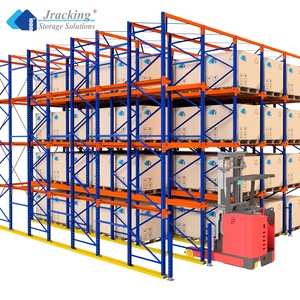
Selective Racking
Warehouse Heavy Duty Industrial Shelves Selective System
European standard blue and orange beam-column configuration providing 100% immediate selectivity for high-throughput distribution hubs.
Explore heavy-duty rack engineering, bespoke pallet storage arrays, and high-efficiency material handling units certified under CE and ISO 9001 standards.
European standard blue and orange beam-column configuration providing 100% immediate selectivity for high-throughput distribution hubs.
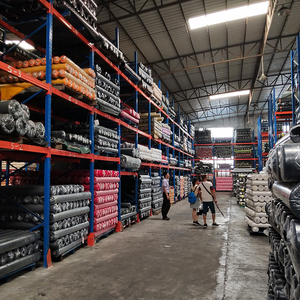
Precision cold-roll formed upright sections designed to support point and uniform loading up to 3,000 kg with bespoke slot pitch configurations.
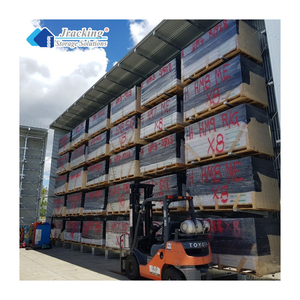
Hot-dip galvanized structural profile arms engineered for timber, pipes, and raw metals, ensuring long-term rust prevention outdoors.
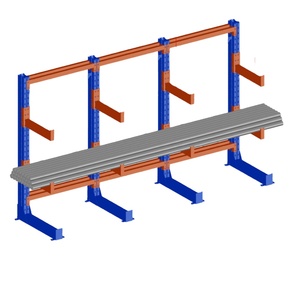
Continuous weld-base structural H-beam columns engineered to eliminate deflection during single-sided and double-sided lateral staging.
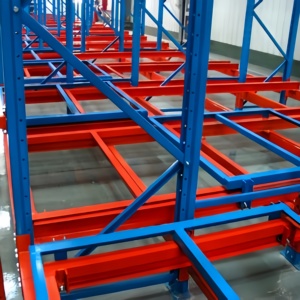
Low-temperature bearing nested carts and inclined guide rails offering 2-to-6 pallet deep high-density accumulation inside frozen vaults.
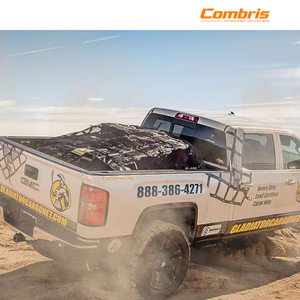
High-tensile PVC coated polyester and metallic retention netting engineered to stop high-bay falling hazards and safeguard pick aisles.
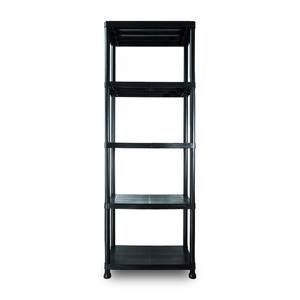
Precision interlocked multi-tier steel deck shelving for carton-picking zones, maintenance workshops, and light assembly lines.
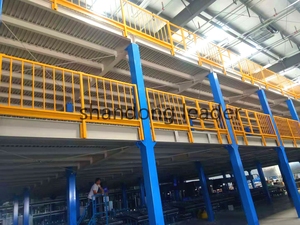
Rack-supported multi-level floor installations maximizing building envelope height, verified through finite element analysis.
A comprehensive analysis of nested cart dynamic staging, LIFO flow efficiency, and seismic structural considerations for engineering procurement officers.
Push back pallet racking is a dynamic high-density accumulation architecture operating primarily on a Last-In, First-Out (LIFO) inventory cadence. Unlike standard drive-in racking that requires fork trucks to travel directly within physical frame bays—introducing substantial risk of structural upright collision—push back systems rely on a telescoping nested carriage assembly or continuous inclined roller tracks. The carts travel along structural steel channel rails angled at an engineered gradient, typically between 1.5% and 3.0% depending on pallet mass, cart wheel friction coefficients, and nominal working temperatures.
During the loading sequence, the handling forklift positions the initial pallet onto the uppermost nested trolley. To deposit the subsequent unit load, the operator gently pushes the first cart backward using the second pallet, exposing the underlying secondary cart. This mechanical sequence repeats up to 6 pallets deep. Upon picking, gravitational potential energy glides downstream pallets smoothly forward to the front aisle face at a controlled speed, governed by precision-flanged steel wheels featuring shielded low-friction bearings. This eliminates aisle dead-space, allowing facilities to achieve up to 75% greater volumetric storage capacity over conventional selective racking arrays.
Fabricated using heavy-gauge cold-formed steel channels with anti-lift safety tabs to guarantee cart stability under asymmetrical pallet placement.
Specially formulated low-temperature lubricants and double-sealed stainless steel or carbon steel bearings designed to operate continuously down to -30°C.
Every lane operates as an independent dynamic accumulator. Unlike drive-in setups requiring cleared vertical blocks, each level can house a different SKU.
Because push back racking imposes dynamic push-and-gravity thrust forces on the supporting horizontal beams, OEM manufacturers must design structural framing beyond simple static load tables. In addition to vertical pallet dead loads, beams resist torsional moments caused by cart acceleration, stopping impacts, and directional forklift contact. Upright columns are rolled from high-strength structural grade steels (e.g., Q235B, Q355B, or ASTM A572 Grade 50) and engineered to comply with strict safety factors.
| Storage Type | Pallet Density Index | Forklift Cycle Speed | Damage Risk Profile | SKU Diversity Capacity |
|---|---|---|---|---|
| Push Back Racking (2-6 Deep) | 80% – 85% | Fast (Aisle Staging Only) | Extremely Low (No Bay Entry) | High (Different SKU per Lane) |
| Drive-In Racking | 85% – 90% | Slow (Deep Maneuvering) | High (Frequent Column Hits) | Low (Same SKU per Bay) |
| Standard Selective Racking | 50% – 60% | Moderate (100% Direct Pick) | Low to Moderate | Maximum (1 Pallet per SKU) |
| Pallet Flow (Gravity FIFO) | 85% – 90% | Fast (Dedicated In/Out) | Low (Aisle Pick) | Moderate (Dedicated Lanes) |
Key technological, regulatory, and supply chain shifts redefining how supply chain leaders procure and deploy heavy racking infrastructure.
Modern supply chain logistics hubs are increasingly integrating fiber-optic sensors and wireless strain gauges along load-bearing rack beams and baseplates. This enables real-time structural health monitoring, alerting warehouse managers to dangerous column deflections, overload conditions, or forklift impact stress long before catastrophic collapse occurs.
Global environmental mandates are driving a shift away from standard chemical finishes toward automated non-toxic zirconium phosphate pre-treatment lines coupled with high-adhesion electrostatic thermosetting epoxy-polyester coatings. These formulations yield superior salt-spray resistance, vital for high-humidity and sub-zero refrigerated environments.
Push back arrays are evolving into hybrid installations where gravity-fed nested carts operate along pick faces while automated 2D radio carriers or AGVs handle long-run pallet induction on upper levels. This modularity protects capital investment by allowing progressive automation without tearing out installed steel framing.
Combining 25 years of metallurgical precision, an integrated 30,000 m² production base, and rigorous international structural compliance.
Continuous coil-slitting, roll-forming, and robotic plasma punching systems guarantee massive volume delivery with short lead times.
Our licensed engineering corps prepares structural stress analyses, seismic calculations, and layout configurations before purchase sign-off.
Fully certified quality operations (CE Certificate No. 2435-CPR-8605159, ISO No. 18624Q00169R0M) ensuring complete legal compliance worldwide.
Heavy steel components bundled with protective edge wraps, grouped by bay numbers, and container-stowed for expedited customs clearance.
Essential technical and logistical answers for project directors, plant managers, and international procurement agents.
We incorporate precision-machined heavy-duty steel wheels mounted with self-lubricating, double-shielded ball bearings riding on structural cold-formed guide channels. Each nested cart features welded side alignment guides and mechanical end stops that retain proper lateral tolerance even if the forklift operator introduces off-center pallets.
While dry ambient warehouses operate efficiently on a gradient of 1.5% to 2.0%, sub-zero cold stores (-18°C to -30°C) utilize an engineered gradient of 2.2% to 2.8%. This compensates for minor surface frost condensation and increases the rolling inertia of the low-temperature lubricant utilized in our cryogenic bearings.
Yes. As an OEM/ODM manufacturer, HEDA Shelves designs bespoke push back cart assemblies and rail supports configured to clip or bolt directly onto existing standard step or box beams, provided the existing upright capacities, slab foundations, and beam deflection limits are verified by our structural engineers.
Every shipment includes mill test certificates (MTC) verifying steel grade chemistry, powder coat adhesion and thickness reports, certified weld inspection records, full component bills of materials (BOM), step-by-step CAD installation schematics, and stamped CE compliance declarations.