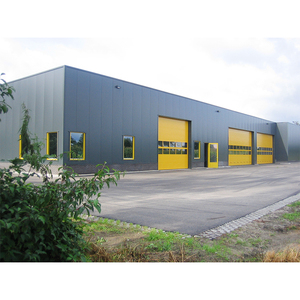
 Structural Clear-Span
Prefab Warehouse Steel Structure Workshop Industrial Steel Structure Warehouse
- High-grade H-section & C/Z purlin design
- Wind resistance: Up to 140 km/h / Grade 12
- Full integration with overhead cranes & racks
Direct from our audited 30,000 m² smart manufacturing center. Each unit is custom roll-formed using high-tensile Q235B and Q355B prime structural steel, certified for rigorous dynamic seismic compliance and demanding supply chain throughput.
Structural Clear-Span
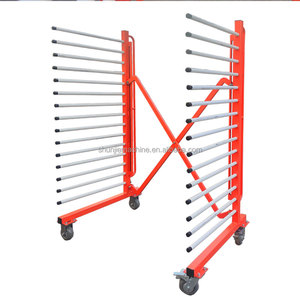 Mobile Heavy Handling
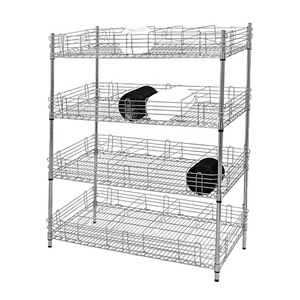 ESD / Cleanroom Class
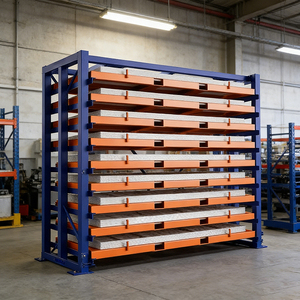 100% Drawer Extension
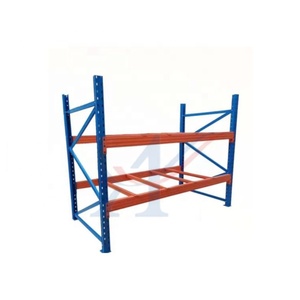 1000kg/Layer Certified
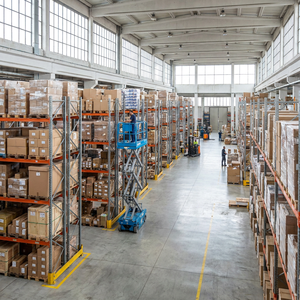 OEM Standard Standard
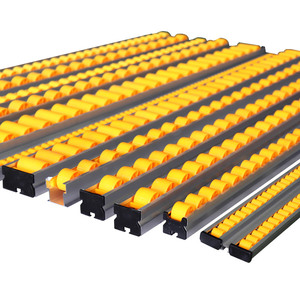 Dynamic FIFO Flow
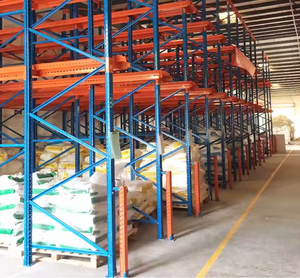 85% Space Density
Modern enterprise warehouse operators are pivoting from standard commodity rack brokers to fully accountable OEM/ODM engineering factories. The strategic differentiation lies in metallurgical integrity, custom cold-roll tooling, finite element analysis (FEA), and lifecycle risk mitigation.
Unlike regional assemblers reliant on non-certified scrap melting, tier-one Chinese OEM/ODM factories execute continuous profiling directly from prime hot-rolled coils (Q235B, Q355B, SS400). Proprietary continuous roll-forming lines exert calibrated pressure steps that preserve grain boundaries along cold-bent radii. This elevates yield strength by 14% to 18% over standard press-brake formed channels, preventing stress-cracking under repetitive forklift docking impacts.
Every industrial installation experiences static gravitational loading, dynamic fork placement impulses, and horizontal seismic shear forces. Advanced ODM partners provide multi-node 3D CAD modeling and Finite Element Method (FEM) calculations conforming to ANSI MH16.1 (USA), EN 15512 (Europe), and AS 4084 (Australia). Structural beam deflections are strictly constrained beneath L/250 under static rated loads, ensuring frame stability and automated crane clearance.
For maritime corridors, refrigerated blast freezers, and humid industrial regions, standard unpickled spray systems fail within 18 months. Leading OEM suppliers mandate a 9-stage chemical pretreatment: hot alkaline degreasing, twin-stage water rinse, acid pickling, nanoceramic or zinc phosphating, and deionized passivating. Finish coats use TGIC-free thermosetting electrostatic polyester powders cured at 195°C, sustaining 500+ hours in ASTM B117 salt spray testing.
| Racking Architecture | Optimal SKU Profile | Volumetric Floor Utilization | Throughput Velocity | Handling Machinery Compatibility |
|---|---|---|---|---|
| Selective Pallet Racking | High SKU diversity, random access picking | 40% – 50% | 100% Direct Selective Access | Standard Counterbalance, Reach Trucks, VNA |
| Drive-In / Drive-Through | Few SKUs, deep batch storage, cold rooms | 75% – 85% | LIFO / FIFO batch dispatch | Counterbalance, Narrow-Mast Reach Trucks |
| Carton / Pallet Gravity Flow | High rotation, fast-moving consumer perishables | 65% – 75% | Automatic Gravity FIFO replenishment | Automated Shuttles, AGVs, Walkie Stackers |
| Heavy Duty Cantilever Racks | Long pipes, lumber, bar stock, sheet steel | 55% – 70% | Rapid crane or side-loader selection | Side-loaders, Multi-directional Forklifts, Overhead Hoists |
| Roll-Out Sheet Metal Rack | High-density laser cutting plate staging | 85% – 90% | Immediate individual tray rollout | Vacuum sheet lifters, bridge cranes, manual hoists |
From prime slit steel coils to ocean-worthy containerized shipping crates, our 30,000 square meter factory executes absolute metallurgical traceability under CE Certification No. 2435-CPR-8605159 and ISO 9001:2015 registration No. 18624Q00169R0M.
Mill test certificates (MTC) verified for chemical composition and mechanical tensile yield limits.
High-speed uncoiling, hydraulic leveling, and tight-tolerance strip shearing without edge burrs.
Continuous CNC progressive dies punch teardrop or 50/75mm diamond pitches with ±0.1mm accuracy.
24-station rolling pass forms complex column profiles, maximizing section modulus without micro-fissures.
Twin C-profile roll-forming with automated continuous seam clinching or structural GMAW welding.
Panasonic robotic 6-axis work cells weld beam connector claws with 100% spatter-free penetration.
Chemical pickling and phosphating removes mill scale, providing ideal mechanical keying for powder.
Nordson automated reciprocator spray booths apply epoxy-polyester powder uniformly across all recesses.
Constant 195°C baking polymerization creates a non-porous, chemical-resistant thermoset enamel barrier.
Bundling with protective dunnage, drop testing, and barcoded container manifests matching customs bills.
The procurement landscape for material handling structures is undergoing accelerated modernization driven by automation integration, ESG environmental mandates, and supply-chain nearshoring resilience.
The boundary between stationary static racking and automated material handling is disappearing. Procurement leads now specify racking systems engineered from day one to accommodate Autonomous Mobile Robots (AMRs), automated four-way pallet shuttles, and top-running automated cranes. This shifts dimensional tolerances from construction-grade ±3.0mm down to mechanical-machining tolerances of ±0.5mm across rack guide aisles, leveling shims, and laser docking reflectors.
Scope 3 carbon disclosure regulations across the European Union (CBAM) and North America are impacting industrial warehouse tenders. Procurement officers are actively transitioning toward Tier-1 mills utilizing electric arc furnace (EAF) steel with recycled scrap inputs. Additionally, chemical pretreatments have transitioned completely away from heavy metal chromates to zirconium-based eco-coatings, and solventless low-cure powder systems that reduce carbon footprint per metric ton by over 28%.
Rapid nearshoring into Central America, Mexico, and Southeast Asia places modern facilities on active tectonic fault zones. Standard catalogs with generic anchor sizing cannot satisfy local building codes (such as NEC, NSR, or Eurocode 8). Procurement contracts now mandate localized geotechnical ground acceleration coefficient (Ss, S1) calculations, oversized ductile base plates, and double expansion wedge anchors that dissipate lateral seismic energy without column shear failure.
Key metallurgical, engineering, structural, and international logistics inquiries resolved by our senior structural engineering team.
Under ANSI MH16.1-2012, maximum beam deflection under nominal working load must not exceed L/180, where L represents the clear span distance between columns. For European EN 15512 and FEM 10.2.02 standards, the limitation is typically more stringent at L/200, and for automated shuttle lanes or AS/RS applications, our engineering team designs to L/300 or L/350. This prevents excessive sagging that could impede forklift mast entry, trigger pallet catch hazards, or misalign optical retroreflectors on automated handling vehicles.
For standard heavy-duty selective racks carrying 1,000 to 1,500 kg per pallet position (up to 4–5 levels high), concrete compressive strength must reach a minimum of 3,000 to 4,000 PSI (20 to 28 MPa). The slab thickness should measure at least 6 to 8 inches (150 to 200 mm) of non-shrink, wire-mesh reinforced concrete. For taller high-density drive-in or mezzanine upright loads exerting concentrated point loads over 80 kN, our team provides custom widened anchor base plates (e.g., 200×200×10mm) to distribute ground bearing stress below the allowable soil and slab threshold.
Yes. Guangzhou Heda Shelves provides full OEM and ODM services. We engineer custom tooling dies to replicate proprietary upright and beam cross-sections (including teardrop, slotted, structural structural c-channel, and European hook profiles). In addition, we execute custom laser stamping of distributor brand logos, bespoke powder color matching (RAL/Pantone), private label carton packaging, and customized QR-coded technical load warning plaques to support your regional distribution identity.
Exporting across trans-oceanic routes to ports such as Puerto Quetzal, Balboa, Colón, Rotterdam, or Long Beach involves severe marine humidity and salt spray exposure. We utilize a multilayer preservation protocol: uprights and beams receive high-density protective stretch shrink film with corner chipboard protectors. Fasteners and hardware are treated with Geomet or high-micron zinc plating and vacuum sealed with desiccant silica packs. Furthermore, containers are pre-inspected for watertightness before cargo stuffing.
Our standard manufacturing turnaround is 15 to 25 business days depending on order tonnage and whether bespoke roll-forming tooling is required. Because our smart workshop operates with 30,000 tons of monthly capacity across 30,000 m² of factory space, large multi-container projects are scheduled with rapid high-volume output. Our standard MOQ is one 20ft or 40ft container load (FCL) to optimize container volumetric packing density and minimize ocean freight cost per pallet location.
Every delivered shipment is accompanied by comprehensive 3D isometric CAD assembly layouts, column-by-column component marking sheets, and complete hardware inventories. For large multi-tier structural mezzanines or complex automated shuttle lanes, our engineering division supplies remote video commissioning sessions and step-by-step video tutorials. On-site bilingual mechanical installation supervisors can also be dispatched directly to your site upon project request.
Provide your facility clear height, building column grid, pallet load dimensions, and forklift lift specifications. Our senior structural design engineers will deliver a comprehensive 3D layout, static calculation report, and factory-direct FOB/CIF price schedule within 24 business hours.