Selective / Heavy Duty
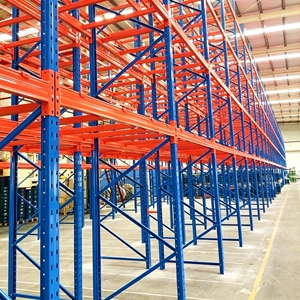
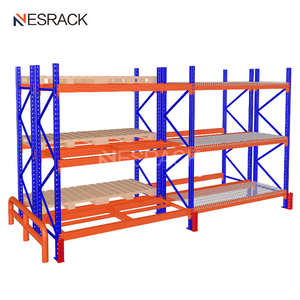
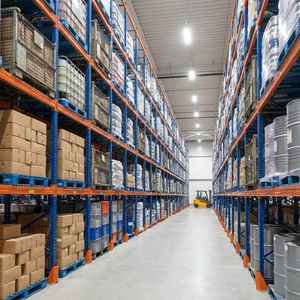
Heavy Duty High Bay Selective Pallet Racking (6-10 Layers)
1,000-5,000 kg/Tier
100% Pallet Accessibility
Q235B / Q355B Steel
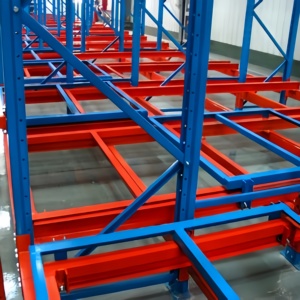
Our OEM/ODM engineering covers everything from high-bay multi-tier pallet racking systems to cold storage push-back systems and high-precision roll forming equipment. Built using certified Q235B/Q355B structural steel, custom-tailored for maximum pallet density, seismic resistance, and forklift compatibility.
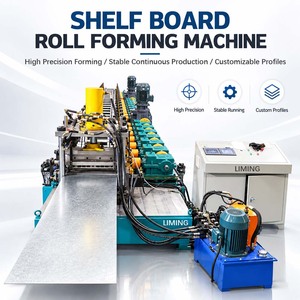
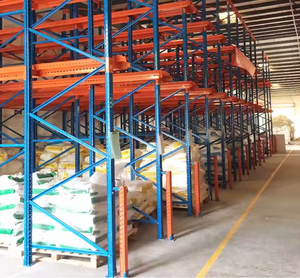
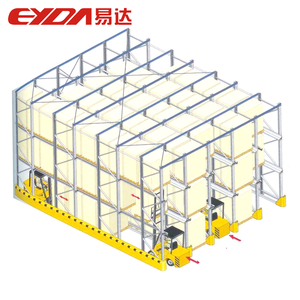
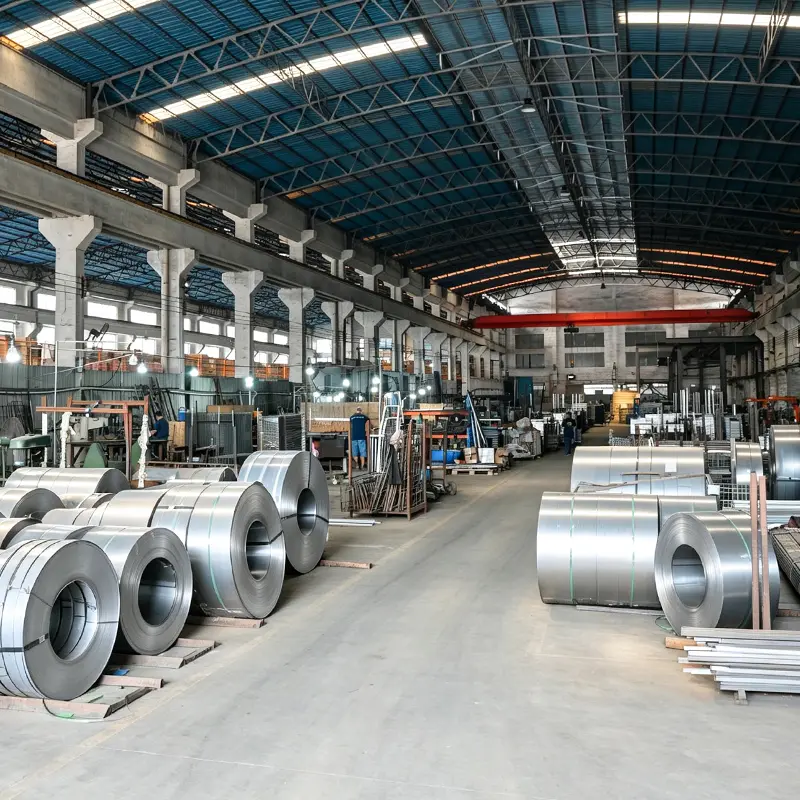
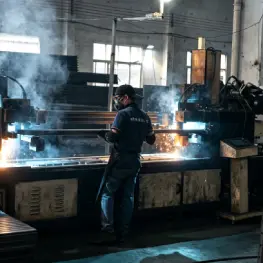
With more than 25 years of specialized OEM/ODM manufacturing excellence, Guangzhou Heda Shelves Co., Ltd. operates a state-of-the-art 30,000 m² smart production base. Certified under ISO 9001:2015, CE (EN 15512), and RoHS, we combine full-cycle automated cold-roll forming, robotic continuous welding, and multi-stage anti-corrosion coating lines.
Dedicated R&D since 2001 in heavy industrial racking and mezzanine platforms.
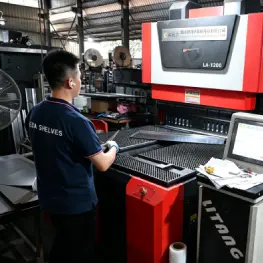
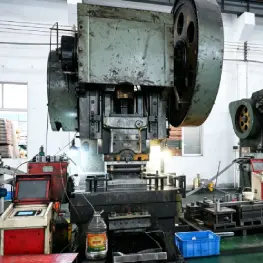
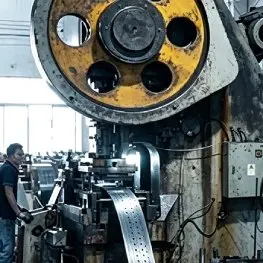
Equipped with 18 automated roll-forming lines and multi-axis CNC punching stations.
Uninterrupted supply chain with direct partnerships with tier-1 steel mills (Baosteel/Shougang).
Delivering tested structural storage systems across 120+ sovereign nations.
Unlike light commercial shelvers, heavy-duty industrial racking requires rigorous elastic-plastic structural mechanics analysis. HEDA engineers utilize advanced 3D ANSYS and SAP2000 Finite Element Method (FEM) software to simulate beam end-connector semi-rigidity, torsional-flexural buckling, and seismic base shear under dynamic cyclic loads.
Every batch of structural steel undergoes destructive tensile tests, yield strength validation (minimum 235 to 355 MPa), and spectrometer chemical element verification. Components pass through our proprietary automated 10-stage pre-treatment tunnel—including automated shot blasting, hot alkaline degreasing, zinc phosphate conversion coating, and electrostatic TGIC polyester powder coating cured at 200°C.
Selecting the optimal racking system requires balancing storage density, SKU accessibility, order picking cycle times, and civil foundation load limits. Review our engineering benchmark below.
| Racking System Type | Volumetric Space Utilization | SKU Selectivity Ratio | Typical Deflection Limit | Stock Rotation Logic | Cold-Room / Seismic Suitability | Primary Industrial Use Case |
|---|---|---|---|---|---|---|
| Selective Pallet Racking | 40% – 50% | 100% (Direct Access) | L / 200 (EN 15512) | FIFO or LIFO | Standard to Moderate | FMCG, 3PL Distribution, Multi-SKU E-Commerce |
| Drive-In / Drive-Through | 75% – 85% | Low (Lane-by-Lane) | L / 250 (Rigid Rail) | LIFO (Drive-In) / FIFO | High (Sub-Zero Freezers) | Beverage, Dairy, Cold Chain Agro-Export |
| Push-Back (Cart/Roller) | 65% – 75% | Medium (By Channel) | L / 200 (Incline Track) | LIFO (Gravity Return) | High (No Forklift Inside) | Food Manufacturing, Chemical Staging Buffers |
| Radio Shuttle Automation | 80% – 90% | Medium-High | L / 300 (High Precision) | Automated FIFO / LIFO | Extreme (-30°C to +45°C) | Automated Frozen Warehouses, High-Throughput Buffers |
| Heavy Duty Cantilever | 50% – 65% | 100% (Linear Loads) | L / 180 (Arm Buckling) | Direct Unobstructed | Outdoor Galvanized / Indoor | Steel Pipes, Extrusions, Rebar, Lumber Yards |
| Rack-Supported Mezzanine | 150% – 200% (Floor Doubling) | 100% Multi-Tier | L / 300 to L / 400 | Continuous Picking | Dry / Temperature Controlled | Auto Parts Distribution, Retail E-Fulfillment |
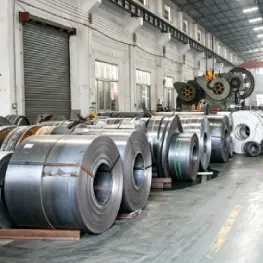
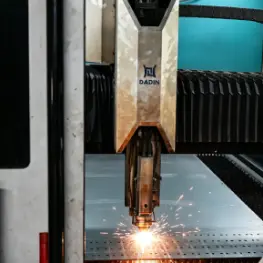
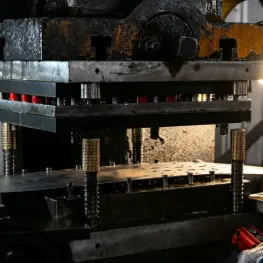
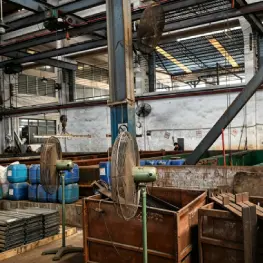
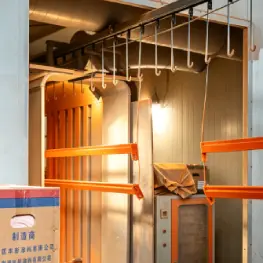
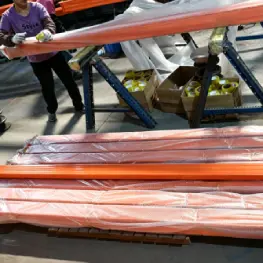
Every structural column, box beam, horizontal diagonal brace, and interlocking connector undergoes an audited 10-stage fabrication workflow within our Guangzhou manufacturing plant.
Global warehouse procurement is experiencing a major structural shift driven by automation adoption, strict seismic compliance, sustainability directives, and localized supply-chain regionalization.
Traditional static pallet storage is rapidly migrating toward hybrid shuttle automation and Autonomous Mobile Robot (AMR) compatibility. Procurement engineers now demand tighter fabrication tolerances (±1.0mm upright deviation over 12m vertical rises) to support automated optical sensors, top-track shuttle crawlers, and high-speed robotic picking cranes without structural jamming.
Rising global ocean freight and raw carbon costs are pushing tier-1 manufacturers toward HSLA steels like Q355B and Q420. By optimizing cold-formed profile cross-sections with multi-ribbed stiffening bends, racking deadweight can be cut by 12% to 18% without diminishing structural load capacity, reducing total landed procurement cost per pallet position.
Major distribution centers across seismically volatile regions (such as the Pacific Ring of Fire, Central America, the Mediterranean, and South America) are moving away from generic off-the-shelf racking. Municipal codes mandate dynamic modal analysis (P-Delta effects, ductility class DCM, and soil-structure interaction factors) calculating exact anchor embedment and oversized baseplate thicknesses.
With refrigerated warehouse power consumption reaching historic highs, cold-storage logistics providers are prioritizing cubic thermal efficiency. Semi-automated radio shuttle systems and deep push-back arrays reduce ambient cooled volume per pallet by over 45%, requiring low-temperature impact-resistant steel alloys and cryogenic lubricants rated down to -35°C.
For coastal and humid equatorial warehouses (such as Panama, Costa Rica, the Caribbean basin, and Southeast Asia), conventional single-layer wet painting is obsolete. Industry procurement specifies a minimum of 80–120 microns electrostatic TGIC polyester powder coating over zinc phosphate conversion, or continuous ISO 1461 hot-dip galvanization for fertilizer and chemical exposure.
Supply chain leaders are increasingly bypassing regional middlemen in favor of factory-direct OEM agreements. By sourcing directly from ISO 9001 and CE certified Chinese manufacturers offering bilingual structural engineering submittals, clear bill of lading export documentation, and serialized container packing lists, EPCs save 25%–35% on CAPEX.
Direct technical and operational answers to the most common queries raised by warehouse developers, civil engineers, supply-chain executives, and import directors.
Our structural engineers execute site-specific dynamic structural analysis adhering to EN 16681, RMI MH16.1, and local earthquake codes. Based on your geographical seismic ground acceleration coefficient (PGA), building importance factor, and concrete slab compressive strength (e.g., C25/30 or 4000 PSI), we custom-engineer column cross-section profiles, gusset baseplates, diagonal frame bracings, and M12-M16 Hilti mechanical/chemical anchor embedment depths.
We source prime hot-rolled and cold-rolled structural coils exclusively from certified state-owned steel conglomerates (Baosteel, Shougang). The baseline grade for beams and uprights is Q235B (yield strength ≥ 235 MPa) or Q355B (yield strength ≥ 355 MPa, equivalent to European S355JR / ASTM A572 Gr. 50). Full EN 10204 Type 3.1 chemical spectrometry and mechanical tensile/elongation mill test certificates (MTC) accompany each export consignment.
Export steel components pass through a 10-stage chemical immersion tunnel: degreasing, acid pickling to eliminate mill scale, and zinc phosphate conversion. Components are subsequently electrostatically powder coated with lead-free TGIC polyester resin (80-120 μm) cured at 200°C, passing 500+ hours of continuous salt-spray testing (ASTM B117). For corrosive outdoor facilities or chemical plants, we offer full hot-dip galvanization conforming to ISO 1461.
To produce an optimized CAD floor layout and quotation within 24 hours, our engineering team requires: (1) Architectural CAD floor plan showing clear ceiling height, column grid coordinates, and dock door locations; (2) Pallet dimensions (W × D × H including overhang) and gross weight per unit; (3) Forklift model, turning radius, and maximum mast lift elevation; (4) Total SKU count, required throughput, and environmental operating temperature.
Components are bundled with heavy-gauge PET straps, protected with corrugated corner guards, and wrapped in moisture-resistant PE stretch film. Uprights and beams are secured onto heavy timber/steel dunnage with designated lifting nylon sling positions to eliminate forklift puncture damage during unloading. Each shipping container (20GP, 40HQ, 45HQ) is modeled using 3D container-loading software to maximize cube utilization and minimize sea transit shifting.
Yes. As an authentic OEM/ODM manufacturer, we operate high-precision automated multi-stage punch tooling capable of stamping industry-standard diamond hole pitches, 50mm pitch tear-drop configurations, 75mm British pitches, or bespoke proprietary profiles. Electrostatic surface colors can be custom matched to any corporate RAL standard (e.g., RAL 5015 Sky Blue, RAL 2004 Pure Orange, RAL 7035 Light Grey) at no additional tooling premium for project orders.
Every delivered project is furnished with comprehensive, English-annotated 2D CAD assembly blueprints, 3D exploded structural schematics, component packing piece-marks, and step-by-step video installation walk-throughs. For large-scale multi-tier mezzanines or automated warehouse deployments, HEDA can deploy certified bilingual field installation supervisors directly to your site to oversee local erection crews.
We provide comprehensive global commercial delivery terms including FOB (South China ports: Guangzhou, Shenzhen, Foshan), CIF, CFR, and turnkey DDU/DDP delivery directly to your facility door. Our export documentation department prepares verified Certificate of Origin (Form E, CO, FTA agreements), packing declarations, commercial invoices, and bill of ladings to guarantee swift, compliant customs release.
Connect directly with HEDA's structural design division. Send us your architectural floor plan or pallet specifications, and receive a comprehensive CAD layout, 3D BIM rendering, and itemized factory-direct price submittal within 24 business hours.