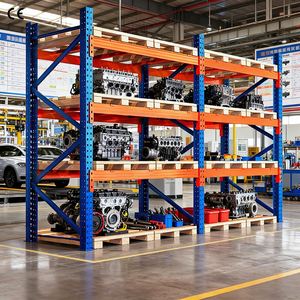
Pallet Racking Shelves & Racks Heavy Duty Metal Pallet Storage Racking 1000kg
1000kg/Beam
Q235B Steel
Adjustable Pitch
Configured with structural Q235B roll-formed steel, customized gradient roller tracks, and safety braking separators built to rigorous international engineering standards.
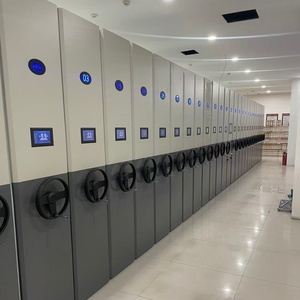
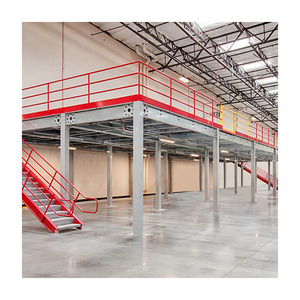
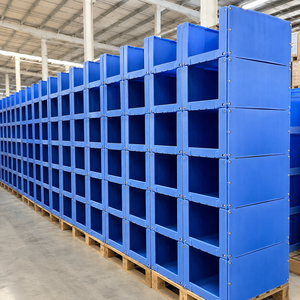
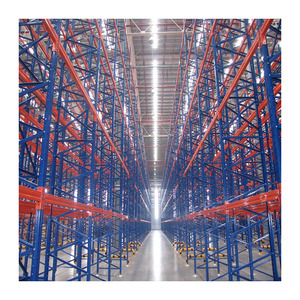
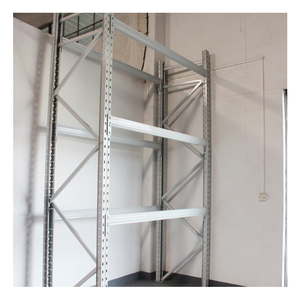
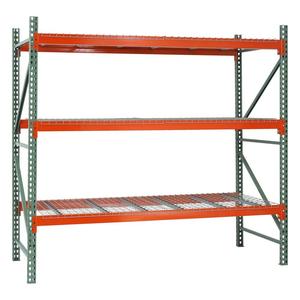
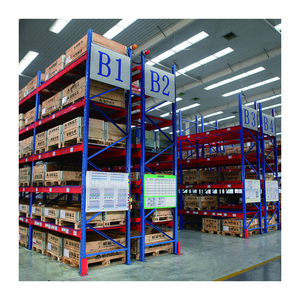
Gravity-fed racking systems—commonly categorized as pallet flow racks and carton flow systems—represent an apex tier of mechanical warehouse engineering. Unlike static selective pallet racks that necessitate wide forklift aisles for every two rows, gravity-driven dynamic racks leverage slight inclinations (typically between 1.5° and 3.5°, or roughly a 2.5% to 4.5% gradient) to transport goods effortlessly from the replenishment aisle (charging side) to the retrieval aisle (discharging side). This physical architecture isolates material handling traffic into designated zones, directly neutralizing forklift collision hazards while achieving exceptional volumetric utilization.
The core kinematic challenge in large-scale gravity pallet flow stems from terminal velocity management. In high-density lanes exceeding 6 to 15 pallets in depth, a single pallet weighing 1,000 kg can accumulate destructive momentum if left uncontrolled. As a premier original equipment and design manufacturer (OEM/ODM), our engineering process integrates centrifugal speed-limiting brake rollers situated at mathematically calibrated pitch intervals along the galvanized roller track. These dynamic brake assemblies automatically introduce kinetic resistance proportional to the square of the roller's rotational speed, locking the descent velocity between an optimal 0.25 m/s to 0.35 m/s regardless of pallet payload variance.
Dynamic Safety Factor: Every gravity system engineered within our Guangzhou manufacturing compound incorporates automated pallet separation mechanisms. When the lead pallet reaches the front terminal end-stop, our mechanical separator disengages contact pressure from the accumulated queue behind it, allowing forklift operators to perform safe vertical extractions free from hydraulic backpressure.
From an operational paradigm, gravity flow represents the uncontested standard for First-In, First-Out (FIFO) batch control. Sectors dealing with strict shelf-life limitations—including cold-chain logistics, pharmaceutical distribution, food processing, dairy, and agricultural exports—rely on pallet flow lanes to eliminate stock expiration and dead inventory. Furthermore, by collapsing multiple redundant aisles into one contiguous block of high-density steel lanes, storage floor utilization expands by up to 60% to 80% compared with standard wide-aisle configurations.
How intelligent automation, cold-chain resilience, and seismic structural dynamics are reshaping global warehousing investments.
Modern procurement is rapidly pivoting from standalone static racks to hybrid gravity-fed buffer lanes interconnected with automated guided vehicles (AGVs) and stacker cranes. Gravity pallet flow lanes act as frictionless accumulation and decoupling buffers between production lines and outbound staging docks, slashing operational energy requirements without costly continuous-chain conveyors.
With global demand for frozen food and biologics soaring, cryogenic engineering is a critical buying consideration. Standard rollers and synthetic lubricants solidify in sub-zero environments (-25°C to -40°C), triggering flow stalls. Contemporary OEM specifications require low-viscosity synthetic fluorinated greases, stainless steel ball bearings, and specialized polyurethane tire sleeves to prevent pallet slippage.
Enterprise procurement teams across seismic zones—such as the Pacific rim and Central America—increasingly mandate finite element analysis (FEA) validating structural integrity under dynamic resonant frequencies. Upright column geometry, diagonal bracing trusses, base plate thickness, and floor anchor chemistry must accommodate simultaneous pallet velocity surges and seismic lateral shear forces.
From prime hot-rolled structural steel to robotic welding and ISO-accredited quality assurance, our 30,000 m² Guangzhou production facility provides verified engineering precision.
Strict structural adherence with CE Certificate No. 2435-CPR-8605159 and ISO 9001:2015 management credentials ensure audited traceability from raw steel coil to packed container.
Our 300+ technical team delivers layout design, load beam deflection simulations, and dynamic gravity lane kinematic calculations at zero cost prior to contract execution.
10-stage preparation including automated pickling, phosphating, and electrostatic powder curing coats every upright and beam, with optional hot-dip galvanizing for coastal and chemical applications.
Specialized export packaging bundles profiles with designated piece markings and balanced weight distribution for frictionless customs inspection and accelerated job-site assembly.
Critical technical considerations for supply chain directors, warehouse managers, and structural engineers.