Modular Boltless
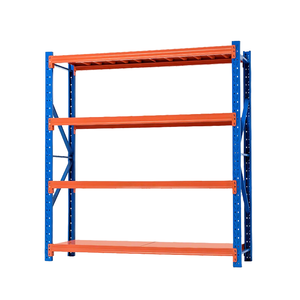
Industrial 4Layer Boltless Steel Storage Rack
Adjustable light-to-medium boltless interlocking design engineered for rapid warehouse manual carton picking and fulfillment hubs.
Explore 8 enterprise-grade storage architectures manufactured from high-yield Q235B/Q355B cold-rolled structural steel, optimized for intensive material handling and high cubic space efficiency.
Adjustable light-to-medium boltless interlocking design engineered for rapid warehouse manual carton picking and fulfillment hubs.
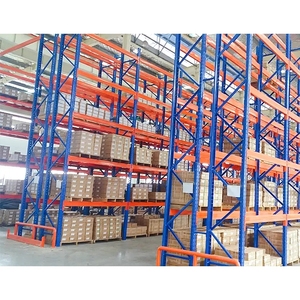
Universal selective beam profiles handling up to 4,500 kg per level, delivering immediate individual pallet selectivity for high-SKU distribution.
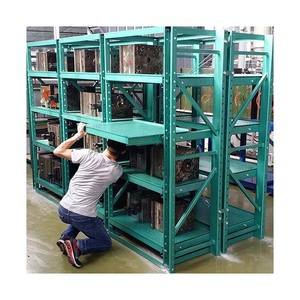
Ergonomic slide-out drawer mechanism supporting 1,000–3,000 kg per deck, integrated with overhead hoist cranes for precise tool deployment.
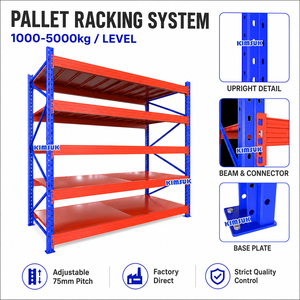
Reinforced solid plate steel decking built to eliminate pallet deflection during long-term static buffering in manufacturing facilities.
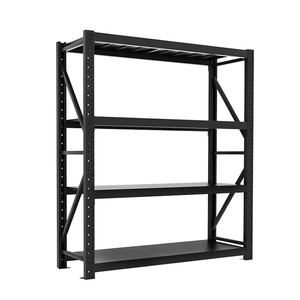
Standardized modular longspan tier system for high-density automotive spares, retail backroom inventory, and carton consolidation.
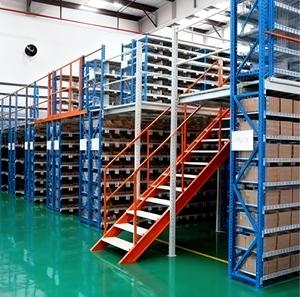
Rack-supported elevated platforms multiplying clear-height utilization by 200–300% without structural foundation reconstruction.
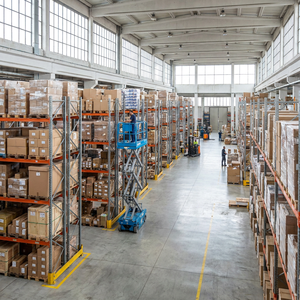
Fully customizable structural upright and beam configurations tailored for high-throughput logistics centers and cold chain terminals.
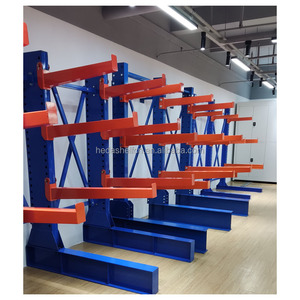
Unobstructed horizontal storage arms engineered specifically for pipes, lumber, extruded aluminum profiles, and heavy steel rebar bundles.
An in-depth technical analysis for international procurement directors, structural engineers, and warehouse logistics exporters.
In heavy industrial logistics, static calculations alone are insufficient to guarantee long-term operational safety. As an authoritative OEM rack manufacturer since 2001, HEDA Shelves utilizes advanced Finite Element Analysis (FEA) to simulate dynamic stresses induced by automated guided vehicles (AGVs), counterbalance forklifts, and severe seismic acceleration. By strictly adhering to international standards—including EN 15512 (European Racking Code), RMI (Rack Manufacturers Institute MH16.1), and AS4084—every cold-formed upright profile undergoes rigorous modeling to assess torsional buckling, local flange crippling, and beam end-connector flexural rigidity.
Our upright sections are rolled from certified high-tensile structural steel (Q235B and Q355B grades), engineered with specialized omega cross-sections and continuous return lips. This geometric cross-section enhances the second moment of area (moment of inertia), allowing structural columns to safely support static unit bay loads exceeding 24,000 kg while maintaining structural resilience under high pallet cycle velocity.
Exporters and maritime distribution hubs face extreme environmental challenges, particularly high relative humidity, airborne salinity, and severe thermal cycles. Standard air-dried paints quickly degrade under these conditions, exposing cold-rolled steel to galvanic oxidation and catastrophic structural fatigue. To prevent premature degradation, our factory utilizes an automated 10-stage surface pre-treatment line.
The manufacturing process begins with automated shot-blasting to achieve surface profile roughness Sa 2.5, followed by multi-stage chemical pickling and deep zinc phosphating. This establishes an impermeable crystalline conversion layer that drastically impedes rust creeping under the paint film. Finished profiles then pass through automated electrostatic powder coating booths utilizing high-durability thermosetting polyester resin powder baked at 200°C. For sub-zero cold rooms, coastal container terminals, or aggressive agrochemical environments, we supply hot-dip galvanized components certified under ISO 1461, ensuring zinc coating thickness exceeding 65–85 μm for maintenance-free lifespans spanning over 25 years.
From custom profile roll-forming to port-ready containerized packing lists, our factory-direct infrastructure guarantees precision delivery.
We tailor beam drop angles, connector hole pitches (50mm/75mm), cold-bent profiles, custom paint pigmentation (RAL specs), and specialized baseplates aligned with your facility's exact concrete compressive strength (fc) and slab rebar layouts.
Fully compliant with international auditing authorities: CE Certificate No. 2435-CPR-8605159, ISO 9001:2015 Quality Management System Certification (No. 18624Q00169R0M, valid through 2027), and verified RoHS chemical testing documentation.
Precision bundling prevents ocean freight transit abrasion. Every shipping container is packed with systematic color-coded component tags, matching itemized Bill of Lading manifests to accelerate local customs clearing and reduce on-site labor sorting costs.
How automation readiness, green steel compliance, and digital twins are reshaping large-scale warehouse rack investments.
Modern distribution centers are rapidly transitioning from standard forklift operations to semi-automated Radio Shuttle systems, autonomous mobile robots (AMRs), and high-bay Automated Storage and Retrieval Systems (ASRS). Traditional tolerances (±3.0mm) are no longer acceptable. Future-proof procurement requires ultra-tight fabrication tolerances (±1.0mm) to ensure laser-guided pallet shuttles glide smoothly along deep-lane guide rails without mechanical binding or sensor disruption.
Warehouse developers in the Americas and seismic-active coastal regions can no longer rely on general seismic zone approximations. Next-generation procurement mandates site-specific soil structure interaction (SSI) modeling. By dynamically calculating rack overturning moments and ductility reduction factors (μ) against local building codes (e.g., IBC, Eurocode 8), structural engineers specify heavy duty wraparound column baseplates and high-yield chemical anchor bolts that safely absorb ground kinetic energy.
Scope 3 carbon reporting is becoming mandatory for tier-1 multinational exporters and third-party logistics (3PL) conglomerates. Procurement directives are actively filtering suppliers based on carbon intensity per ton of finished racking. HEDA Shelves addresses this shift by sourcing scrap-recycled Electric Arc Furnace (EAF) hot-rolled steel and deploying ultra-low volatile organic compound (VOC) TGIC-free powder coatings, significantly cutting embodied environmental footprints.
As rack structures scale past 15 to 30 meters in clear height, structural monitoring is going digital. Leading facilities are adopting IoT-driven strain gauge sensors embedded directly into high-impact upright posts and cantilever joints. These continuous telemetry monitors alert facility safety teams to subtle deflection creep, unseen forklift impacts, or dynamic overload conditions before micro-fissures propagate into progressive frame collapses.
Authoritative guidance addressing common structural, commercial, and engineering questions encountered during international rack sourcing.
To design an optimized layout, we require: clear interior warehouse dimensions (L × W × H to lowest obstruction/sprinkler head), building column grid spacing, pallet specifications (length, width, total height including cargo, and gross weight), forklift turning radius and mast reach height, SKU volume, and preferred stock rotation rule (FIFO or LIFO).
In accordance with EN 15512 and RMI standards, we apply a minimum partial material safety factor of 1.4 to 1.5 against steel yield strength under static load limits. Furthermore, beam deflection under maximum design working load is strictly limited to L/200 (or L/300 for sensitive automated systems) to avoid structural strain or pallet dislodgement.
For standard dry ambient warehouses, multi-stage electrostatic thermosetting powder coating (60–80 μm) provides exceptional durability. For extreme conditions—such as cold storage (-25°C) where condensation cycles accelerate rust, or coastal facilities subject to marine salt fog—we mandate continuous hot-dip galvanization per ISO 1461.
Components are pre-packaged into rigid steel-strapped bundles with protective plastic film barriers, cardboard edge angle boards, and reinforced wooden dunnage blocks. Uprights and beams are nested symmetrically to prevent transport torsion, optimized for 40ft High Cube (HC) container cube fill factors exceeding 95%.
Yes. As a direct OEM/ODM manufacturer with in-house tooling workshops, we can develop custom upright profiles, tailored connector hook configurations (3-claw / 4-claw safety pins), and private-label embossing for regional racking distributors, exporters, and large-scale engineering contractors.
Every shipment is accompanied by bilingual 3D assembly CAD drawings, component schedules, anchor torque specifications, and step-by-step video tutorials. For large-scale projects exceeding 1,000 pallet positions, we deploy professional bilingual installation site supervisors to coordinate local installation crews directly.