Precision Heavy-Duty Racking & Manufacturing Machinery
Manufactured according to stringent European standard FEM 10.2.02 and US RMI guidelines. Explore our high-performance pallet storage and automated profiling systems.
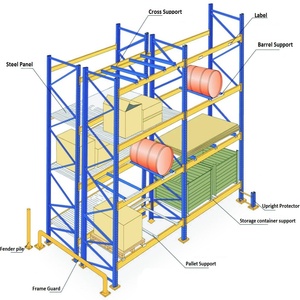
Heavy Duty Industrial Metal Shelf Cantilevered Pallet Rack Powder Coating Finish Bolt Structure for Warehouse Storage Shelves
Engineered for long-form, irregular materials and heavy industrial coils. Fully bolted column base configuration with high-tensile structural steel stability.
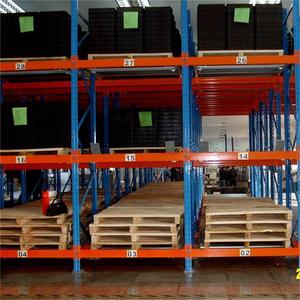
Heavy-Duty Dynamic FIFO Pallet Flow Racking 5 Steel Roller Corrosion Protected Powder Coated Warehouse Storage Stacking Racks
Gravity-driven pallet flow system featuring precision galvanized roller tracks and speed separation brakes for seamless First-In, First-Out throughput.
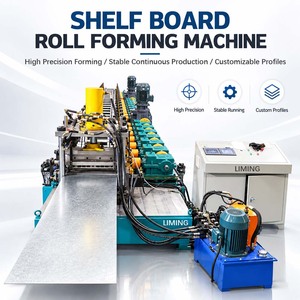
Liming Storage Rack Shelf Board Forming Machine For Steel Shelving Panel And Warehouse Equipment Production
Automated cold roll forming manufacturing line with synchronized hydraulic punch stations for high-tolerance beam, upright, and steel decking output.
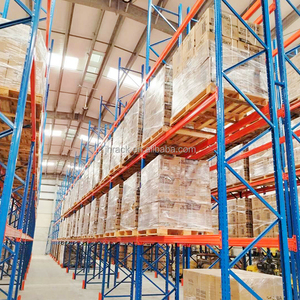
Industrial Heavy Duty Warehouse Granulating Racking Storage Racks with Corrosion Protection European Standard Pallet Rack
Classic heavy-duty structural steel pallet rack, featuring 50mm/75mm beam adjustability, robotic seam welding, and acid-resistant thermoset polymer coating.
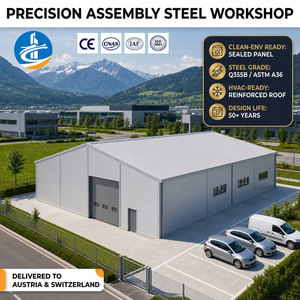
High-Bay Racking Steel Structure Warehouse for High Density Automated Storage and Logistics
Ultra-tall rack-clad warehouse structures designed for stacker cranes, high-speed automated storage, retrieval systems (AS/RS), and maximum volumetric density.
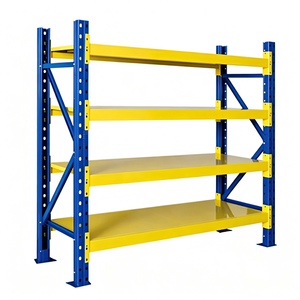
Industrial Warehouse Shelving Adjustable Metal Storage Rack Commercial Logistics Factory Garage Workshop Goods Organization
Multipurpose, flexible modular racking system suited for split-case fulfillment, archive centers, automotive components, and maintenance workshop storage.
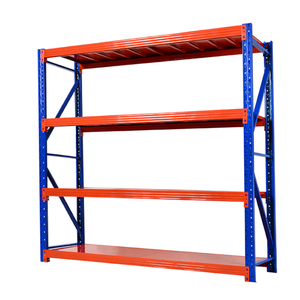
Heavy-Duty Boltless Steel Storage Rack Industrial Warehouse And Garage Use Storage Shelf With High Capacity
Patented drop-in interlock connection requiring zero bolts. Reduces on-site installation time by 60% while providing formidable rigid load stability.
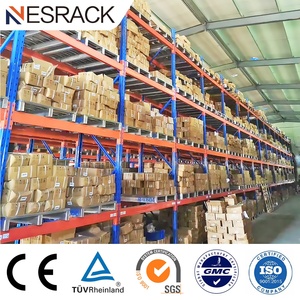
Heavy-Duty Boltless Shelving Racking Systems Industrial Steel Iron Warehouse Racks Heavy Duty Storage Rack with CE Certificate
Certified under European Standard EN 15512, featuring cold-rolled Q235B/Q355B structural sections, multi-prong claw connectors, and safety locking pins.
Engineering Double Deep Pallet Racking: Spatial Density vs. Selectivity
In modern industrial logistics, floor space acquisition and cold storage refrigeration costs have emerged as the primary operational expenditure bottlenecks. Double deep pallet racking represents an optimal structural compromise between standard single-deep selective racking and ultra-dense drive-in or automated shuttle setups. By storing unit loads two deep in a back-to-back layout (four pallets deep per dual-sided aisle structure), double deep configurations instantly eliminate 50% of the working aisles required by conventional selective racking systems, boosting overall cubic storage density by 30% to 40%.
However, implementing double deep pallet storage requires rigorous mechanical engineering calculations. Because pallets situated in the rear tier require specialized reach trucks equipped with pantograph mechanisms or telescopic forks, beam deflections, upright torsional rigidity, and aisle tolerance envelopes must conform to strict engineering standards including FEM 10.2.02, EN 15512, and the Rack Manufacturers Institute (RMI) MH16.1 design specifications.
1. Kinematic Mechanics & Fork Reach Load Deration
When operating a specialized reach truck with extended pantograph scissors to retrieve the rear-tier load (nominal 1,000 kg – 1,200 kg standard EUR/ISO pallet), the vehicle's center of gravity shifts forward dramatically. In structural rack engineering, this induces dynamic impact forces that must be compensated for during beam connector claw dimensioning. HEDA Shelves utilizes cold-rolled Q355B high-tensile steel upright profiles paired with heavy-duty box beams engineered to limit vertical deflection strictly within L/200 under static and dynamic cyclic loading.
To assist global system integrators and supply chain directors in evaluating capital efficiency, the engineering matrix below illustrates the trade-offs across conventional racking paradigms:
| System Architecture | Floor Footprint Utilization | Direct Selectivity | Required Forklift Equipment | Typical SKU Homogeneity | Capital Cost Index |
|---|---|---|---|---|---|
| Standard Selective | 35% - 40% | 100% (Instant Pick) | Standard Counterbalance / Reach | High SKU variety (1-2 pallets/SKU) | 1.0 (Baseline) |
| Double Deep Pallet Rack | 55% - 65% | 50% (Two-deep LIFO) | Pantograph Double-Reach Truck | Medium SKU density (2-4 pallets/SKU) | 1.3 - 1.45 |
| Drive-In / Drive-Through | 65% - 75% | 10% - 15% (Batch LIFO) | Standard Counterbalance (Cab-In) | Very low SKU count (Mass batches) | 1.5 - 1.7 |
| Radio Shuttle Automation | 75% - 85% | Automated Lane FIFO/LIFO | Standard Forklift + Automated Shuttle | High-throughput batch logistics | 2.4 - 3.2 |
| Very Narrow Aisle (VNA) | 50% - 60% | 100% (Instant Pick) | Wire-Guided Turret Truck | High SKU variety + Tall clearance | 2.1 - 2.8 |
2. Material Science: Structural Cold-Forming & Surface Metallurgy
As premier Chinese exporters and direct manufacturers, HEDA Shelves employs continuous automated roll-forming lines capable of handling steel coil thicknesses ranging from 1.5mm to 3.5mm with micro-metric dimensional precision. Our double deep uprights feature an omega-profile geometry with continuous 50mm or 75mm pitch diamond-slotted punching. This geometric cross-section delivers superior cross-axial torsional moment resistance compared to standard open C-channels.
For surface protection, especially in humid tropical zones, cold-storage distribution hubs, and chemical logistics complexes, all fabricated steel components undergo an intensive 10-stage automated pre-treatment protocol:
• Stage 01–04: High-Temperature Alkaline Degreasing & Cascade Neutralization: Completely eradicates mill oils, carbon soot, and stamping residues from the coil surface.
• Stage 05–07: Acid Pickling & Nano-Ceramic Zirconium / Zinc Phosphating: Chemically passivates the cold-formed substrate, developing a dense micro-crystalline zinc-phosphate conversion layer that stops micro-corrosion underneath coatings.
• Stage 08–10: Electrostatic Thermoset Polyester Powder Deposition & 200°C Curing: Delivers an exceptionally resilient 80μm–120μm dry film thickness (DFT). Finished coatings endure 500+ hours of continuous neutral salt spray exposure (ASTM B117) without blistering, peeling, or adhesion loss.
3. Seismic Load Calculation & Slab Anchoring Parameters
Exporting structural storage equipment to seismically active regions—such as the Pacific Ring of Fire, Central and South America, Southern Europe, and Southeast Asia—necessitates compliance with EN 16681 (Steel static storage systems - Adjustable pallet racking systems - Principles for seismic design). Because double deep racking features a higher mass concentration per unit floor area, seismic overturning moments are considerably amplified.
Our engineering division models every warehouse project using Finite Element Analysis (FEA). Base plates are laser-cut from 8mm–12mm structural steel plates and secured with multi-anchor expansion or chemical capsule stud arrangements rated for dynamic shear stress and upward pullout forces. Frame bracing incorporates tubular diagonal and horizontal trusses bolted with Grade 8.8 structural fasteners to prevent cyclic sway fatigue during earth tremors.
Why Global Logistics Integrators Partner with HEDA Shelves
Direct from our 30,000 square meter factory in Guangzhou, China. We combine deep engineering credentials, massive fabrication capacity, and certified export execution.
Autonomous Roll-Forming & Heavy Tooling
Equipped with more than 30 automated rolling lines, high-precision robotic welding arms, and heavy-duty stamping presses. Our production line maintains steady tolerances of ±0.5mm across all column sections and load beam steps.
Independently Audited International Certifications
Full regulatory transparency. We hold verified CE Certificate No. 2435-CPR-8605159, ISO 9001:2015 Certificate No. 18624Q00169R0M, and RoHS environmental compliance, providing frictionless building approvals worldwide.
Optimized Sea Export Bundling & Palletization
Every sea container is 3D-simulated prior to loading. Uprights are bundled with steel band protective dunnage, beams are inter-nested on pallets, and small parts are crated, maximizing 40HQ volume utilization and avoiding transit chafing.
Free 24-Hour CAD & 3D BIM Structural Modeling
Provide us with your warehouse footprint and pallet specifications. Our senior structural design team delivers an optimized CAD layout plan, load calculation document, and 3D architectural rendering within one business day.
Multilingual Engineering & Global Project Supervision
From local code analysis in North America and Europe to turnkey installation guidance in Latin America and the Middle East, our field engineers provide detailed installation drawings, high-definition assembly videos, or on-site supervision.
Future Trends in Double Deep Pallet Racking & High-Density Storage
Strategic purchasing insights for warehouse operations, logistics developers, and commercial procurement managers navigating the 2026–2030 automation horizon.
01 AGV & AMR Autonomous Pantograph Integration
The historical limitation of double deep racking—operator visual occlusion during rear pallet retrieval—is being solved by Autonomous Guided Vehicles (AGVs) equipped with 3D LiDAR and optical camera alignment. Autonomous double-reach forklifts can operate safely within narrower aisles (down to 2.8 meters), substantially increasing throughput speeds while eliminating pallet impact damage.
02 Transition to Ultra-High-Yield Cold-Rolled Steels
Procurement departments are prioritizing structural resilience over sheer steel bulk. By upgrading from ordinary mild steel to micro-alloyed, high-yield steels (such as Q355B and Q460), racking manufacturers achieve equal or superior load safety coefficients with thinner gauge profiles, cutting gross structural deadweight, maritime shipping container quantities, and overall carbon footprints.
03 Dynamic Slotting & WMS-Driven Honeycombing Mitigation
The primary critique of double deep configurations is "honeycombing"—empty rear pallet slots hidden behind occupied front slots. Modern Warehouse Management Systems (WMS) now utilize predictive algorithmic slotting, assigning paired fast-moving inventory lots to dual-depth lanes. This elevates space utilization rates above 90% without sacrificing dispatch cycle times.
04 Decarbonized Production & Low-VOC Powder Finishes
Global supply chain compliance mandates low-carbon footprint infrastructure. Chinese manufacturers are transitioning to 100% heavy-metal-free, low-temperature-cured TGIC-free polyester powder formulations, combined with closed-loop wastewater reclamation systems during the chemical pickling and phosphating stages.
Frequently Asked Questions by International Buyers
Clear, engineering-backed answers addressing structural design, equipment compatibility, and export logistics.
Q1: What forklift specifications are strictly required for double deep pallet racking?
Double deep racking cannot be serviced by standard counterbalance forklifts. It requires a dedicated double-reach pantograph reach truck or a forklift fitted with telescopic hydraulic forks. When planning aisle widths, pantograph reach trucks typically require an operating aisle clearance of 3.0 to 3.4 meters for standard 1,000 × 1,200 mm pallets, compared to 2.6 to 2.9 meters for standard single-reach trucks. Furthermore, the truck must possess sufficient residual capacity at peak mast extension to account for load deration.
Q2: How do you prevent rear pallet push-through accidents in double-deep configurations?
Safe operation is maintained by integrating heavy-duty rear pallet stop beams, tubular back-stops, or structural wire mesh backing screens. At HEDA Shelves, we also engineer guide rails along the floor aisles to keep double-reach trucks perfectly centered, and we can configure guide channels across the upper beam tiers to ensure rear pallets seat securely on both front and rear load beams.
Q3: Can existing selective racking systems be retrofitted into double deep racking?
Yes. Because the fundamental upright frame profiles and load beams share structural continuity, existing selective frames can often be rearranged back-to-back using specialized heavy-duty frame row spacers (typically 200mm to 400mm spacing). However, structural recalculations are essential: because double deep uprights carry double the pallet weight per bay row, concrete slab PSI load capacity, baseplate dimensions, and seismic anchoring must be verified by our engineering team.
Q4: What information is required to receive a comprehensive CAD proposal and export quotation?
To produce an exact engineering drawing and quote, we need: (1) Warehouse architectural drawings showing clear ceiling height, column grid coordinates, and dock door placements; (2) Pallet specifications including width, depth, overall load height (including pallet base), and maximum gross weight; (3) Existing forklift model, mast stage height, and minimum turning radius; (4) Local seismic zone ratings or soil classification if available; (5) Preferred destination sea port for CIF/FOB calculations.
Q5: What standard warranties and quality assurance documentation accompany export shipments?
All HEDA Shelves double deep and industrial pallet rack projects include mill test certificates (MTC) proving steel tensile grade, raw material chemical composition reports, and coating thickness test certificates. Structural steel components carry a comprehensive 5-to-10-year structural integrity warranty against normal operational defects. Every shipping container includes a detailed packing list, tagged component labels, and exploded-view CAD installation schematics.