Engineered Industrial Pallet Racks & Material Handling Systems
From single-deep selective arrays to multi-tier mezzanine engineering and corrosion-resistant hot-dip galvanizing, compare structural specifications fabricated strictly to EN 15512 and RMI standards.
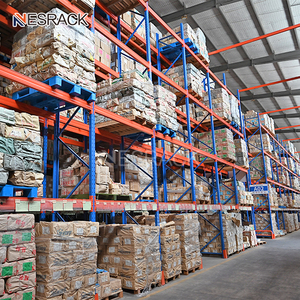
Pallet Multilevel Racking Heavy Duty Warehouse Storage Shelf System Warehouse Stacking Pallet Rack
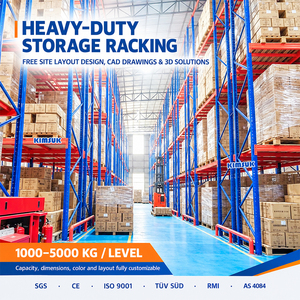
Modular Heavy Duty Racking System Steel Storage Shelves, Customized Warehouse Pallet Rack Factory Direct Supply
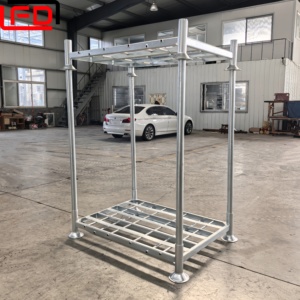
Dip Galvanized Industrial Storage Logistic Equipment Pallet Rack Warehouse Stackable Post Pallet Metal Pallet
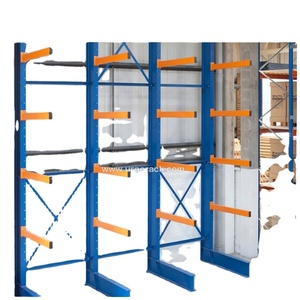
High Space Use Stainless Steel Storage Cantilever Racking with Warehouse Racks
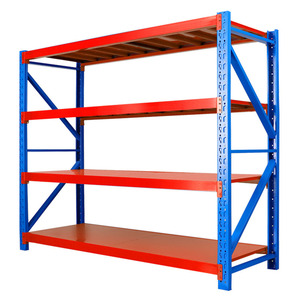
Medium/Heavy Duty Storage Equipment Warehouse Industrial Powder Coating Cargo Steel Iron Tool Supermarket Stacking Storage Racks
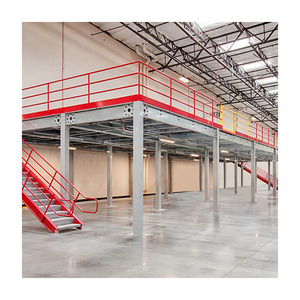
Mracking Provide Mezzanine Installation Support High Quality Warehouse Storage Industrial Mezzanine Floor Supplier Customized
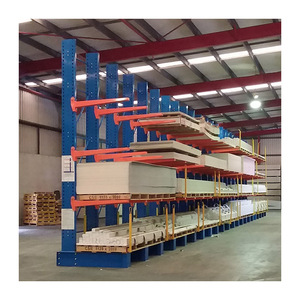
Mracking Adjustable Corrosion Protection Steel Pipe Storage Shelf Custom Warehouse Cantilever Rack System
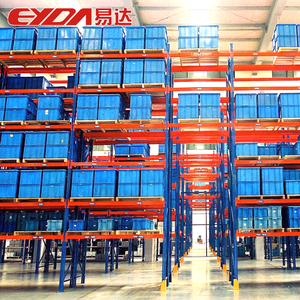
Garage Storage Factory Steel Warehouse Metal Van Rack System Heavy Duty Shelving Single Deep Industrial Pallet Rack Shelving
Engineering Architecture & Global Procurement Trends in Industrial Storage
A structural analysis of modern high-density pallet racking, material failure mechanics, international seismic codes, and the multi-year macro shift toward automated intralogistics.
1. Material Science, Upright Cold Roll-Forming & Structural Deflection Dynamics
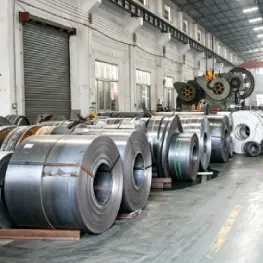
The structural integrity of modern heavy-duty warehouse racking hinges fundamentally on raw metallurgy, profile geometry, and cold work hardening during roll forming. Certified Chinese export manufacturers utilize high-grade Q235B and Q355B low-alloy carbon structural coils (conforming to GB/T 700 and GB/T 1591, chemically equivalent to ASTM A36 and ASTM A572 Grade 50). These steels possess verified tensile strengths ranging between 370–510 MPa and yield limits up to 355 MPa, ensuring resilient plasticity under sudden seismic shocks and seismic shear-wave propagation.
During profile roll-forming across 18 to 24 continuous forming stations, upright columns undergo progressive precision deformation to eliminate residual internal stresses. Upright cross-sections (typically 80×60mm, 90×70mm, 100×70mm, 120×95mm, and 140×95mm with steel thicknesses from 1.5mm to 3.0mm) incorporate multiple stiffening ribs along the web and dual returns on the flanges. Under European FEM 10.2.02 and EN 15512 codes, structural deflection limits for load-bearing box beams must not exceed L/200 (where L is the clear span length between upright frames). Box beams fabricated via automated continuous seam-welding of double C-profiles achieve superior torsional rigidity compared to open channels, preventing beam twisting under asymmetric pallet placements.
| Racking Topology | Storage Density Index | SKU Selectivity | Inventory Rule | Forklift Handling Class | Primary Application Profile |
|---|---|---|---|---|---|
| Selective Pallet Racking | Standard (40–45% footprint) | 100% Direct Access | FIFO / LIFO Flexible | Counterbalance, Reach Truck | FMCG, 3PL Distribution, Multi-SKU Hubs |
| Drive-In / Drive-Through | Ultra-High (up to 85%) | Low (Lane-Restricted) | Strict LIFO (FIFO Drive-Thru) | Standard Counterbalance, Reach | Cold Storage, Beverage, Homogeneous Sacks |
| Radio Shuttle Cart System | Maximized (up to 90%) | Medium-High (Lane level) | Software FIFO / LIFO | Electric Forklifts + AGV Ready | Blast Freezers, Agro-Exports, High Throughput |
| Push-Back Cart System | High (2 to 6 Pallets Deep) | Moderate by Bay | LIFO (Gravity Cart Flow) | Standard Reach Trucks | Buffer Zones, Manufacturing Staging |
| Rack-Supported Mezzanine | Vertical Multiplying (200-300%) | 100% Hand-Pick / Bulk Mix | Custom Manual / Conveyor | Order Pickers, Pallet Jacks | E-commerce, Auto Parts, Spare Components |
2. Seismic Engineering Compliance & Foundation Slab Calculation Protocols
Procurement teams specifying industrial racks in active tectonic regions (such as Central America's Pacific Ring of Fire, the Andean belt, Southeast Asia, or Mediterranean Europe) must mandate finite element seismic analysis. Racking behaves as an unbraced or partially braced semi-rigid steel frame. Under ground acceleration forces ($S_s$ and $S_1$ factors per IBC / ASCE 7 or Eurocode 8), racking undergoes harmonic oscillations where the sway displacement ($P\text{-}\Delta$ effect) can trigger sudden column bucking if baseplates and anchors fail.
Export-grade engineering accounts for dynamic beam-to-column rotational stiffness ($C_{bi}$) through beam end connector stub tests. Baseplates are stamped from heavy gauge 6.0mm–12.0mm steel plates with dual wedge anchor holes, transferring axial loads and moments safely into the concrete slab ($f'_c \ge 25\text{–}30\text{ MPa}$). Seismic bracing modules—combining back vertical horizontal K-bracing, portal ties across aisles, and robust floor run-spacers—stabilize high-bay installations exceeding 12 meters in height.
Product Development & Future Procurement Trends (2025–2030)
Anticipate technological inflection points reshaping modern intralogistics infrastructure and overseas manufacturing standards.
ASRS Integration & Shuttle-Ready Racking
Manual forklift operations are rapidly migrating toward semi-automated radio shuttle pallets and fully automated storage and retrieval systems (ASRS). Structural racking must now be manufactured with micro-tolerances (±1.0mm per 10m height) to support automated crane guide rails, optical sensors, and rail-guided shuttles.
Green Metallurgy & Low-VOC Powder Finishes
International ESG mandates demand eco-friendly manufacturing footprints. State-of-the-art Chinese exporters have eliminated heavy metal chromate pretreatment, deploying advanced 9-stage closed-circuit silane and zirconium conversion baths followed by TGIC-free electrostatic powder coatings that resist 500+ hours of continuous salt-spray testing.
Modular Rack-Supported Structural Building Envelopes
To circumvent ballooning civil construction costs and lengthy municipal permitting times, forward-thinking enterprises are adopting rack-clad warehouse structures (Clad-Rack buildings). Here, the heavy-duty racking frames serve as the primary load-bearing structural columns supporting exterior wall panels and roof trusses.
Guangzhou HEDA Shelves: 25-Year Industrial Leadership & Export Excellence
An unyielding commitment to dimensional precision, structural safety, certified material traceability, and end-to-end container logistics handling.
Full International Credentials
Rigorous factory audits by international inspection agencies: CE Certificate No. 2435-CPR-8605159, ISO 9001:2015 No. 18624Q00169R0M (valid through June 2027), and RoHS non-toxic coating compliance.
Global Export Footprint
Over 10,000 completed warehouse projects successfully commissioned across 120+ nations, including complex distribution hubs spanning North America, Europe, Australia, the Middle East, Southeast Asia, and Central America.
Free 3D & CAD Layouts
Our 30+ dedicated structural engineers deliver customized AutoCAD floor plans, 3D photorealistic renderings, and seismic load engineering calculations within 24 hours—enabling immediate verification with your local municipal engineers.
Massive 30,000t Capacity
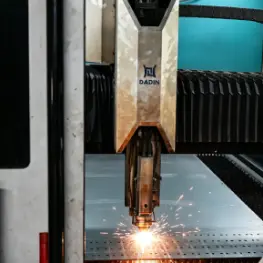
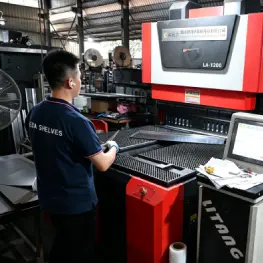
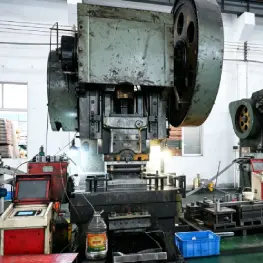
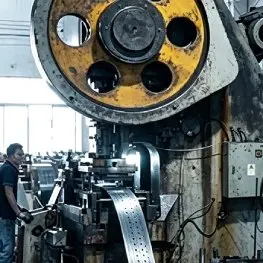
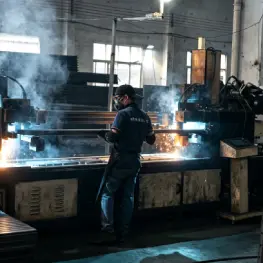
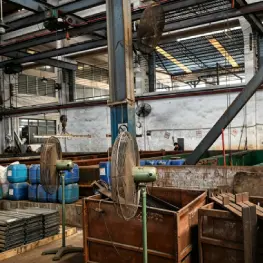
Operating across a modern 30,000 square meter manufacturing base in Guangzhou, our automated multi-station roll-forming lines and robotic welding cells achieve a reliable 30,000-ton monthly structural steel output.
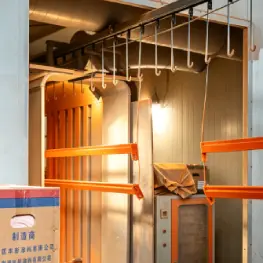
Controlled 10-Stage Manufacturing Process
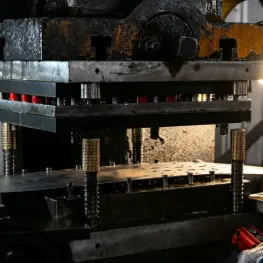
Every beam, column, baseplate, and brace is manufactured under documented ISO 9001:2015 traceability from hot-rolled carbon steel coils to final export bundle strapping.
Frequently Asked Questions by Industrial Racking Importers & EPCs
Clear, engineer-level answers addressing international loading codes, seismic calculation requirements, container stuffing optimization, and site erection protocols.
Every export project is evaluated using structural finite element software based on your specific pallet weights, pallet dimensions (EUR 1200×800mm, Industrial 1200×1000mm, or US 48×40”), clear building eave heights, forklift mast dimensions, and local seismic acceleration coefficients ($S_s$ and $S_1$). We verify upright column slenderness ratios, beam end connector shear ratings, and beam deflection under full static and dynamic operational loads ($L/200$ deflection criteria). Formal calculation books and material mill test certificates (MTC 3.1) are supplied with every shipment.
For ambient industrial warehouses, our automated electrostatic thermoset epoxy-polyester powder coating (80 to 120 microns dry film thickness) offers exceptional scratch resistance, chemical durability, and vivid color-coded aisle management. However, in low-temperature cold rooms (-25°C to -40°C), coastal seaports subject to airborne salt chlorides, or agrochemical fertilizer warehouses, we recommend hot-dip galvanizing according to ISO 1461 / ASTM A123. Galvanizing forms a metallurgical iron-zinc alloy layer with a 70–85 micron thickness that provides complete sacrificial cathodic protection, eliminating micro-cracking and rust creep even if the surface is scratched during forklift loading.
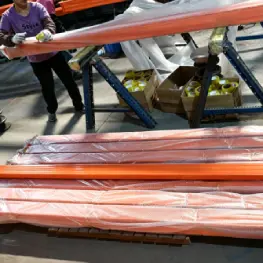
Shipping logistics account for a significant portion of landed cost. Our engineering team designs nested beam profiles and pre-calculated upright bundle dimensions to maximize both container weight and cube space. Uprights are bundled with heavy steel strapping, non-marking corrugated edge protectors, and air dunnage bags to eliminate transit abrasion. Beams are stacked in custom wood cradles permitting rapid forklift offloading at destination ports. A typical 40HQ container comfortably accommodates 22 to 26 metric tons of pallet racking, complete with tagged and numbered loading lists mapped directly to your site installation drawings.
To generate an optimal warehouse storage layout, simply share: (1) Architectural building drawings showing clear ceiling height, internal column grids, entry/exit dock door positions, and fire sprinkler clearances; (2) Pallet specifications including overall length, width, height (including load), and maximum pallet gross weight; (3) Existing or planned forklift equipment details (reach truck, counterbalance, narrow aisle VNA, and minimum required operating aisle width Ast); and (4) SKU velocity profiles (FIFO vs. LIFO rotation). Our team turns around a full 2D CAD layout, 3D visualization, and itemized CIF/FOB pricing within 24 hours.
Every shipment arrives with comprehensive piece-marked structural installation blue-prints, 3D exploded assembly diagrams, and torque specifications for base anchor bolts and frame diagonal bracing bolts. Additionally, we provide real-time high-definition video technical support during site erection. For major automated logistics projects and multi-level rack-supported mezzanines exceeding 5,000 square meters, we dispatch senior erection engineers directly to your overseas job site to supervise assembly, verify plumb and level tolerances (per EN 15635), and conduct final structural handover load inspections.
Request Your Custom Warehouse Layout & Factory-Direct Quote
Connect directly with our senior application engineers. Receive compliant CAD floor plans, structural FEM load capacity calculations, and factory-direct volume pricing within 24 hours.
Global Export Desk
Instant access to comprehensive product specification sheets, profile sections, load tables, and installation manuals.
Get Catalog