Featured Industrial High Density Pallet Racking Systems
Engineered from premium Q235B and Q355B structural steel, our high-density racking configurations maximize cubic space utilization up to 85% compared to conventional selective racking.
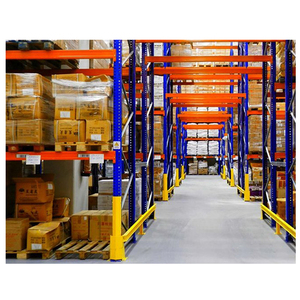 Industrial Standard
Heavy Duty Boltless Steel Pallet Rack System Industrial Storage Shelves
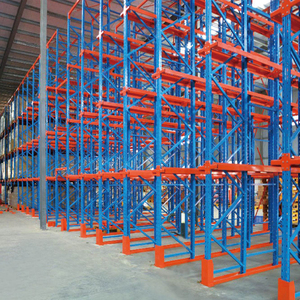 High Density LIFO
Heavy Duty 5 Layer Drive-In Pallet Racking Cold Rolled Steel Bulk Racks
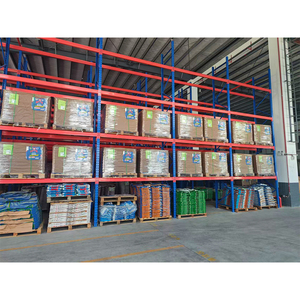 High Bay VNA
High Bay Heavy Duty Steel Pallet Racking System Industrial Storage Shelving
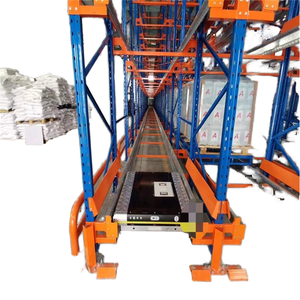 Semi-Automated
Automated Radio Shuttle Rack High Density Storage FIFO LIFO System
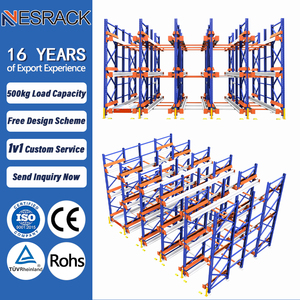 Intelligent Shuttle
High Density Durable Radio Shuttle Rack Warehouse Storage Racking System
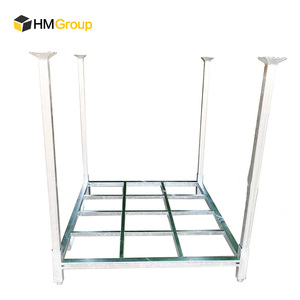 Modular Stacking
OEM Heavy Duty Galvanized Steel Stacking Racks For Warehouse Stack Pallet
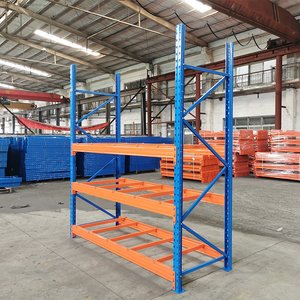 Multi-Tier Selective
5-Layer Heavy Duty Steel Racking Industrial Logistics Wire Mesh Rack
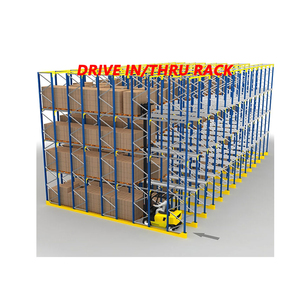 Double Deep & Drive-In
High Density Drive-In Pallet Rack Double Deep Bulk Storage System
Guangzhou HEDA Shelves: Engineered Racking Manufacturing Since 2001
Eliminating intermediary trading margins with verified factory credentials, certified steel structural calculations, and integrated export engineering across 120+ maritime shipping corridors.
Structural Integrity & International Standards Verification
In high-density pallet racking systems, structural engineering precision represents the boundary between optimized operational profitability and catastrophic catastrophic warehouse collapse. Unlike light shelving, high-density systems aggregate massive static and dynamic payloads—frequently surpassing 2,000 kg per pallet position and tens of thousands of tons per cubic block. As an established direct manufacturing pioneer operating out of Guangzhou, China, Guangzhou HEDA Shelves Co., Ltd. enforces zero-compromise engineering benchmarks validated through authoritative global standard compliance.
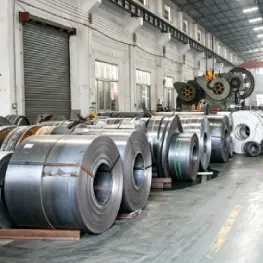
Our complete manufacturing output complies with strict mechanical integrity and structural safety codes, backed by certified third-party credentials: CE Certification No. 2435-CPR-8605159 for structural steel components, ISO 9001:2015 Quality Management System Certification No. 18624Q00169R0M (maintained and strictly audited), along with full compliance under international RoHS material non-toxicity protocols. Structural calculations adhere strictly to FEM 10.2.02 (European Racking Federation), RMI (Rack Manufacturers Institute) specification standards, and Australian AS4084 steel storage codes. Every batch of cold-rolled steel coil is authenticated using spectral steel analysis and tensile-yield verification (guaranteeing minimum yield stress ratings of 235 MPa for Q235B and 355 MPa for Q355B profile extrusions).
Seismic-Resistant Structural Dynamics
Central America, the Pacific Rim, and Mediterranean zones face constant seismic hazards. We engineer bespoke baseplates, seismic anchor ties, and heavy diagonal vertical portal bracings computed using FEA (Finite Element Analysis) specific to local ground acceleration (PGA) metrics.
- Finite Element Load Distribution Simulation
- Heavy Grade 8.8 Structural Expansion Anchors
- Upright Profiles Engineered for High Bending Moments
Tropical & Cold Chain Corrosion Defense
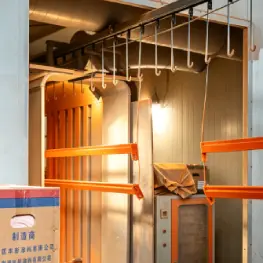
From Caribbean humidity to -30°C blast freezers, oxidation destroys structural gauge integrity. HEDA applies an industrial 10-stage surface pretreatment including degreasing, zinc-phosphating pickling, and thermo-cured epoxy-polyester electrostatic powder coating.
- 60 to 90 Micron Dry Film Thickness Coating
- Hot-Dip Galvanizing (EN ISO 1461) Available
- 500+ Hour Neutral Salt Spray (ASTM B117) Tested
Turnkey Export & Custom Shipping Packaging
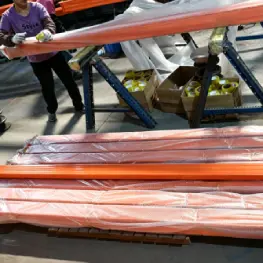
Global transit damage causes critical site assembly downtime. HEDA utilizes automated bundle-banding, corrugated corner cushioning, steel frame crates, and comprehensive loading plans designed to fill 40ft High Cube containers without freight volume waste.
- Barcoded Loading Lists with Itemized Rack Marks
- Direct Shipments to 120+ International Gateway Ports
- Free Complete 3D CAD Assembly Blueprints Included
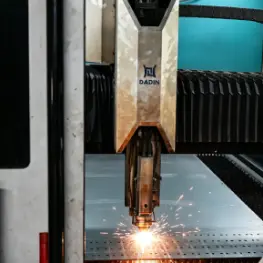
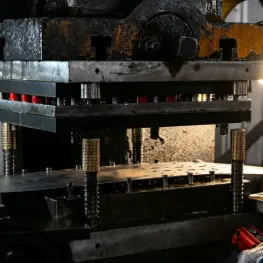
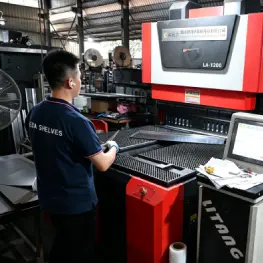
Rigorous 10-Stage High-Precision Manufacturing Process
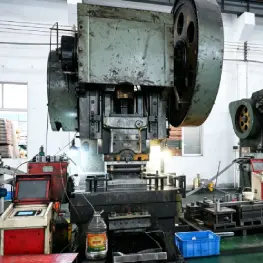
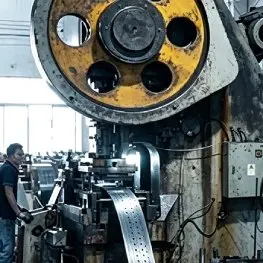
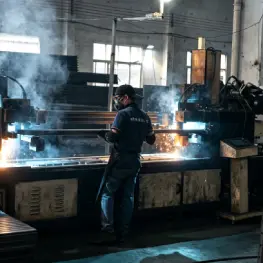
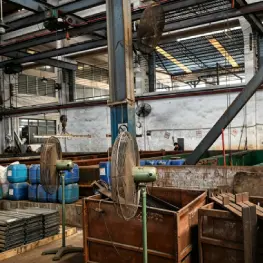
Unlike regional brokers who subcontract production to fragmented workshops, HEDA Shelves owns and regulates an end-to-end 30,000 square meter integrated facility powered by 300+ structural engineers, precision machine operators, and certified welders. Every production batch progresses through 10 strictly monitored quality gateways:
Global Procurement Trends Shaping High-Density Racking (2025–2030)
In-depth market intelligence for Chief Procurement Officers (CPOs), supply chain directors, and logistics warehouse developers looking to hedge against inflation, steel tariff volatility, and space shortages.
1. The Shift from Selective Racking to High-Cubic Semi-Automation
Industrial real estate lease costs across key transit hubs have increased dramatically over the past triennium. Warehouse operators can no longer justify the 60% floor space allocation sacrificed to forklift handling aisles in traditional selective racking configurations. Consequently, global procurement teams are aggressively pivoting capital allocations toward high-density semi-automated solutions, specifically Radio Shuttle Racking and Drive-In compact configurations.
By transitioning from wide aisles (3.5–4.2m) to continuous storage tunnels serviced by programmable robotic shuttle carts, enterprise facilities achieve up to an 85% volumetric fill rate within identical architectural building footprints. The procurement calculus has fundamentally shifted: high-density racking is no longer viewed as a capital equipment expense, but as a strategic hedge against warehouse footprint expansion and soaring brick-and-mortar development costs.
| Storage Topology | Floor Space Utilization | Throughput Velocity | Forklift Damage Risk | Stock Rotation Strategy | Total Cost of Ownership (5-Yr) |
|---|---|---|---|---|---|
| Standard Selective Rack | 35% – 45% (Aisle-Heavy) | 100% Direct Accessibility | Moderate (Frequent turns) | FIFO / LIFO Universal | High (Footprint overhead) |
| Drive-In / Drive-Thru | 65% – 75% (High Density) | Low–Medium (Batched) | High (Mast mast collision) | LIFO (Drive-In) / FIFO (Thru) | Low Initial / High Maintenance |
| Radio Shuttle System | 75% – 88% (Max Cubic) | High (Automated carrier) | Near Zero (Exterior loading) | Flexible FIFO & LIFO | Lowest (Maximum floor ROI) |
| Double Deep Racking | 50% – 60% (Medium Density) | Medium (50% direct pick) | Moderate (Extended reach) | LIFO per pair | Low Capital Expenditure |
| Rack-Supported Mezzanine | 80% – 95% (Vertical Floor Gain) | High (Multi-level manual pick) | Low (Perimeter isolated) | Custom Partitioning | Extremely Cost Effective vs Construction |
Direct-to-Manufacturer Sourcing
International supply chains are bypassing local trading middlemen to secure direct mill pricing, guaranteed structural certifications, and custom CAD layout engineering direct from verified Chinese factories.
Seismic & Life-Safety Compliance
Insurance underwriters in earthquake-prone zones (Central America, Latin America, Mediterranean) now require authenticated third-party PE stamps and FEM 10.2.02 deflection verification prior to policy underwriting.
Shuttle Retrofitting Capabilities
Forward-thinking buyers are purchasing drive-in rail systems pre-engineered with dual-purpose tracks that allow seamless upgrading to motorized lithium-ion radio shuttles as warehouse throughput demands escalate.
Supply Line Resilience
Sourcing from tier-1 manufacturers with monthly outputs exceeding 30,000 tons guarantees delivery lead times for multi-thousand pallet rollouts, preventing expensive commercial launch delays.
Technological Innovations in High-Density Storage Engineering
How metallurgy advancements, ultra-cold-chain robotics, and dynamic digital simulation are transforming warehouse structural design.
High-Yield Micro-Alloyed Steel Profiles
The industry is rapidly shifting from heavy mild steel to high-tensile cold-formed micro-alloyed steel grades (Q355B and high-yield cold-rolled coils). By incorporating complex multi-bend stiffening ribs into upright column geometries (omega-shaped and multi-flanged upright profiles), engineers achieve higher flexural buckling resistance while reducing overall dead weight.
- 15–20% Dead Load Reduction
- Superior Torsional Stiffness in High Bays (>12m)
- Optimized Ocean Container Weight Distribution
Autonomous Deep-Lane Shuttles & AI Integration
The integration of brushless DC motors, LiDAR navigation, and smart optical sensors has propelled radio shuttle racking into semi-autonomous operational excellence. Contemporary systems interface directly with cloud-based Warehouse Management Systems (WMS) via industrial Wi-Fi or 5G protocols, executing real-time SKU re-slotting, automated inventory mapping, and dynamic cycle counting during non-shift hours.
- Sub-Zero (-30°C) Lithium Iron Phosphate (LiFePO4) Cells
- Dynamic Optical Distance & Pallet Overhang Detection
- Automated Pallet Sorting & FIFO Batch Balancing
Full-Lifecycle Structural Health Monitoring
With racks reaching clear heights beyond 14 meters, accidental forklift impact at bottom upright footings can trigger progressive collapse hazards. The forefront of racking R&D features modular smart impact telemetry collars with integrated multi-axis accelerometers. These IoT sensors communicate instantaneous structural deflection data, sounding alerts and pinpointing damaged bays for immediate structural inspection.
- Real-Time Shear and Deflection Telemetry
- Automated Preventive Maintenance Flagging
- Enhanced Warehouse Human Operator Safety
Global Delivery Footprint: Central America & International Gateway Ports
HEDA Shelves manages seamless factory-to-port ocean freight forwarding with verified customs documentation, container volume optimization, and regional compliance.
Direct Ocean Freight to Caribbean and Pacific Terminal Hubs
Procuring warehouse systems across international borders requires mastery of ocean logistics, fumigation requirements, container tare weight restrictions, and import customs compliance. HEDA Shelves routinely coordinates factory-direct container shipments from our southern China manufacturing hub (Port of Guangzhou / Port of Shenzhen / Port of Foshan) to major international ports worldwide, including specialized service throughout all seven Central American logistics hubs:
Guatemala & Belize
Puerto Quetzal (Pacific) and Santo Tomás de Castilla (Caribbean); Port of Belize (Belize City). Expedited clearing documentation for agricultural processing, coffee export centers, and multi-tier wholesale facilities.
Honduras & El Salvador
Puerto Cortés (Honduras) and Acajutla (El Salvador). Deep-water container handling optimized for heavy steel bundles, industrial machinery distributions, and agrochemical bulk depots.
Nicaragua & Costa Rica
Corinto (Nicaragua); Puerto Caldera (Pacific) and Moín / Limón (Caribbean, Costa Rica). Direct access to free trade zones, cold chain perishables storage, and industrial equipment hubs.
Panama Regional Hub
Port of Balboa (Pacific) and Colón Free Zone / Manzanillo (Caribbean). Fast customs bonded transshipment routes feeding multinational re-export warehouses across the Americas.
Frequently Asked Questions by Industrial Racking Buyers
Essential technical, logistical, and structural answers to address complex procurement evaluations.
While both systems offer high-density bulk storage by removing conventional operating aisles, their operational mechanics differ radically. In Drive-In Racking, the forklift operator must physically drive inside the racking structure to deposit or retrieve pallets along cantilevered support rails. This significantly increases load/unload cycle times and creates high risks of forklift mast collisions against upright frames. It operates almost exclusively on a Last-In, First-Out (LIFO) protocol.
Conversely, Radio Shuttle Racking keeps the forklift outside the racking bay. The forklift simply positions the pallet on the front entry rail, where a remote-controlled, battery-powered shuttle cart lifts and transports the pallet deep into the storage channel at speeds up to 1.0 m/s. This eliminates rack impact risks, drastically reduces cycle times by up to 50%, and provides total flexibility to operate under both FIFO (First-In, First-Out) or LIFO configurations.
High-density racking in seismic active regions cannot be sized using standard static dead-load formulas. Our structural engineering department utilizes specialized finite element modeling (FEM 10.2.02 / RMI / AS4084) integrated with local geological ground acceleration (PGA) metrics provided by your project engineer. We calculate the dynamic overturning moment, frame ductility, and base plate shear stress.
To counteract seismic forces, we configure oversized reinforced footplates (often 12–16mm thick), high-tensile anchor bolts with increased embedment depths, custom horizontal back-to-back bracing, and heavier upright column steel gauges (up to 2.5mm or 3.0mm wall thickness) ensuring structural stability during earthquake vibrations.
For ambient temperature warehouses in tropical coastal zones, standard commercial paint is inadequate. HEDA Shelves employs an automated 10-stage preparation process featuring acid pickling, zinc-phosphating, and industrial-grade electrostatic epoxy-polyester powder coating cured at 200°C. This delivers an impermeable barrier of 60–90 microns that resists oxidation, chipping, and chemical abrasion.
For blast freezers and cold storage rooms operating down to -30°C, or coastal facilities exposed to continuous ocean salt spray, we recommend Hot-Dip Galvanizing (HDG) in accordance with EN ISO 1461. Hot-dip galvanizing bonds a protective metallurgical zinc alloy layer over 85–100 microns thick, completely protecting internal and external tube surfaces from condensation rust.
To produce an optimized CAD layout design and structural load calculation within 24 hours, our engineering department requires:
1. Architectural Warehouse Plan: Overall length, width, clear ceiling height (under truss), pillar/column grid locations, dock door locations, and fire exit walkways.
2. Pallet Profile: Pallet dimensions (Width x Depth x Height including product), gross weight per pallet, and pallet type (Euro, GMA, or industrial four-way wooden/plastic).
3. Material Handling Equipment (MHE): Forklift type (counterbalance, reach truck, VNA, or stacker), maximum lifting mast height, and minimum turning radius.
4. Inventory Dynamics: Total SKU count, pallet turnover rate, and required inventory rotation strategy (FIFO or LIFO).
We provide a complete three-tier installation support matrix designed for overseas procurement:
Tier 1: Comprehensive CAD & 3D Assembly Manuals. Every shipped container includes laminated structural blueprints, part marks matching shipping tags, bolt torque specifications, and step-by-step exploded assembly diagrams.
Tier 2: Real-Time Remote Engineering Video Supervision. Our project engineers schedule live video conferences to guide your local mechanical assembly contractor on upright frame squaring, anchor leveling, and beam lock engagement.
Tier 3: On-Site Senior Engineer Dispatch. For large-scale multi-bay distribution center projects, HEDA dispatches experienced bilingual installation project managers to supervise full assembly, anchor pull testing, and hand-over commissioning.
Every commercial invoice and shipment from HEDA Shelves is supported by authentic certifications that can be submitted directly to municipal building inspectors and insurance underwriters:
• CE Conformity Certificate: No. 2435-CPR-8605159 (Structural Steel Enforcement)
• ISO 9001:2015 System Certification: No. 18624Q00169R0M (Audited Design and Manufacturing Quality)
• RoHS Compliance Certification: Verification of non-toxic coating formulations
• Mill Test Certificates (MTC): Raw material tensile and chemical composition verification according to EN 10204 3.1.
We back our structural high-density pallet racking systems with up to a 5-year structural warranty against manufacturing defects.
Transform Your Warehouse Density with HEDA Direct Engineering
Request an itemized factory-direct quote, complete structural calculation report, and a free 2D CAD / 3D virtual layout tailored to your building clear height and pallet throughput metrics within 24 hours.