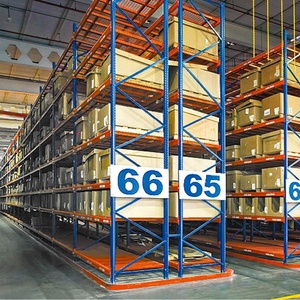
Enterprise Product Inventory
Heavy Duty Warehouse Storage Solutions
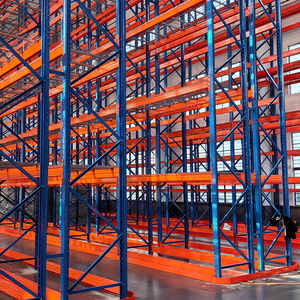
Fabricated strictly with prime Q235B/Q355B cold-rolled structural steel, optimized for intensive mechanical handling and extreme payload capacities.
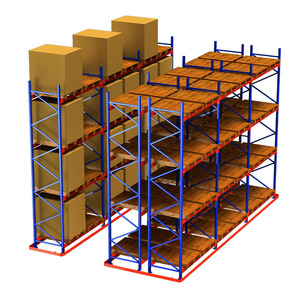
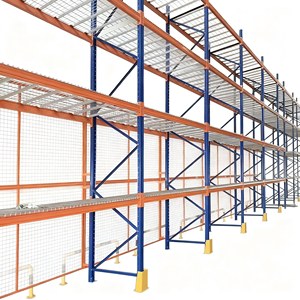
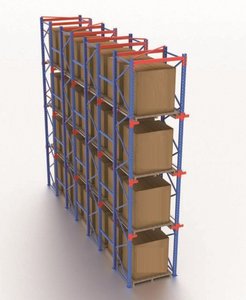
Engineering Specifications
Heavy-Duty Cantilever Mechanical Parameters
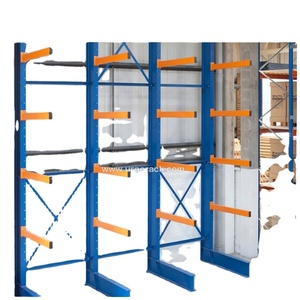
Unlike generic light shelving, heavy-duty cantilever systems require precise structural mechanics calculated based on arm bending moments and column axial loads.
| Structural Component | Cold-Formed Roll Profile | Heavy Structural I-Beam (H-Beam) | Safety Code & Factor |
|---|---|---|---|
| Column Upright Profile | 200×60 to 300×90 (C-Profile Interlock) | IPE 200 up to HEB 450 Structural Beam | EN 15512 / RMI Spec 2.0:1 |
| Load Capacity Per Arm | 300 kg to 1,000 kg | 1,000 kg to 4,500 kg+ | Static Point/Uniform Distributed Load |
| Arm Connection Method | Pin-hook mechanical locking | High-tensile Grade 8.8 structural bolts | Anti-unhook safety shear pins |
| Column Height Reach | 2,000 mm – 6,000 mm | Up to 12,000 mm (Free-standing or Clad) | Deflection limit L/250 max under load |
| Protective Finishing | Electrostatic Powder (60-80μm) | Hot-Dip Galvanized (ISO 1461, 85-110μm) | ASTM B117 Salt Spray Testing Compliant |
Strategic Procurement Horizons
Emerging Sourcing Dynamics for Heavy Racking
How evolving logistics networks, raw material economics, and cross-border maritime strategies are impacting B2B capital infrastructure acquisitions.
Factory-Direct Engineered Supply Chains
Global procurement teams are bypassing intermediaries to work directly with certified Chinese original equipment manufacturers. This direct engagement reduces layout revision cycles from weeks to hours via factory-level finite element calculation (FEA) engineers.
Corrosion Optimization for Coastal Zones
With massive port infrastructure expansions across Latin America, the Middle East, and Southeast Asia, demand is shifting toward dual-layer anti-corrosion technology—combining chemical phosphatizing with architectural-grade polyester coatings or full hot-dip zinc baths.
Container-Optimized Modular Engineering
With volatile maritime container rates, procurement decisions favor racking components engineered specifically around the internal volumetric boundaries of 40-foot High-Cube (HQ) shipping containers, ensuring minimal dead freight and damage-free arrival.
Industry 4.0 Integration
Technological Trajectory of Cantilever Storage
The convergence of heavy structural metal fabrication and smart material handling automation is transforming static yards into automated hubs.
Automated Guide-Rail & AGV Compatibility
Heavy cantilever profiles are being fitted with magnetic or optical guide paths along their bases. Multi-directional forklifts and automated guided vehicles (AGVs) maneuver long-form steel profiles down aisles as narrow as 2.2 meters without human steering.
IoT Structural Health Monitoring
Next-generation cantilever columns now integrate localized strain gauges and acoustic emission sensors. These devices identify structural fatigue, accidental forklift collision damage, or uneven ground settlement in real time before mechanical failure can occur.
Seismic-Resilient Base Joint Articulation
By engineering specialized energy-dissipating dynamic base shoes, advanced cantilever racking can absorb transverse kinetic ground motions in high-risk seismic zones, preserving valuable stock and preventing devastating warehouse collapses.
Enterprise Manufacturing Capabilities
Integrated Heavy Racking Engineering Since 2001
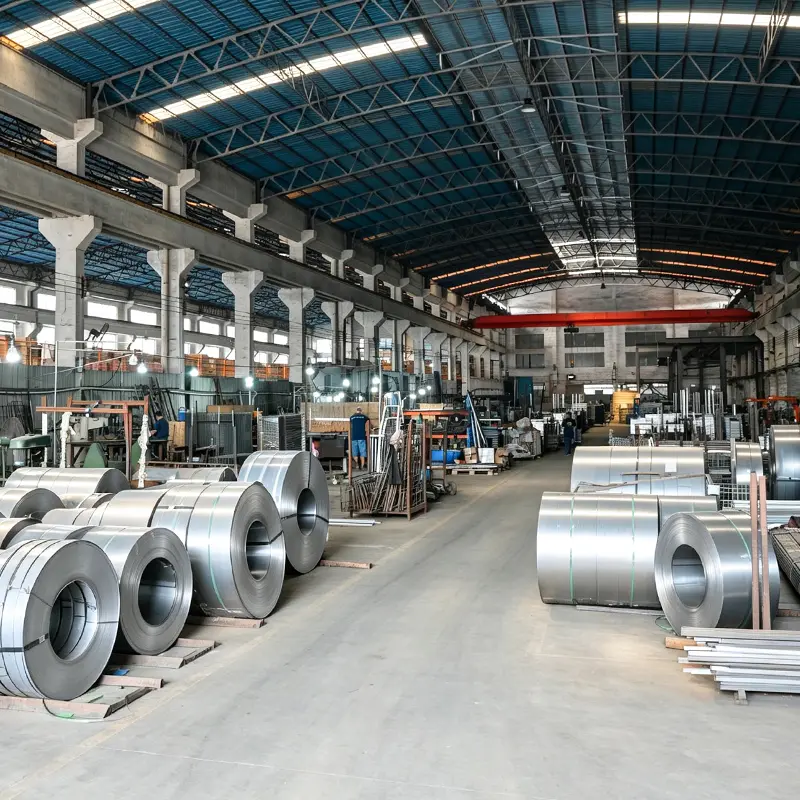
With over two decades of technical evolution, Guangzhou Heda Shelves Co., Ltd. operates an advanced 30,000 square meter intelligent fabrication base equipped with computerized roll-forming lines, automated laser cutting tables, and robotic gantry welding rigs.
-
Certified Compliance Infrastructure Holds official CE certification (No. 2435-CPR-8605159), ISO 9001:2015 audited management systems, and complete RoHS environmental traceability.
-
Complimentary Engineering Layouts Our team of licensed structural engineers delivers full 3D CAD modeling, structural payload calculations, and seismic feasibility reports within 24 hours.
-
Total Export Logistics Management Direct logistics channels serving international gateways such as Puerto Quetzal, Puerto Cortés, Balboa, Rotterdam, Long Beach, and Hamburg under CIF or FOB terms.
Procurement Knowledge Base
Heavy Duty Cantilever Procurement FAQ
Technical and logistical solutions addressing international structural codes, container consolidation, and engineering calculations.
What essential engineering parameters are required to calculate a cantilever load rating?
To deliver an accurate, certified structural plan, our engineering office requires: (1) Total material length, width, and bundle diameter; (2) Average and maximum unit load weights; (3) Loading method (forklift tine dimensions, overhead crane hooks, or automated retrieval); (4) Floor slab thickness and concrete compressive strength (typically 20-30 MPa); and (5) Regional environmental vectors (wind shear ratings for outdoor setups and seismic category codes).
When should I specify Roll-Formed vs. Heavy Structural H-Beam Cantilever Racks?
Roll-formed cantilever systems utilize cold-rolled C-channel steel profiles. They are economical and well suited for payloads up to 1,000 kg per arm, such as PVC pipes, aluminum extrusions, and packaged mouldings. Heavy structural H-Beam cantilever systems are fabricated with hot-rolled IPE or HEB steel, delivering superior torsional resistance and load capacities exceeding 4,500 kg per arm—essential for raw steel billets, heavy plate stock, cast iron dies, and rebar bundles.
How does the factory treat cantilever finishes for high-humidity and outdoor storage?
Indoor warehousing typically uses our continuous electrostatic powder coating line, which includes a 7-stage chemical degreasing, acid pickling, and iron phosphating pre-treatment. For outdoor lumber yards, coastal port zones, or corrosive chemical environments, we recommend our hot-dip galvanization process (ISO 1461). The steel is submerged in molten zinc at 450°C, producing a metallurgically bonded 85–110 micron zinc-iron alloy barrier that resists rust for decades.
Can your cantilever designs comply with local building and seismic codes?
Yes. All structural calculations are verified against recognized international specifications, including European EN 15512 standards and American RMI (Rack Manufacturers Institute) codes. For projects located along active seismic belts (such as Latin America or the Pacific Rim), our design engineers integrate your regional peak ground acceleration (PGA) metrics to specify reinforced upright cross-sections, oversized anchor plates, and cross-bracing bays.
How are oversized cantilever components packed to avoid container demurrage and damage?
Cantilever columns and base beams are bundled with industrial dunnage, corrugated protective wrapping, and custom-welded steel banding frames to prevent transit shifting. Uprights are nested to maximize container cube volume. Every bundle includes a bilingual, weather-sealed packing manifesto detailing project tier levels, part reference numbers, and center-of-gravity lift markings for safe offloading on site.
What international quality certifications back your structural steel products?
HEDA Shelves products carry verified CE Certification (No. 2435-CPR-8605159), ISO 9001:2015 Quality Management certification (No. 18624Q00169R0M, valid through June 2027), and complete RoHS material safety reports. Mill Test Certificates (MTC) documenting steel chemical compositions and tensile yield test results accompany every batch upon shipment.
Ready to Engineer Your Heavy Duty Cantilever System?
Connect with our technical engineering department for an itemized commercial proposal, customized CAD floor drawings, and dynamic structural loading simulations.