Fire Safety
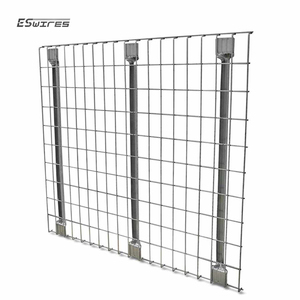
Manufactured under stringent European FEM 10.2.02 and American ANSI/RMI MH16.1 structural standards. Fully customizable rack systems designed to handle 500kg up to 5,000kg load per level with optimal floor area utilization.
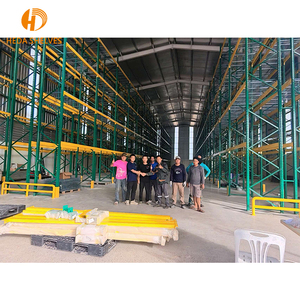
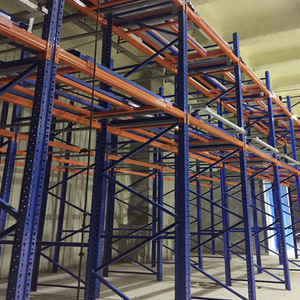
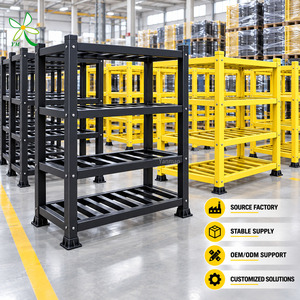
Over 25 years dedicated exclusively to industrial racking metallurgy, structure calculation, and export precision.
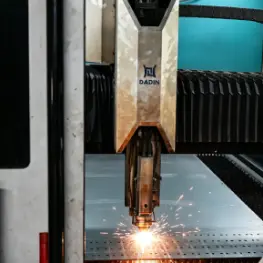
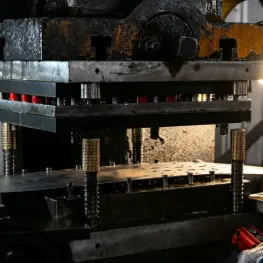
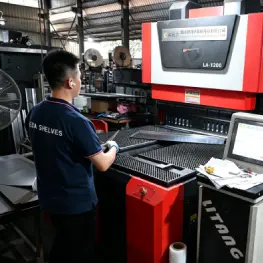
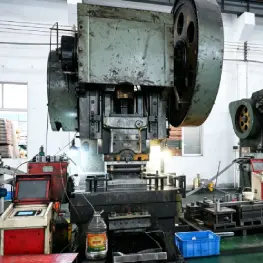
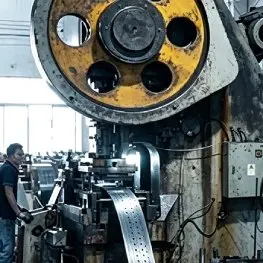
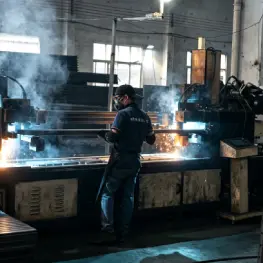
Fully automated roll-forming lines, laser profiling cells, robotic GMAW welding stations, and automated coating lines.
Scalable output capacity servicing enterprise 3PL distribution centers, port warehouses, and cold-chain facilities worldwide.
CE Certificate No. 2435-CPR-8605159 & ISO 9001:2015 accredited structural integrity across Europe, Americas, and APAC.
In modern industrial logistics, the physical racking infrastructure represents the structural backbone of fulfillment speed, asset protection, and personnel safety. Selecting heavy duty warehouse storage racks is not merely a purchase of formed structural steel—it is an intricate structural engineering commitment governed by static load balancing, dynamic impact allowances, soil slab deflection parameters, and localized seismic codes. As supply chains adapt to higher cubic-volume demands, procurement managers and project engineers worldwide turn to premier Chinese manufacturing facilities that blend direct metallurgical control with certified European FEM and American ANSI/RMI engineering tolerances.
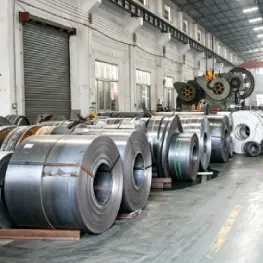
Heavy-duty upright frames manufactured at our facilities utilize certified primary Baosteel or Shougang hot-rolled strip steel grades Q235B and Q355B (equivalent to ASTM A36 and ASTM A572 Grade 50). Upright profiles are engineered through continuous 18-to-24-pass precision cold roll-forming lines, guaranteeing structural stiffness, minimal residual stress, and true web-to-flange squareness within ±0.15mm tolerance.
Traditional warehouse operations historically relied heavily on standard single-selective pallet racking arrays. While selective layouts deliver 100% SKU accessibility, their areal floor footprint consumption (typically requiring 3.0m to 3.8m wide forklift aisles) translates into poor volumetric efficiency, often capturing less than 35% of total warehouse cubic capacity. Modern logistics economics, exacerbated by escalating industrial land valuation and cold storage operational energy costs, have catalyzed a systematic migration toward compact, high-density structures:
Strategic industrial procurement requires anticipating five fundamental shifts transforming the material handling and intra-logistics ecosystem over the next decade:
| Racking Topology | Standard Steel Grade | Unit Load Range | Aisle Width Req. | Space Volumetric Eff. | Recommended Application |
|---|---|---|---|---|---|
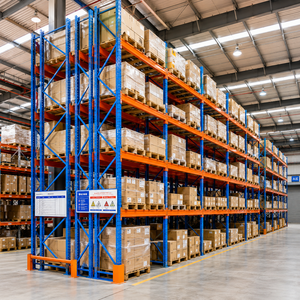
| Selective Pallet Rack | Q235B / Cold-Rolled | 1,000 – 4,000 kg / level | 3.0m – 3.8m | 35% – 40% | High-SKU, low-volume distribution hubs, retail fulfillment |
| Radio Shuttle System | Q355B / High-Strength | 500 – 2,000 kg / pallet | 2.6m – 2.8m (transfer only) | 75% – 85% | Cold chain, food & beverage bulk batching, high throughput |
| Drive-In / Drive-Through | Q235B / Structural | 1,000 – 1,500 kg / pallet | Forklift chassis fit | 65% – 75% | Seasonal inventories, uniform products, LIFO/FIFO storage |
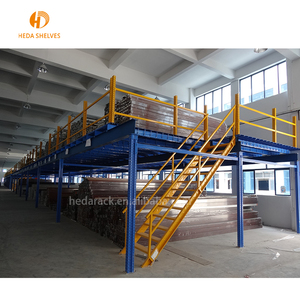
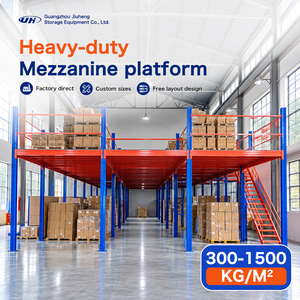
| Rack-Supported Mezzanine | Q235B & Q355B Hybrid | 300 – 1,200 kg / m² | Integrated Walkways | 80% – 95% Vertical | E-commerce manual split-case picking, auto spare parts hubs |
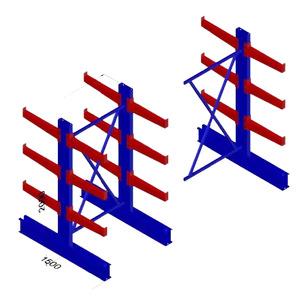
| Heavy Duty Cantilever | Hot-Rolled H / Cold-Formed | 500 – 3,000 kg / arm | Varies by stock length | Customized Linear | Steel tubing, aluminium extrusions, lumber, PVC piping |
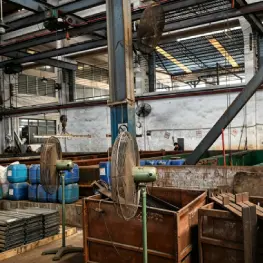
Combining 25 years of engineering heritage with a 30,000 m² state-of-the-art manufacturing plant. We remove middleman markups while providing certified structural security for mission-critical warehouse infrastructure.
Strict conformity with European standard EN 15512, FEM 10.2.02, and US ANSI/RMI MH16.1. Holding validated CE Certificate (No. 2435-CPR-8605159) and ISO 9001:2015 quality credentials ensuring legal and insurer acceptance in any territory.
Our veteran in-house engineering squad provides complimentary CAD floorplans, 3D visual space simulations, and finite element structural load evaluations based on your specific forklift models, pallet parameters, and local building seismic zonings.
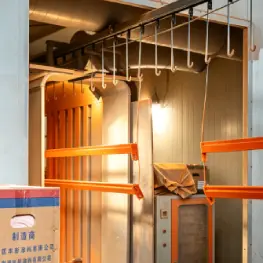
Components undergo an automated multi-stage immersion: ultrasonic degreasing, acid pickling, zinc phosphating, high-pressure rinsing, and electrostatic epoxy-polyester powder polymerisation at 200°C for exceptional resistance to chipping and tropical humidity.
Essential technical, quality assurance, logistics, and installation questions addressed directly by our structural engineering and export division.
Q235B possesses a minimum yield strength of 235 MPa and is universally deployed for standard selective beams and light-to-medium uprights. Q355B (equivalent to European S355 and American ASTM A572 Grade 50) delivers an elevated yield strength of 355 MPa. In tall automated bays exceeding 10 meters, deep shuttle lanes, or mezzanine base columns, engineering in Q355B reduces overall steel profile thickness while preserving superior elastic resistance against buckling and dynamic impact.
Under both FEM 10.2.02 and RMI specifications, the maximum allowable vertical deflection of a pallet rack beam loaded to design capacity is strictly limited to 1/200th of the clear span length (L/200), or L/300 for specialized automated installations. Each configuration is mathematically modeled via structural calculation software, physical destructive testing on certified test beds, and provided with explicit engineering load capacity plaques.
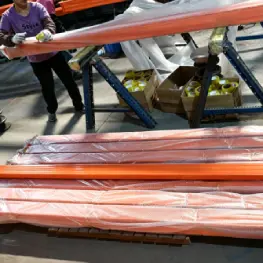
Upright frames and horizontal beams are nested, banded with heavy-duty PET strapping, and isolated with high-density corrugated spacer blocks and protective stretch film wrap. Critical contact points, connector tabs, and baseplates are bubble-padded. Fasteners, baseplates, and leveling shims are packed in reinforced wooden crates labeled by pallet bay coordinate, accompanied by detailed container packing manifests to streamline local customs deconsolidation.
Yes. Our engineering division regularly calculates projects for high-seismic regions worldwide (e.g., Pacific Rim, Latin America, Mediterranean). By inputting your facility's soil classification, spectral response accelerations (Ss and S1), and building design categories, we specify enlarged seismic baseplates, high-grade Hilti or Fischer chemical anchoring, continuous back-to-back row spacers, and vertical spine cross-bracing to prevent catastrophic resonance failure.
For standard selective pallet racking and teardrop systems using standard powder coating colors, typical factory manufacturing lead time is 15 to 20 business days for up to five 40ft High Cube containers. Highly engineered custom installations—such as multi-tier rack-supported mezzanine floors or automated radio shuttle lanes—generally require 25 to 30 business days inclusive of pre-assembly inspection, coating, and export crating.
Every shipment is accompanied by complete 2D CAD placement blueprints, 3D exploded assembly diagrams, piece-by-piece hardware catalogs, and step-by-step video installation guides. For multi-thousand pallet facilities or complex mezzanines, we can dispatch seasoned bilingual installation supervisors directly to your site or provide real-time remote engineering assistance to coordinate with your local rigging contractors.
Submit your warehouse architectural blueprint, floor slab thickness, pallet dimensions, and forklift lift clearance. Our senior structural logistics engineers will deliver an optimized layout plan and detailed cost estimation.