Core Storage Systems & Precision Handling Equipment
Manufactured strictly with high-tensile Q235B and Q355B cold roll-formed steel, robotically welded and multi-stage powder coated for rigorous industrial operations.
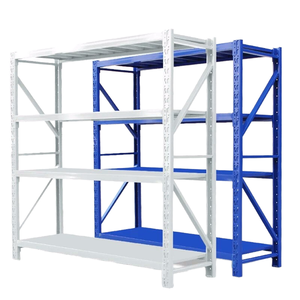
Industrial Medium Duty Steel Pallet Storage Rack
Technical Specs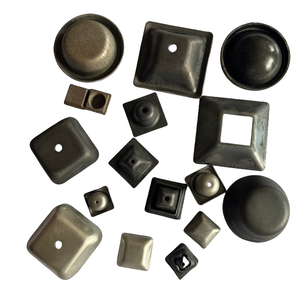
Heavy Duty Round Stacking Steel Stillage Feet
Technical Specs
High Density Narrow Aisle (VNA) Racking System
Technical Specs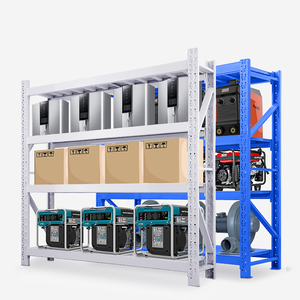
Double Deep Heavy Duty Metal Pallet Rack
Technical Specs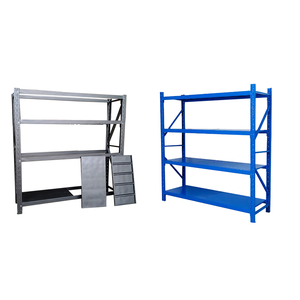
100 to 500kg Adjustable Steel Storage Racks
Technical Specs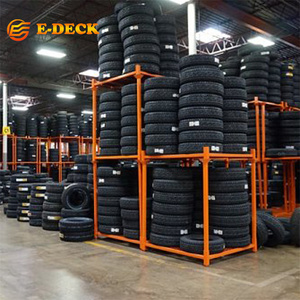
Heavy Duty Metal Powder Coated Stacking Racks
Technical Specs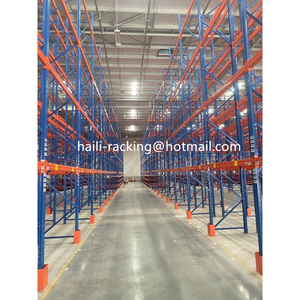
500 to 9000Kg/Layer Mobile Storage Racking
Technical Specs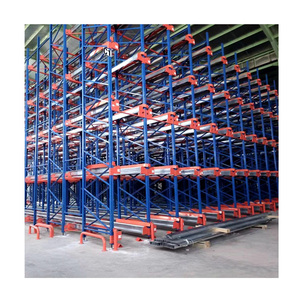
High-Speed Auto Radio Shuttle Pallet Racking
Technical SpecsThe Engineering Mechanics of Gravity Feed (Pallet Flow) Systems
Gravity Feed Pallet Racking (commonly designated in intralogistics engineering as Pallet Flow Racking) operates on the physical principle of controlled dynamic incline. Driven by planetary gravitation rather than electrical motors, pallet flow structures utilize precision-inclined roller tracks spanning depths of up to 30 pallet positions. Pallets are inducted at the elevated charging aisle (infeed) and automatically glide under carefully calibrated gravitational acceleration toward the discharging face (outfeed) at a predetermined controlled velocity.
In contemporary high-throughput supply chains—notably in pharmaceutical temperature-controlled cold chains, high-velocity food and beverage distribution, and automotive assembly buffers—the implementation of genuine First-In, First-Out (FIFO) dynamic storage is paramount. Unlike static drive-in or drive-through racks that suffer from operator dwell time and severe collision exposure, gravity feed systems strictly segregate loading and retrieval traffic into dedicated, non-interfering operational aisles.
To prevent destructive runaway conditions caused by uncontrolled velocity accumulation over long lane depths, industrial gravity flow engineers integrate three critical hardware subsystems:
Centrifugal Speed Controllers
Internally geared brake rollers engineered with internal planetary flyweights. As the passing pallet drives the roller rotation past 0.25 m/s, centrifugal clutch shoes expand outward against internal brake drums, applying proportional kinetic friction to arrest speed spikes regardless of pallet mass.
Time-Delay Line Separators
Mounted directly before the discharge end-stop. When a pallet rests in the primary picking position, the mechanical trigger locks the rear queue back by 150mm. This eliminates line hydrostatic pressure (which can exceed 10,000 N), preventing the lead pallet from pinching against the forklift forks during extraction.
Impact Charge Modules
Reinforced entry guides with replaceable zinc-plated entry steel rollers and heavy-duty structural deflection stops. Absorbs dynamic drop shocks caused by forklift masts during loading, protecting the downstream high-precision flow tracks from structural deflection.
Gravity Flow vs Alternative High-Density Systems
Rigorous operational comparison across floor footprint, handling throughput, mechanical Capex, and operational life cycle.
| Storage Configuration | Space Utilization | Inventory Rotation | SKU Selectivity | MHE Collision Risk | Automation Complexity | Maintenance Overhead |
|---|---|---|---|---|---|---|
| Gravity Flow (Pallet Flow) | 85% – 90% | Strict FIFO | Medium (Lane-Level) | Ultra Low | Pure Dynamic (Passive) | Low (Inspection-Based) |
| Radio Shuttle Racking | 85% – 90% | FIFO / LIFO Dual | Medium (Lane-Level) | Low | Semi-Automated (Lithium AGV) | Medium (Battery/Sensors) |
| Drive-In Racking | 75% – 80% | Strict LIFO | Poor (Batch SKU) | High (Aisle Ingress) | None (Manual Forklift) | High (Upright Damage) |
| Push-Back (Cart Type) | 70% – 75% | Strict LIFO | Fair (2-6 Pallets) | Low | Passive Gravity Cart | Low (Wheel Bearings) |
| Standard Selective Rack | 40% – 45% | Flexible | 100% Individual | Moderate | None (Manual Forklift) | Low (Standard Beams) |
Direct Factory Manufacturing Integrity: Guangzhou Heda Shelves Co., Ltd.
Founded in 2001 with more than 25 years of specialized structural fabrication experience, Guangzhou Heda Shelves operates state-of-the-art cold-bending and roll-forming manufacturing bases spanning over 30,000 square meters. With a workforce of more than 300 veteran structural engineers, certified robotic technicians, and logistics experts, our facilities produce in excess of 30,000 metric tons of certified racking monthly.
10-Stage Precision Heavy Industrial Manufacturing Pipeline
From raw metallurgical coil inspection to advanced electrostatic curing, our production line executes uninterrupted quality controls.
01. Certified Coil Sourcing
Prime certified hot-rolled coil stock purchased exclusively from tier-1 mills (Baosteel, Shougang) with mill test certificates certifying yield strengths exceeding 235–355 MPa.
02. Continuous CNC Punching
High-speed hydraulic CNC punch presses stamp 50mm / 75mm pitch diamond and butterfly upright slots with micro-metric dimensional repeatability across 12-meter profiles.
03. Precision Roll Forming
Progressive 18–24 station roll-forming mills shape steel strip gradually into multi-flanged, closed-seam omega columns to eliminate localized residual stress.
04. Robotic Mig Welding
Automated multi-axis welding cells attach 3-, 4-, and 5-prong beam connectors to box beams, ensuring complete metallurgical root penetration without spatter or porosity.
05. Pickling & Phosphating
Complete 5-stage chemical pre-treatment immersion baths remove rust, scale, and organic oils, depositing an amorphous zinc phosphate crystalline layer to inhibit sub-film oxidation.
06. Electrostatic Powder Cure
Dual Swiss Gema automated reciprocal spray booths apply thermosetting polyester-epoxy powder at 60–90 microns, followed by 200°C curing for maximum impact and abrasion resistance.
07. QA Deflection Testing
Sample lot test fixtures apply 1.5x working design loads per EN 15512 and RMI specifications, verifying that span beam deflection remains strictly beneath the 1/200th limit.
08. Containerized Export Pack
Bundled with protective corrugated angle wrapping, anti-abrasion polyester strapping, and computerized 3D container packing layouts to eliminate maritime ocean-freight rubbing.
Future Technology Trends Transforming Gravity Pallet Racking
Emerging innovations in mechanical velocity regulation, automated mobile robot interfacing, and sustainable metallurgy.
1. AMR/AGV Compatible Outfeeds
Modern gravity feed outfeeds are rapidly discarding traditional manual forklift end-stops in favor of precision cantilevered optical laser targets and electro-pneumatic pallet pop-up stops. This allows autonomous counterbalanced AGVs to dock with millimeter alignment, completing automated depot-level FIFO replenishment with zero human fork-truck operators.
2. Eddy-Current Contactless Braking
Traditional mechanical centrifugal brake drums inevitably undergo mechanical friction pad wear over 5–7 years of intensive duty cycles. Next-generation flow lanes are adopting permanent neodymium magnet eddy-current brake cylinders. As steel-bearing rollers rotate across magnetic fields, counter-electromotive force creates contactless, maintenance-free dynamic braking that functions continuously at -30°C.
3. Zinc-Aluminum-Magnesium Alloys
Cold chain facilities for deep-frozen agricultural products, seafood, and vaccines are abandoning conventional hot-dip galvanizing (HDG) due to flaking and environmental emissions. Chinese mills are engineering ZAM (Zinc-Aluminum-Magnesium) self-healing steel roll profiles, offering three times the anti-corrosion life of galvanized steel in coastal, humid, and caustic environments.
Frequently Asked Questions: Global Sourcing & Design Engineering
Direct technical responses to the critical questions asked by warehouse architects, supply chain vice-presidents, and international procurement managers.
Accelerate Your High-Density Intralogistics Project
Send us your warehouse CAD floor plan, floor slab specifications, pallet dimensions, and operational throughput targets. Our structural engineering team will deliver a comprehensive 3D layout, static load calculations, and a transparent factory-direct pricing quote within 24 hours.
Contact Us