1000KG / Level
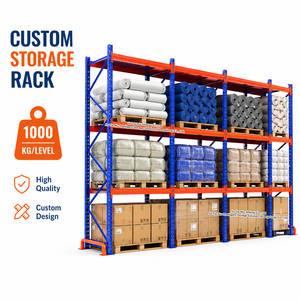
Engineered for intralogistics durability, strict load deflections, seismic shear performance, and variable high-bay warehousing configurations.
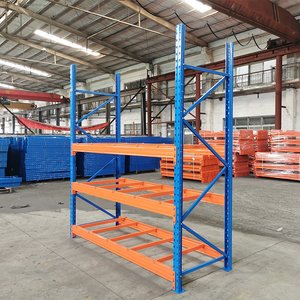
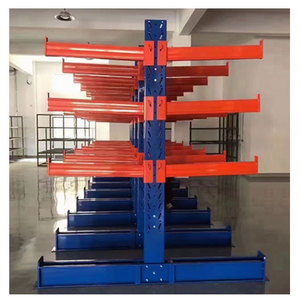
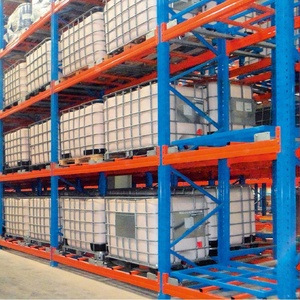
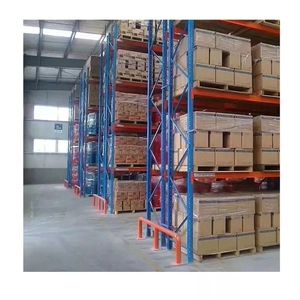
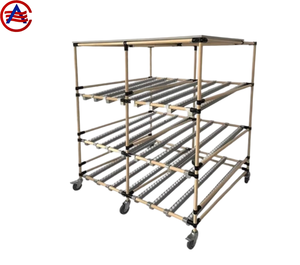
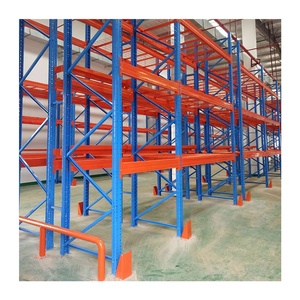
Operating an integrated 30,000 m² heavy-steel fabrication hub in Guangzhou, delivering high-bay racking systems certified under European and American racking codes.
In automated and high-density industrial warehousing, specifying structural pallet rack manufacturers is not merely an exercise in raw steel tonnage procurement. It is a critical civil and mechanical engineering decision governed by international design frameworks, primarily EN 15512:2020 (European Standard for Steel Static Storage Systems), RMI ANSI MH16.1 (Specification for the Design, Testing and Utilization of Industrial Steel Storage Racks), and statutory factory conformity under the Construction Products Regulation (CPR 305/2011/EU), verified through our CE Marking (Certificate No. 2435-CPR-8605159).
A frequent dilemma encountered during large-scale procurement is balancing roll-formed cold-rolled profiles against heavy structural hot-rolled channels. Cold-formed profiles (utilizing certified high-tensile structural grades such as S355JR or ASTM A1011) leverage continuous automated cold roll-forming with multi-stage profiling lines. This profile engineering introduces multiple stiffening ribs along the column flanges and returns, maximizing the radius of gyration ($r$) and effective section modulus ($Z$). This approach delivers an outstanding strength-to-weight ratio, lowering seismic inertial mass while maintaining rigid load factors ($L/200$ deflection thresholds).
Conversely, for harsh environments subjected to frequent forklift collision energies (such as high-turnover beverage distribution hubs or harsh sub-zero cold storage facilities), heavy structural steel channel racks fabricated from hot-rolled C-channels (ASTM A36 or European S275JR) provide superior impact toughness and ductile yield plateaus. Guangzhou Heda Shelves maintains both multi-station automated continuous roll-forming lines and structural plate CNC plasma cutting cells, allowing structural engineers to configure hybrid topologies: structural channel upright bases combined with cold-formed adjustable box beams.
The stability of a selective or dynamic racking bay depends fundamentally on the rotational stiffness ($C_m$) of the beam-to-column connector. Conventional slotted racks often suffer from pin looseness and notch stress concentrations under cyclic loading. Heda Shelves implements optimized teardrop, diamond, and butterfly hook connector geometries with cold-forged 3-to-5-finger connector plates. Each connector weld is carried out using automated Panasonic robotic MIG welding stations, guaranteeing total throat penetration and elimination of micro-crack propagation.
Using 3D Finite Element Analysis (ANSYS and SAP2000), our structural engineers simulate down-aisle bending, cross-aisle sway buckling, and second-order structural $P-\Delta$ effects under combined gravity, seismic, and wind loads (for rack-supported warehouse buildings). This structural validation guarantees upright frame safety factors of not less than 1.65 to 1.95 against structural yield under full static load conditions.
Exporting structural storage racking to seismically active regions—including the Pacific Rim, Central America, the Mediterranean basin, and Southeast Asia—requires deep consideration of spectral acceleration parameters ($S_s, S_1$) and seismic performance categories. Under seismic vibration, unanchored or improperly stiffened racks undergo severe cross-aisle drift, causing beam disengagement and progressive catastrophic collapse.
Atmospheric corrosion inside tropical warehouses, coastal marine depots, and blast-freezer facilities quickly compromises bare steel through pitting and weld oxidation. Guangzhou Heda Shelves implements a rigorous automated 10-stage surface finishing workflow. Components are subjected to hot alkaline degreasing, ultrasonic water washing, acid pickling to eliminate mill scale, zinc phosphating to provide a crystalline anti-corrosion barrier, and automatic dry-off baking.
Following pretreatment, components receive thermosetting epoxy-polyester powder coating applied electrostatically inside a pressurized cleanroom booth, followed by uniform 200°C curing. The resulting coating exhibits an average thickness of 70–90 μm, exceeding 500 hours of neutral salt spray testing (ASTM B117) and cross-hatch adhesion ratings of Grade 0 (ISO 2409). For aggressive outdoor or high-moisture cold chains, components receive continuous Hot-Dip Galvanization (HDG) in compliance with EN ISO 1461, yielding a zinc layer of 60–110 μm that protects the core steel for decades.
Over 25 years of specialized storage manufacturing, supporting EPC contractors, logistics integrators, and commercial distributors across 120+ countries.
Full CE marking under EN 15512, ISO 9001:2015 certified quality systems, and RoHS chemical compliance. Seamless container clearance supported by certified mill test reports (MTR) and fumigated export bundling.
Experienced structural engineers provide free CAD floor planning, 3D BIM visualizations, and slab load calculations within 24 hours. Validated fork truck clear aisles, turning radii, and sprinkler clearances prior to fabrication.
No middlemen or trading margins. Direct access to our 30,000 m² Guangzhou workshops, automated roll-forming lines, robotic welding stations, and electrostatic coating lines guarantees competitive pricing and rapid turnaround.
Comprehensive structural blueprints, component part numbering, step-by-step 3D assembly guides, and remote video technical supervision. Dedicated on-site engineering supervisors deployed globally for major multi-tier mezzanines.
Evaluating macroeconomic steel variables, automation interfacing, and structural resilience to maintain a future-proof warehouse supply chain.
Procurement is transitioning from traditional low-density drive-in systems to radio shuttle and 4-way autonomous pallet shuttle systems. This eliminates forklift entry into storage lanes, lowers rack damage rates by over 75%, and accelerates warehouse turnaround cycles in cold chain logistics.
Faced with escalating commercial land and industrial construction costs, buyers are increasingly opting for rack-clad warehouse architectures. In these configurations, the pallet rack frames serve as the primary structural skeleton, directly carrying roof purlins, side wall cladding, and automated stacker cranes without conventional building columns.
Next-generation installations are adopting IoT strain gauges, optical deflection sensors, and wireless impact-detection nodes mounted to upright legs for live overload alerts. Concurrently, environmental, social, and governance (ESG) standards require verified Environmental Product Declarations (EPDs), low-embodied-carbon electric-arc-furnace (EAF) steel coils, and lead-free powder coatings.
Every structural beam, upright column, brace, and footplate undergoes rigorous inspection across all ten manufacturing stages.
Direct procurement of prime coils with verified spectrometer chemical and yield analysis.
Automated longitudinal strip shearing ensuring tight edge tolerance without micro-burrs.
High-speed hydraulic tool matrices stamp precision pitch holes with 0.1mm repeatability.
24 to 28-station sequential profiling produces stiffened upright columns with zero twisting.
Interlocking twin-C roll profiles are continuously seam-welded to create rigid closed box beams.
Multi-axis robotic arms weld connector fingers to box beams under mixed argon shielding gas.
Automated shot-blasting and edge radiusing remove weld spatter, ensuring a smooth substrate.
Multi-tank chemical immersion removes oxidation and deposits an anti-corrosion zinc-phosphate layer.
Automated spray guns apply non-toxic epoxy-polyester powder, followed by 200°C oven curing.
Laser measurement checks, load deflection sample testing, and export container bundling.
Critical engineering criteria, container export logistics, seismic considerations, and international standards for enterprise buyers.
Under the European Construction Products Regulation (CPR 305/2011/EU), structural steel storage racks fall under EN 1090-1 / EN 15512 frameworks. Importers must verify the Notified Body (NB) identification number, ensuring the certificate explicitly states the Factory Production Control (FPC) system approval. Guangzhou Heda Shelves provides CE Certificate No. 2435-CPR-8605159, verifiable through accredited certification registers, accompanied by Declarations of Performance (DoP) and full Mill Test Certificates (MTC).
According to EN 15512 and RMI specifications, the vertical deflection ($\delta$) of any structural pallet beam under uniformly distributed load (UDL) must not exceed $L/200$, where $L$ is the clear span length between upright columns (e.g., maximum 13.5 mm deflection for a 2700 mm standard two-pallet beam). Automated ASRS installations often require stricter limits of $L/300$ or $L/400$ to prevent stacker crane optical sensor misalignments.
Overseas sea freight subjects structural steel components to high humidity and salt atmospheres. Upright columns and beams are bundled using specialized heavy-gauge PET strapping with corner edge-protectors. Bundles are fully shrink-wrapped with waterproof industrial polyolefin films, fitted with desiccant packs, and mounted on treated timber dunage skids for damage-free forklift container devanning.
Our engineering department requires: (1) Slab compressive strength (minimum $f'_c \ge 25\text{ MPa}$ or 3000 PSI), (2) Total concrete slab thickness (typically 150 mm to 250 mm), (3) Single or double rebar mat placement details, and (4) Soil subgrade modulus ($k$). In seismic zones, expansion anchors are upgraded to seismically approved mechanical undercut or chemical injection anchors to resist cyclic pullout shear forces.
Standard roll-formed selective pallet rack systems (10 to 50 container project volumes) typically require a 15 to 25 calendar-day manufacturing window following technical approval of CAD production drawings. Projects requiring specialized hot-dip galvanization or custom tooling for non-standard column perforation pitches run on a 25 to 35-day manufacturing cycle.
Yes. We engineer customized roll-formed tooling and punching dies to maintain dimensional compatibility with major international racking profiles (including 50mm, 75mm, and 76.2mm pitch standards, as well as teardrop configurations). Our technical department can verify hole geometry, metal gauge, and connector hook compatibility directly from your physical sample or engineering blueprints.
Send your warehouse architectural plans, clear ceiling heights, pallet load matrices, and forklift equipment specifications. Our senior structural logistics engineers will deliver an optimized CAD layout, 3D render, and transparent factory-direct pricing within 24 hours.
Contact Us