Heavy Duty Boltless Steel Pallet Rack System Industrial Warehouse Storage Shelves
Modular industrial racking built from high-yield Q235B cold-rolled steel, engineered for 100% pallet accessibility and reconfigurable beam pitches.
Industrial Structural Engineering, High-Density Storage Solutions & Global Warehouse Compliance Systems Designed for Resilience and Profitability.
Precision cold-rolled profiles manufactured under ISO 9001:2015 and CE certification standards, engineered to meet strict structural deflection limits and seismic load criteria across international logistics hubs.
Modular industrial racking built from high-yield Q235B cold-rolled steel, engineered for 100% pallet accessibility and reconfigurable beam pitches.
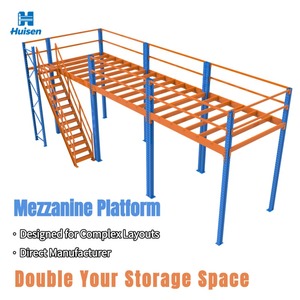
Multi-tier vertical floor system leveraging heavy-duty upright frames to double usable square meterage without external structural retrofits.
High-tensile zinc phosphated and powder-coated manual storage modules configured for rapid-assembly pick lines and cleanroom facilities.
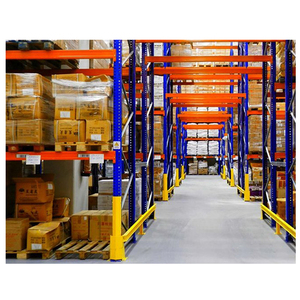
Ultra-tall high bay cold-rolled profile racking designed for Narrow Aisle (VNA) and automated reach truck operations up to 14 meters.
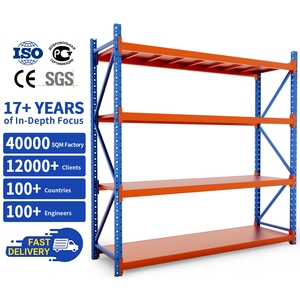
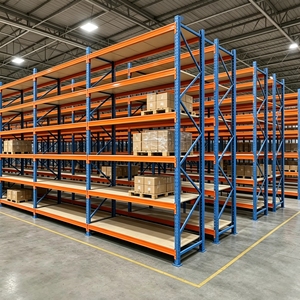
Four-tier reconfigurable racking architecture balancing medium picking decks with bottom bulk pallet staging for comprehensive warehouse flow.
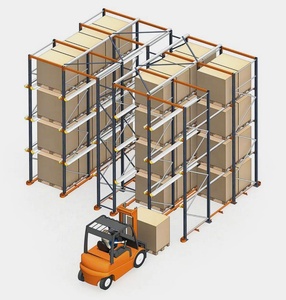
Dense drive-in and drive-through structural matrix eliminating order-picking aisles to reclaim up to 80% of active cubic floor capacity.
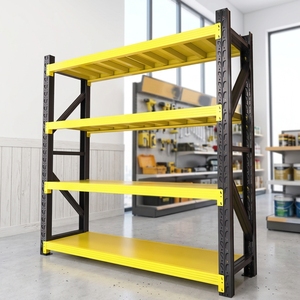
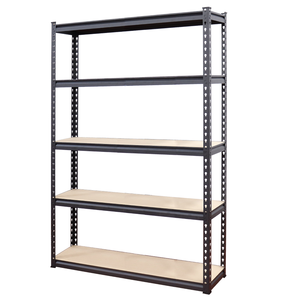
Rigid carbon steel framework with composite support decks for back-of-store staging, maintenance cribs, and dynamic parts fulfillment.
Heavy structural profile with 75mm adjustability, high-capacity box beams, and anti-unseating safety clips for intense 24/7 pallet cycling.
Over 25 years of specialized mechanical engineering, vertical-integrated manufacturing, and cross-border structural compliance for demanding logistics corridors.
In high-capacity warehouse operations, pallet racking systems do not act merely as steel shelves; they function as primary structural skeletons holding hundreds of metric tons of dynamic vertical and lateral loads. Sourcing from a verified manufacturer certified under CE (Certificate No. 2435-CPR-8605159) and ISO 9001:2015 guarantees that every roll-formed upright column and structural box beam meets rigorous tensile, deflection, and dynamic shock criteria specified by EN 15512 and FEM 10.2.02 codes.
Our direct-from-factory operation integrates every stage of production under continuous metallurgical quality control. From cold-strip structural steel coils uncoiled and fed into computerized continuous multi-stage roll-forming machines, to automated CNC punch-presses setting connector apertures within tight micro-tolerances, our production protocols eliminate dimensional deviations that lead to frame twisting, mechanical binding, and premature fatigue under heavy cycles.
Advanced CNC-controlled cold-bending machinery executes multi-station continuous profile processing for flawless alignment, accurate beam locking, and high structural moment of inertia.
Complete immersion pickling, degreasing, and zinc phosphating pre-treatments guarantee adhesion for heavy-gauge electrostatic powder coatings, neutralizing oxidation risks in humid and coastal environments.
Structural engineering teams configure upright sections, baseplates, back-to-back ties, and chemical anchor arrays tuned to site-specific slab ratings and local seismic zones.
Optimized nested bundle packaging with clear bill-of-materials labelling simplifies customs clearing, lowers drayage expense, and accelerates on-site mechanical erection across international seaports.
Evaluating the convergence of automated warehousing, micro-fulfillment demands, material science, and life-cycle economics for procurement executives.
The global warehousing landscape is undergoing unprecedented transformation spurred by skyrocketing industrial land values, systemic labor shortages, and tightening delivery lead times. Forward-thinking operations managers are increasingly stepping away from low-density standard selective racking layouts in favor of dynamic and semi-automated high-density installations. Radio Shuttle Racking, automated carton flow systems, and narrow aisle high-bay structures represent a fundamental shift toward vertical optimization.
A strategic procurement assessment requires calculating the Total Cost of Ownership (TCO) across a 15-to-20-year horizon rather than focusing solely on upfront steel acquisition costs. Systems engineered with higher-grade alloy steels (such as Q355B alternatives) offer reduced dead weight and enhanced structural deflection resistance, enabling facilities to extend clear working heights beyond 12 meters safely while mitigating forklift impact risks through reinforced base boots and anchor load spreaders.
The rising deployment of Autonomous Mobile Robots (AMRs) and automated shuttle carriers requires racking tolerances down to ±1.5mm. Factory-calibrated rolling profiles and deflection-free beam designs avoid automated vehicle sensor faults and track jams.
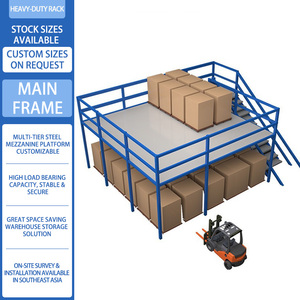
To combat surging industrial lease rates, operators are converting unused vertical clearance into multi-level storage platforms. Integrating heavy-duty pallet racking directly as structural columns enables simultaneous bulk staging below and manual e-commerce picking above.
With cold-chain distribution centers and tropical maritime ports expanding, hot-dip galvanization and advanced zinc-aluminum-magnesium coatings are rapidly outpacing conventional single-coat paint systems to ensure 25-year structural service lifespans under condensation.
Selecting the optimal equipment framework involves precise mapping between warehouse clear height, product SKU fragmentation, inventory turn velocities (FIFO vs. LIFO), and forklift chassis specifications.
| Racking Topology | Access Density | Standard Load Rating | Inventory Flow Strategy | Target Operational Environment |
|---|---|---|---|---|
| Selective Pallet Racking | Medium (40-50% footprint) | 1,000 – 4,500 kg / level | 100% Immediate Direct Access | High-SKU 3PLs, Retail Distribution, General Spare Parts |
| Drive-In / Drive-Through | Very High (75-85% footprint) | 1,000 – 2,000 kg / pallet | LIFO (Drive-In) / FIFO (Drive-Thru) | Cold Storage, Seasonal Harvests, Beverage Bottling Plants |
| Radio Shuttle System | Maximum (80-90% footprint) | 500 – 1,500 kg / pallet | Flexible (Automated FIFO / LIFO) | Sub-Zero Freezers, Fast-Moving Consumer Goods (FMCG) |
| Heavy-Duty Cantilever | Variable (Specialized) | 500 – 3,000 kg / arm | Direct Handling with Sideloaders | Timber Yards, Steel Profiles, Rebar, Extrusion Mills |
| Rack-Supported Mezzanine | Vertical Multiplier (200-300%) | 300 – 1,000 kg / m² deck | Decoupled Picking & Staging | Apparel Fulfillment, Automotive Spare Parts, Assembly Decks |
In-depth technical answers addressing international standards compliance, slab load certifications, seismic engineering calculations, and freight consolidation.
Under EN 15512, EN 15620, and the Construction Products Regulation (CPR 305/2011), full compliance requires a valid Factory Production Control (FPC) certificate issued by an accredited notified body, certified structural load capacity charts reflecting mechanical finite element analysis (FEA), material test certificates (MTC 3.1) tracing steel chemical composition and yield points, and a comprehensive Declaration of Performance (DoP).
Racking posts concentrate immense loads onto very small footprints. An upright holding 12,000 kg transfers extreme punch pressure into the concrete slab. Our engineering department calculates customized footplate surface dimensions, thickness profiles, and expansion anchor bolt positions to distribute post loads safely beneath the slab's allowable bearing limit (typically 30–60 kN/m² for unreinforced slabs).
Facilities located along active seismic corridors (e.g., Central America's Pacific rim, Southern Europe, Southeast Asia) cannot use standard non-seismic frame assemblies. Our design team uses localized Peak Ground Acceleration (PGA) factors and local building codes to calculate dynamic beam moment capacities, upgrading post thicknesses, diagonal bracing geometries, and anchor embedment depths accordingly.
For ambient industrial environments, our automated 10-stage process (alkaline degreasing, pickling, zinc phosphating, and electrostatic epoxy-polyester powder coat at 180°C–200°C) delivers robust surface protection. In refrigerated cold storage, coastal facilities, or chemical environments, we recommend either hot-dip galvanizing (complying with ISO 1461) or specialized pre-galvanized cold-formed coils to eliminate micro-corrosion beneath the film.
To prepare comprehensive 2D CAD engineering plans and 3D renderings, we require: (1) Building architectural blueprints showing column centers, clear ceiling heights, and door locations; (2) Pallet dimensions (W x D x H) including goods overhang and gross weight; (3) Forklift model, turning radius, and maximum reach height; and (4) Throughput goals including total pallet counts and inventory turnover style.
Every export shipment is accompanied by sequential 3D erection drawings, detailed packing lists keyed to container loading sequences, and component tags for fast on-site identification. Additionally, our engineering center provides remote video installation assistance, step-by-step mechanical erection guides, and can dispatch certified installation supervisors on-site for major turnkey implementations.
Connect directly with our engineering team to review structural profiles, verify dynamic load ratings, and obtain a complimentary full-scale CAD layout proposal with itemized export pricing for your facility.
Get Catalog