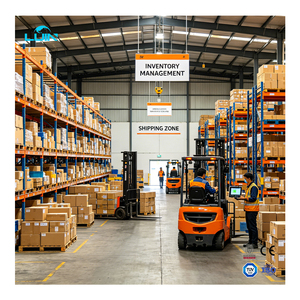
 Stacking Rack
Adjustable Stacking Pallet Rack Heavy Duty Storage Shelving Unit for Warehouse
Modular Stacking
1,000–2,500kg/Level
Tested under European Standard EN 15512, our cold-rolled steel rack configurations support dynamic loads from 1,000 kg up to 4,000 kg per beam level with integrated anti-corrosive powder finishes.
Stacking Rack
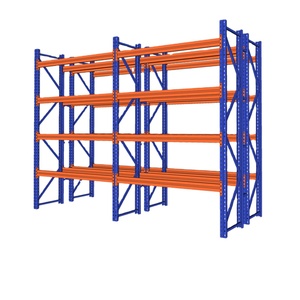 Heavy Storage
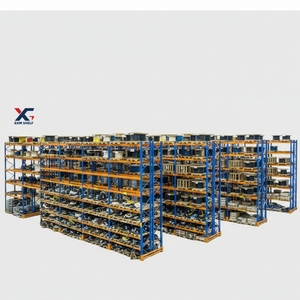 Boltless Fastening
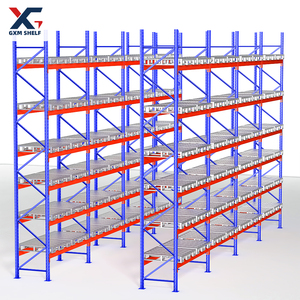 Integrated Bays
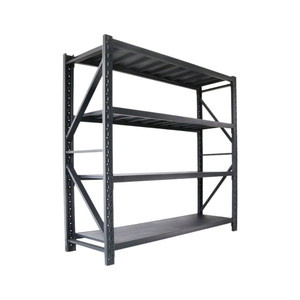 Cold Rolled Q235B
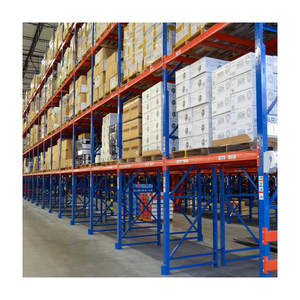 Selective Racking
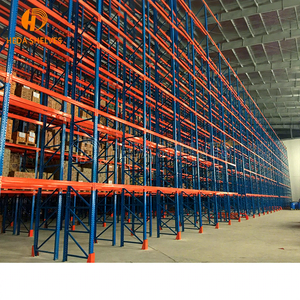 Heavy-Duty 4T
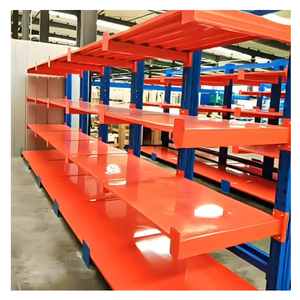 Cantilever System
In contemporary modern supply chain operations, pallet racking systems serve as high-density structural frames rather than passive steel shelving. Industrial pallet storage systems are classified under European Standard EN 15512 (Steel Static Storage Systems: Adjustable Pallet Racking Systems – Principles for Structural Design) and EN 1090-1 Execution Class 2 (EXC2) for CE certification under the Construction Products Regulation (CPR No. 305/2011/EU). Specifying an industrial-grade pallet rack factory requires strict verification of yield stresses, cold roll-forming parameters, cross-sectional moment of inertia, and finite element modeling (FEM 10.2.02).
HEDA Shelves manufactures uprights and load-bearing horizontal beams predominantly from high-tensile cold-rolled steels (certified grades Q235B and Q355B, chemically analogous to European structural grades S235JR and S355JR under EN 10025-2). The profile forming stage executes a sequence of 18 to 24 cold-rolling passes. This iterative cold work increases the yield strength of the steel through controlled strain hardening, generating omega (Ω) shaped upright columns capable of sustaining substantial axial compression loads without undergoing torsional or flexural buckling.
Upright frame perforations are punched using CNC automated mechanical press dies at consistent 50mm or 75mm increments. The resulting omega profile features multiple multi-bend return lips that effectively distribute localized concentrated loads into the vertical columns. Bolted diagonal and horizontal lattice bracings transform individual vertical sections into rigid structural trusses capable of withstanding dynamic lateral forces, forklift impact shears, and cyclic seismic accelerations.
| Structural Parameter | Standard Selective Pallet Rack | Double-Deep Heavy Duty Rack | Drive-In Pallet Storage | Radio Shuttle Semi-Automated |
|---|---|---|---|---|
| Steel Profile & Grade | Q235B / Q355B (EN S355JR) | Q355B Cold-Formed Steel | Heavy Omega Upright + Q235B | High-Tensile Galvanized Rail + Q355B |
| Beam Connection | 3/4-Claw Riveted Card Slot | 4-Claw Locking Connector | Cantilever Support Bracket | Continuous Welded Structural Saddle |
| Design Standard | EN 15512 / FEM 10.2.02 | EN 15512 / EN 15620 | EN 15629 / RMI MH16.1 | EN 15620 / FEM 9.831 (ASRS Ready) |
| Pallet Access Index | 100% Direct Selective Access | 50% Direct (Reach Truck) | LIFO / Strict Batch Rotation | FIFO or LIFO Automated Lanes |
| Floor Utilization Efficiency | 35% – 42% Area Utilization | 50% – 58% Area Utilization | 65% – 75% High Density | Up to 85% Maximum Footprint |
| Deflection Limit (Static) | L / 200 | L / 200 | L / 250 | L / 300 to L / 400 |
Founded in 2001, Guangzhou Heda Shelves Co., Ltd. has accumulated over 25 years of specialized engineering experience in structural pallet racking, heavy-duty mezzanine platforms, and automated storage solutions. Operating a centralized 30,000 square meter production facility equipped with high-speed automated roll-forming lines, robotic welding stations, and a closed-loop electrostatic powder coating facility, the company achieves an audited monthly production output of up to 30,000 metric tons of steel storage equipment.
To ensure total regulatory compliance across international markets, HEDA Shelves maintains authenticated third-party certifications including:
Every beam, upright column, and seismic baseplate undergoes strict batch verification across 10 sequential manufacturing checkpoints to prevent localized micro-cracking and verify dynamic stress resistance:
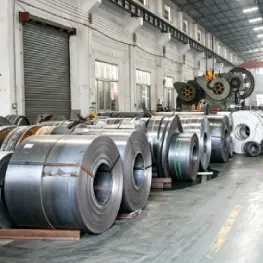
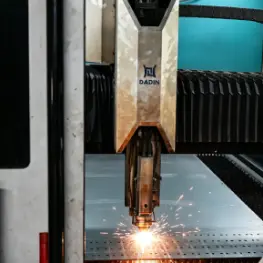
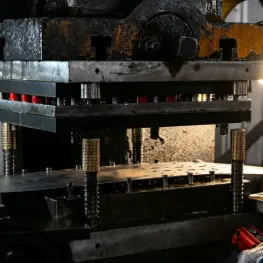
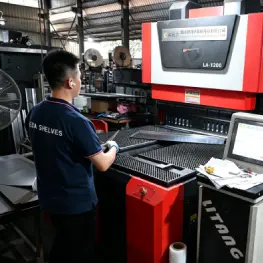
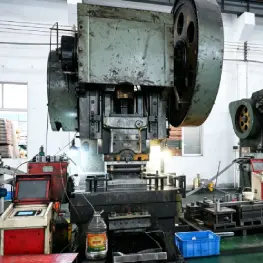
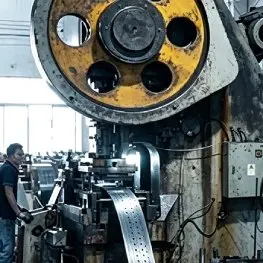
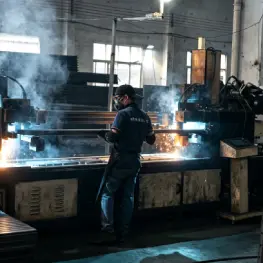
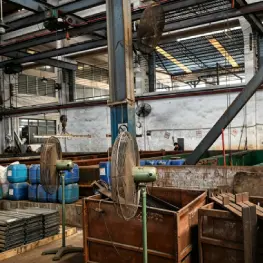
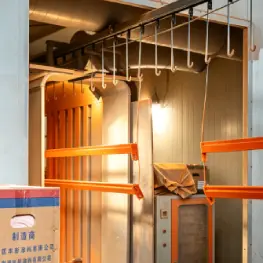
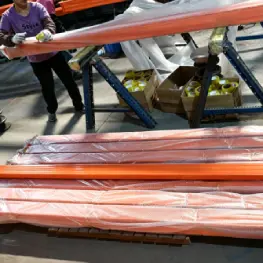
The pre-treatment stage (Step 08) remains critical for long-term corrosion prevention. While low-tier manufacturers rely on rudimentary wipe-downs, HEDA operates a continuous immersion line featuring degreasing, multi-stage water rinsing, acid pickling to eliminate all mill scale, and micro-crystalline zinc phosphating. This chemically bonds a 60–80 micron high-adhesion epoxy-polyester powder shell that withstands ISO 9227 neutral salt spray tests up to 500 hours without blistering.
As industrial land costs climb and operational margins tighten globally, procurement managers are pivoting from basic selective racking towards modular, energy-efficient, and software-integrated storage ecosystems. Supply chain directors must evaluate five critical long-term procurement trajectories over the next decade:
Procurement of standard drive-in racking is decreasing by 14% annually, replaced by 4-way radio shuttle systems. Semi-automated deep-lane shuttles maximize cold room and dry warehouse cube utilization while reducing forklift travel time and eliminating catastrophic upright collisions.
European and multinational buyers increasingly evaluate the embodied carbon footprint of warehouse steelwork. Future contracts demand Environmental Product Declarations (EPD) and electric arc furnace (EAF) scrap-recycled steel coils coated with low-VOC curing powders.
Procurement teams no longer accept static 2D PDF sketches. Architectural specifications require full Building Information Modeling (BIM Level 2 / LOD 300) IFC models, enabling engineers to stress-test dynamic forklift turning radiuses and automated sprinkler clearance zones prior to steel cutting.
Emerging smart racks incorporate embedded strain gauge IoT sensors within high-load connector hooks. These sensors broadcast real-time beam sag metrics to warehouse management systems (WMS), actively warning operations managers of uncalculated eccentric or localized pallet overloading.
Severe seismic zones across the Americas and the Mediterranean enforce enhanced non-linear time-history structural dynamic calculations. Procurement involves thicker gauge footplates, ductile base connections, and double-anchor anchors embedded into high-strength 28-day cured concrete slabs.
Procuring heavy-duty warehouse racking from an overseas factory requires rigorous evaluation of engineering tolerances, slab loadings, and logistics verification:
Frame capacity depends on the vertical distance between the first beam level and the ground slab (the "unbraced bottom height"), overall frame depth, and the moment resistance of the column profile. Taller unbraced spans reduce overall frame capacity due to Euler buckling constraints. HEDA’s licensed engineers supply computerized stress calculations according to EN 15512 standards to establish exact limits.
Industrial pallet racks transmit heavy point loads through baseplates to the slab. A typical 3,000kg bay creates point reactions of 4 to 8 metric tons per column. The concrete slab should be reinforced with a minimum compressive strength of 25–30 MPa (C20/25 or C25/30) and an uncracked thickness of at least 150mm–200mm to accommodate chemical or mechanical expansion anchors.
Box beams are formed by welding two interlocking C-channels face-to-face, providing balanced torsional resistance and high vertical load bearing for standard EUR (800x1200mm) and ISO (1000x1200mm) pallets. Step beams have an internal recessed ledge designed to flush-mount steel mesh decking, timber panels, or drop-in cross ties for carton picking versatility.
In accordance with European Norm EN 15635, all aisle ends and vulnerable upright bases should be protected by floor-anchored steel column guards and bull-nose wrap-around protectors. These protective elements are designed to absorb dynamic impact energies of at least 400 Joules without transferring destructive shear forces directly into the rack column.
In blast freezers and low-temperature cold rooms where condensation, moisture freezing, and thermal expansion cycles occur, hot-dip galvanizing (HDG compliant with ISO 1461, 70–85 micron zinc thickness) is recommended. Alternatively, low-cure anti-corrosive zinc-rich primer with electrostatic epoxy powder topcoats provides reliable performance for dry sub-zero rooms.
Upright frames are banded into rigid timber-cushioned bundles using heavy-duty steel or PET strapping. Beam connectors are wrapped in corrugated protective film and interleaved with high-density corrugated spacers. Detailed container loading diagrams and itemized packing lists are provided with every shipment to support efficient container de-stuffing and customs clearance.
Collaborate directly with our engineering team to develop optimized warehouse layout plans, structural moment-deflection calculations, and competitive factory-direct pricing for your international projects.