High Density
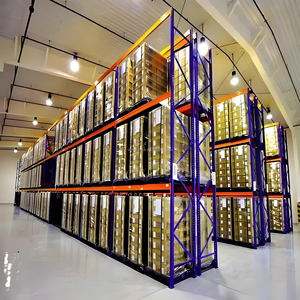
Space Saving Warehouse Storage Solution Forklift Entry System High Density Drive in Rack
Drive-In Rails
LIFO/FIFO
Q235B/Q355
Structural Cold-Rolled Steel Frame Profiles, High-Precision CNC Punching, and Seismic-Resistant Warehouse Engineering Directly from Guangzhou Heda Shelves Co., Ltd.
Engineered with certified structural profiles, precision slot geometry, and electrostatically applied thermo-hardened polymers to withstand high static and dynamic industrial loads.
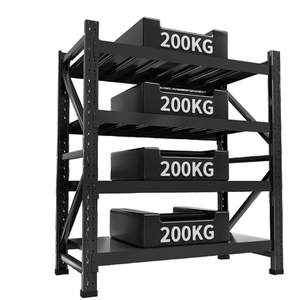
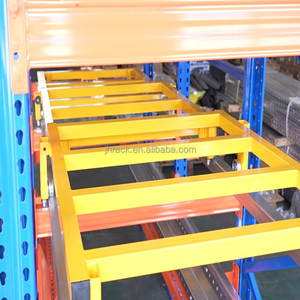
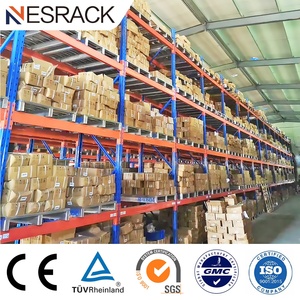
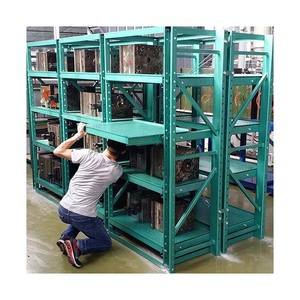
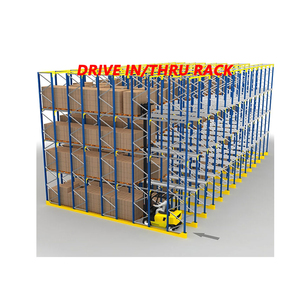
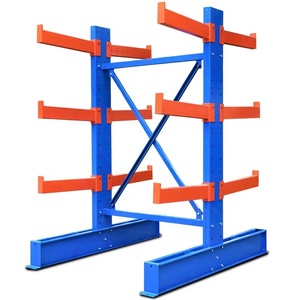
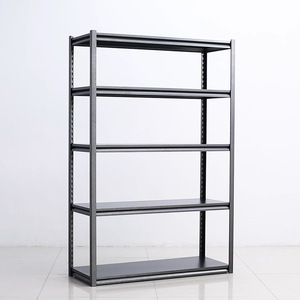


The structural upright is the core vertical load-bearing member of any static storage matrix. A failure in upright geometry or steel yield strength compromises the overall installation. We design and roll-form uprights according to stringent EN 15512 and FEM 10.2.02 international codes.
HEDA utilizes continuous multi-station cold roll-forming lines to engineer closed and open Omega (Ω) upright profiles featuring up to 12 cold-bent structural return bends. These return bends shift the centroid of the column toward the geometric center, substantially escalating the critical buckling moment (Euler's buckling limit) without gratuitous deadweight penalties.
Punching pitches of 50mm, 75mm, and 76.2mm are executed on automated high-tonnage CNC punch presses prior to roll forming. The precision teardrop, diamond, or butterfly apertures ensure an interference-fit taper engagement with beam connectors. This wedging dynamic rigidifies the frame node, eliminating frame sway and torsion under maximum allowable moment loadings.
Every batch of steel coils sourced from certified tier-one mills undergoes spectral chemistry analysis and elongation yield validation. Standard industrial racks use Q235B structural carbon steel (yield strength ≥235 MPa). High-bay facilities, narrow aisle (VNA) systems, and mezzanine column uprights use high-strength Q355B low-alloy steel (yield strength ≥355 MPa).
Global supply-chain complexities and the expansion of high-throughput distribution hubs are reshaping how tier-one operations specify, procure, and deploy industrial upright components.
Traditional manually serviced shelving is increasingly shifting toward automated storage and retrieval systems (AS/RS). Procurement criteria have pivoted from basic static capacity ratings to tighter profile deflection thresholds (L/500 and L/750). Modern upright lines must maintain sub-millimeter manufacturing tolerances over 12-meter continuous vertical roll formations to support autonomous shuttles and crane runs without track deviations.
Engineering teams now require FEA (Finite Element Analysis) simulation and localized seismic site response calculations before signing off on procurement contracts. Warehouses located along active zones (e.g., Central American Pacific Belts, the Mediterranean basin, or trans-oceanic logistic ports) specify widened anchor base assemblies, gusseted upright columns, and heavier bracing angles capable of dampening harmonic shock loads.
Procurement audits prioritize environmental compliance alongside structural safety. Leading facilities mandate heavy metal-free surface preparation protocols. HEDA executes a 10-step immersion process utilizing eco-compliant zinc phosphate passivation and silane nanocoatings. The subsequent thermoset polyester powder cure (60-80 microns) achieves ISO 9227 salt-spray corrosion performance past 500 hours without toxic effluent release.
Every upright component passing through our Guangzhou manufacturing facility undergoes systematic quality gates to ensure complete material compliance and dimensional accuracy.
Clear, technical explanations to the most common engineering and logistical queries posed by project managers, warehouse operators, and structural consultants.
Open-back Omega (Ω) upright profiles feature precision-engineered inward returns and perforated face webs that allow rapid height adjustment of load beams and accessories. When engineered with sufficient cross-sectional thickness and dynamic cold-forming return bends, open-back profiles achieve equivalent Euler buckling resistance while simplifying interior zinc-phosphate spray access and maintenance inspections. Closed-tube box uprights are typically reserved for specialized heavy cantilever columns or drive-in cantilevered arms where multi-axis torsional loads require high torsional polar moments of inertia.
Every layout supplied by Guangzhou Heda Shelves Co., Ltd. is calculated using full 3D Finite Element Analysis (FEA) based on the client's concrete floor slab specification, core geotechnical parameters, and warehouse operating profiles. Our structural engineering designs adhere directly to CE EN 15512 (Steel Static Storage Systems: Adjustable Pallet Racking Systems - Principles for Structural Design) and the European FEM 10.2.02 standard. We provide complete calculations that cover maximum column vertical loads, second-order P-Delta sway effects, seismic ground acceleration coefficients, and base plate shear distributions for local civil verification.
For standard temperature-controlled distribution warehouses, our industrial electrostatic epoxy-polyester powder coating (60–80 µm) provides long-term resistance against flaking, scuffing, and atmospheric oxidation. However, for refrigerated blast freezers operating down to -30°C, high-humidity coastal facilities (such as Caribbean, Pacific, or equatorial cargo zones), or aggressive chemical storage environments, we recommend continuous hot-dip galvanizing (HDG) in accordance with ISO 1461. This metallurgically bonds an 85+ micron sacrificial zinc layer directly onto the steel substrate, fully eliminating rust propagation under severe condensation cycles.
Upright frame load tables are closely linked to the vertical unsupported distance between consecutive shelf beam tiers (the buckling length). A smaller adjustment pitch (such as 50mm or 75mm) enables fine vertical level adjustments to suit changing pallet dimensions. Raising a lower beam level by just 300mm can reduce the column’s overall load-carrying capacity by 15% to 25% due to increased slenderness ratio. Precision-punched CNC slots let logistics managers set clearance heights accurately, keeping beam levels close to pallet heights to maximize residual capacity.
Every export shipment from HEDA Shelves includes a comprehensive engineering package designed for seamless customs clearance, project audit sign-off, and installation assembly. This encompasses the mill test certificate (MTC) matching raw coil heats, our official CE Certificate of Conformity (No. 2435-CPR-8605159), ISO 9001:2015 audit certificates (No. 18624Q00169R0M), factory quality release sheets verifying coating thickness and punch tolerances, component loading lists indexed per container bundle, and detailed assembly drawings with bolt torque specifications.