Industrial Shelving & Storage Systems Portfolio
Engineered for high-density space utilization, maximum load rigidity, and full seismic resilience.
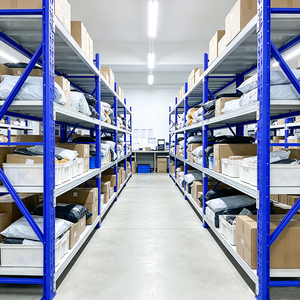
Warehouse Steel Rack Pallet Rack Shelves for Warehouse 3 Tons Foldable Storage Shelves
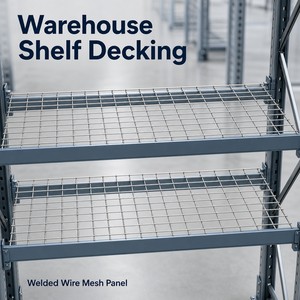
Heavy Duty Galvanized Steel Load Bearing Support Bar Drop-In Type Wire Mesh Decking Panel For Warehouse Pallet Rack Storage
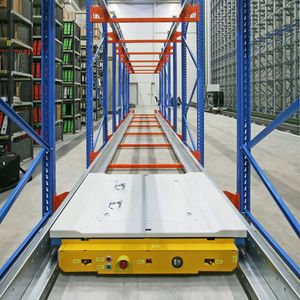
Heavy Duty Industrial Warehouse Radio Shuttle Racks Intensive Warehousing Pallet Racking Cargo & Storage Equipment Manufacturer
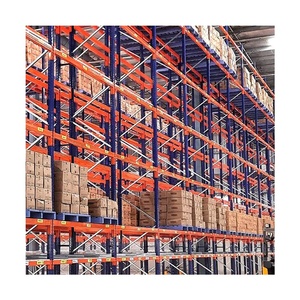
Metal Pallet Racking Warehouse Storage Pallet Racking System Heavy Duty Shelves Rack Unit For Goods Storage
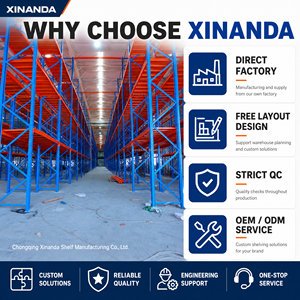
Heavy Duty High Bay Warehouse Racking System Industrial Pallet Storage Shelves for Large Distribution Warehouses
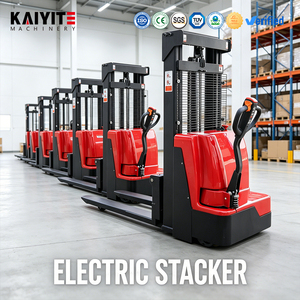
Industrial Electric Stacker 1Ton 2Ton Pallet Stacking Truck 3500mm Lift Height For Racking System
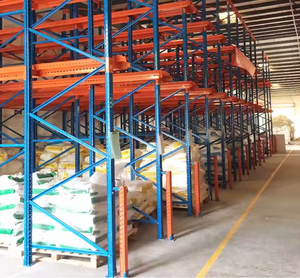
High Quality Adjustable Drive-Through Pallet Rack Industrial Warehouse Drive-In Racking System Folding Metal Storage Rack
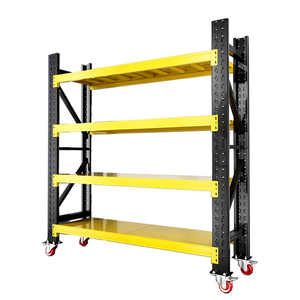
Metal Foldable Corrosion Protection Storage Rack Boltless Adjustable Thickened Heavy Duty Caster Wheel Rack Industrial Warehouse
Enterprise Strengths & Factory Capabilities
A fully integrated direct manufacturer executing stringent quality control from raw metallurgical coil to completed on-site assembly.
Verified CE & ISO 9001:2015
Certified production tracking under CE No. 2435-CPR-8605159 and ISO 9001:2015 accreditation (Certificate 18624Q00169R0M). Fully compliant with European EN 15512 static steel racking testing codes.
Engineering & Free 3D Layouts
Our dedicated R&D engineering wing utilizes advanced Finite Element Analysis (FEA) to assess torsional buckling, joint elasticity, and seismic stability, delivering custom 2D/3D DWG schematics within 24 hours.
Global Delivery & Seaborne Packing
End-to-end export experience shipping to 120+ nations across North America, Latin America, Europe, and Southeast Asia. Standardized container nesting protocols prevent in-transit scratching and marine salt degradation.
Industrial Shelving Engineering: The Critical Balance of Structural Integrity and Operational Throughput
In modern high-throughput logistics terminals, industrial shelving and heavy-duty pallet racking are no longer regarded simply as steel furniture; they serve as the dynamic structural backbone of entire supply chain nodes. Procuring enterprise-grade systems demands a comprehensive engineering perspective that incorporates structural elastoplastic behavior, load distribution uniformity, and seismic dynamics. Sourcing from an authentic CE-certified manufacturer guarantees that steel yield strengths (typically high-grade Q235B or Q355B certified hot-rolled coils) align strictly with validated design load ratings, avoiding dangerous progressive collapses induced by upright profile deflection or localized shear bolt failures.
A rigorous manufacturing methodology requires that every component undergoes precision cold roll-forming, continuous punch index calibration, automated robotic welding, and a ten-stage surface treatment protocol encompassing acid pickling, zinc phosphating, and electrostatic polymer powder coating. This exhaustive chemical process creates an impervious physical barrier against industrial atmospheric contaminants, humidity fluctuations, and corrosive chemical fumes commonly encountered in modern warehousing environments.
Future Procurement Trends: Data-Driven Warehousing & Sourcing Shift
Procurement directors and facility design engineers are confronting dramatic shifts in global supply chain infrastructure. The traditional approach of buying off-the-shelf catalog racks is rapidly being displaced by sophisticated, tailor-made procurement models. Key market procurement trends include:
- Seismic Resilience as a Baseline Specification: With international building codes adopting stricter seismic life-safety mandates, industrial facilities demand site-specific static and dynamic calculation dossiers. Procurement checklists require seismic base-plate anchor analyses that account for soil category spectra and ground acceleration coefficients.
- Direct Factory Engineering Collaboration: Intermediary sourcing friction is declining as procurement managers choose direct factory interaction. Working directly with manufacturing engineers shortens custom punch and beam slot customization cycles, minimizes markup costs, and assures traceable mill test certificates (MTC).
- High-Bay Density Maximization Over Footprint Expansion: Surging industrial real estate and land leasing prices globally incentivize facilities to maximize usable cubic volume rather than square footage. Multi-tier rack-supported mezzanines and automated high-bay systems (reaching clearances from 10 to over 30 meters) represent the majority of capital expenditures in high-growth logistics clusters.
- Surface Treatment Durability Guarantees: Facilities operating in tropical, coastal, or high-humidity regions prioritize long-term cyclic corrosion performance. Specification standards are moving from standard single-coat paint toward thick thermosetting epoxy-polyester coatings and pre- or post-fabrication hot-dip zinc galvanization for humid ambient conditions.
Technological Evolution: Smart Racking & Hybrid Storage Dynamics
The technological trajectory of warehouse racking systems is moving toward intelligent structural interaction. While static strength remains the foundational requirement, integration with warehouse management software (WMS) and warehouse execution systems (WES) dictates newer hardware configurations:
- Transition from Pure Manual Storage to Semi-Automated Shuttles: High-density radio shuttle racks are replacing deep drive-in racking. Radio shuttle carriers maneuver pallets within storage channels autonomously, cutting internal lift truck transit cycles by up to 40% and eliminating vehicle impacts against vertical upright columns.
- Sensor-Embedded Structural Health Monitoring (SHM): Advanced cold-formed uprights are increasingly fitted with impact-monitoring accelerometers and strain gauges. These modules alert plant safety supervisors in real time if a forklift collision surpasses critical deflection limits or if localized beam overloading poses an operational risk.
- Hybrid Picking Modules: Modern e-commerce fulfillment hubs combine lower-level live carton gravity flow tracks for rapid individual SKU order picking with upper levels engineered for high-bay reserve pallet consolidation, compressing handling workflows into integrated vertical footprints.
Industrial Shelving Procurement FAQ
Essential engineering and procurement considerations answered by our certified technical specialists.
Q: What is the significance of the CE mark for industrial steel racking?
The CE marking (specifically under Construction Products Regulation EN 1090 / EN 15512) certifies that the racking manufacturer exercises Factory Production Control (FPC). It proves that raw steel yield strengths, structural profile designs, weld penetration depths, and load deflection limits have undergone rigorous independent physical destructive testing and finite element computational verification.
Q: How do I determine whether my facility needs selective or high-density racking?
The design decision depends on SKU diversity, inventory turnaround rates, and pallet volume. Selective racking provides 100% immediate accessibility to each pallet, making it optimal for operations with diverse SKUs and frequent picking cycles. High-density designs (such as Drive-In, Push-Back, or Radio Shuttle systems) eliminate handling aisles to consolidate large volumes of low-mix SKUs, achieving up to 75-80% spatial floor utilization.
Q: What warehouse information is required to produce an engineered layout?
To produce an accurate CAD schematic and structural calculation, our engineering team requires: facility architectural blueprints (length, width, clear height under roof joists), slab thickness and concrete compressive capacity (f'c), column grid intervals, pallet footprint dimensions (width × depth × overall loaded height and gross weight), and the operating turning radius and maximum lift height of your material handling equipment.
Q: How is steel surface protection handled for cold store or humid coastal warehouses?
For standard temperature-controlled warehouses, our 10-step pickling, phosphating, and electrostatic powder coating provides robust, scratch-resistant surface protection. In blast-freeze environments (down to -25°C) or highly humid coastal ports, we recommend hot-dip galvanization (HDG), which metallurgical bonds a sacrificial zinc layer over the components to eliminate deep rust formation and flaking over decades of use.