Enterprise Heavy Duty Systems
High-Density Engineered Storage Solutions
Explore our heavy-duty industrial rack portfolio built with cold-rolled high-tensile structural steel, rigorously engineered to European standard EN 15512 and CE compliance.
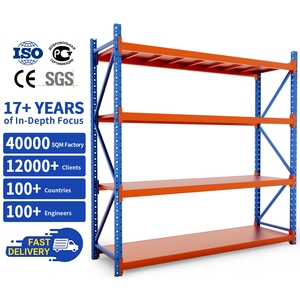
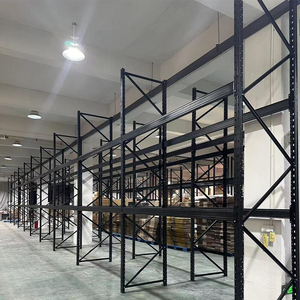
Longspan Shelving Rack High Bay Industrial Shelves Narrow Aisle Heavy Duty Metal Warehouse Storage Selective Pallet Racking
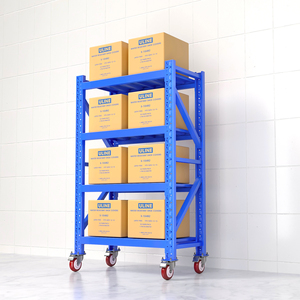
Wire Mesh Deck Pallet Racking Corrosion Resistant Dust Leakage Prevention 5-Layer Heavy Duty Warehouse Storage
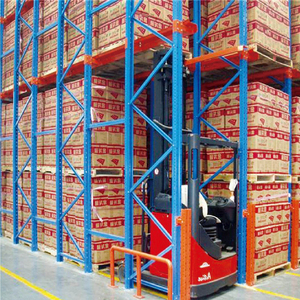
Drive in Pallet Racking 5 Layer Heavy Duty High Density Industrial Warehouse Bulk Store for Automotive Parts Storage
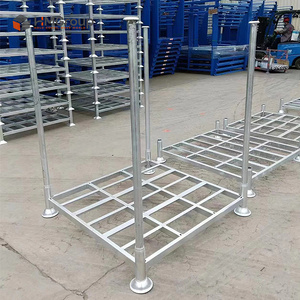
Heavy Duty Industrial Galvanized Metal Steel Storage Stacking Pipe Pallet Stillages Racks
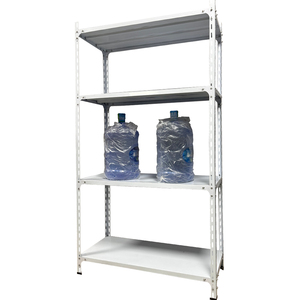
Warehouse Angle Bar Steel Slotted Storage Display Stand Rack Multilayer Adjustable Racking System
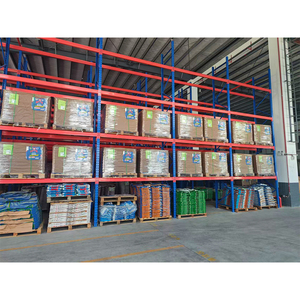
High Bay Heavy Duty Steel Pallet Racking System Warehouse Industrial High Density Storage Shelving Rack
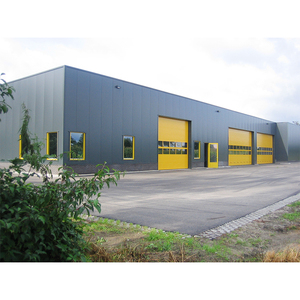
Prefab Warehouse Steel Structure Workshop Industrial Steel Structure Warehouse Engineering Infrastructure
Engineering Dynamics: The Architecture of CE-Certified Gravity Racking Systems
Modern industrial supply chains operate under severe spatial and fiscal constraints. As urban warehousing lease costs skyrocket and omnichannel distribution mandates tighter delivery windows, storage density and order turnaround velocity have emerged as mission-critical performance vectors. Among high-density dynamic storage strategies, the Gravity Racking System (frequently termed Pallet Flow Racking) stands as an unmatched mechanical innovation. Operating on fundamental Newtonian principles, pallet flow lanes leverage earth’s gravitational pull to move palletized inventories down dedicated, pitched roller beds. By integrating storage and internal movement into a continuous, self-powering process, gravity racking eliminates superfluous operating aisles, achieving floor area volumetric efficiency exceeding 75%.
CE Mark Audited (EN 15512 / EN 15620 Compliance)
ISO 9001:2015 Quality Management Certified
Kinematic Principles and Structural Mechanical Rigor
At our Guangzhou manufacturing complex, every gravity flow system is tailored from premium grade structural steel (Q235B and Q355B), utilizing automated multi-station cold roll-forming lines to achieve millimeter-exact profile tolerances. The operational anatomy of our gravity racking revolves around precisely configured roller beds set at a gradient between 2.5% to 4.0%, depending strictly on pallet bottom morphology and cargo weight distribution (typically calibrated from 500 kg to 1,500 kg per pallet position).
The mechanics of controlled acceleration are paramount. Without robust engineering controls, unmanaged gravity-induced acceleration risks pallet runaway, impact collision, product damage, and catastrophic rack deflections. To mitigate dynamic inertia, our systems integrate high-durability centrifugal brake rollers spaced at calculated intervals along the track. These brake rollers operate without external power, utilizing an internal mechanical governor that applies dynamic resistive friction proportional to the pallet's linear velocity, ensuring pallet travel never exceeds a safe speed of 0.25 to 0.3 meters per second.
Centrifugal Speed Controllers
Independently calibrated mechanical brake drums automatically engage when pallet velocity surpasses safety thresholds, preventing surging along deep flow channels up to 25 pallets deep.
Automatic End Separator Mechanisms
Physical mechanical stoppers isolate the foremost discharge pallet from the subsequent accumulation column, removing line back-pressure so reach trucks can extract pallets safely without binding.
Zinc-Electroplated Solid Steel Rollers
High-load cylindrical rollers featuring shielded precision ball bearings lubricated for sub-zero environments, guaranteeing uninterrupted rotation even in -30°C cold storage operations.
Strategic Product Recommendations based on Operational Workflows
Warehouse logistics engineering is never one-size-fits-all. When selecting between high-density structural platforms, facility managers must map inventory turnover frequency against stock variety (SKU dispersion):
- Strict FIFO Applications (Fast-Moving Perishables & Pharma): Gravity Flow Racking is the gold standard. Products enter from the high replenishment aisle and exit at the retrieval face, making batch expiration tracking automatic and uncompromised.
- High-Density Homogeneous Goods (Beverages & Bulk Seasonal Stock): Drive-In and Drive-Through racking maximizes cube density at a lower capital cost, optimal for LIFO scenarios where selective access to individual pallets is secondary to mass cubic storage.
- Variable SKU Fast Distribution: Selective Pallet Racking outfitted with Wire Mesh Decking provides immediate 100% pallet accessibility, safeguarding operators against falling carton hazards while facilitating rapid reach-truck cycles.
- Long, Profiled Materials (Pipes, Timber, Extrusions): Heavy Duty Cantilever Racking eliminates front vertical column barriers, allowing side-loaders or overhead bridge cranes unhindered access to oversized product bundles.
Procurement Shifts & Global Sourcing Trends
Modern global logistics buyers are transitioning away from ad-hoc equipment orders toward life-cycle structural sourcing. The prevailing procurement trends reshaping our industry encompass:
1. Decarbonization and Energy-Free Automation: As global corporations commit to ESG (Environmental, Social, and Governance) roadmaps, automated storage and retrieval systems (ASRS) face scrutiny over substantial continuous power consumption. Gravity racking offers an ingenious passive automation alternative—delivering high-density automated movement with zero kilowatt-hours consumed. This zero-power dynamic mobility yields dramatic operational cost reductions, especially within costly refrigerated logistics hubs.
2. Structural Resilience & Seismic Engineering: Extreme climate conditions and cross-regional seismic hazards demand certified finite element analysis (FEA). Modern procurement authorities demand documented stress-strain verification under regional seismic excitation parameters. At our facility, structural upright design incorporates proprietary omega-profile geometries, high-yield baseplates, and certified high-shear interlocking safety connector pins.
3. Seamless Telematics and Warehouse Management System (WMS) Interfacing: Gravity flow systems are increasingly outfitted with intelligent sensor arrays at the retrieval terminal. Integrated photo-electric eyes and pneumatic position stops interface directly with central warehouse management software, notifying warehouse operations in real time when pick slots become empty.
Guangzhou HEDA Shelves: Enterprise Manufacturing Advantages
With an established pedigree spanning over 25 years since 2001, Guangzhou Heda Shelves Co., Ltd. has grown from a regional engineering workshop into a heavy-industry manufacturing titan encompassing 30,000 square meters of specialized production lines.
Our infrastructure encompasses heavy-tonnage automated coil-slitting centers, automated high-speed column punching presses, precision profile roll-forming machines, and twin continuous electrostatic powder coating tunnels with multi-stage chemical pretreatment baths. This ensures unyielding structural adherence to CE Certificate No. 2435-CPR-8605159 and ISO 9001:2015 standards.
Every overseas export order undergoes systematic containerization planning. Beams, frames, and roller beds are bundled with protective buffer wraps, indexed with detailed alphanumeric packing manifests, and loaded to maximize container cubic capacity, ensuring hassle-free logistics clearance and effortless site inventorying upon arrival at destination ports worldwide.
Procurement Clarity
Frequently Asked Questions on Gravity Racking
Expert structural and commercial guidance addressing common logistical, technical, and regulatory procurement questions.
What floor slope and gradient calculations are used in gravity pallet flow lanes?
Typically, flow beds are engineered with an incline between 2.5% and 3.5% (approx. 30mm vertical drop per linear meter). Hardwood pallets, plastic runners, and composite skids possess different friction coefficients; our design team calculates precise gradients alongside product test runs to prevent stalling or excessive inertia.
How does the system eliminate back-pressure during pallet extraction?
We integrate automatic pallet separators at the unloading discharge interface. The separator mechanically locks the accumulated queue of upstream pallets roughly 300mm behind the lead pallet. Once the forklift raises and withdraws the lead unit, a mechanical foot-trigger releases the next pallet to advance safely.
Can gravity racking systems endure humid, coastal, or deep freeze conditions?
Yes. For cold store chambers operating down to -30°C, rollers are outfitted with low-temperature synthetic lubricants and specialized bearing seals. In highly humid or coastal port environments, all structural profiles undergo full hot-dip galvanization or dual-layer anti-corrosion epoxy powder coatings.
What structural certifications and engineering calculation sheets are delivered?
Every client project is supported by official CE certificates (CE No. 2435-CPR-8605159), ISO 9001:2015 tracking, mill test certificates for steel raw materials, and an engineer-stamped statical calculation dossier verifying compliance with European EN 15512 and FEM regulations.
Accelerate Your Warehouse Intralogistics Efficiency
Consult with our structural engineering team today. We provide zero-cost 2D architectural CAD floor plans, comprehensive 3D digital twin models, and complete load calculations tailored to your facility parameters.
Get Catalog