Heavy-Duty Warehouse Systems & Dynamic Flow Racks
From self-regulating pallet gravity flow lanes to multi-level structural mezzanines, discover engineered systems precision-manufactured from high-tensile Q235B/Q355B cold-rolled steel.
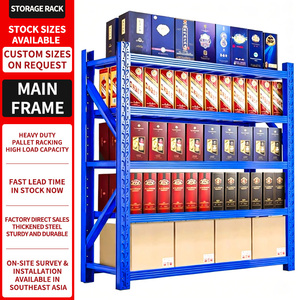
300kg Per Layer Medium Duty Warehouse Storage Shelving Racking System Industrial Steel Storage Rack Multilayer
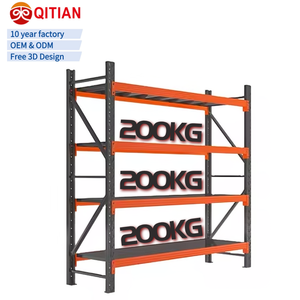
Factory Customized Steel Light Duty Industrial Storage Shelves 4 Layer Warehouse Rack System 200kg Capacity Storage Rack
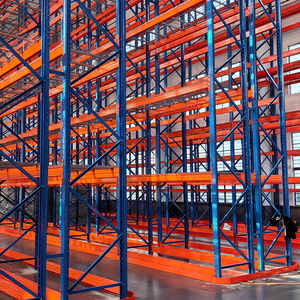
Heavy Duty Industrial Warehouse Storage Selective Teardrop Pallet Racking System Price
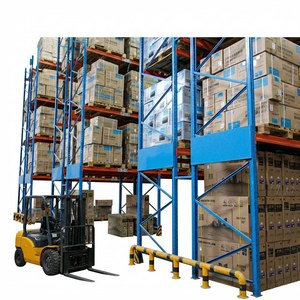
YueYang Warehouse Shelving Heavy-duty Drive-in Industrial 3-Layer Cold Rolled Steel Epoxy Powder Coated Pallet Racking System
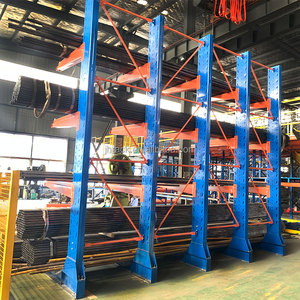
Customized Industrial Cantilever Racking Warehouse Storage Rack Upright Frames Heavy Duty Cantilever Racks Steel Storage Shelf
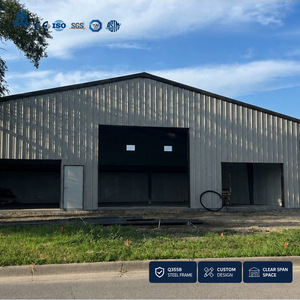
Prefabricated Steel Warehouse High Bay Storage Building Pallet Racking System Distribution Facility Space Planning
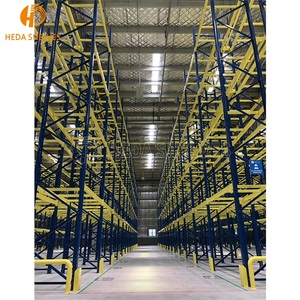
Factory 4-Layer Medium Duty Rack 100kg Corrosion Protected Garage Warehouse Heavy Duty Racks & Industrial Shelving Units
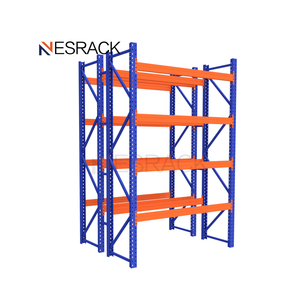
Heavy Duty Industrial Shelving Certificated Stacking Pallet Racking System Racks for Warehouse
Engineering Principles of CE Certified Gravity Flow Pallet Racking
Gravity Flow Pallet Racking (frequently designated across European intralogistics specifications as Pallet Live Storage or Live Dynamic Racking) functions on an unpowered, gravity-driven First-In, First-Out (FIFO) methodology. Engineered for high-throughput fulfillment environments, agricultural cross-docking, temperature-controlled cold chains, and pharmaceutical stockpiles, gravity flow channels convert up to 80% of warehouse floor area into prime cubic storage volume by eliminating intermediate travel aisles between load and retrieval faces.
Kinematic Control & Mechanical Deceleration Architecture
In high-density dynamic storage, maintaining velocity equilibrium is paramount to structural integrity and workforce safety. When pallet payloads range from 500 kg to 1,500 kg per position, runaway kinetic energy represents severe occupational danger. Our CE-certified flow bed assemblies integrate three tiers of motion control:
Centrifugal Brake Rollers
Direct-contact steel speed controllers calibrated to engage whenever linear speed exceeds 0.25 m/s. Integrated gear dampening protects delicate pallet structures and ensures uniform transit across 20-pallet-deep lanes.
End-Stop Safety Separators
Mechanical pallet separation mechanisms decouple the leading discharge pallet from trailing lane back-pressure. Forklift operators extract the front pallet completely isolated from dynamic rear thrust, mitigating mast binding.
Self-Centering Guide Rails
Full-length structural zinc-chromate coated guide tracks keep non-standard GMA (48x40"), EUR 1 (800x1200mm), and industrial chemical CP-3 pallets tracking on the true lane centerline without lateral wall scrubbing.
Mathematical Load Calculations & Slope Dynamics
In accordance with EN 15512 (Steel static storage systems – Adjustable pallet racking systems – Principles for structural design) and the European CPR (Construction Products Regulation No. 305/2011/EU), gravity flow systems require precise physical velocity and friction coefficient calibrations:
| Design Variable | Standard Euro/GMA Pallet Spec | Heavy Bulk / Industrial Pallet Spec | Cold Storage (-25°C) Spec |
|---|---|---|---|
| Recommended Slope Angle | 3.0% – 3.2% (1.72° – 1.83°) | 2.8% – 3.0% (1.60° – 1.72°) | 3.5% – 4.0% (2.00° – 2.29°) |
| Brake Roller Interval | 1 Unit per Pallet Position | 1 Unit per 0.8 Pallet Position | 1 Low-Temp Synthetic Lubricated Unit / Pallet |
| Terminal Velocity Limit | 0.30 m/sec max | 0.25 m/sec max | 0.28 m/sec max |
| Roller Core Material | Electro-Galvanized Precision Tube | Heavy-Duty Solid Wall Seamless Steel | Zinc-Plated with Sealed 6204-ZZ Bearings |
| Max Backpressure Relief | Up to 15 Metric Tons Lane Force | Up to 28 Metric Tons Lane Force | Up to 18 Metric Tons Lane Force |
Guangzhou HEDA Shelves: 25 Years of Factory-Direct Engineering Authority
Founded in 2001, Guangzhou Heda Shelves Co., Ltd. has grown to become a benchmark industrial manufacturer of complex warehouse racking, automated warehousing substructures, and industrial mezzanine platforms. Operating from an expansive 30,000 square meter standardized manufacturing facility staffed by more than 300 experienced fabrication engineers, layout draftsmen, and certified structural welders, HEDA produces over 30,000 tons of structural steel storage equipment every month.
Rigorous 10-Stage Precision Production Protocol
Gravity flow racks endure intense cyclical dynamic forces. To prevent frame deflection, beam twisting, and roller failure under prolonged stress, every component manufactured in HEDA's automated workshops complies with a ten-stage quality assurance protocol:
01. Prime Raw Materials
Direct procurement of high-grade Baosteel Q235B and Q355B cold-rolled structural steel strip coils with complete mill test certifications.
02. Laser & Precision Cutting
High-speed automated CNC shearing maintaining cross-section tolerance within ±0.2mm for distortion-free beam alignment.
03. Automated Column Punching
Multi-station continuous punch stamping ensures 50mm / 75mm pitch precision for adjustable upright beam connections.
04. Roll-Forming Mill
Multi-stand cold roll-forming lines produce continuous Omega-profile upright posts with enhanced moment of inertia.
05. Robotic Spot & Seam Welding
Automated OTC robotic welding cells guarantee deep weld penetration between beam connectors and box profiles.
06. Chemical De-Greasing & Pickling
Submersion acid wash eliminates oxidation and scale, providing chemically pure surface substrate profiles.
07. Phosphating Bath
Micro-crystalline conversion layer deposited to inhibit rust crawl under high tropical humidity or cold room condensation.
08. Electrostatic Powder Coating
Automated Swiss Gema powder application with 180°C curing creates 60–80 micron high-adhesion anti-scratch finish.
09. Seismic Base & Anchor Rigging
Custom engineering for seismically active regions across Central America, Pacific Ring, and Southern Europe.
10. Export Bunking & Labeling
Container-optimized bundle strapping, shock-buffered corners, and bill-of-lading component indexing.
Future Procurement & Technological Trends in Gravity Flow Storage
As enterprise supply chains confront escalating industrial real estate lease prices and mounting labor volatility, warehouse procurement officers must evaluate gravity flow systems not as standalone static shelves, but as foundational intralogistics nodes. Over the next five years (2026–2031), five primary structural trends will redefine dynamic racking procurement:
Hybrid AMR/AGV Interfacing
Autonomous mobile forklifts and Automated Guided Vehicles require extreme positional repeatability. Modern gravity flow unload faces are engineered with laser alignment reflectors and hydraulic indexing stops to ensure robot forks engage pallets within ±3mm tolerances.
Zero-Emission Passive Cold Chain
With industrial refrigeration energy consumption surging, gravity flow cuts energy waste. By condensing refrigerated storage cubes by 50% compared to selective aisles, distribution centers realize measurable reductions in kilowatt-hour load per pallet turn.
Smart RFID & Optical In-Lane Monitoring
Future gravity systems incorporate optical sensors at each brake roller node. Warehouse Management Systems (WMS) obtain real-time digital twins of inventory roll status, detecting stuck pallets or slow-flow lanes before dock jams occur.
Seismic Resilience in Nearshore Hubs
Nearshoring hubs in Central America (Panama, Costa Rica, Guatemala) and Southeast Asia demand seismic dynamic calculations complying with local civil codes (NEC, Eurocode 8). Uprights feature heavy-gauge baseplates with dual wedge anchors.
Comparative Engineering Matrix: Selecting the Optimum High-Density Architecture
| Operational Metric | Gravity Pallet Flow (FIFO) | Drive-In Racking (LIFO) | Radio Shuttle Racking (FIFO/LIFO) | Selective Pallet Racking |
|---|---|---|---|---|
| Footprint Utilization | 80% – 85% Maximum Density | 70% – 75% High Density | 80% – 90% Ultra High Density | 35% – 45% Low Density |
| Stock Rotation Rule | Strict FIFO (First-In, First-Out) | LIFO (Last-In, First-Out) | Configurable FIFO or LIFO | Random Direct Access |
| Forklift Aisles Needed | 2 Only (Load face + Pick face) | 1 Common Aisle | 1 or 2 Aisles | Multiple (Between every row) |
| Forklift Rack Ingress | Zero (External access only) | High (Drives inside rack structure) | Zero (Shuttle cart handles lane) | Zero (Reaches into rack face) |
| Forklift Damage Risk | Negligible / Protected | High / Continuous Upright Impact | Extremely Low | Moderate |
| Operating Power Requirement | Zero kW (Pure Gravity & Mechanical) | Zero kW | Lithium Battery Recharging | Zero kW |
Frequently Asked Questions for Project Engineers & Importers
Clear, verifiable technical answers on load certification, customs compliance, seismic engineering, and installation protocols.
Request Complete Dynamic Gravity Racking Specifications & Structural Dossier
Partner directly with Guangzhou Heda Shelves Co., Ltd. for factory-direct engineering pricing, customized seismic dynamic load calculations, and comprehensive CAD/3D intralogistics facility designs. Contact our senior structural design team now to receive our comprehensive 2026/2027 Engineering Catalog.
Get Catalog