High-Efficiency Warehouse Racking & Industrial Shelving Systems
Configured specifically for Canadian supply chains—from standard 40" × 48" GMA pallet distribution in Ontario and Quebec to harsh sub-zero cold storage facilities in Calgary, Edmonton, and Winnipeg.
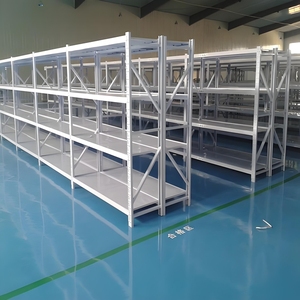
Medium Duty Industrial Metal Shelving Rack For Storage Warehouses
Boltless step-beam steel racking with adjustable shelf tiers. Perfect for parts distribution centers, hardware depots, and carton manual picking.
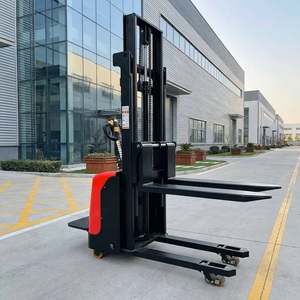
Rugged All Terrain Electric Stacker 1.5T 2T Off-road Lift Stacker
Pneumatic rough-ground handling unit optimized for outdoor lumber yards, unpaved loading bays, and transitional winter warehouse thresholds.
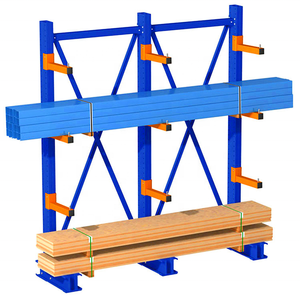
Heavy Duty Industrial Cantilever Rack System for Timber & Pipe
Unobstructed vertical column racks engineered for dimensional Canadian timber, steel tubing, PVC conduit, and extruded architectural profiles.
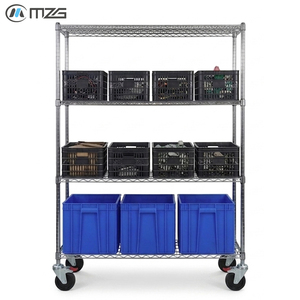
Industrial Parts Heavy Duty Metal Wire Shelving with Wheels
High-tensile zinc/chrome wire shelf cart with heavy-duty locking casters. Ideal for line-side assembly staging, fulfillment buffers, and clean rooms.
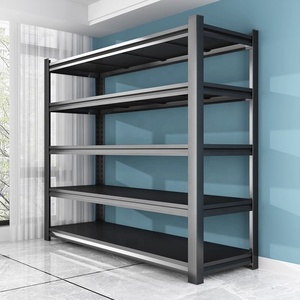
5 Layers 150KG Capacity Warehouse Wire Storage Steel Shelving
Ventilated modular steel wire unit ensuring compliance with overhead NFPA/fire sprinkler water-penetration bylaws in commercial buildings.
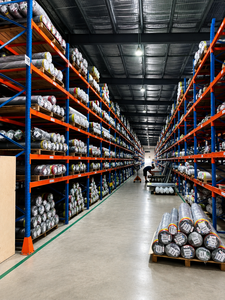
Multi Level Warehouse Heavy Duty Steel Pallet Racking Systems
Standard selective and high-bay racking systems roll-formed from premium certified structural steel coil. 100% selective access to all pallet locations.
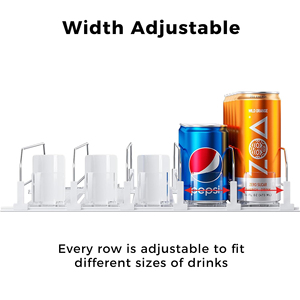
Spring Loaded Gravity Roller Shelf Pusher Track for Coolers
Automated front-facing pusher tracks for convenience storage, supermarket display racks, and cold-room beverage staging lines.
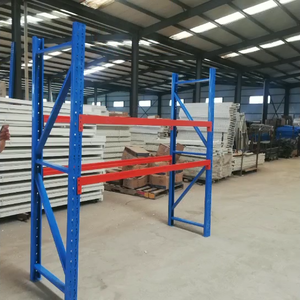
Adjustable Multi-Tier Warehouse Logistics Push-Back & Drive-In Rack
High-density storage racking consolidating aisles into dynamic storage cubes. Excellent for Canadian frozen food and bulk manufacturing distribution.
Engineering Racks for the Canadian Regulatory & Seismic Environment
Importing industrial steel storage racking into Canadian provinces requires meticulous adherence to national building frameworks, provincial health and safety acts, and location-specific geotechnical conditions.
1. CSA A344 & CSA S16 Design Compliance Protocols
In Canada, storage racks are legally classified as structural building components under provincial jurisdictions. Steel industrial storage systems exported to Canadian facilities must satisfy CSA Standard A344 (User Guide for Steel Storage Racks) and CSA S16 (Design of Steel Structures). In Ontario, storage installations exceeding specific load and dimensional thresholds require a mandatory Pre-Start Health and Safety Review (PSR / PSHSR) signed and stamped by an accredited Professional Engineer (P.Eng.) licensed by Professional Engineers Ontario (PEO).
Our structural engineering team produces full calculations based on finite element analysis (FEA). We evaluate upright column buckling limits, beam-end connector moment capacities, torsional unbraced lengths, and seismic shear transfers to provide your local P.Eng. with turnkey submittal calculation packages.
| Compliance Factor | Canadian Standard / Regulation | Engineering Specification & Execution |
|---|---|---|
| Structural Steel Code | CSA S16 / AISI S100 | High-strength Q235B & Q355B cold-rolled steel; certified minimum yield strength $F_y \ge 345\text{ MPa}$ ($50\text{ ksi}$). |
| Rack User Standard | CSA A344.1 / CSA A344.2 | Load application plaques prominently displayed; minimum beam deflection limit strictly maintained at $L/180$. |
| Ontario Safety Law | OHSA Reg. 851, Section 7 (PSR) | Engineered drawings, weld certifications (CWB-equivalent testing), and physical destructive load test documentation provided. |
| Fire Protection Bylaws | NFPA 13 & National Fire Code (NFC) | Open-wire mesh decks (50% water permeability); flue space maintainers (transverse and longitudinal minimum 6-inch flues). |
2. Geotechnical & Seismic Engineering Across Canadian Regions
Canada presents drastically divergent seismic hazard profiles under the National Building Code of Canada (NBC). Warehouses located in the Cascadia Subduction Zone—such as the Lower Mainland of British Columbia (Vancouver, Richmond, Delta, Surrey)—experience significant Spectral Response Accelerations ($S_a(0.2)$ often exceeding $0.85\text{g}$). Soft marine delta soils (Site Class D or E) exacerbate the risk of liquefaction and base shear amplification.
For BC and Vancouver Island projects, we engineer heavy-gauge oversized baseplates (up to $16\text{mm}$ thickness), high-ductility anchor bolt patterns with extended embedment depths into structural concrete slabs, and fully triangulated rear x-bracing. In contrast, installations across the geologically stable Canadian Shield (Greater Toronto Area, Montreal, Ottawa) prioritize high-density vertical cube exploitation, maximizing beam load configurations up to $30\text{ ft}$ clear heights.
3. Sub-Zero Metallurgy & Thermal Shock Protection
Cold chain logistics infrastructure in Canadian prairie hubs like Calgary, Edmonton, and Regina encounters ambient operating temperatures dipping below $-30^\circ\text{C}$ in blast freezers. Standard carbon steel undergoes a Ductile-to-Brittle Transition (DBTT) at depressed temperatures, where impact from a reach truck can result in catastrophic brittle fracture rather than ductile deformation.
To address these conditions, we supply low-temperature Charpy V-notch tested steel profiles and specialized hot-dip galvanized finishes or cold-elastic polyurethane electrostatic powder coatings. Our multi-stage pretreatment process incorporates alkaline degreasing, zinc-phosphate conversion coating, and curing schedules calibrated to prevent micro-cracking and moisture delamination under intense refrigeration.
Tailored Storage Configurations for Canada's Prime Logistics Hubs
Every Canadian economic corridor faces distinct supply chain pressures, land costs, and inventory rotation models. Here is how our racking architectures solve regional industrial challenges.
GTA Mega-Fulfillment & 3PL Hubs
Peel Region, Mississauga, Brampton, VaughanWith industrial land values in the Greater Toronto Area commanding premium lease rates, distribution centers require extreme vertical space utilization and high SKU density.
- Very Narrow Aisle (VNA): 1.6m aisle configurations reaching 14m clear heights for wire-guided turret trucks.
- Multi-Tier Mezzanines: Rack-supported pick towers multiplying active e-commerce fulfillment floor area by 300%.
- Ontario PSR Turnkey Packages: All drawings and node moment calculations provided ready for local P.Eng. sign-off.
Pacific Gateway & Inland Hubs
Metro Vancouver (Delta, Richmond) & Calgary (Balzac)Balancing seismic protection near Cascadia subduction zones with the high throughput demanded by intermodal container transloading from Port of Vancouver and Prince Rupert.
- High-Ductility Seismic Racks: Heavy footplates, anchor bolts, and reinforced column bases mitigating seismic ground shear.
- Heavy Cantilever Systems: Outdoor and indoor lumber, rebar, and structural timber storage for BC forestry yards.
- Intermodal Fast Sorting: Drive-in and push-back lanes engineered for rapid Pacific transload cycle times.
Agri-Food & Industrial Corridor
Montreal, Saint-Laurent, Winnipeg, EdmontonSpecialized heavy-duty storage for Canadian meat processing, dairy producers, and industrial assembly facilities operating in demanding environments.
- Radio Shuttle Cold Storage: Deep lane automation functioning without performance degradation down to -25°C.
- Hot-Dip Galvanized Racks: Impervious to salt-air exposure and chemical washdowns in food manufacturing.
- Automotive Staging Racks: Custom engine, transmission, and body panel racks for Southern Ontario assembly plants.
Emerging Trends Transforming Canadian Warehouse Logistics
Canadian supply chains are navigating tighter industrial availability, stricter environmental guidelines, and accelerating warehouse automation adoption.
Automation-Ready Racking (ASRS & AMR)
With persistent warehouse labor shortages across Ontario and Alberta, Canadian operators are retrofitting existing racks for Autonomous Mobile Robots (AMR) and four-way shuttle systems requiring tighter fabrication tolerances (±1.0mm).
Vertical Cube Densification (40ft+ Clears)
Escalating municipal land taxes and construction costs have prompted Canadian developers to construct facilities with 36-ft to 42-ft clear ceiling heights, shifting focus to high-bay structural uprights and high-capacity beam connectors.
Nearshoring & Cross-Border Buffers
CUSMA trade adjustments and geopolitical supply chain realignments have led Canadian manufacturers to establish larger on-shore raw material inventories, boosting demand for heavy-duty drive-in and cantilever racking.
Low-Carbon Steel & ESG Procurement
Tier-1 Canadian enterprises now evaluate the embodied carbon footprint of warehouse fixtures. Our roll-forming lines leverage scrap-recycled electric arc furnace (EAF) coil and low-VOC powder finishes, meeting LEED warehouse targets.
25 Years of Factory-Direct Precision Engineering
Founded in 2001, Guangzhou Heda Shelves Co., Ltd. operates a 30,000 m² automated production complex with 300+ technicians, producing up to 30,000 tons of industrial storage systems per month for global export.
Raw Steel Sourcing
Certified prime Q235B & Q355B coils with full mill test certificates.
Precision Slitting
High-speed laser and CNC shears ensuring edge tolerances within ±0.2mm.
CNC Column Punching
Continuous automated 50mm/75mm teardrop and hex pitch punching.
Continuous Roll Forming
Multi-stand progressive rollers shaping high-rigidity omega column sections.
Automated Beam Forming
Twin-C interlock welding generating dual-thickness step beams.
Robotic MIG Welding
Multi-axis Panasonic robotic weld stations for connector-to-beam joints.
Acid Pickling & Phosphating
Multi-tank chemical wash removing scale and depositing zinc phosphate layer.
Electrostatic Powder Coat
GEMA automatic spray line applying 60-80μm durable thermoset epoxy powder.
High-Temp Curing Tunnel
200°C curing ensuring cross-hatch adhesion and extreme scratch resistance.
Canadian Export Crating
Steel strap bundling, protective edge guards, and ISPM-15 dunnage.
Verified Quality & Third-Party Validated Testing
Our structural manufacturing procedures undergo continuous auditing by international testing bodies. We supply Canadian procurement departments, structural engineers, and insurance underwriters with verifiable registration numbers, weld tensile test reports, and raw material traceability.
Container Optimization for Canada
Direct ocean freight quoted CIF / DDP to Port of Vancouver, Port of Prince Rupert, Port of Montreal, and Halifax.
Frequently Asked Questions by Canadian Warehouse Operators
Key technical, regulatory, and logistics answers for operations directors, logistics engineers, and facility managers across Canada.
? How do your racking systems satisfy Ontario Pre-Start Health and Safety Reviews (PSR)?
Under Ontario Regulation 851 (Industrial Establishments) Section 7, new racking installations must have an engineering review. We furnish detailed structural calculations, shop drawings, material test mill certs, and connection capacity tables. This allows your local licensed Ontario Professional Engineer (P.Eng.) to swiftly inspect and issue the compliant PSR stamp prior to inventory loading.
? Can you provide seismic load calculations for British Columbia facilities?
Yes. Warehouses in Metro Vancouver, Richmond, Delta, and Surrey reside in active seismic zones governed by the National Building Code of Canada (NBC) and BC Building Code. We configure your racking using site-specific spectral acceleration values, building importance categories, and concrete slab thickness to calculate dynamic base shear, heavy-duty baseplate dimensions, and anchor bolt embedment depths.
? What customs documentation and CBSA tariff codes are used for Canadian import?
Our export documentation team provides commercial invoices, packing lists with piece marks, bills of lading, and Canada Customs Invoices (CCI). Industrial steel storage racks typically enter Canada under Harmonized System (HS) Code 7308.90 (Structures and parts of structures of iron or steel). We coordinate with your Canadian customs broker for rapid clearance through Vancouver, Prince Rupert, or Montreal.
? How do you accommodate Canadian 40" x 48" GMA standard pallets and flue spaces?
Most Canadian facilities rely on the Standard GMA 40" × 48" grocery pallet. We design standard beam lengths at 96" or 108" clear entry for two-pallet locations, and 144" for three-pallet bays. Upright frame depths are calibrated to 42" or 44" to ensure an optimal 3" pallet overhang front and rear, maintaining the mandatory 6" transverse and longitudinal flue spaces demanded by Canadian fire protection bylaws (NFPA 13).
? What finish should be chosen for sub-zero freezer warehouses in Calgary or Winnipeg?
For refrigerated facilities operating between 0°C and 4°C, our multi-stage electrostatic thermoset powder coating provides reliable long-term moisture and abrasion protection. For deep-freeze warehouses operating down to -30°C in Alberta or Manitoba, we recommend hot-dip galvanizing (HDG) or cold-temperature-rated elastic powder finishes that will not crack under thermal contraction or cyclic moisture loading.
? How is on-site installation managed across Canadian provinces during winter?
Every order is shipped with step-by-step 3D assembly plans, numbered component tags, and anchor torque specifications. We provide complete remote video engineering oversight throughout installation. For complex mezzanine structures or large automated high-bay systems, certified installation supervisors can be deployed on-site to oversee local mechanical assembly teams across Canada.
Get Your Free Engineered CAD Layout & Canadian Port-Delivered Quote
Send us your facility dimensions, ceiling clear heights, pallet specifications, and forklift parameters. Our engineering department will generate a full 3D layout simulation, bill of materials, and transparent CIF/DDP cost model within 24 hours.
Consult a Storage Engineer
Direct communication with structural racking specialists. No intermediaries.
Inquire Now