Industrial Pallet Racking & High-Density Storage Solutions
From single-deep Euro-pallet selective systems to automated multi-tier mezzanines, explore heavy-duty storage configurations manufactured directly to DIN and ISO standards for Berlin distribution hubs.
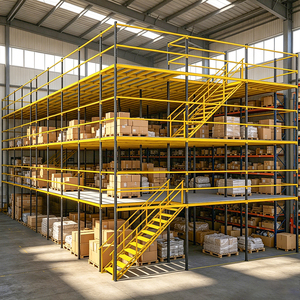
Multi Level Steel Mezzanine Platform Shelving System with Guardrail Staircase Pallet Rack Storage for Industrial Warehouse Use
- 300–1,000 kg/m² Floor Load Rating
- Integrated Structural Staircases & Railings
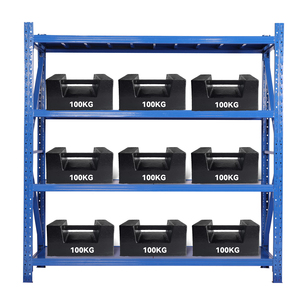
100~500KG Per Layer 2M Height Warehouse Stacking Shelves&units Iron Storage Metal Display Rack Wide Span Storage Rack
- 100–500 kg Uniform Distributed Load
- Boltless Step-Beam Adjustability
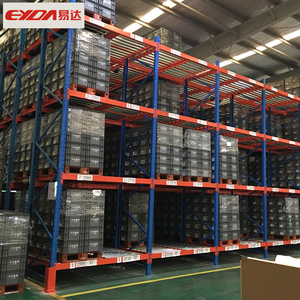
GuangZhou Factory OEM Service Adjustable Warehouse Storage Heavy Duty Pallet Gravity Flow Racking Roller Rack System
- Heavy-Duty Brake Rollers & Separators
- Strict First-In First-Out Rotation
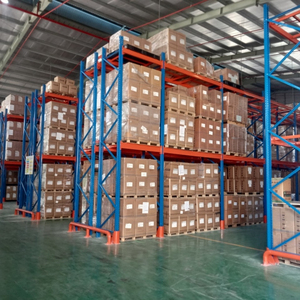
Wholesale Heavy Duty Selective Pallet Racking System Designed For Easy Pallet Access And Reliable Cold Storage Applications
- Sub-Zero -30°C Cold-Tough Steel Alloy
- Hot-Dip Galvanized / Epoxidized Finish
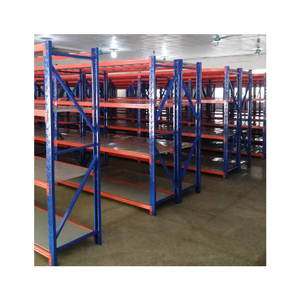
Commercial Metal Heavy Duty Warehouse Industrial Pallet Rack Shelving Systems
- Up to 4,500 kg Pallet Beam Capacity
- Fully Compatible with Reach & VNA Trucks
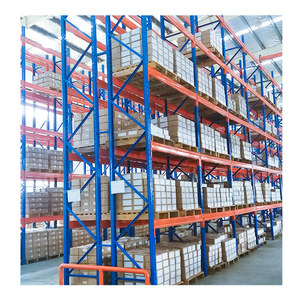
Factory Industrial Racks Manufacturers Warehouse Storage Heavy Duty Selective Steel Pallet Racking System
- Precision Cold-Rolled Q235B/Q355B Steel
- 100% Direct Individual Pallet Accessibility
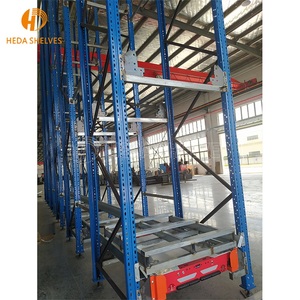
Oem Teardrop Pallet Racking Stacking Racks Shelving Industrial Shelves China Radio Shuttle Rack
- High-Density Deep Lane Radio Shuttle
- Zero Forklift Collision Risk in Channel
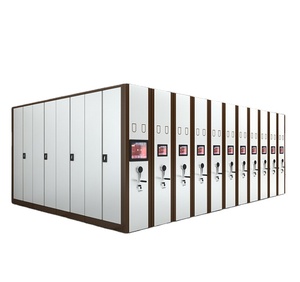
JINGYE Library Furniture Metal Mobile Book Shelving Storage Dense Frame Intelligent Mobile Shelving Archives
- Electronic Touch / Optical Micro-Sensors
- Doubles Floor Capacity for Medical/Archives
Industrial Logistics Architecture: Berlin-Brandenburg Supply Chain Demands
Evaluating structural pallet racking engineering criteria for the German capital's primary logistics hubs, freight villages (GVZ), and e-commerce fulfillment corridors.
The capital region of Berlin-Brandenburg represents one of Central Europe's most dynamic yet structurally constrained logistics marketplaces. With its strategic convergence of the Trans-European Transport Network (TEN-T) corridors, the German capital has transitioned from a localized consumer center into a high-throughput European distribution nexus. Industrial warehousing space across key Freight Villages (Güterverkehrszentren - GVZ)—including GVZ Berlin Süd (Großbeeren), GVZ Berlin West (Wustermark), and the rapidly scaling industrial node of GVZ Berlin Ost (Freienbrink) adjacent to the Tesla Gigafactory—is operating at historic occupancy rates exceeding 97.5%. Consequently, warehouse developers, third-party logistics providers (3PLs), and manufacturing enterprises face stringent commercial pressure: floor rental rates per square meter have escalated significantly, transforming vertical cube utilization from a design preference into a critical operational necessity.
Structural Engineering Imperative: Vertical Density vs. DIN EN Compliance
In Berlin's hyper-competitive warehousing market, standard floor stacking or inefficient low-bay configurations introduce intolerable cost overheads. Modern logistics assets require high-bay selective pallet racking, narrow aisle (VNA) systems, and multi-tier rack-supported platforms capable of supporting European standard pallet loading profiles (EPAL 1: 800×1200 mm, EPAL 2: 1200×1000 mm, and industrial metal stillages) up to heights of 14 meters, strictly calculated under DIN EN 15512 and certified under European structural norms.
Beyond raw vertical capacity, intralogistics infrastructure in Berlin must align with diverse operational profiles across surrounding districts such as Spandau, Neukölln, Marzahn-Hellersdorf, and Ludwigsfelde. These applications range from high-turnover FMCG cross-docking facilities serving the metropolitan core, to specialized cold-storage facilities operating at negative 28 degrees Celsius, to cleanroom-grade pharmaceutical archives in technology hubs like Adlershof and Berlin-Buch. Engineering pallet racking for these environments requires acute metallurgical precision, customized upright section moduli, certified weldments, and corrosion-resistant surface treatments designed to endure aggressive condensation cycles without mechanical degradation.
High-Bay Selective Racking for Großbeeren & Wustermark
Designed for logistics operators managing tens of thousands of dynamic SKUs. High-bay selective racking offers complete 100% pallet accessibility, immediate SKU tracking, and custom beam span configurations up to 3,600 mm for triple Euro-pallet storage with deflection parameters engineered strictly below 1/200th of the span length (L/200).
- Compatible with high-reach reach trucks & wire-guided VNA
- Seismic frame bracing compliant with Eurocode 8 (EN 1998)
- Integrated column protection & collision armoring
Heavy Die, Stillage & Cantilever Storage for Freienbrink
Driven by the electric vehicle (EV) supply chain and precision machinery producers in the Berlin-Brandenburg industrial ring. Heavy-duty pallet and cantilever systems provide open-front structural integrity to hold irregularly shaped battery modules, stamping dies, chassis pressings, and steel coils exceeding 3,000 kg per load point.
- High-tensile Q355B cold-formed structural steel
- Custom pallet support bars & drop-over mesh decks
- Reinforced anchor footplates distributing concrete point loads
Dynamic Gravity Flow & Mobile Systems in Berlin Urban Zones
Space-constrained inner-city facilities in Neukölln and Spandau require ultra-high storage density without sacrificing throughput. Dynamic gravity roller racks provide automated FIFO product cycling for perishable foods, while high-density mobile racking condenses pharmaceutical and archival storage footprint by up to 50%.
- Automatic centrifugal speed controllers for slope control
- Sub-zero powder and hot-dip galvanizing for cold storage
- Optical safety photo-eyes and electronic PLC interlocks
Key Storage & Material Handling Trends in Germany's Capital
How digitalization, DIN EN standards, and carbon footprint reduction are reshaping procurement protocols for warehouse racking across Berlin.
Automation & Shuttle Synergies
With acute labor constraints and rising wage costs in the Berlin metropolitan perimeter, operators are pivoting rapidly from traditional counterbalanced forklifts to semi-automated deep-lane Radio Shuttle systems and automated guided vehicle (AGV) interfaces that run 24/7 with zero damage to structural uprights.
Strict Compliance (DIN EN 15635)
Industrial health and safety agencies (Berufsgenossenschaften) and building authorities rigorously enforce DGUV Regel 108-007 and DIN EN 15635. Racking installations must undergo certified structural calculations (Prüfstatik), mandatory annual inspections, and integrate stamped load capacity rating plates.
Brownfield Multi-Tier Mezzanines
Because municipal zoning in central Berlin severely restricts greenfield logistics developments, developers are turning to existing brownfield properties. Structural steel mezzanines and rack-supported multi-tier platforms double or triple usable floor area inside historic brick halls and standard ceiling height warehouses.
ESG & Low-Carbon Steel Supply
Institutional real estate investors (e.g., DGNB and LEED gold certification mandates) increasingly demand verified Environmental Product Declarations (EPDs), sustainably sourced low-carbon structural steel coils, and solvent-free electrostatic powder coatings that eliminate VOC emissions during production.
Technical Comparison of Industrial Pallet Racking Systems
Comparative structural parameters, floor area utilization indices, and material handling equipment compatibility for warehouse planning engineers.
| Racking System Type | Floor Space Utilization | Stock Accessibility | Stock Rotation Rule | Standard Load Capacity | MHE Compatibility |
|---|---|---|---|---|---|
| Standard Selective Pallet Racking | 40% – 45% (Wide Aisle) | 100% Immediate Direct Access | FIFO or LIFO Flexible | 1,000 – 4,500 kg per beam level | Standard Counterbalance, Reach Trucks |
| Very Narrow Aisle (VNA) Racking | 60% – 65% (Aisles ~1.7m) | 100% Immediate Direct Access | FIFO or LIFO Flexible | 1,000 – 4,000 kg per beam level | VNA Turret Trucks, Man-Up Order Pickers |
| Radio Shuttle High-Density System | 75% – 85% (Deep Lane) | Pallet Lane Batch Selective | FIFO or LIFO Programmable | 500 – 2,000 kg per pallet unit | Standard Counterbalance + Auto Shuttle |
| Gravity Pallet Flow Racking | 70% – 80% (Incline Rollers) | Strict Lane Sequential | Strict FIFO (First-In, First-Out) | 300 – 1,500 kg per pallet unit | Counterbalance at loading/unloading aisles |
| Rack-Supported Mezzanine Platform | 150% – 250% (Volumetric Gain) | 100% Hand-Picking Access | Manual SKU Routing | 300 – 1,000 kg/m² floor rating | Hand Pallet Trucks, Vertical Goods Lifts |
Why International Logistics Directors Partner with HEDA Shelves
Over 25 years of automated manufacturing precision, CE-certified structural steel production, and direct-to-site logistical execution for the European market.
Since its establishment in 2001, Guangzhou Heda Shelves Co., Ltd. has evolved into an international premier manufacturer of heavy-duty warehouse racking, automated shuttle storage, and structural steel mezzanines. Spanning a state-of-the-art 30,000-square-meter automated production facility with more than 300 experienced engineers, structural designers, and fabrication specialists, the company produces in excess of 30,000 metric tons of certified steel racking components monthly. For European procurement managers and German plant operators seeking to optimize capital expenditures (CapEx) without compromising on safety or compliance, working directly with our manufacturing facilities eliminates redundant intermediary distributor markups while delivering direct factory accountability from mill certified steel coils to fully simulated 3D CAD engineering blueprints.
CE & ISO 9001 Certified
All load-bearing structures are fabricated under verified ISO 9001:2015 quality assurance protocols (Certificate No. 18624Q00169R0M, valid to June 2027) and conform to European CE Construction Products Regulation (No. 2435-CPR-8605159).
Free 3D CAD & Static Design
Our dedicated engineering department models complete warehouse layouts in AutoCAD and 3D simulation software within 24–48 hours, providing finite element analysis (FEA) and load calculation reports ready for review by your structural consultants.
10-Stage Precision Finishing
From automated multi-station cold roll-forming to computerized punch stamping, shot blasting, acid pickling, phosphating, and electrostatic powder curing, our components achieve maximum surface hardness, scratch resistance, and long-term corrosion durability.
Fast European Transit
Shipments to Berlin are routed smoothly via sea freight into major Northern European container ports (Hamburg, Bremerhaven, or Rotterdam) or via direct China-Europe Railway Express links terminating at Berlin logistics nodes, complete with pre-cleared customs documentation.
Frequently Asked Questions by Warehouse Managers in Berlin
Key legal, structural, and operational answers addressing the import, calculation, and safe installation of industrial steel racking in Germany.
Plan Your Berlin Warehouse Racking Project with Factory Engineers
Take advantage of direct manufacturer pricing, custom DIN-compliant engineering, and complete layout simulation. Submit your building dimensions, pallet specifications, and forklift parameters to receive a complimentary AutoCAD floor plan, 3D render, and detailed factory-direct quotation within 24 hours.