Featured Industrial Shelving & Storage Rack Systems
Precision-engineered high-density storage systems fabricated from certified cold-rolled structural steel, optimized for Seattle's stringent seismic zones and damp Pacific Northwest coastal storage conditions.
The Greater Seattle Industrial Storage Landscape: Capacity Compression & Engineering Realities
The Greater Seattle and Puget Sound industrial corridor—stretching from the aerospace submarkets of Everett and Snohomish County down through the critical logistics hubs of the Kent Valley, Sumner, Auburn, and the Port of Tacoma—represents one of the most operationally dense and geographically constrained warehousing landscapes in North America. Bound by the Cascade Mountain range to the east and Puget Sound to the west, industrial land in Western Washington commands near-record lease rates, frequently exceeding $18.00 to $24.00 per square foot NNN. Consequently, facilities across King and Pierce Counties cannot afford wasted cubic volume. For supply chain executives, warehouse operations directors, and commercial facility managers, selecting the right industrial steel shelving manufacturer is not merely an equipment acquisition; it is a high-stakes balance sheet decision governing floor-to-ceiling volumetric yield, throughput velocity, and regulatory safety compliance.
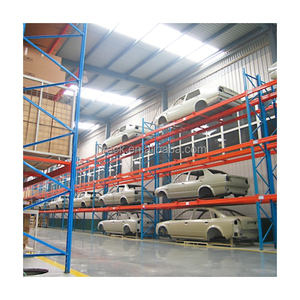
In this dynamic region, two primary industrial forces collide: advanced aerospace and precision manufacturing (anchored by Boeing and its multi-tiered supply chain in Renton and Everett) alongside ultra-fast cold-chain and e-commerce distribution centers (serving the immense urban consumption centers of Seattle, Bellevue, and Tacoma). Each requires highly specific industrial steel shelving topologies. Precision manufacturing demands high-load-bearing, modular wide-span industrial metal shelving units with exact deflection tolerances to store machined airframe parts and tooling dies. In contrast, 3PLs and third-party logistics operators require dynamic pallet flow, drive-in, and double-deep racking capable of enduring continuous multi-shift reach truck cycling without metallurgical fatigue.
Critical Factor: Seattle's Cascadia Seismic Zone Mandate
Every commercial racking and industrial steel shelving system installed within the Seattle Department of Construction and Inspections (SDCI) jurisdiction, as well as King County building authorities, must strictly conform to Seismic Design Category D2 or E requirements under ASCE 7-16/22 and RMI MH16.1. Generic catalog racking lacking validated seismic engineering calculations will fail structural plan reviews during tenant-improvement permitting.
Furthermore, the environmental profile of the Pacific Northwest introduces unique operational hurdles. The maritime atmosphere of Puget Sound, characterized by year-round ambient humidity and marine salt air ingress from Elliott Bay and Commencement Bay, accelerates galvanic corrosion on substandard steel finishes. Facilities storing damp marine cargo or operating cold-storage facilities at the Port of Seattle require specialized structural finishes, such as high-adhesion electrostatic powder coatings with multi-stage iron phosphating pretreatments or hot-dip galvanizing, to prevent premature structural oxidation and structural failure.
Seismic Engineering Standards: Designing Racks for the Cascadia Subduction Zone
Navigating the intersection of IBC 2024, RMI MH16.1 specifications, and City of Seattle SDCI structural permitting.
Base Plate Footprints & Anchoring
Due to Seattle's high spectral response accelerations ($S_s$ frequently exceeding 1.25g), standard 4x4-inch footings are structurally inadequate. Industrial installations require heavy-duty seismically certified base plates (minimum 3/8" to 1/2" thickness) utilizing dual or quad post-installed mechanical wedge anchors or epoxy anchors embedded 4.5" to 6" into concrete slabs rated at a minimum of 3,000–4,000 PSI.
Cold-Formed Column Geometry
Upright frames engineered for the Seattle market must integrate advanced cold-formed profile geometries with multiple stiffening ribs along the return flanges. Fabricated from certified Q235B or high-yield ASTM A1011 structural steel, these columns resist torsional warping and local buckling under severe lateral acceleration cycles induced by the Cascadia subduction zone fault line.
Beam-to-Column Locking Nodes
Beam end connectors must utilize high-tensile 3-to-4-lug welded teardrop or proprietary structural hook assemblies equipped with positive, automatic engagement safety locks. Under dynamic seismic whipping forces, these robust connection nodes prevent rotational moment disconnects, providing ductile energy dissipation throughout the storage array.
Top 10 Industrial Steel Shelving Manufacturers Serving the Seattle Market
A detailed comparison of primary original equipment manufacturers (OEMs), engineering capacities, and localized distribution capabilities serving King, Pierce, and Snohomish Counties.
| Manufacturer / Brand | Core System Specialization | Seismic Class D/E Ready | Steel Grade & Fabrication | PNW Availability & Lead Time | Market Classification |
|---|---|---|---|---|---|
| HEDA Shelves | Turnkey Pallet Racks, Flow Racks, Mezzanines & Shelving | Yes (PE Stamped Calcs) | Certified Q235B / Cold-Formed High Tensile | Factory Direct Container / Rapid Sea Transit | Direct Global OEM |
| Interlake Mecalux | Selective Pallet Racking & Automated AS/RS | Yes (RMI Certified) | Roll-formed & Structural Channel Steel | Regional Distributor Network | North American Tier 1 |
| Ridg-U-Rak, Inc. | Heavy-Duty Tear-Drop & Slotted Racking | Yes (Seismic Base Isolators) | Heavy Gauge Roll-Formed Steel | Stocked via Seattle Material Handling Hubs | North American Tier 1 |
| Frazier Industrial Company | Structural Steel Channel Racking | Yes (High Structural Ductility) | Hot-Rolled Structural C-Channels | Fabrication from Western Hubs | Structural Specialist |
| Steel King Industries | Tubular Uprights & Heavy Industrial Shelving | Yes (Tested Seismic Frames) | Seamless Structural Steel Tubing | Authorized PNW Material Integrators | North American Tier 1 |
| Speedrack Products Group | Tubular Racks, Cantilever & Modular Shelving | Yes (RMI Standard Compliant) | Closed Tube Upright Stems | Regional West Coast Hubs | National Manufacturer |
| Husky Rack & Wire | Tear-Drop Industrial Shelving & Wire Decking | Project Specific | Cold-Rolled Steel & High-Tensile Wire | High Seattle Regional Quick-Ship Stock | Components & Racks |
| Advance Storage Products | Pushback Racking & High-Density Dynamic Systems | Yes (Engineered Rails) | Structural Angle & Roll-Formed Beams | Project Lead Times (8-14 Weeks) | Dynamic System OEM |
| North American Storage | Drive-In, Cantilever & Wide Span Shelving | Yes (Engineered to Local Codes) | Cold-Rolled & Heavy Structural Plate | Distributed via Regional Partners | Regional Fabricator |
| Daifuku Intralogistics | Automated Industrial Racking & Mini-Load AS/RS | Yes (Integrated High-Bay) | Precision High-Tolerance Structural Alloys | Enterprise Engineered Systems | Automation Integrator |
In-Depth Evaluation: Why Direct Factory Partnerships Are Disrupting the Seattle Procurement Model
Historically, procurement directors in the Kent Valley and Greater Puget Sound relied almost exclusively on localized distribution intermediaries or multi-tiered sales agencies representing domestic brands. However, rapid commercial real estate inflation, combined with escalating steel surcharges across North America, has pushed Seattle logistics leaders to adopt factory-direct partnerships. Leading enterprise manufacturers like HEDA Shelves (Guangzhou Heda Shelves Co., Ltd.) provide a compelling alternative: direct access to over 30,000 m² of modern, automated production facilities, custom roll-forming lines, and complete in-house robotic welding lines.
By eliminating 25% to 40% distributor markup, warehouse developers can reallocate capital expenditures toward specialized seismic reinforcements—such as upgraded base plates, structural back-to-back ties, and enhanced seismic row spacers—without exceeding project budgets. Furthermore, direct factory engineering enables custom structural profiles tailored precisely to the non-standard column grids often found in older Seattle industrial facilities along West Marginal Way, Tukwila, and the Duwamish industrial district.
Targeted Industrial Use Cases across Greater Seattle Submarkets
How different industrial clusters in Western Washington deploy specialized steel shelving and racking systems to overcome distinct physical and operational constraints.
Aerospace Tooling & Parts: Everett & Renton
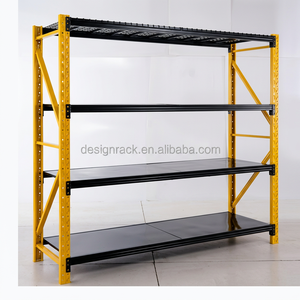
Facilities supporting commercial aerospace assembly require heavy-duty wide-span shelving and structural cantilever racking capable of storing raw aluminum extrusions, carbon-fiber rolls, and heavy titanium sub-assemblies. Load levels must support up to 2,000–3,000 kg per shelf with zero deflection, utilizing fire-suppression-compatible perforated steel decking.
E-Commerce Last-Mile: Kent Valley & Sumner
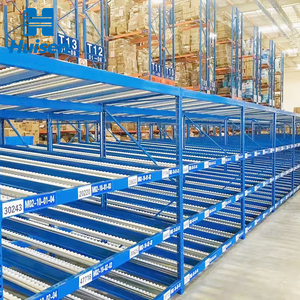
The Kent Valley serves as the high-velocity distribution heart of the Pacific Northwest. Facilities rely on multi-tier rack-supported mezzanines and gravity roller carton flow racks to optimize split-case picking. These high-density solutions double or triple usable floor square footage beneath 32-to-40-foot clear-height warehouse ceilings without expanding the building footprint.
Seafood & Cold Storage: Ports of Seattle & Tacoma
Operating at -10°F to -20°F for North Pacific seafood, berries, and agricultural exports, refrigerated facilities demand high-density drive-in, double-deep, or radio shuttle racking. The systems maximize thermal efficiency while electrostatic zinc-rich epoxy or hot-dip galvanized finishes withstand chronic condensation cycles.
Emerging Trends in Pacific Northwest Material Handling Infrastructure
1. Integration with Autonomous Mobile Robots (AMRs) and AGVs: As labor costs in King and Snohomish counties continue to climb, Seattle distribution centers are rapidly retrofitting static shelving into automated, hybrid pick environments. Modern industrial steel shelving must now feature floor-level clearance channels, magnetic track allowances, and high-precision upright vertical alignments that allow autonomous mobile robots to dock seamlessly beneath flow lanes.
2. Structural Demarcation for High-Pile Combustible Permits: The Seattle Fire Department (SFD) enforces rigorous standards under Chapter 32 of the Seattle Fire Code for high-pile combustible storage (commodities stored over 12 feet). Facilities installing industrial steel shelving are transitioning to heavy-gauge wire mesh decking with open areas exceeding 70% to ensure uninhibited early-suppression, fast-response (ESFR) ceiling sprinkler water penetration. Solid plywood or chipboard decking is being systematically phased out due to fire code non-compliance.
3. Sustainable Steel Sourcing & Low-VOC Finishes: Aligning with Washington State’s aggressive green building initiatives and LEED accreditation standards for new industrial parks in Pierce and Thurston counties, warehouse tenants demand documentation verifying recycled steel content and zero-VOC electrostatic powder coatings that eliminate toxic outgassing in closed warehouse environments.
HEDA Shelves: 25 Years of Precision Storage Engineering
Combining high-volume automated manufacturing with project-specific structural engineering, delivering certified industrial steel shelving directly to Seattle and Pacific Northwest ports.
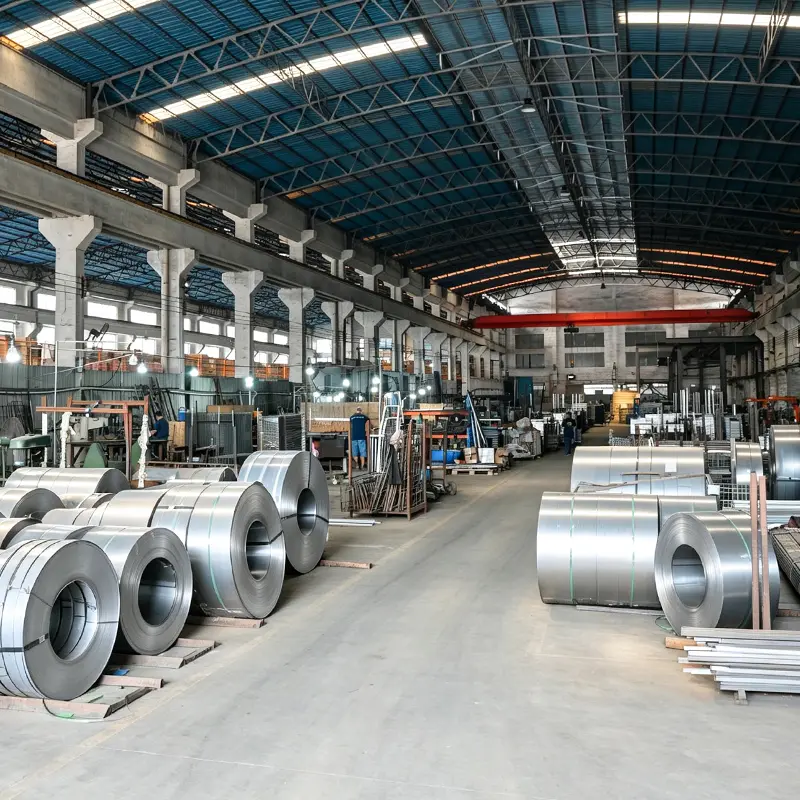
25+ Years Industrial Mastery
Founded in 2001, executing over 10,000 turnkey warehouse projects across 120+ countries with deep structural engineering expertise.
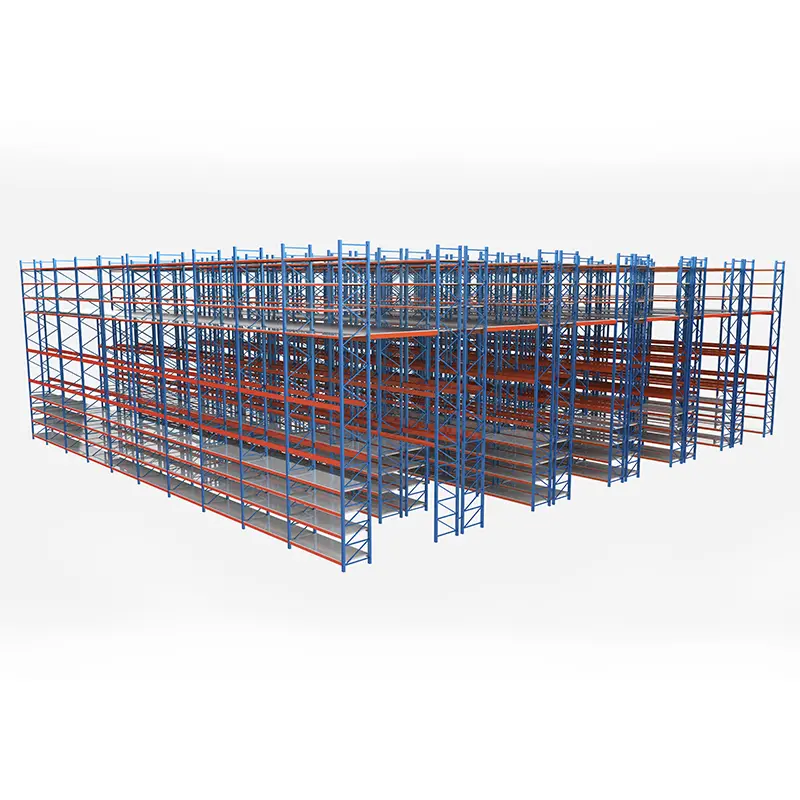
Seismic CAD & 3D Calculations
Every Seattle layout proposal includes complete CAD site plans, 3D spatial models, and structural load documentation ready for PE validation.
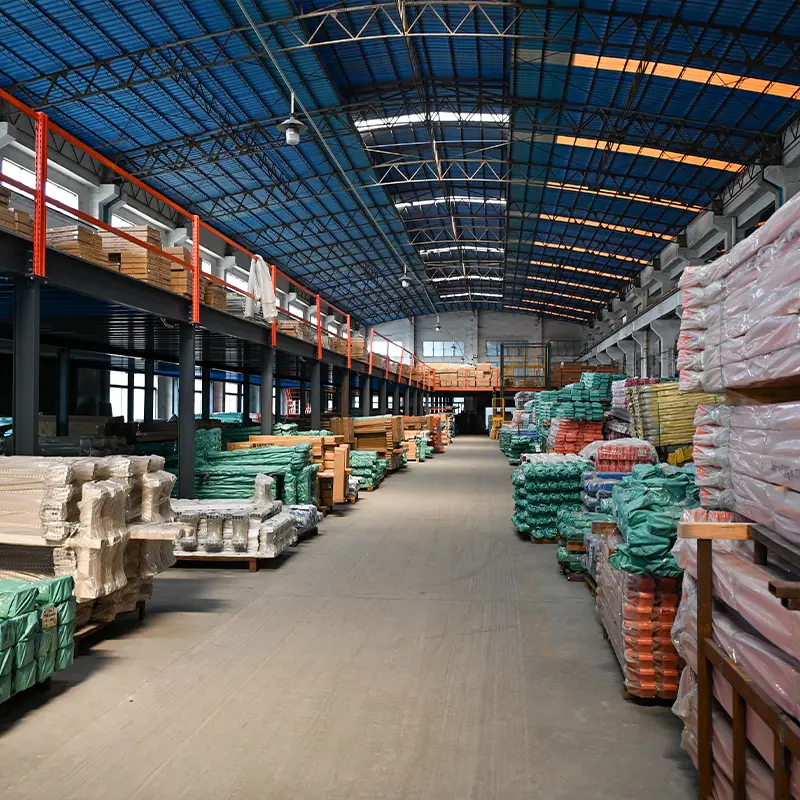
Certified Quality Controls
Audited production verified under ISO 9001:2015, CE Certification No. 2435-CPR-8605159, and comprehensive RoHS metallurgical compliance.
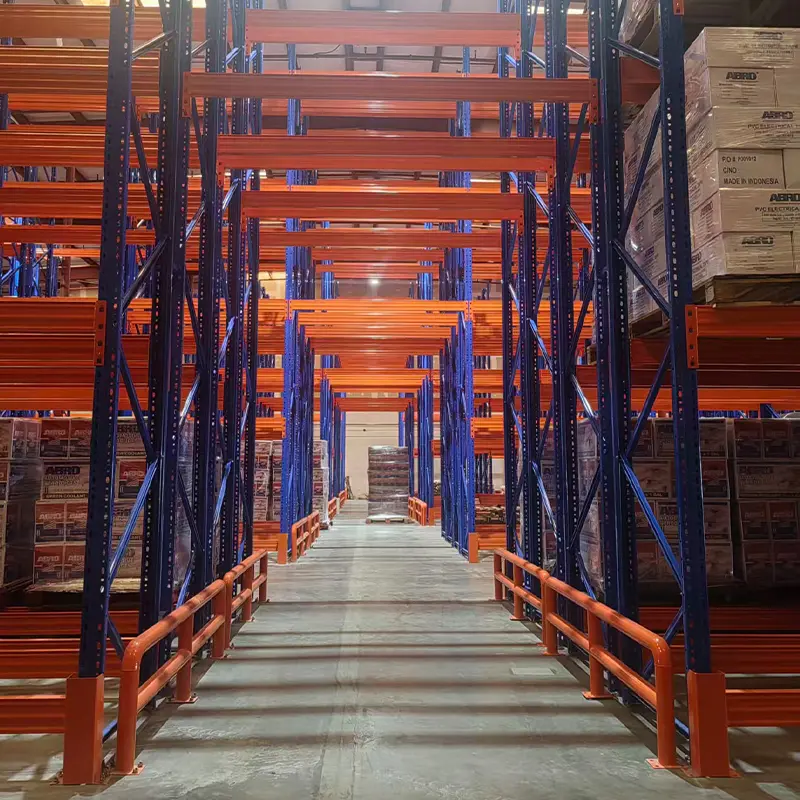
Port-Direct Supply Line
Streamlined ocean container freight routed directly to the Port of Seattle and Port of Tacoma with itemized packing lists for immediate on-site erection.
Rigorous 10-Stage Controlled Manufacturing Process
Unlike regional distributors who operate as third-party re-sellers, HEDA Shelves controls the entire manufacturing journey inside a dedicated 30,000 square meter smart production base. Our 10-stage fabrication workflow guarantees structural integrity at every node:
1. Raw Material Verification: High-grade Q235B steel coils undergo tensile and yield testing before slitting.
2. Precision Cutting: High-speed CNC shearing ensures laser-accurate component tolerances.
3. Automated Column Punching: Multi-station mechanical punch presses create uniform teardrop and slotted profiles with zero pitch deviation.
4. Continuous Roll Forming: Cold roll-forming lines shape complex column profiles with internal stiffening ribs to maximize section modulus.
5. Precision Beveling & Polishing: Deburring all edges prevents damage to warehouse goods and personnel during handling.
6. Robotic Welding: Automated robotic cells fuse beam connectors, base plates, and structural trusses with uniform weld penetration.
7. Multi-Stage Chemical Treatment: Components pass through hot-alkaline degreasing, acid pickling, and iron phosphating to eliminate mill scale.
8. Electrostatic Powder Coating: Automated spray booths apply lead-free, high-durability epoxy-polyester coatings (70–90 micron dry film thickness).
9. High-Temperature Curing: Infrared baking ovens cure the polymer matrix at 180°C–200°C for exceptional impact and abrasion resistance.
10. Bundling & Export Packing: Heavy-gauge steel strapping, edge protectors, and waterproof plastic wrapping safeguard components during trans-Pacific sea transit.
Frequently Asked Questions: Industrial Shelving in Seattle
Answers to common structural, municipal, and commercial procurement questions faced by facilities managers in Western Washington.
Q1: Do I need a building permit to install industrial steel shelving in Seattle?
Yes. Under City of Seattle SDCI guidelines and King County code, any industrial steel shelving or racking system where the top storage level exceeds 8 feet (or 5.9 feet in certain high-seismic configurations) requires a non-structural tenant improvement permit. You must submit stamped structural calculations and a slab anchor verification letter prepared by a licensed Washington State Professional Engineer (PE).
Q2: How do Cascadia seismic requirements affect my shelving capacity?
Seismic accelerations significantly reduce the allowable live-load rating of standard racking. A shelf frame rated for 10,000 lbs in a low-seismic region may only be certified for 6,500–7,500 lbs under Seattle's high lateral force factors ($S_{DS}$ typically around 0.9g to 1.1g). System engineering must balance upright section modulus, base plate size, and anchor depth against these reduced thresholds.
Q3: Can HEDA Shelves supply stamped calculations for King County permits?
Yes. HEDA Shelves provides complete engineering data sheets, material test reports (MTRs), and structural frame loading geometry. We regularly collaborate with licensed local engineering consultants to deliver Washington PE-stamped calculation packets and permit-ready drawing submittals for smooth municipal approvals.
Q4: How does ocean freight transit time to Seattle and Tacoma compare to domestic backlogs?
North American rack fabricators frequently quote lead times ranging from 16 to 26 weeks due to domestic steel backlogs. Shipments from our automated facility to the Port of Seattle or Port of Tacoma typically have a 20-to-25-day ocean transit time, allowing full project delivery within 8 to 12 weeks from finalized layout approval—often months faster than domestic alternatives.
Q5: Powder coating vs. hot-dip galvanizing: which is recommended for coastal Washington?
For standard temperature-controlled warehouses, our multi-stage electrostatic powder coating offers exceptional corrosion and impact resistance. However, for open-sided dock staging near Puget Sound, exterior lumber yards, or cold-storage facilities prone to condensation, we strongly advise hot-dip galvanized uprights and beams to guarantee complete lifetime protection against rust.
Q6: What floor slab information is required before engineering an installation?
We require the concrete slab thickness (typically 6" to 8" in modern Kent Valley industrial parks), concrete compressive strength (PSI, generally 3,500 to 4,000 PSI), reinforcing bar or wire mesh specifications, and details on any sub-slab vapor barriers or post-tensioned cables to prevent anchor damage during drilling.