High-Performance Storage Rack Architectures for Moscow Industrial Facilities
Engineered from certified high-tensile structural steel (Q235B / Q355B equivalent to GOST 09G2S and St3sp), providing seismic resilience, dynamic thermal resistance down to -30°C, and space utilization up to 85%.
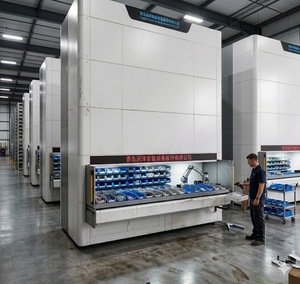
Industrial Hardware Storage VLM Automated Vertical Lift Module Heavy Capacity Warehouse Shelving System
Enclosed computer-controlled vertical lift carousel system designed for dense spare parts, precision tooling, and fast hardware picking in machine-building facilities.
- Payload: 500-1,000 kg/tray
- Dual Extractor Lift
- WMS/1C Integration
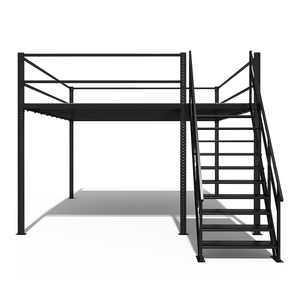
Heavy Duty Rack Industrial Mezzanine Interlocking Floor Rack Attic Racking System for Warehouse Storage
Self-supporting rack-mounted multi-level steel mezzanine doubling or tripling floor area for light manufacturing, packaging cells, and high-SKU bin storage.
- Deck Load: 300-1,200 kg/m²
- Interlocking Steel Grid
- Modular Expansion
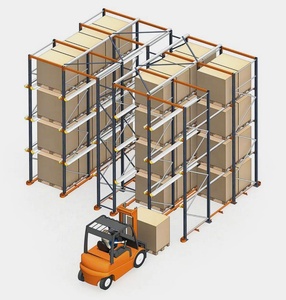
Good Price Q235 Drive in Racking From URGO Storage Rack
High-density LIFO continuous lane storage eliminating picking aisles for uniform industrial pallet stock, beverage bottling, and cold temperature staging.
- Q235 Structural Steel
- Up to 80% Cube Utility
- Heavy Pallet Rail Guides
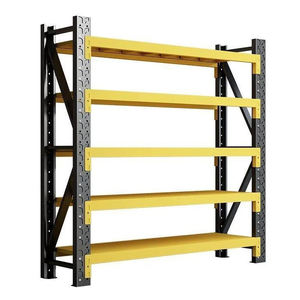
Racking Adjustable Metal Boltless Shelf And Racks Warehouse Storage Medium Duty Metal Rack Shelf
Rapid-assembly boltless shelving units with adjustable beam steps, engineered for toolrooms, sub-assembly staging, maintenance depots, and retail stockrooms.
- 200-800 kg/Level
- 50mm Pitch Adjustment
- Anti-Scratch Coating
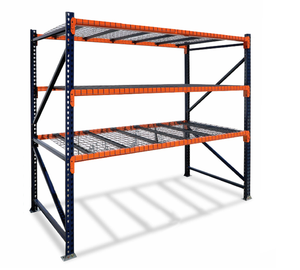
Adjustable 5 Layer Heavy Duty Corrosion Protected Steel Warehouse Racking System with Mesh Shelves and Pallet Rack
Universal industrial pallet racking equipped with electro-welded wire mesh decking, fire sprinkler clearance, and enhanced anti-corrosion barrier coatings.
- Max 4,500 kg/Beam Pair
- Drop-In Safety Mesh
- Zinc/Epoxy Duplex Finish
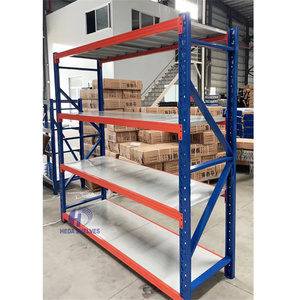
Customized Factory Supply Industrial Workshop Display Shelving Iron Shelves Storage Rack in Warehouse Light Iron Rack
Versatile modular shelving tailored for factory workshops, kitting carts, assembly-line buffers, and industrial retail distribution counters.
- Modular Perforated Upright
- Custom RAL Powder Colors
- Reinforced Solid Ribs
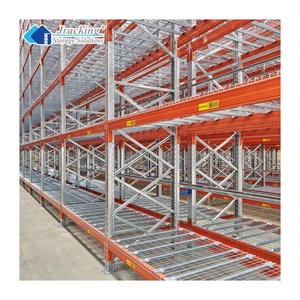
Jracking Industrial Shelving Warehouse Rack Heavy Duty Pallet Racking System for Distribution Centers AS4084 Certified
International AS4084, FEM, and CE certified selective pallet racking with high torsional rigidity for 3PL distribution centers and big-box industrial facilities.
- 100% Pallet Accessibility
- High-Bay Clear Heights (15m+)
- Omega Beam Profiles
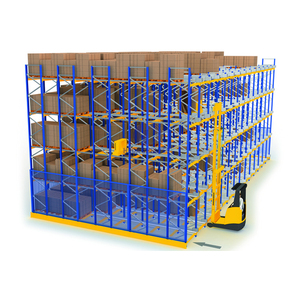
Durable Shuttle Heavy Duty Rack System Asrs 4-Way Shuttle Racking Automated Radio Shuttle Racking System for FIFO & LIFO
Automated high-density radio shuttle racking with multi-directional shuttles for ultra-dense cold storage, deep-lane FIFO/LIFO turnover, and zero forklift rack damage.
- LiFePO4 Rapid Recharging
- Cold Room Rated (-30°C)
- Autonomous Fleet Dispatch
The Moscow & Moscow Oblast Industrial Racking Landscape
Analyzing land scarcity, high-cube construction, supply chain localization, and technical structural safety across the Central Federal District.
Pressure on Cubic Capacity & Class A Logistics Real Estate
The Moscow Metropolitan Region and surrounding Moscow Oblast (Podmoskovye) represent over 60% of the Russian Federation's total high-grade Class A and Class B+ warehouse stock. With average vacancy rates across key industrial corridors (MKAD, Central Ring Road / CKAD, M-10/M-11, and M-4 Don) hovering near historic lows below 1.2%, factory operators and 3PL enterprises face surging rental charges per square meter. The primary operational objective has fundamentally shifted from expanding footprint to vertical cube optimization.
Industrial facilities in clusters such as Podolsk, Domodedovo, Noginsk, and Technopolis Moscow SEZ demand high-bay selective pallet racking and automated shuttle installations reaching clear heights of 12 to 16.5 meters. Standard low-profile configurations are rapidly being replaced by specialized multi-tier rack-supported platforms and narrow-aisle (VNA) systems to triple pallet positions per building footprint without capital-intensive structural brick-and-mortar investments.
Import Substitution & Heavy Manufacturing Modernization
The swift acceleration of localized Russian manufacturing across heavy machine building, chemical synthesis, automotive aftermarket assembly, and pharmaceutical production has necessitated custom rack engineering. Domestic factory floors require systems capable of holding non-standard Euro-pallets (800x1200 mm), Russian standard industrial pallets (1000x1200 mm), and heavy metal containers holding cast engine blocks, dies, and raw coils.
Furthermore, the seasonal swings of the Moscow climate—where temperatures fluctuate from +35°C in mid-summer down to -32°C in deep winter—require precision metallurgical standards. Storage racks placed inside unheated buffer staging docks or refrigerated distribution hubs must be fabricated from killed carbon structural steel (such as high-tensile Q235B and Q355B with verified Charpy V-notch impact toughness) to completely prevent low-temperature ductile-to-brittle failure under dynamic dynamic forklift loading.
Engineering Matrix: Industrial Racking Systems for Moscow Facilities
Direct comparison of load ratings, temperature thresholds, space efficiency, and compliance standards for warehouse procurement teams.
| Racking Architecture | Rated Bay Capacity (kg) | Max Clear Height (m) | Cold Room Spec (-30°C) | Space Utility (%) | Regulatory Alignment |
|---|---|---|---|---|---|
| Heavy Duty Selective Pallet | 1,000 – 4,500 per level | Up to 16.5m | Powder Coated / Galvanized | 40% – 50% | GOST R 55525-2017 EN 15512 |
| Automated 4-Way Radio Shuttle | Up to 2,000 per pallet | Up to 24.0m | Spec Cold Grade LiFePO4 | 80% – 88% | GOST 57381-2017 CE / ISO 9001 |
| Drive-In / Drive-Through | 800 – 1,800 per pallet | Up to 12.0m | Standard Galvanized Rails | 70% – 80% | GOST R 55525-2017 FEM 10.2.02 |
| Structural / Rack Mezzanine | 300 – 1,200 kg/m² | Multi-Tier (2-4 Floors) | Ambient / Heated Sheds | 100% – 200% Floor Gain | SNiP II-23-81* / EN 1090-1 |
| Vertical Lift Module (VLM) | 500 – 1,000 per tray | Up to 14.0m | Controlled Environment | 85% Footprint Save | CE Machinery Directive / RoHS |
| Medium-Duty Boltless Shelving | 200 – 800 per shelf | Up to 5.0m | Universal Ambient | 60% Picking Density | ISO 9001:2015 Audited |
Tailored Storage Configurations for Moscow's Key Industrial Hubs
From microelectronics in Zelenograd to heavy automotive stamping in Dmitrov, discover how our structural designs solve specific regional manufacturing challenges.
Heavy Industrial Machine-Building & Foundry Parks
Concentrated in the southern and eastern belts of Moscow Oblast (Kolomna, Lyubertsy, Podolsk), machine builders handle heavy forged steel, gear assemblies, pumps, and metal molds. Storing these un-palletized or irregular heavy parts on standard lightweight racking leads to dangerous beam deflection and upright buckling.
- Engineered Box Beams: Dual C-profile welded box beams handling point loads up to 4,500 kg per level without plastic deformation.
- Steel Decking Channels: Reinforced corrugated or drop-in heavy steel panels preventing loose dies and heavy equipment from falling through.
- Structural Impact Guarding: Heavy 8mm solid floor-anchored steel column boots and end-of-aisle horseshoe barriers to withstand 10-ton counterbalance forklift impacts.
Pharmaceutical & Cleanroom Logistics Hubs
The Special Economic Zone (SEZ) "Technopolis Moscow" sites in Zelenograd, Alabushevo, and Pechatniki host the country’s leading pharmaceutical, medical technology, and microelectronic manufacturing clusters. These operations require zero dust accumulation, strict sanitization compliance, and complete lot traceability under national GMP standards.
- Anti-Microbial Electrostatic Powder Coating: Non-porous TGIC-free epoxy-polyester coatings resistant to frequent chemical disinfection and isopropyl washdowns.
- Vertical Lift Modules (VLMs): Enclosed class-10,000 cleanroom compatible dynamic carousels with HEPA filtration options for high-value API batch storage.
- Wire Mesh Decking with 70% Open Area: Ensures unobstructed ESFR ceiling sprinkler water penetration and prevents aerosol smoke stagnation.
Sub-Zero Cold Chain & Multi-Temperature Distribution
Moscow serves as the supreme distribution node for refrigerated and frozen food products across European Russia. Mega-logistics nodes in Domodedovo, Chekhov, and Dmitrov feature deep-freeze chambers maintaining -20°C to -30°C. Cold storage facilities face high cubic refrigeration utility costs and hazardous operational conditions for forklift drivers.
- Automated 4-Way Radio Shuttle Racking: Shuttles execute automated deep-lane retrieval while fork trucks stay in ambient vestibules, minimizing cold air loss.
- Low-Temperature Steel Formulation: Certified Q355D/E micro-alloyed structural steels that retain high impact energy (Charpy tested at -40°C) without embrittlement.
- Condensation-Proof Fasteners: Grade 8.8 structural bolts treated with hot-dip galvanizing (min 65μm) or Dacromet coating to prevent corrosion during defrost cycles.
Automotive Spares, Tyres & Fast-Paced E-Commerce Fulfilment
With the rapid reorganization of the Russian automotive aftermarket supply chain, large distribution centers along the MKAD and M-11 corridors in Khimki, Solnechnogorsk, and Sheremetyevo must manage tens of thousands of fast-moving SKUs ranging from delicate microchips to heavy tyres and body panels.
- Multi-Tier Mezzanine Interlocking Floors: 3-tier catwalk attic racking systems multiplying picking capacity without additional heating or foundation loads.
- Specialized Tyred Beam Racks: Stepped beams designed specifically for vertical or horizontal tyre nesting, eliminating flat spots and damage.
- Gravity Carton Flow Integration: Inclined roller tracks integrated into lower pallet levels to support high-speed piece-picking and split-case replenishment.
Engineering Compliance with GOST R 55525-2017 & Structural Safety
Operating warehouse racking in the Russian Federation is strictly governed by national occupational safety legislation. Here is how our engineering protocols guarantee legal and operational peace of mind.
GOST R 55525-2017 & 57381-2017
Every storage system supplied to Moscow industrial facilities is designed to meet or exceed Russian national standards GOST R 55525-2017 (Storage Equipment: Demountable Racks) and GOST 57381-2017 (Frontal Pallet Racks). We provide comprehensive technical passports, load specification plaques in Russian, permissible deflection metrics (not exceeding 1/200 of beam span), and certified test protocols required by Rostekhnadzor and private insurance underwriters.
Seismic & Floor Slab Dynamic Modeling
Although Moscow is not in a high-magnitude earthquake zone, industrial buildings constructed on reclaimed riverbed soils or deep clay subsoils along the Moskva River basin require rigorous geotechnical baseplate calculation. Our finite element analysis (FEA) models upright column baseplate pressure, chemical expansion anchor embedment depths, and floor slab shear limits according to SNiP 2.03.13-88 (Floors) to eliminate structural settling and post deflection.
Certified Cold Room Metallurgy
In deep freeze environments (-25°C to -35°C), standard low-grade carbon steel can suffer sudden brittle fracture under forklift shock loads. Heda Shelves utilizes fully aluminum-killed, fine-grain structural steels with low carbon equivalent values (CEV < 0.40) and verified sub-zero impact toughness. Uprights and load-bearing beams maintain structural ductility, completely preventing catastrophic rack collapse.
10-Stage Electrostatic Surface Treatment for Moscow Continental Humidity
Components undergo ultrasonic degreasing, hot acid pickling, zinc phosphate conversion coating, and high-build electrostatic epoxy-polyester powder curing at 200°C. Total dry film thickness exceeds 75–95 microns, ensuring a salt spray resistance rating of over 500 hours (ASTM B117) to withstand winter floor salting and condensation.
Moscow Industrial Storage Trends: Automation, Density, & Smart Integration
Technological imperatives shaping warehouse retrofits and new factory constructions across the Moscow Capital Region.
Acute Labor Shortages Driving Shuttle Automation
Wages for certified reach truck and forklift drivers in Moscow Oblast have increased over 45% in recent fiscal periods. Consequently, enterprises are systematically shifting away from human-dependent broad-aisle setups toward automated 4-way radio shuttles and stacker cranes (ASRS). Automated deep-lane systems operate 24/7 in unlit, unheated, or refrigerated environments with zero personnel risk.
Interlocking Attic Mezzanines for Brownfield Factory Conversions
As historical Soviet-era production halls in Sokol, Lefortovo, and Mytishchi are converted into modern innovation incubators, high structural ceilings (7 to 10 meters) are utilized through modular multi-tier rack-supported platforms. These systems utilize pre-punched interlocking structural beams requiring no on-site hot welding, allowing installations to proceed without disrupting ongoing lower-floor manufacturing.
Seamless Interfacing with 1C:Enterprise WMS Software
Modern racking systems are no longer isolated steel shelves; they are integrated nodes in digital enterprise architectures. Heda Shelves automated vertical lift carousels and shuttle controller PLCs come equipped with open API and OPC-UA connectivity, interfacing directly with ubiquitous Russian 1C:WMS logistics modules for real-time SKU cycle counting, automated batch FIFO routing, and laser-guided picking accuracy.
Why International Industrial Enterprises Partner with HEDA Shelves
Combining 25 years of engineering mastery, a 30,000 m² state-of-the-art production plant, and direct multi-modal rail freight into Moscow rail freight terminals.
Total In-House Quality Control from Steel Coil to Final Assembly
Founded in 2001, Guangzhou Heda Shelves Co., Ltd. operates an integrated 30,000 square meter intelligent manufacturing facility powered by a dedicated technical workforce of 300+ engineers, robotic welding technicians, and intralogistics system designers. With a monthly processing capacity exceeding 30,000 tons of structural steel, we eliminate subcontractors and deliver uncompromised dimensional consistency.
Our facility maintains certified compliance with ISO 9001:2015 quality management systems, CE certification (No. 2435-CPR-8605159), and hazardous substance restriction directives (RoHS). For engineering teams in Moscow, we provide complete transparency: mill test certificates, ultrasonic weld inspections, dynamic deflection reports, and photorealistic 3D CAD layout proposals within 24 hours of receiving site dimensions.
Direct Multimodal Freight Routes to Moscow Logistics Terminals
Exporting industrial equipment to the Russian Federation demands dependable transit corridors, strict container load balancing, and exact customs documentation:
- Rail Freight Direct to Vorsino & Bely Rast: Fast block-train transit via regular Eurasian railway connections providing 18 to 22-day depot-to-depot transit.
- Multimodal Sea-Rail (Vladivostok / St. Petersburg): Cost-optimized heavy container transport for bulk multi-tier mezzanine and high-bay racking systems.
- Heavy Export Packing: Heavy-gauge protective timber dunnage, plastic moisture-barrier wrapping, steel strap bundling, and indexed packing lists per shipping unit.
- Complete Customs Dossier: Delivery with HS code documentation, certificates of origin, load capacity passports in Russian, and step-by-step assembly guides.
10-Stage Precision Production Architecture
Ensuring millimeter-level precision across automated roll-forming, punching, welding, and surface finishing.
Coil Inspection
Certified prime high-tensile steel coils with verified yield strength.
CNC Slitting
High-speed longitudinal slitting to strict width tolerances (±0.1mm).
Continuous Punching
Automated punch lines forming precise 50mm/75mm upright pitch slots.
Multi-Pass Roll Forming
14 to 18 progressive cold-rolling passes creating stiff omega profiles.
Fiber Laser Cutting
Burr-free 3D cutting of structural connectors, braces, and baseplates.
Robotic Welding
Automated CO2 gas-shielded seam welding with zero spatter and deep penetration.
Shot Blasting & Acid Wash
Complete scale, rust, and oil removal down to Sa 2.5 white metal cleanliness.
Zinc Phosphating
Micro-crystalline conversion layer maximizing subsequent powder adhesion.
Electrostatic Coating
Automated reciprocator powder booths curing high-durability polymer shells.
QC & Crated Packing
Coating thickness check, dimensional verification, and secure container crating.
Frequently Asked Questions: Industrial Racking Procurement in Moscow
Addressing engineering parameters, GOST standards, logistics lead times, cold-chain operations, and on-site assembly supervision.
How does your structural design guarantee compliance with GOST R 55525-2017?
Our structural engineering team produces detailed calculations following the static and dynamic loading protocols outlined in GOST R 55525-2017 and GOST 57381-2017. We calibrate upright profile geometry, safety locking pins (withstanding a minimum 5.0 kN upward dislodgement shear force), and beam deflection limits (not exceeding L/200 under maximum nominal load). Every delivery includes a comprehensive technical passport, factory load test certificates, and bilingual identification safety plates ready for inspection by Russian municipal safety auditors.
What steel grades and coatings are specified for deep-freeze storage (-30°C) in Moscow?
For cold rooms and unheated buffer warehouses subject to severe winter freezing, we strictly prohibit low-grade commercial carbon steels that undergo catastrophic cold embrittlement. We specify certified high-tensile structural grades Q355D or Q355E, micro-alloyed and killed to guarantee high Charpy V-notch impact toughness values at -40°C. Surfaces are protected by specialized elastic epoxy-polyester electrostatic powder coatings or hot-dip galvanization to resist condensation, moisture, and micro-cracking caused by cyclic thermal shocks.
What are the freight options and typical lead times to Moscow Oblast logistics hubs?
Production lead times for standard heavy-duty selective and drive-in racking typically span 15 to 25 business days depending on tonnage. For shipping into the Moscow region, we offer direct container rail transit via major railway hubs entering the freight yards of Vorsino (Kaluga region boundary) or Bely Rast (northern Moscow Oblast), typically taking 18 to 24 days. For large-volume multi-tier projects, sea-rail routing through Vladivostok or St. Petersburg provides optimum cost efficiency. All consignments are bundled with precision loading manifests to facilitate smooth customs declaration.
How is installation managed for facilities in Moscow, Podolsk, or Zelenograd?
Every order is accompanied by detailed CAD assembly drawings, 3D exploded layout blueprints, part-number mapping lists, and video guides in English and Russian. For medium-sized projects, your local maintenance or mechanical contractor can execute assembly efficiently. For major Class A logistics builds, multi-tier mezzanine attic systems, or automated shuttle systems, we provide remote video supervision or dispatch certified bilingual installation project managers to oversee erection, vertical laser alignment, chemical anchoring, and static acceptance testing on-site.
Can your systems support both standard Euro (EUR) and Russian standard industrial pallets?
Yes. European logistics standard pallets measure 800 x 1200 mm, whereas domestic Russian industrial pallets frequently measure 1000 x 1200 mm or 1200 x 1200 mm for heavy goods. We custom-engineer the clear bay beam lengths (e.g., 2700mm for 3 EUR pallets, or 3300mm/3600mm for Russian pallets) and frame depths (1050mm–1100mm) with drop-in pallet support cross-bars or wire mesh shelves, allowing versatile multi-format pallet storage within the same aisle.
What specific floor slab data do you need from our Moscow building to start design?
To perform verified structural and anchor pull-out static calculations, our layout team requires: (1) Concrete slab thickness and compressive strength grade (typically B20 to B30 or 25–35 MPa); (2) Floor flatness class according to DIN 18202 or Russian SNiP guidelines; (3) Building clear ceiling height to the lowest obstacle (truss, ventilation, or lighting); (4) Column grid coordinates; and (5) Operational specifications of your forklifts (mast collapsed/extended height, turning radius, and wheel load footprint).
Accelerate Your Moscow Warehouse Productivity Today
Send your building floor plan, ceiling clear heights, and inventory pallet data. Our veteran intralogistics engineers will prepare a fully customized 2D/3D CAD layout, finite-element structural calculation, and competitive DDP/FOB quotation within 24 hours.