High-Performance Warehouse Systems Tailored for Japanese Industry
Engineered to interface seamlessly with standard Japanese industrial pallets (JIS T-11 type: 1,100 mm × 1,100 mm), automated guided vehicles (AGVs), and severe seismic building codes (Building Standard Act / Kenchiku Kijun-hō).
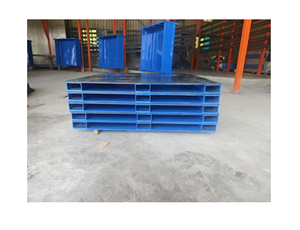
Customized Heavy Duty Steel Storage Rack Warehouse Pallet Racking System with Roller Bearing
Equipped with heavy-duty roller beds and speed dampers, this gravity live storage system accelerates rapid order fulfillment while conserving up to 60% floor footprint in high-turnover Japanese food and pharmaceutical distribution hubs.
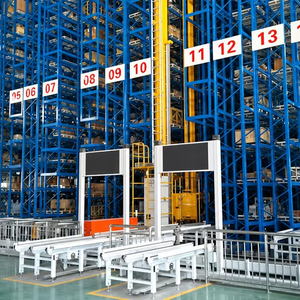
AS/RS Automated Storage and Retrieval System, High Bay Heavy Duty Pallet Rack
Designed specifically to counteract Japan's severe warehouse labor shortages (the "2024 Logistics Problem"). Ultra-precise vertical tolerance accommodates stacker cranes and micro-shuttles operating at speeds exceeding 240 m/min.
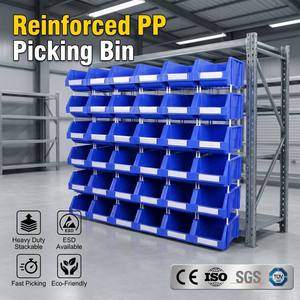
INORDER Semi-Open Stacking Warehouse Bin Spare Parts Picking Storage Organizer
Engineered for Kaizen and 5S workflows in Japanese automotive and electronic assembly plants. Semi-open hopper fronts provide swift small-parts picking, ergonomic handling, and seamless integration with louvred rack panels.
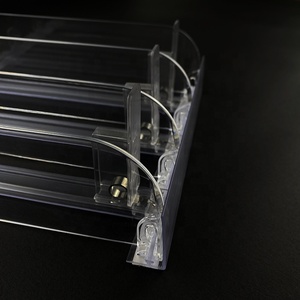
Retail Store Spring Loaded Auto Feed Transparent Plastic Divider Pusher System
A fixture standard across Japanese convenience chains (Konbini) and drugstores. Automatically advances items to the front edge upon customer selection, drastically reducing face-up labor costs while maximizing product visual appeal.
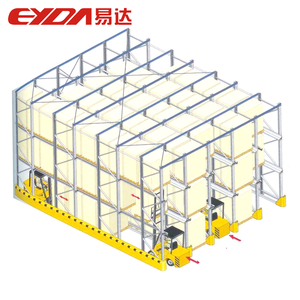
Heavy Duty 5 Layer Drive In Pallet Storage Racking System Drive-Thru Warehouse Pallet Rack
Eliminates aisles to store massive batches of uniform SKUs. Built with heavy cold-rolled structural steel profiles, it operates reliably in refrigerated and -25°C blast-freezer warehouses across Hokkaido, Tokyo Bay, and Osaka port cold terminals.
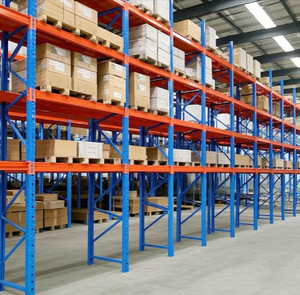
Teardrop Pallet Rack Industrial Grade Heavy Duty 3-Layer Adjustable Steel Storage Rack
Versatile and highly adaptable for cross-dock facilities handling varied packaging sizes. Surface finished with multi-stage chemical phosphatization and high-adhesion electrostatic powder coating to withstand humid Japanese coastal climates.
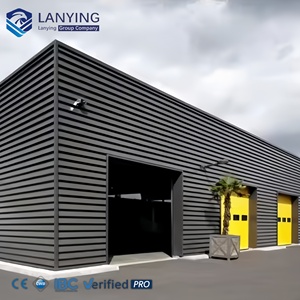
Prefabricated Steel Structure Logistics Warehouse Workshop Industrial Building
Complete structural logistics buildings engineered alongside interior racking loads. Incorporates wide-span column design, thermal roof insulation, and structural anchor calculations complying with Japanese seismic load safety margins.
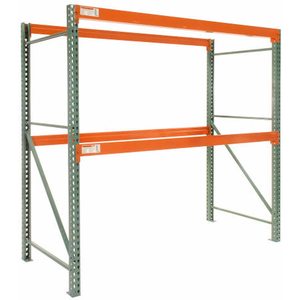
Warehouse Adjustable Steel Teardrop Pallet Racking System with Wire Mesh Decking
Configured with galvanized steel wire decking panels to conform with rigorous Japanese municipal fire prevention laws (enabling overhead sprinkler penetration) while preventing palletized cargo slippage during low-frequency seismic vibrations.
Over 25 Years of Heavy-Duty Structural Racking Manufacturing
Operating from our modern 30,000 square meter integrated industrial facility in Guangzhou, China, Guangzhou Heda Shelves Co., Ltd. delivers direct factory-priced, certified racking systems trusted by global logistics enterprises across more than 120 nations.
Certified Structural Raw Materials
We source prime, hot-rolled and cold-rolled structural carbon steel (Q235B and Q355B grades) from state-owned steel producers. Every batch is certified with full chemical composition and tensile elongation test certificates, ensuring zero internal metallurgic defects under cyclical loading.
- Mill Test Certificate (MTC) verification per batch
- Yield strength tested beyond 355 MPa standard
- Zero micro-fissuring during profile bending
Advanced Automated Roll-Forming
Our workshop houses high-precision, continuous multi-roller profile forming lines alongside CNC laser punching centers. Upright columns feature an omega-profile cross section with 12 cold-rolled folding edges, imparting unmatched torsion resistance against side-impact loads.
- Tight roll-forming tolerance (±0.5 mm deviation)
- Continuous robotic gas shielded arc welding
- 50mm pitch adjustable vertical beam connectors
9-Stage Anti-Corrosion Treatment
Every steel profile undergoes immersion degreasing, multi-stage acid pickling, silane passivation, and electrostatic powder polymerisation baked at 180°C. This industrial coating barrier withstands high atmospheric humidity in coastal logistics ports such as Tokyo and Osaka Bay.
- 60–80 µm uniform powder coating thickness
- 500-hour neutral salt-spray test certified
- Optional hot-dip galvanizing for cold storage (-30°C)
Navigating Japan’s Warehousing Paradigm: Seismic Codes & Automation
Procuring warehouse racking for Japanese distribution facilities demands an exacting understanding of localized engineering mandates, the demographic shifts reshaping freight movement, and rigid seismic safety standards.
Building Standard Act (建築基準法) & JIS B 8951
Japan is situated on the circum-Pacific seismic belt. Standard international racking calculations are entirely insufficient for Japanese building permits. Our structural engineering department carries out dynamic finite element analysis (FEA) evaluating lateral force coefficients, base shear distribution, and ground resonance acceleration. We configure enlarged base plates (12 mm to 16 mm thickness) anchored with specialized chemical expansion bolts (M16/M20), overhead transverse aisle bracing, and mechanical drop-prevention backstops to withstand seismic intensities exceeding JMA Scale 6-Upper without structural collapse.
Solving the "2024 Logistics Problem" (2024年問題)
With statutory caps of 960 hours per annum on truck driver overtime enacted under Japan's Working Style Reform Legislation, shippers must streamline loading turnaround times and consolidate regional inventory. Racking configurations must transition from slow, flat-floor block stacking to hyper-dense high-bay racking systems, pallet flow gravity beds, and automated AS/RS interfaces. Our systems enable continuous 24/7 robotic material movement, mitigating acute labor shortages while cutting truck loading idle times down to under 15 minutes per trailer.
Precision Interfacing with JIS T-11 Pallets (1100×1100 mm)
Unlike European warehouses built around Euro-pallets (1,200 × 800 mm) or American operations utilizing GMA 48"×40" platforms, Japan's supply chain is overwhelmingly dominated by the standardized JIS T-11 pallet (1,100 mm × 1,100 mm). Installing imported racking with mismatched bay depths creates perilous overhangs and uneven point-load weight distribution. HEDA Shelves engineers our beam depths specifically at 1,000 mm or 1,050 mm with dual heavy-duty bottom support bars, guaranteeing absolute load equilibrium and compliance with the Japan Logistics Systems Association (JILS) safety best practices.
| Storage System Architecture | Space Utilization Ratio | JIS T-11 Compatibility | Seismic Resistance (Scale 6+) | Pick Selectivity | Ideal Japanese Industry Application |
|---|---|---|---|---|---|
| Selective Pallet Racking | 40% – 50% | 100% Direct Fit | High (with top ties) | 100% (Pure Random) | 3PL, FMCG E-Commerce Distribution Centers in Kanto/Kansai |
| Drive-In / Drive-Through | 70% – 85% | Engineered Custom | Heavy X-Braced | Low (Batch LIFO) | Beverage, Agricultural Produce & Cold Blast Freezers |
| Automated AS/RS High-Bay | 85% – 95% | High Precision Mill | Superior (FEA Designed) | 100% Automated | Precision Automotive, Electronics & Automated Mega-Hubs |
| Pallet Live Flow (Roller Bed) | 65% – 75% | Speed-Damper Tuned | High Rigidity | FIFO Controlled | Perishable Dairy, Fresh Meat & Pharmaceutical Cold Warehousing |
| Rack-Supported Mezzanine | 180% – 250% (Multi-Tier) | Integrated Small Parts | Full Column Tie-In | High Manual Flow | Spare Parts Logistics, Kaizen Assembly & Retail Sorting |
Engineered for Japan's Core Industrial Logistics Hubs
From high-value coastal land around Tokyo Bay to heavy automotive manufacturing belts along the Tokaido corridor, our structural systems align with regional commercial demands.
Tokyo, Kanagawa & Chiba
Driven by extreme industrial rental rates and massive consumer e-commerce volume. Focus: Multi-level rack-supported mezzanines and high-bay narrow aisle (VNA) systems maximizing cubic volume utilization within strict warehouse zoning limits.
Aichi (Nagoya), Gifu & Mie
The manufacturing heartland of the Japanese automotive ecosystem. Focus: Heavy-duty cantilever racking for extruded aluminum and structural steel profiles, integrated with modular plastic bin systems for lean, Just-In-Time (JIT) Kanban picking.
Osaka, Kobe & Kyoto
Major international multimodal gateway handling bulk imports, chemicals, and pharmaceuticals. Focus: Heavy corrosive-resistant selective pallet racking with wire mesh safety decking and chemical bunding sumps meeting fire safety regulations.
Kyushu (Fukuoka) & Hokkaido
Hubs for rapid semiconductor fabrication development (Kyushu) and large-scale agro-fisheries (Hokkaido). Focus: Hot-dip galvanized cold room drive-in racking (-30°C) and clean-room specification dust-free powder-coated steel racking.
10 Controlled Production Stages: From Prime Coil to Certified Racks
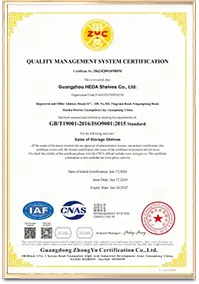
Every structural upright, load beam, and connector bracket is fabricated under rigid quality management protocols in our ISO 9001:2015 certified production lines.
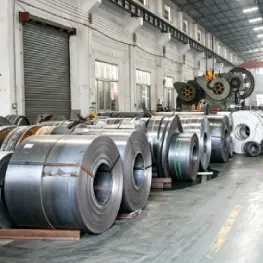
Raw Material Grading
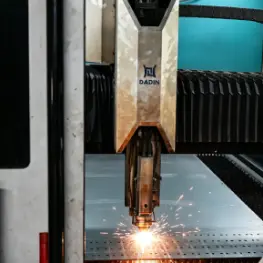
Precision Steel Cutting
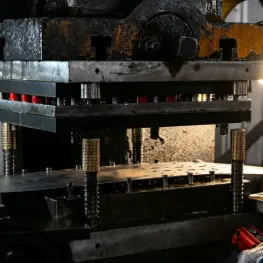
Automated CNC Punching
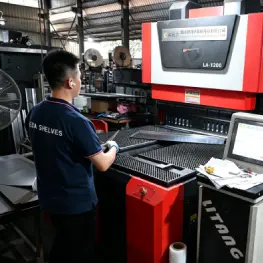
Cold Bending Forming
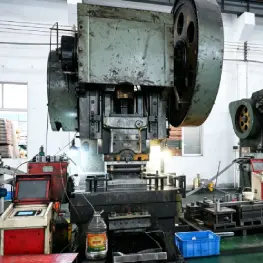
Profile Roll Forming
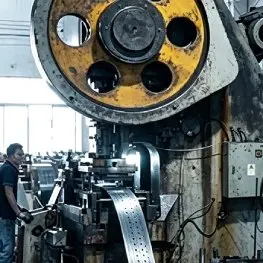
Shot-Blast Polishing
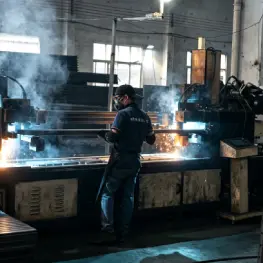
Robotic Laser Welding
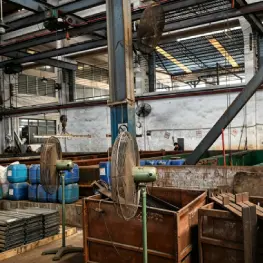
Pickling & Phosphating
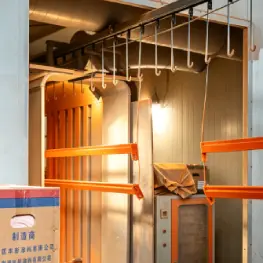
Electrostatic Coating
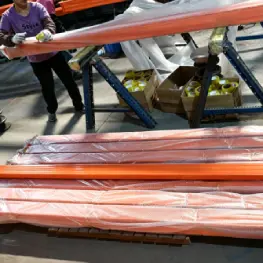
Final QC & Packaging
Audited Manufacturing Compliance & Structural Safety
Procurement teams and Japanese general contractors (Zenecon) can independently verify our structural testing and quality certifications.
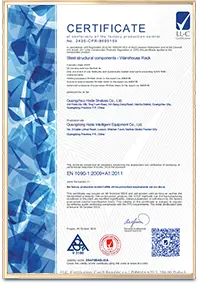 CE Structural Certification
Certificate No. 2435-CPR-8605159
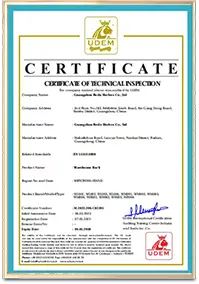 ISO 9001:2015 Audited
No. 18624Q00169R0M (Valid to 2027)
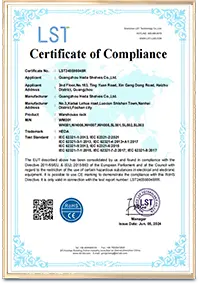 RoHS Environmental Lead-Free
Heavy Metals Free Powder Coating
 Structural Load Verified
Static & Dynamic Load Deflection Tested
Direct Sea Route Shipping to Major Japanese Sea Ports
Situated near Guangzhou, Nansha, and Shenzhen (Yantian/Shekou) international ports, we ensure scheduled containerized sea freight to Japan with transit times of only 4 to 7 days.
| Destination Port (Japan) | Primary Industrial Delivery Coverage | Typical Ocean Transit (Direct) | Container Stowage Optimization | Customs Documentation Provided |
|---|---|---|---|---|
| Port of Tokyo (東京港) | Kanto, Greater Tokyo, Saitama, Tochigi, Gunma | 4 – 5 Days | Steel bundles banded with corner guards; 40HQ optimized | Bill of Lading, Invoice, Packing List, Certificate of Origin, MTC |
| Port of Yokohama (横浜港) | Kanagawa, Atsugi, Shizuoka industrial corridors | 4 – 5 Days | Beam racks strapped in nested wooden cradles | Full commercial invoice with accurate HS code classification |
| Port of Nagoya (名古屋港) | Aichi, Gifu, Mie (Chukyo Automotive Cluster) | 5 – 6 Days | Sequential offloading labeling matching site floor plans | Steel Mill Chemical & Physical Analysis Documentation |
| Port of Osaka (大阪港) / Kobe (神戸港) | Kansai, Osaka, Hyogo, Shiga, Nara distribution hubs | 5 – 6 Days | Moisture-absorbing desiccant bags in sealed container liners | RCEP trade agreement preferential duty tariff documents |
| Port of Hakata (博多港) | Fukuoka, Kumamoto, Kitakyushu, Nagasaki (Kyushu) | 3 – 4 Days | Direct feeder vessels; rapid pallet unloading design | Certified 3D assembly shop drawings & installation guide |
Frequently Asked Questions by Japanese Procurement Teams
Clear, direct engineering and commercial answers addressing common import, compliance, and structural inquiries.
Plan Your Warehouse Racking Project with Senior Structural Engineers
Send us your warehouse CAD floor plan, ceiling clear height, pallet dimensions, and operational throughput targets. Our engineering office will generate an optimized 2D layout, 3D visualization, and complete load calculation proposal within 24 hours.