High-Density Industrial Racking Systems for Brazilian Facilities
From high-throughput distribution hubs in Cajamar and Extrema to specialized heavy manufacturing across the ABC Paulista corridor, our structural systems are certified for durability, precision clearance, and high static load capacity.
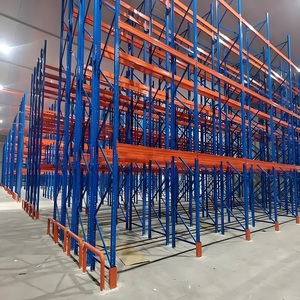
Heavy Duty Double Deep Pallet Rack System
- Load: Up to 4,500 kg/Beam
- Adjustable Pitch: 75mm
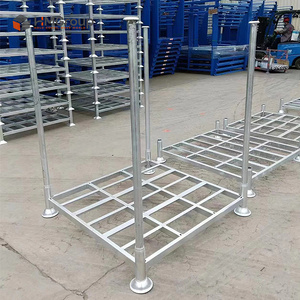
Galvanized Metal Stacking Pallet Stillages Racks
- Finish: Hot-Dip Galvanized
- Stackable: 4-5 Tiers
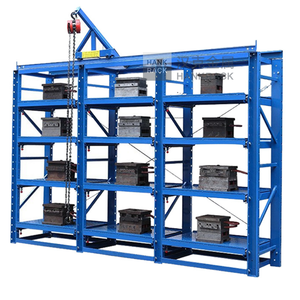
Heavy Duty Steel Mold Slide Storage Rack
- Drawer Capacity: 2,000 kg
- Full Extension Roll-Out
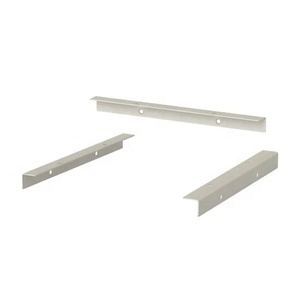
OEM Precision Stamped Steel Connectors & Parts
- High Tensile Steel Q355B
- Custom Structural Profiles
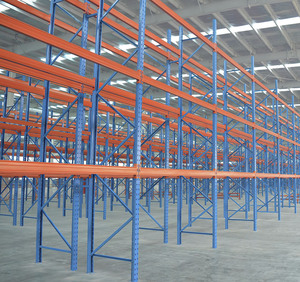
Cold-Rolled Steel Selective Warehouse Racking
- Standard: ABNT NBR 15524
- Epoxy-Polyester Coating
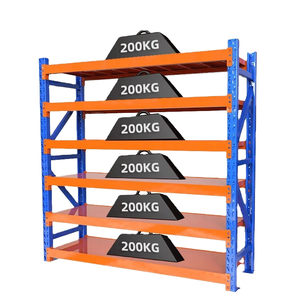
High-Density Drive-In Pallet Racking System
- Space Utilization: Up to 85%
- Cold Storage Compatible
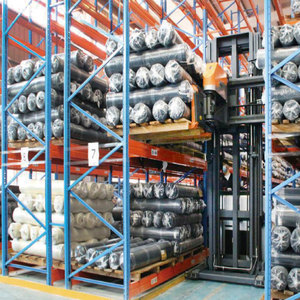
Very Narrow Aisle (VNA) Heavy Duty Shelving
- Height: Up to 15 Meters
- Guide Rail & Wire Guidance
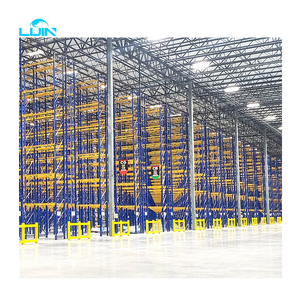
Integrated Cash & Carry Heavy Retail Racking
- Dual Retail & Bulk Storage
- Custom Decking & Dividers
Intralogistics Engineering: Racking & Mezzanine Systems Across Brazil
The industrial and logistics landscape in Brazil has undergone a structural transformation over the past decade. The exponential rise of e-commerce across the South and Southeast regions, paired with massive consolidation in agribusiness corridors (Mato Grosso, Goiás, Paraná) and specialized manufacturing in the ABC Paulista and Betim automotive clusters, has placed unprecedented valuation on warehouse cubic footage. High prime land leasing rates in tier-1 logistics markets—specifically within the 30-kilometer radius of São Paulo (Cajamar, Barueri, Guarulhos) and along the Rodovia dos Bandeirantes, Anhanguera, and Presidente Dutra highways—compel logistics operators, 3PLs, and manufacturers to vertically scale their existing footprints rather than undertaking cost-prohibitive greenfield expansions.
For operations facing structural ceilings of 10 to 14 meters of clear height, modern multi-tier mezzanine platforms (Mezaninos Estruturais) and rack-supported mezzanine floors (Mezaninos sobre Estruturas Porta-Paletes) represent the most fiscally sound, high-ROI engineering alternative. By doubling or tripling usable surface area without increasing the building's physical footprint, industrial operators avoid escalating municipal property taxes (IPTU) and eliminate extensive civil construction permitting cycles while maintaining full operational continuity.
Regulatory Compliance & Structural Safety Standards in Brazil
Deploying heavy industrial mezzanine flooring and high-bay racking systems in Brazilian facilities demands uncompromising adherence to technical norms established by the Brazilian Association of Technical Standards (Associação Brasileira de Normas Técnicas - ABNT) as well as rigorous regional fire department regulatory guidelines (Corpo de Bombeiros Militar / Auto de Vistoria do Corpo de Bombeiros - AVCB). Structural failure in dynamic warehousing environments poses unacceptable human, fiscal, and legal liabilities under Brazilian labor safety directives (NR-11 and NR-12).
| Standard Code | Governing Body | Engineering Scope & Compliance Requirement | Design Application |
|---|---|---|---|
| ABNT NBR 15524-1 / 2 | ABNT (Brazil) | Sistemas de armazenagem: Princípios para o projeto de estruturas de aço porta-paletes seletivos. Deflection limits, beam connection tolerances, and dynamic loading verification. | Selective Racking, Drive-In, Multi-Tier Upright Sections |
| ABNT NBR 8800:2008 | ABNT (Brazil) | Projeto de estruturas de aço e de estruturas mistas de aço e concreto de edifícios. Column buckling formulas, beam-column interaction, bolt shear strengths. | Structural Steel Mezzanine Beams, Columns, Base Plates |
| ABNT NBR 14762:2010 | ABNT (Brazil) | Dimensionamento de estruturas de aço constituídas por perfis formados a frio. Verification of cold-formed thin-walled structural members. | Cold-Formed Upright Profiles, Step Beams, Floor Joists |
| Instruções Técnicas (IT) | Corpo de Bombeiros | Fire compartmentation, emergency egress pathways, staircase geometries, sprinkler penetration clearance (NFPA 13 compatible open grating floors). | Mezzanine Walkways, Handrails, Toe Plates, Egress Routes |
| EN 15512 / FEM 10.2.02 | European Standards | Steel static storage systems: Adjustable pallet racking systems - Principles for structural design under static and non-linear operational forces. | Advanced Non-Linear Load Calculations & Safety Factors |
Micro-Climate Resilience: Addressing Brazilian Humidity & Coastal Corrosion
Warehouses situated along Brazil’s vast coastal strip—home to vital maritime gateways including the Port of Santos, Port of Paranaguá, Port of Itajaí, and Port of Suape—experience severe environmental challenges. Relative humidity consistently exceeding 80%, combined with aggressive maritime airborne salinity (névoa salina), accelerates electrochemical corrosion on unprotected carbon steel. In untreated warehouses, standard thin-film coatings degrade within 24 to 36 months, inducing structural embrittlement at critical perforated upright connection slots.
To deliver an operational lifespan exceeding 25 years under harsh tropical conditions, our manufacturing process implements an advanced surface preparation sequence. Components undergo a continuous 10-stage automated immersion and spray treatment: alkaline degreasing, industrial acid pickling to eliminate mill scale, secondary neutralization, zinc phosphating, and deionized water rinsing. The electrostatically applied epoxy-polyester architectural powder coat is cured in computerized baking ovens at 180°C–200°C, producing a non-porous cross-linked protective barrier with a dry film thickness (DFT) between 70 to 90 microns. For extreme open-air, fertilizer-handling, or cold-storage environments, we supply hot-dip galvanized components certified in compliance with ABNT NBR 6323, providing unmatched galvanic sacrificial protection.
Mezzanine Platform Architectures: Engineering Comparison
Selecting the optimal vertical expansion framework requires precise alignment between pallet load dynamics, manual order picking density, fire suppression system layout, and concrete slab bearing capacities.
Rack-Supported Mezzanines (Mezanino sobre Porta-Paletes)
Structural Mechanics: Utilizes cold-rolled high-tensile upright frames (55x47, 80x60, 90x70, 100x70, or 120x95mm omega profiles) as both the primary load-bearing structural columns and multi-tier storage racking. Heavy-duty interlocking box beams support secondary C-section floor joists.
Optimal Application: Dense SKU distribution, e-commerce order picking towers, pharmaceutical batch storage, and automotive aftermarket warehouses where manual order picking occurs on upper catwalks while full-pallet bulk stock is staged below.
Engineering Parameters:
- Platform Load: 300 to 800 kg/m² uniformly distributed load (UDL)
- Clear Aisle Widths: 900mm to 1,400mm for high-speed cart picking
- Decking: Open steel grating (50-70% light/water transmission for AVCB) or embossed galvanized steel panels
Structural Steel Mezzanines (Mezanino Metálico Estrutural)
Structural Mechanics: Engineered with wide-flange structural steel columns (H-beams, SHS/RHS hollow sections) and rolled I-beam or cold-formed heavy channel primary girders. Eliminates internal racking obstacles, delivering expansive, open-span column grids (up to 6 to 9 meters between spans).
Optimal Application: Cleanroom installations, light manufacturing assembly lines, administrative mezzanine offices within industrial sheds, sorting automation platforms, or AMR/AGV robot operating zones.
Engineering Parameters:
- Platform Load: 500 to 1,500+ kg/m² UDL for heavy machinery
- Column Base Plates: Precision laser-cut Q355B base plates with heavy Hilti chemical anchors to distribute point loads
- Staircases: Industrial heavy-gauge stringers, anti-slip treads, closed risers, continuous safety handrails per NBR 9077
Localized Applications Across Key Brazilian Industrial Corridors
Every industrial geography in Brazil presents unique supply chain velocity, climatic pressures, and inventory profiles. Our installations are customized to solve operational bottlenecks from port to hinterland.
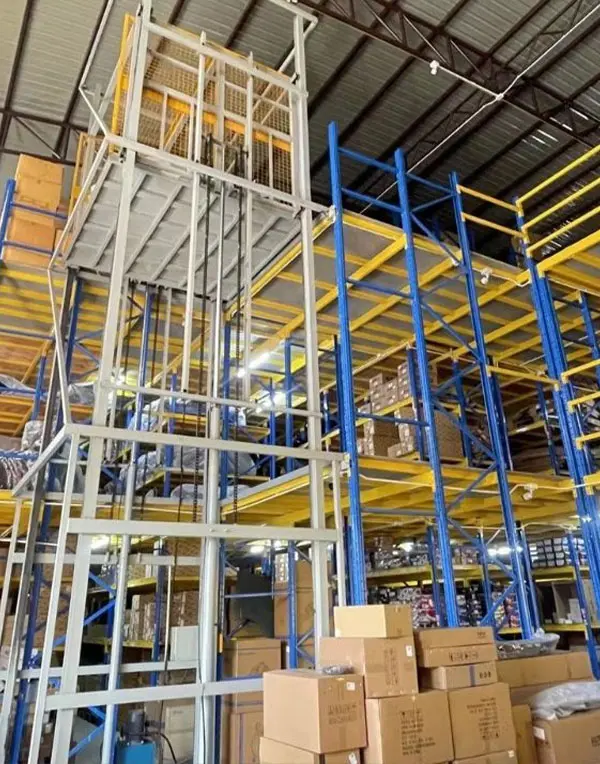
Multi-Tier E-Commerce Picking Towers & Returns Hubs
Within high-velocity fulfillment centers operating in Cajamar, Barueri, Louveira, and the fiscal-benefit hub of Extrema (Minas Gerais), operations process tens of thousands of parcel units daily. Floor stacking creates bottlenecks, while low ceiling utilization inflates per-unit storage costs.
- 3-Tier Rack-Supported Mezzanines
- Integrated Spiral & Gravity Chutes
- AVCB Fire-Approved Grating Decking
- Pneu-Tire & Carton Flow Integration
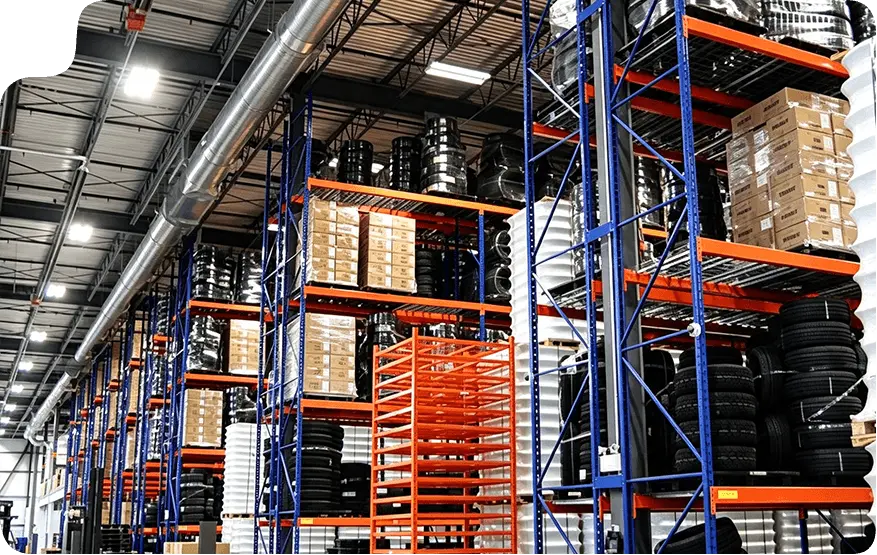
Heavy Die, Stamping Mold & Automotive Line-Side Buffering
Tier-1 automotive suppliers and OEM assembly plants require absolute structural integrity to stage stamping tools, injection molds, and heavy engine components. Sub-standard commercial racking deflects under cyclical dynamic hoist transfers, posing extreme worker hazards.
- Roll-Out Mold Racks (2,000kg/drawer)
- Structural Stanchions for Crane Runways
- High-Impact Column Protectors (Omega)
- Heavy Galvanized Steel Stillages
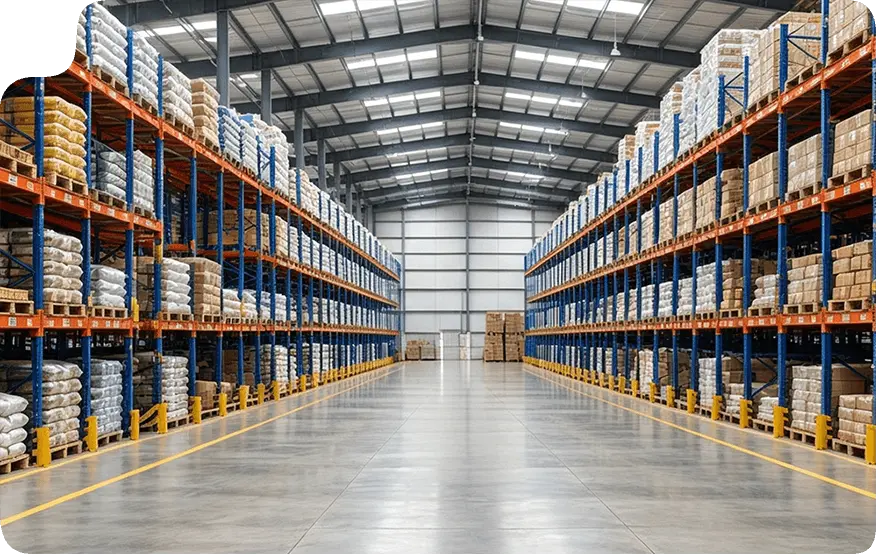
Agrochemical, Hybrid Seed & Fertilizer Distribution Depots
The vast agribusiness heartland requires massive storage density for seasonal seed shipments, bagged inputs, and agrochemicals. Atmospheric chemical vapors and fluctuating warehouse interior temperatures require superior corrosion resistance and fire containment features.
- Heavy-Duty Drive-In & Radio Shuttle
- Electrostatic Zinc-Phosphate Coating
- Welded Wire Decking for Big Bags
- Spill-Containment Bund Integrations
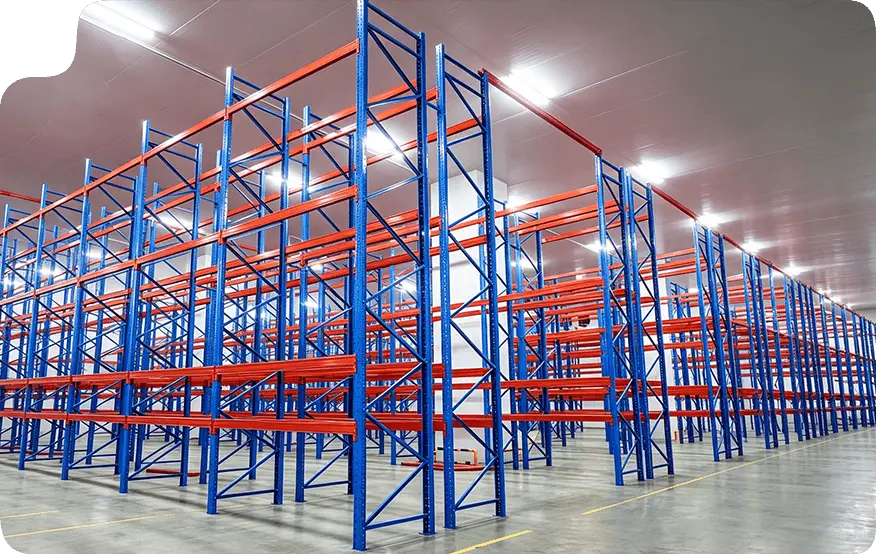
Refrigerated & Blast Freezer Warehouses (-25°C Cold Rooms)
Brazil’s protein exporters in Santa Catarina, Paraná, and Rio Grande do Sul operate cold chambers where every cubic meter incurs extreme electrical refrigeration overhead. Conventional selective racking wastes valuable chilled air in wide forklift operating aisles.
- Semi-Automated Radio Shuttle Racks
- Sub-Zero Cold Tough Steel Grades
- Full Hot-Dip Galvanization Options
- FIFO / LIFO Dynamic Inventory Logic
Intralogistics Trends Shaping Brazilian Warehouse Infrastructure
Strategic analysis of market forces driving engineering specifications across Brazilian distribution centers, logistics parks (Condomínios Logísticos), and manufacturing hubs.
Condomínios Logísticos Dominance
Institutional developers (GLP, Prologis, Bresco) have raised tenant expectations to Class-A facilities featuring 12m clear heights and 6 t/m² slab capacities. Tenants prioritize modular, demountable mezzanine and racking structures that can be reconfigured or relocated without damaging leasehold property.
Omnichannel Velocity & Dark Stores
Urban last-mile hubs in Greater São Paulo, Rio de Janeiro, and Belo Horizonte are deploying compact, multi-level micro-fulfillment mezzanines within urban warehouses. This optimizes dense manual bin picking while separating pickers from dispatch loading bays.
Transition to Semi-Automation
Rising labor rates and high overtime costs during holiday seasons (Black Friday, Dia das Mães) are accelerating adoption of semi-automated storage systems like Radio Shuttle and Carton Flow mezzanines, bridging the capital expenditure gap between manual racking and full AS/RS cranes.
Tax Incentive Corridors
ICMS tax differentials continue to shift warehouse footprints away from São Paulo city toward Extrema (MG), Betim (MG), and Joinville/Itajaí (SC). These emerging logistics nodes demand rapid commissioning with standardized modular components shipped ready to assemble.
Manaus Free Trade Zone (SUFRAMA)
Electronics and consumer durable assemblers in the Zona Franca de Manaus require specialized heavy mold racking and ESD-safe mezzanine sub-assembly floors capable of resisting extreme equatorial heat and river-basin humidity.
Tightened AVCB Fire Inspections
Brazilian insurers and municipal fire marshals enforce rigorous compliance with NFPA 13 sprinkler water drop-through requirements. Solid mezzanine floors without sprinkler extensions are rejected; open-mesh steel floor grating is now the standard specification.
Precision Steel Manufacturing with 25 Years of Proven Engineering
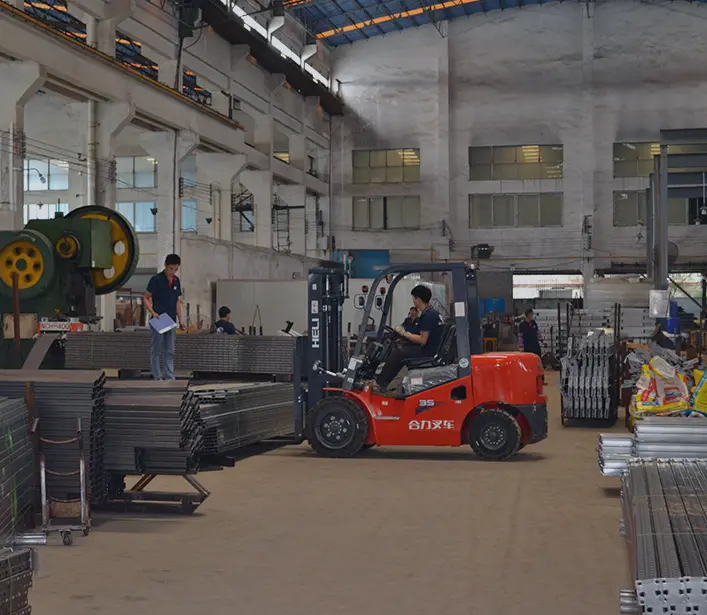
Our 30,000 m² automated facility in Guangzhou controls every manufacturing phase—from raw coil slit verification to final export packing—ensuring dimensional accuracy and structural integrity for Brazilian industrial buyers.
Direct Factory Accountability for Overseas Turnkey Deliveries
Purchasing industrial racking across international borders requires verified technical capabilities, certified metallurgical quality, and rigorous dimensional tolerance control. We eliminate trading intermediaries, partnering directly with Brazilian supply chain managers, warehouse developers, and EPC contractors.
- Certified Steel Coils: Prime domestic hot-rolled and cold-rolled steel coils (Q235B & Q355B high-tensile strength) verified with mechanical mill test certificates.
- Automated CNC Continuous Roll Forming: 16-stand automated cold-roll profiling lines producing continuous column profiles up to 12 meters without splicing.
- International Quality Auditing: Certified to ISO 9001:2015 (Certificate No. 18624Q00169R0M, valid to June 2027), CE Conformity (No. 2435-CPR-8605159), and RoHS.
- Complimentary 3D CAD & Load Verification: Comprehensive Tekla/AutoCAD layouts, structural load calculations, and column base plate point load distributions provided before manufacturing begins.
The 10-Stage Precision Manufacturing Workflow
Every batch of uprights, step beams, cross-ties, and mezzanine floor panels undergoes systematic quality gating.
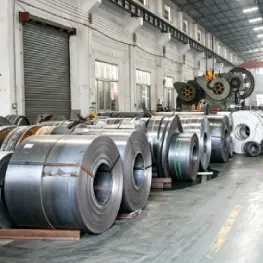
Certified Steel Coil Testing
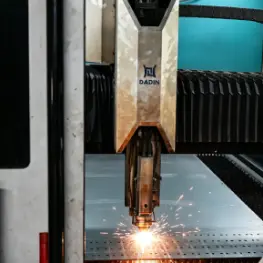
Precision Slitting & Cutting
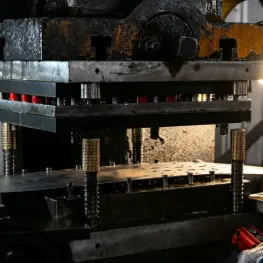
CNC Automated Punching
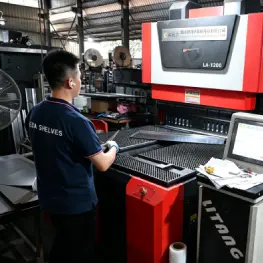
Continuous Cold Bending
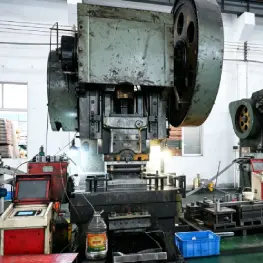
16-Stand Roll Forming
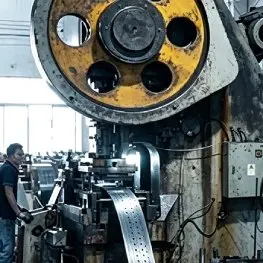
Robotic Burr Polishing
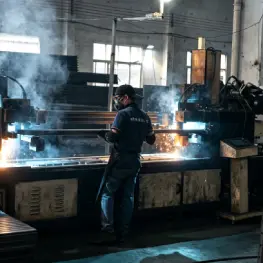
Robotic Mig Welding
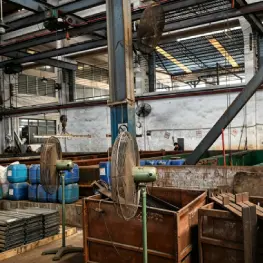
Acid Pickling & Phosphating
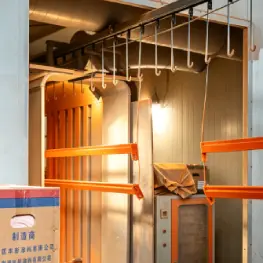
Automated Powder Coating
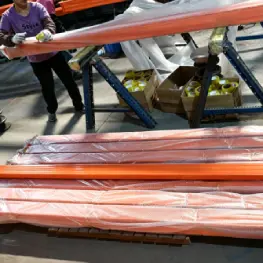
QC Gating & Export Stacking
Maritime Shipping, Customs Compliance & Installation in Brazil
Exporting heavy structural steel to Brazil requires streamlined maritime containerization, precise tariff classification under Mercosur rules (NCM), and foolproof assembly documentation.
Container Optimization & Export Protection
Structural racking uprights and mezzanine girders represent heavy, dense dimensional cargo. We optimize container loading into 40ft High Cube (40HC) and 40ft Open Top (40OT) containers to maximize cubic weight allowances while ensuring components remain undamaged during 30 to 45-day maritime transits.
- Steel-Strapped Bundling: Heavy structural beams and uprights bundled with protective corrugated paper corners and plastic wrapping to prevent abrasion.
- Container Packing Lists: Granular, color-coded packing lists labeled by mezzanine floor tier or racking aisle for rapid site sorting upon arrival.
- Moisture Desiccant Packs: Industrial silica and calcium chloride desiccant bags placed inside sealed bundles to absorb condensation during equator crossings.
Direct Gateway Ports for Brazilian Shipments
We provide full CIF or CFR terms to major Brazilian seaports, collaborating with your certified Despachante Aduaneiro (customs broker) to ensure seamless Siscomex import declaration clearance.
| Port Name | State | Target Industrial Logistics Region |
|---|---|---|
| Porto de Santos | SP | São Paulo Metro, Campinas, ABC Paulista, Extrema (MG) |
| Porto de Paranaguá | PR | Curitiba, São José dos Pinhais, Ponta Grossa Corridor |
| Porto de Itajaí / Navegantes | SC | Joinville, Blumenau, Florianópolis, Cold Chain Exporters |
| Porto de Suape | PE | Recife, Northeast Automotive & Consumer Hubs |
| Porto de Rio Grande | RS | Porto Alegre, Caxias do Sul Industrial Belt |
Frequently Asked Questions by Brazilian Buyers
In-depth technical answers addressing import duties, local building certifications, engineering calculations, and installation procedures in Brazil.
Request an Engineered Layout & CIF Brazil Project Quotation
Provide your building dimensions, clear ceiling height, pallet unit profiles (W x D x H), and target destination port. Our senior intralogistics engineering team will deliver a fully calculated 2D/3D CAD warehouse layout proposal and comprehensive factory-direct quotation within 24 hours.