Q1: Do your pallet racking and workstation systems meet Slovak and European Union safety norms?
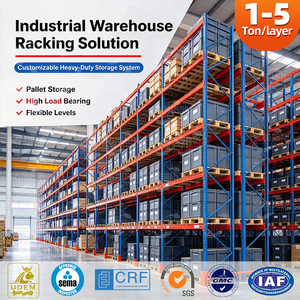
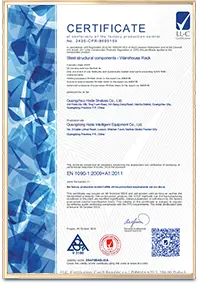
Yes. All structural systems exported to Slovakia strictly follow European Committee for Standardization (CEN) codes, specifically EN 15512 (Principles for structural design of adjustable pallet racking), EN 15620 (Tolerances, deformations and clearances), and EN 15635 (Application and maintenance of storage equipment). Our products carry formal CE certification (No. 2435-CPR-8605159) and full factory testing documentation acceptable to Slovak occupational safety inspectors (Inšpektorát práce).
Q2: How do your beam designs accommodate standard European pallet formats (EUR-1, EUR-2, and Gitterboxes)?
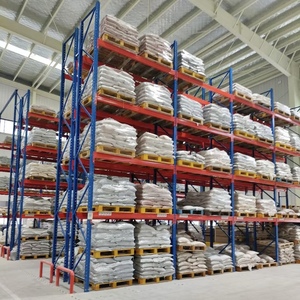
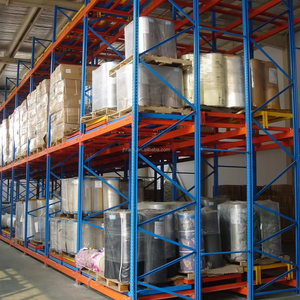
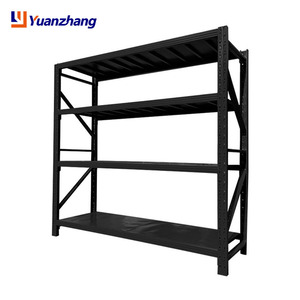
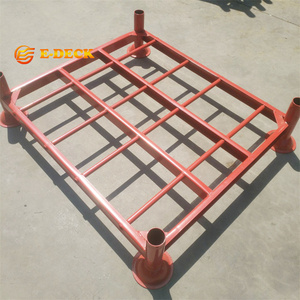
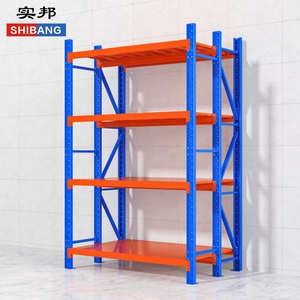
Our standard beam spans are engineered precisely for European logistics modules. For example, our 2,700mm beam length accommodates three EUR-1 pallets (800 x 1,200mm) side-by-side with required 75mm clearances between pallets and 100mm frame clearance per EN 15620. For heavy steel mesh Gitterboxes (DIN 15155) commonly used in Slovak automotive lines, we supply reinforced top-hat profile pallet support bars and heavy steel drop-in panels preventing corner point-load deformation.
Q3: What is the typical freight transit time from your Guangzhou plant to Slovak industrial parks?
Shipments depart South China ports (Nansha / Yantian) via maritime routes to the Adriatic Port of Koper (Slovenia) taking roughly 24–28 days. From Koper, containers move directly via regular freight rail shuttles to customs inland terminals in Bratislava or Dunajská Streda within 48–72 hours. Total typical door-to-door transit to facilities in Bratislava, Trnava, Žilina, Nitra, or Košice ranges between 32 and 38 calendar days.
Q4: How does import customs clearance and Slovak VAT operate under EU regulations?
Shipments are usually quoted under CIF Koper or DAP your Slovak facility address (Incoterms 2020). For registered Slovak VAT entities (IČ DPH), the import VAT can often be handled via the EU customs reverse-charge mechanism (Pomerové zdanenie / Article 211 EU VAT Directive) through authorized Slovak forwarders, eliminating the cash-flow burden of upfront VAT payments upon container arrival at the border.
Q5: Can HEDA customize workstation layouts with integrated power, ESD protection, and overhead tool rails?
Absolutely. Our pallet rack integrated workstations are fully modular. We supply factory-punched uprights designed for quick bracket attachment of pneumatic airline tubes, 230V/400V power raceways, LED task lighting armatures, spring tool balancers, and conductive ESD matting required for automotive electronic sub-assemblies in cleanroom or ESD-protected areas (EPA).
Q6: How is on-site mechanical installation handled inside Slovakia?
We provide comprehensive 3D installation blueprints, exploded CAD assembly diagrams, and component packing manifests marked with exact frame designations. Slovak clients may choose their preferred local industrial mechanical installation contractor, or HEDA can dispatch bilingual site supervisors to oversee anchoring, torque validation to slab specifications, and initial load test verification.
Q7: What floor slab requirements (concrete thickness and flatness) are necessary for installation?
For standard selective racking installations up to 8 meters height, a reinforced concrete slab of minimum C20/25 grade with a thickness of at least 150–200mm is standard. Floor levelness should comply with DIN 18202 Table 3 or EN 15620 classifications to ensure vertical alignment without excessive leveling shims under the upright baseplates.
Q8: How do we initiate a customized layout drawing and project price quotation?
Simply provide your facility CAD drawing (or clear dimensions: length, width, unobstructed height under truss), target pallet sizes and maximum weights, forklift mast height and turning radius, and preferred picking station locations. Our engineering department returns an optimized 2D layout, 3D visualization model, and itemized CIF/DAP quote within 24–48 hours.