Featured Industrial Storage Systems for Riyadh Logistics Hubs
From ultra-dense Drive-In/Drive-Through configurations to heavy-duty selective frameworks, our racking portfolios meet rigorous Middle Eastern cold chain, FMCG, and automotive requirements.
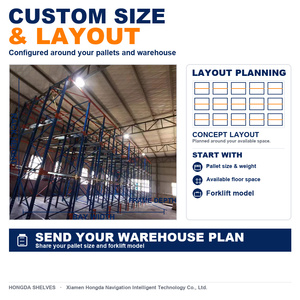
Heavy Duty Drive in Pallet Rack High Density Cold Storage Logistics
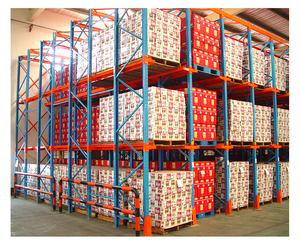
China Factory Wholesale 5-Layer Steel Drive-In Racks Corrosion Protected
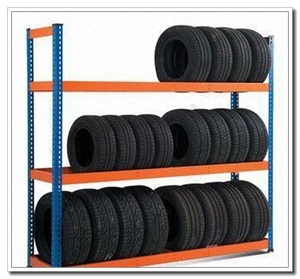
Industrial Car Tyre Rack Folding Stacking Drive-In Pallet Shelves
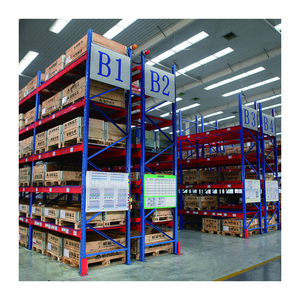
Industrial Spliced Drop-Over Deck Panel Storage Rack 2000kg Heavy Duty
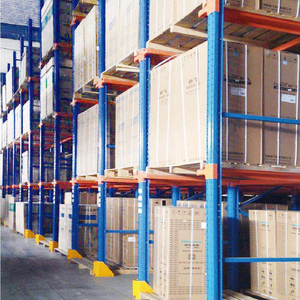
Reinforced 5-Layer Drive-In Storage Racking Cold Rolled CE Certified
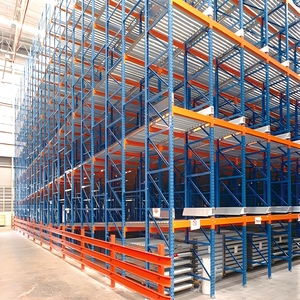
Selective & Drive-in Convertible Pallet Rack 500-4000kg/Level Capacity
Multi-Tier Rolling Storage Rack Mobile Utility Fulfillment Cart
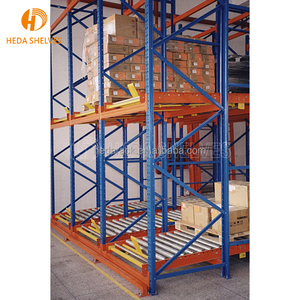
Industrial Gravity Flow Roller FIFO Racking System for Distribution Centers
Engineering High-Density Drive-In Racking for Riyadh's Modern Supply Chain Infrastructure
In the heart of the Arabian Peninsula, Riyadh is undergoing an unprecedented logistical evolution driven by the Saudi Vision 2030 framework and the National Industrial Development and Logistics Program (NIDLP). As prime warehouse land lease prices surge across key hubs—including the MODON Industrial Cities (1st, 2nd, and 3rd), the Al-Sulay logistics corridor, and the burgeoning special economic zones near King Salman International Airport—logistics directors, supply chain operators, and facility engineers can no longer afford the spatial waste inherent to conventional selective racking setups.
Drive-In and Drive-Through warehouse pallet racking represents the mechanical pinnacle of volumetric spatial optimization. By eliminating operational access aisles between adjacent storage bays, Drive-In racking converts up to 75% to 85% of total cubic warehouse volume into active pallet positions. For enterprise distribution facilities handling high-volume, low-SKU profiles, cold storage environments, and FMCG staging centers, this engineering paradigm drastically cuts per-pallet operational overhead, cooling costs, and building footprint requirements.
Structural Kinematics & Mechanical Integrity of Drive-In Racking
Unlike standard static pallet racks where load-bearing beams directly support horizontal pallets across open spans, Drive-In racking systems function via a specialized cantilever bracket and continuous rail design. Forklift trucks navigate physically into the structural storage lanes (bays) to place and retrieve pallets along bilateral, heavy-gauge steel support rails running the full depth of the tunnel.
Because the internal structure lacks longitudinal tie-beams across the entry corridors, structural stability against lateral torsion, seismic resonance, and truck impact requires rigorous mechanical engineering calculations. Certified manufacturers utilize three proprietary bracing assemblies:
Continuous Pallet Guide Rails
Roll-formed from high-yield 2.5mm to 3.0mm structural cold-rolled steel (Q235B / Q355B), featuring an integrated flared entry horn that self-centers pallets and guards against structural jamming during high-speed forklift handling.
Overhead & Spine Bracing Grid
Robust structural X-bracing truss networks situated along the top horizontal plane and rear structural uprights. This distributes axial thrust loads across adjacent upright columns, preventing longitudinal deflection.
Heavy-Duty Floor Guidance & Column Shields
Floor-anchored heavy structural steel angle rails (100mm x 75mm x 6mm or larger) guide reach trucks directly down the center of each bay, physically shielding upright columns against wheel impact and side-swipes.
LIFO vs. FIFO Operational Protocols: Tailoring to Riyadh's Distribution Cycle
Operational methodology dictates whether facility designers specify Drive-In or Drive-Through structural variants:
Drive-In Racking (LIFO - Last-In, First-Out): Features a single access aisle for both loading and picking operations. The first pallet placed into the lane becomes the last pallet retrieved. This represents the most cost-effective and space-efficient solution for non-perishable merchandise, bulk consumer packaging, automotive lubricants, raw industrial materials, and items with uniform manufacturing runs.
Drive-Through Racking (FIFO - First-In, First-Out): Features independent entry and exit aisles situated at opposing faces of the racking block. Loading occurs at one face while picking executes at the other. This configuration is widely implemented across Riyadh food production facilities (e.g., date processing factories, poultry distribution networks, and dairy conglomerates located along the Al-Kharj Road corridor) where strict batch expiration rotation and batch control are non-negotiable legal mandates.
Comparative Performance Matrix: Industrial Storage Systems
To assist procurement engineers and warehouse consultants in Riyadh, the table below provides an empirical evaluation across critical mechanical, operational, and capital metrics:
| Racking Topology | Cubic Space Efficiency | Selectivity | Rotation Method | Pallet Handling Speed | Primary Use-Cases in Riyadh |
|---|---|---|---|---|---|
| Drive-In Racking | 75% - 85% | Low (Batch level) | LIFO (Last-In, First-Out) | Moderate (Driver enters bay) | Cold Freezers, Beverage Bottling, Chemical & Auto Spares |
| Drive-Through Racking | 70% - 80% | Low (Batch level) | FIFO (First-In, First-Out) | Moderate (Dedicated in/out) | Dairy Processing, Packaged Dates, Agricultural Commodities |
| Standard Selective | 40% - 50% | 100% (Instant access) | Any (Flexible) | High (Unobstructed aisles) | General E-commerce, Retail 3PL, High SKU Assortments |
| Push-Back System | 65% - 75% | Medium (Per Lane) | LIFO (Gravity carts) | High (Exterior picking) | Medium Turn Cold Storage, Fast-moving Food Distribution |
| Radio Shuttle System | 80% - 90% | Medium-High (Per Level) | FIFO or LIFO (Automated) | Very High (Robot automation) | Mega Distribution Centers, High-throughput Automated Hubs |
Localized Applications & Emerging Warehousing Trends in Riyadh
From hyper-arid summer temperatures exceeding 50°C to stringent Civil Defense and SASO specifications, our structural engineering accounts for the unique operating realities of Saudi Arabia's capital.
Cold Storage & Food Security Hubs
Riyadh acts as the central redistributor for dairy, poultry, dates, and imported frozen goods across the Najd plateau. Our Drive-In systems feature heavy structural hot-dip galvanization or specialized thermo-hardening powder coatings rated down to -30°C to prevent steel embrittlement and surface peeling under thermal condensation.
MODON Industrial Clusters (1st, 2nd, 3rd)
Heavy manufacturing units producing plastics, chemical reagents, and electrical components throughout MODON industrial zones demand structural integrity for concentrated, uniform pallets weighing up to 2,000kg. Uprights are cold-formed from high-yield Q355B alloy steel with reinforced baseplates anchoring deep into C25/30 concrete slabs.
Automotive & Spare Parts Logistics
Riyadh hosts the Kingdom's largest automotive dealerships and parts distributors. Drive-In racking combined with modular tyre pallet nests allows companies in Al-Fawzan and Al-Kharj industrial sectors to stack hundreds of tyre SKUs or heavy powertrain crates safely, freeing up floor space for order sorting.
Civil Defense & Saudi Building Code (SBC) Compliance
Saudi Civil Defense standards mandate strict clearance tolerances for overhead fire sprinkler heads (minimum 500mm clear space below deflector heads), in-rack sprinkler integration for storage heights above 7.5 meters, and certified structural anchoring calculations under SBC 301/306 structural dynamics.
E-Commerce & Retail Fulfillment Buffers
Major regional distribution operators in the Al-Sulay logistics corridor utilize Drive-In blocks as deep buffer storage zones for bulk reserve inventory. Pallets are fed rapidly to exterior dynamic carton flow and selective picking lines, maintaining exceptional picking speed during Ramadan and White Friday sales surges.
Pharmaceutical Logistics (SFDA Standards)
Regulated by the Saudi Food and Drug Authority (SFDA), pharmaceutical warehouses in Riyadh require sanitary, dust-resistant finishes. Our electrostatic powder-coated surfaces prevent rust flaking, support sanitization washes, and allow seamless integration of temperature telemetry sensors across deep racking lanes.
Emerging Warehousing Dynamics in the Central Province
Three tectonic shifts are currently defining warehouse design across the Riyadh logistics sector:
1. Vertical Volume Exploitation: With modern logistics parks offering clear interior heights ranging from 11 to 14.5 meters, logistics managers are abandoning older 6-meter facilities. Our Drive-In systems easily reach up to 12 meters in vertical elevation, featuring reinforced upright profiles (up to 120mm face width, 2.5mm thickness) to withstand dynamic forklift loading at elevated pick heights.
2. Rapid Customs Integration via SABER Platform: Importing industrial racking into Saudi Arabia requires comprehensive conformance certificates under the SASO Technical Regulations. Every batch we manufacture for Riyadh undergoes factory-audited inspection to guarantee seamless customs clearance via the SASO Saber platform and expedited transfer through Dammam Port (King Abdulaziz Port) or Riyadh Dry Port.
3. Enhanced Forklift Guidance & Safety Automation: As operations transition toward 24/7 fulfillment schedules, the human risk of rack impact rises. We engineer floor-mounted heavy steel guide angles and tapered entry columns that shield critical vertical members, ensuring zero structural compromise even during rapid multi-shift cycle times.
Riyadh Warehouse Racking Procurement & Engineering Questions
Clear, engineer-backed answers to the most common questions raised by facility developers, warehouse managers, and supply chain directors across Saudi Arabia.
What documentation do you provide for Saudi Customs (SABER) and SASO clearance?
We supply complete technical compliance dossiers for SABER platform registration, including factory ISO 9001:2015 certifications, CE compliance certificates (No. 2435-CPR-8605159), mill test certificates for Q235B/Q355B steel, chemical composition sheets, and load testing performance reports. This guarantees seamless issuance of the Shipment Certificate of Conformity (SCoC) prior to vessel arrival at King Abdulaziz Port in Dammam or Jeddah.
How does Drive-In racking comply with Saudi Civil Defense fire sprinkler requirements?
Saudi Civil Defense regulations require a minimum 500mm vertical clearance between the top pallet load and ceiling sprinkler deflectors. For storage structures exceeding 7.5 meters or high-hazard commodity groups, our CAD engineers integrate dedicated structural mounting brackets directly onto the Drive-In upright frames to support vertical in-rack sprinkler pipe runs and intermediate sprinkler heads without compromising forklift lane clearance.
What forklift trucks are compatible with your Drive-In racking channels?
Drive-In racking accommodates standard counterbalance forklifts and electric reach trucks. However, the outer width of the forklift mast, overhead guard (OHG), and chassis must be evaluated against the clear bay entrance width. Typically, we configure the clear lane between pallet support arms with 75mm to 100mm of clearance on either side of the pallet and forklift body. We strongly recommend floor-mounted guidance angle rails to eliminate human steering errors inside deep tunnels.
How does desert ambient heat and cold storage condensation affect the coating finish?
Warehouses in Riyadh face extreme ambient swings: summer warehouse temperatures can hit 50°C, while cold storage blast freezers operate at -25°C. For ambient warehouses, our 10-stage automated electrostatic powder coating (60–80 microns thickness) provides superior adhesion that will not crack or blister. For cold storage and high-condensation operations, we offer Hot-Dip Galvanizing (HDG) conforming to ISO 1461, delivering permanent cathodic protection against rust.
What concrete slab requirements and floor flatness ratings are needed?
Due to the concentration of weight across continuous column uprights in Drive-In systems, a reinforced concrete floor slab with a compressive strength of at least C25/30 (25 MPa to 30 MPa) and a minimum slab thickness of 180mm to 220mm is standard. For floor flatness, we recommend DIN 18202 Table 3 Line 3 or TR34 Free Movement (FM3) specifications to ensure forklifts remain stable when lifting loads at 8 to 11 meters depth inside the lanes.
What is the typical shipping lead time and installation workflow for Riyadh?
Production typically requires 15 to 25 business days depending on project tonnage. Ocean container freight from our port to Dammam or Jeddah takes approximately 18 to 22 days. Upon port customs clearance, containers are trucked via the multi-modal expressway network directly to your site in Riyadh. We provide step-by-step CAD assembly drawings, video installation guides, and can dispatch on-site technical installation supervisors to lead local rigging teams.
Transform Your Riyadh Warehouse with a Free 3D Engineering Layout
Send us your warehouse architectural dimensions, clear internal ceiling height, pallet dimensions, and forklift specifications. Our certified racking engineers will deliver a comprehensive 2D CAD layout, 3D rendering, and factory-direct CIF/DDP quote within 24 hours.