Precision OEM Industrial Racking Systems for Norwegian Facilities
Engineered for structural resilience in extreme ambient conditions, high load capacities, and dense floor configurations. Manufactured under strict ISO 9001:2015 and CE EN 1090 control.
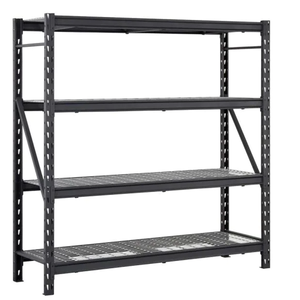
3 Layers Boltless Steel Racking Industrial Shelf Adjustable Stacking Assemble Shelving for Garage Warehouse
- Boltless Interlocking Connection
- Modular Shelf Reconfiguration
- Nordic Workshop & Buffer Ready
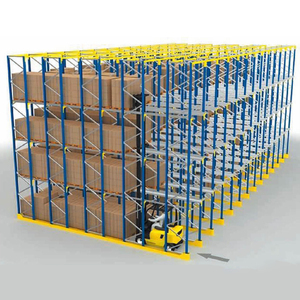
Industrial 5 Layer Heavy Duty Drive-In Pallet Racking Anti Corrosion Design for Cold Chain Warehouse Storage
- Seafood Deep-Freeze Qualified (-30°C)
- Zinc / Marine Epoxy Finished
- High Pallet Volumetric Density
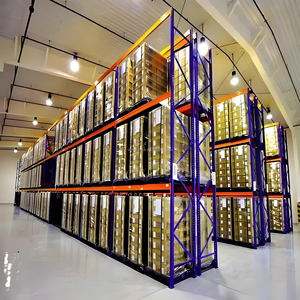
Space Saving Warehouse Storage Solution Forklift Entry System High Density Drive in Rack
- LIFO Pallet Infill Geometry
- Heavy-Duty Guide Rail Rails
- Eliminates Dead Aisle Footprints
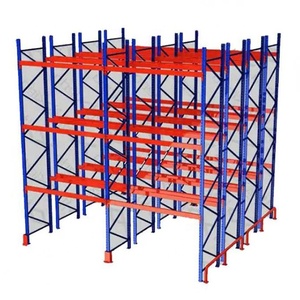
Perter High Density Storage Stack Selective Heavy Duty Pallet Racking System Design Warehouse Pallet Shelves
- Universal EUR/Nordic Pallet Sizing
- Up to 4,500 kg Capacity Per Pair
- Integrated Safety Drop Pins
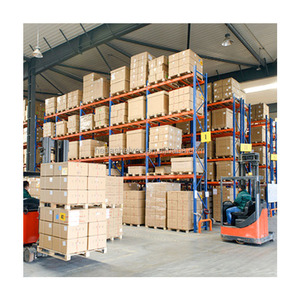
Cold Room Storage Drive in Heavy Duty Rack Metal Storage Shelves Steel Pallet Shelving Racking System
- Brittle-Resistant Q355D/E Steel
- High Air Flow Clearance Profile
- Thermal Expansion Floor Fixings
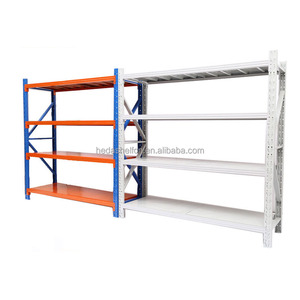
Wholesale Price Industrial Boltless Storage Rack 4 Tier Metal Shelving Units Warehouse Steel Heavy Duty Stacking Racks Shelves
- Rapid 0-Hardware Installation
- High Load Surface Deck Support
- Ideal for Automotive & Spare Parts
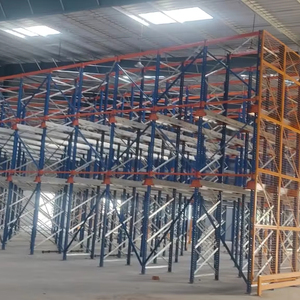
Steel High-Density LIFO Drive Pallet Rack 25000 kg Capacity Powder Coated Strong Guide Rails Forklift Drive-In Access Storage
- Reinforced Upright Up to 120mm
- Heavy-Duty Deflection Dampeners
- Full Seismic Bracing Alignment
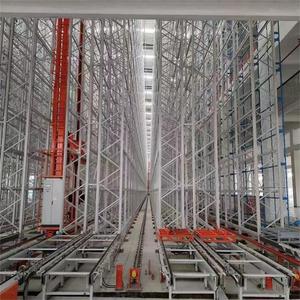
QDITC High Density Heavy Duty Made in China Automatic Racking System ASRS with 2000kg Capacity for Warehouse Use
- Millimeter Tolerances (NS-EN 15620)
- Automated Stacker Crane Ready
- High-Bay Heights Over 30 Meters
Structural Racking Design for Extreme Scandinavian Operations
Operating industrial storage systems in Norway demands advanced material specifications. From deep coastal fjord humidity to the sub-zero mechanics of seafood processing facilities in Tromsø and Hammerfest, our OEM engineering ensures zero brittle fracture, zero structural deflection failures, and total compliance with NS-EN 15512 and Eurocode standards.
Sub-Zero Steel Metallurgy (Charpy Impact Toughness)
Standard cold-rolled structural steels undergo a ductile-to-brittle transition when exposed to temperatures below 0°C. In Norwegian sub-zero cold rooms (-25°C to -35°C), dynamic forklift impacts can cause instant brittle cracking along beam-to-column connectors.
- High-impact Q355D and Q355E certified steel coils tested down to -40°C.
- Charpy V-Notch impact absorption values exceeding 27 Joules at -30°C.
- Calculated according to Eurocode 3 (NS-EN 1993-1-10) fracture mechanics.
Corrosion Classification (ISO 12944: C4 & C5-M Marine)
Facilities across Western Norway (Vestland, Møre og Romsdal, Rogaland) face harsh marine salt mist and ambient condensation that strip low-grade coatings within months. We engineer bespoke dual-phase surface treatments for extended service lifespans.
- Hot-Dip Galvanizing (HDG) per EN ISO 1461, achieving 85–100 μm thickness.
- Automated 10-stage pickling, phosphating, and electrostatic pure polyester coat.
- Zero blistering or under-film rust propagation after 1,000+ hours of salt fog tests.
TEK17 Compliance & Structural Limit State Verification
Under the Norwegian Byggteknisk forskrift (TEK17), industrial warehouse racks must be structurally proven against accidental impacts, localized slab punch-through, and thermal expansion strains between indoor warm zones and cold staging air locks.
- Base plate load redistribution design to protect heated insulated concrete slabs.
- FEA 3D stress simulation validating column stability under full UL & SLS limit states.
- Certified dynamic deflections constrained below 1/200th of vertical span lengths.
High-Density Applications Across Norwegian Commercial Hubs
Every industrial sector in Norway operates under strict operational parameters—from high automation along the E6 logistics corridor to heavy marine staging on coastal wharves.
Aquaculture, Pelagic Seafood & Salmon Cold Storage
Seafood processing facilities handle high-throughput, bulk-frozen salmon cartons and pelagic fish containers. Because refrigerating sub-zero air is energy-intensive, facilities cannot afford wide, empty forklift corridors.
Offshore Energy, Subsea Engineering & Marine Logistics
Supply bases serving North Sea offshore installations require high-capacity staging racks for long pipes, riser segments, umbilical reels, and heavy marine valve assemblies that exceed standard pallet thresholds.
Greater Oslo FMCG, E-Commerce & 3PL Automated Hubs
Driven by extreme land costs and the highest warehouse labor rates in Europe, logistics operations in the Greater Oslo logistics strip are transforming into 24/7 automated micro-fulfillment facilities.
Engineering Specifications & Architectural Feasibility Guide
A direct comparison matrix prepared for Norwegian engineering consultants, structural architects, and logistics procurement directors selecting optimal static and dynamic storage systems.
| Racking Architecture | Space Efficiency | Direct SKU Accessibility | Stock Rotation Rule | Cold Room Index | Norwegian Standard Reference |
|---|---|---|---|---|---|
| Selective Pallet Racking | Moderate (~40%) | 100% Direct Access | FIFO / LIFO Flexible | Standard Suitable | NS-EN 15512 / NS-EN 15620 |
| Drive-In / Drive-Through | High (~75%) | Batch / Block Access | Strictly LIFO (FIFO Through) | Optimal (Seafood) | NS-EN 15512 Class 400 |
| Radio Shuttle Racking | Maximum (~85%) | Lane Selective | Programmed FIFO & LIFO | Superior (-30°C) | FEM 10.2.02 / NS-EN 15512 |
| Heavy-Duty Cantilever | Long Goods Custom | 100% Direct Column Access | Universal | Marine Salt Resistant | Eurocode 3 (NS-EN 1993) |
| Rack-Supported Mezzanine | Doubled/Tripled (+200%) | Manual Picking Selective | Manual FIFO / Dynamic | Conditioned Space | TEK17 / NS-EN 1993-1-3 |
| Automated High-Bay ASRS | Ultimate Vertical (>90%) | Automated 100% Continuous | Software Optimized FIFO | Unmanned Dark Room | NS-EN 15620 Tolerances 100/200 |
Key Macro Trends Transforming Norwegian Industrial Warehousing
Procurement directors and facility developers in Norway are aligning capital investments with national decarbonization mandates, severe labor dynamics, and strict zoning restrictions.
Aggressive Push Toward Automated Dark Warehousing
With Norway's median warehouse wage standing among the highest globally, operators are replacing manual forklift operations with AGVs, shuttle systems, and high-bay ASRS. Static racks must now be manufactured with deflection tolerances under ±1.5 mm across a 12-meter vertical mast to prevent crane laser sensor trips.
Green Building Regulations (BREEAM-NOR Standards)
Industrial real estate developments along the Oslofjord corridor and Rogaland increasingly require BREEAM-NOR certification. Importers must supply racks made with audited, recyclable structural steel, manufactured in factories with verified low carbon-intensity processes and zero-emission volatile powder coat lines.
Subsea Electrification & Battery Gigafactory Logistics
The buildout of battery cell manufacturing facilities (such as initiatives in Arendal and Mo i Rana) and maritime electrification plants requires specialized fire-retardant storage racks with integrated thermal runaway drainage channels, inert gas sprinkler integration, and heavy modular deck loading.
Guangzhou HEDA Shelves: 25 Years of Global OEM Racking Authority
We do not broker products; we manufacture them. As a direct enterprise partner with over two decades of structural cold-formed steel manufacturing experience, we control the entire lifecycle from raw slit coil to port delivery in Norway.
CE Marking Certified
Certificate No. 2435-CPR-8605159 per EN 1090-1 execution standards for structural steelwork.
ISO 9001:2015 Quality Audited
Registration No. 18624Q00169R0M verifying dimensional consistency, load testing, and trace tracking.
RoHS & Eco Compliant
Fully compliant powder coat formulas with non-toxic, lead-free, and heavy metal-free chemical finishes.
Technical Procurement FAQ for Norwegian Warehouse Projects
Comprehensive engineering, customs, and structural answers addressing common queries from Norwegian logistics directors, EPC contractors, and structural consultants.
How does HEDA ensure compliance with NS-EN 15512 and local TEK17 standards?
Every customized racking proposal is accompanied by structural calculations verifying Ultimate Limit State (ULS) and Serviceability Limit State (SLS). Our engineering models account for local floor slab point loads, concrete psi ratings, bolt shear calculations, and accidental forklift collision allowances according to NS-EN 15512 and Eurocode 3, ensuring smooth municipal and Arbeidstilsynet approvals.
Can you provide hot-dip galvanized finishes for coastal seafood and offshore facilities?
Yes. While our standard electrostatic powder coating delivers superior durability in climate-controlled spaces, we specialize in high-spec batch Hot-Dip Galvanizing (HDG) per EN ISO 1461 for cold-storage fish processing hubs in Tromsø, Bodø, and Bergen. This process creates an impermeable metallurgical zinc-iron alloy barrier that resists salt-mist spray, defrosting washdowns, and aggressive cleaning chemicals.
What are the sea shipping transit routes and lead times to Norwegian entry ports?
Shipments depart directly from major ports in South China (Nansha / Shenzhen) bound for main Norwegian receiving ports including Port of Oslo, Larvik, Brevik, Kristiansand, Stavanger, and Bergen. Average maritime transit times range between 32 to 42 days. Every 40ft High Cube container is packed using timber-free dunnage, protective plastic wrap, and labeled bundles mapped to your erection drawings for rapid customs processing.
How does our team handle local installation and site safety certification?
We supply complete multilingual installation dossiers with every project, including 3D assembly exploded views, component bill of materials (BOM), anchor torque specifications, and beam connector locking protocols. For large-scale installations (ASRS, Mezzanines, Drive-In), we offer remote engineering video supervision or deploy experienced factory installation foremen to supervise your local Norwegian assembly crews.
Request an Engineered CAD Layout & Free Structural Proposal
Connect with our senior logistics structural engineering team. We convert your warehouse architectural drawings into an optimized 2D/3D storage configuration with verified load ratings, seismic calculations, and itemized CIF port delivery pricing within 24 hours.
- Warehouse Dimensions & Clear Height
- Pallet Footprint & Max Load Weight
- Forklift Model, Turning Radius & Mast Lift
- Ambient Operating Temperature Range
- Floor Slab Thickness & Reinforcement
- Designated Destination Port in Norway
Direct Engineering Consultation
Get your CAD design, finite element load analysis, and container delivery quote started today.
Inquire Now