Customized Warehouse Portable Durable Steel Storage Heavy Duty Rack
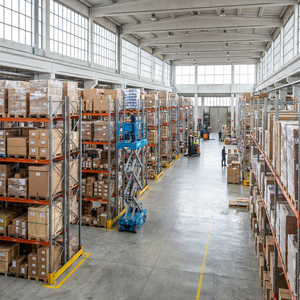
Modular industrial racking featuring interlocking box beams and reinforced upright posts, custom-configured for multi-tier fulfillment warehouses in the Osaka Bay district.
Engineered to withstand intensive forklift operations, dense pallet rotation, and strict Japanese Industrial Standards (JIS B 8920). All structural configurations are factory-direct, powder-coated, and tested for seismic stability.
Modular industrial racking featuring interlocking box beams and reinforced upright posts, custom-configured for multi-tier fulfillment warehouses in the Osaka Bay district.
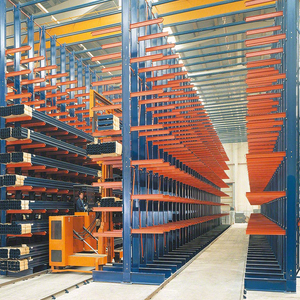
Freestanding column systems with bolted arm connections engineered for high moment loads, timber packages, and heavy structural sections across Sakai-Senboku shipyards.
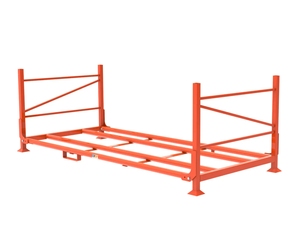
Specialized pipe and bar cradle racks with integrated end-stop pins, specifically adapted for Higashiosaka precision alloy tube and raw extruded metal warehousing.
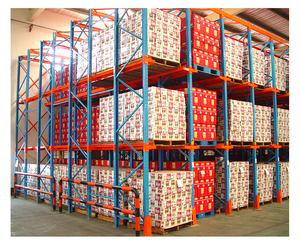
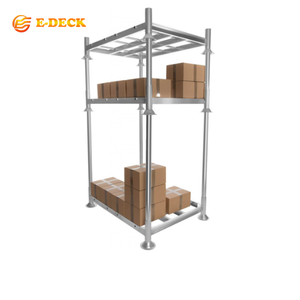
Maximum-density FILO/FIFO storage that eliminates operating aisles. Widely implemented inside refrigerated warehouses across Maishima and Nanko container terminals.
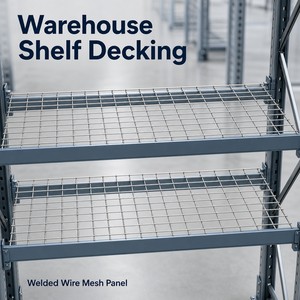
Self-draining, high-strength wire mesh decking allowing 100% sprinkler water penetration to comply with the Japanese Fire Service Act (Shobohou) in multi-level warehouses.
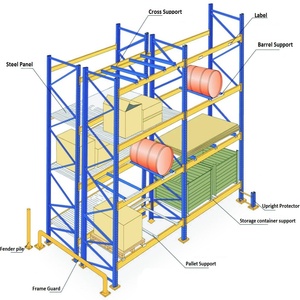
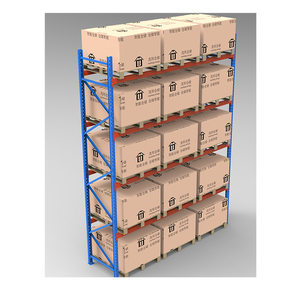
The gold standard for high-SKU Kansai 3PL fulfillment. 100% direct access to individual 1100x1100mm standard Japanese T11 pallets with seamless forklift maneuverability.
Precision-rolled deep channel uprights designed for heavy pallet loads, combining VNA (Very Narrow Aisle) guides to maximize ceiling clearance in land-constrained Osaka plots.
Flush-to-wall single-sided cantilever arrays designed for sheet metal, copper tubing, and construction timber storage in tight-clearance urban Osaka industrial workshops.
Warehouses across the Osaka Bay periphery—including reclaimed waterfront clusters in Nanko, Maishima, Sakishima, and Yumeshima—rest upon deep alluvial deposits and reclaimed marine clays. These subsoils inherently amplify low-frequency seismic waves during seismic events generated by the Nankai Trough or inland fault lines. Standard light-gauge racking systems face severe risks of structural resonant buckling, beam clip detachment, and dynamic pallet ejection under high ground acceleration (horizontal seismic shear coefficient $C_0 \ge 0.25 - 0.30$).
Our engineering division integrates finite element structural analysis (FEA) calibrated to the Building Standards Act of Japan (Kenchiku Kijun-hō) and the Japan Industrial Racking Association (JIIA) codes. By upgrading column uprights to heavy cold-rolled Q355B micro-alloyed structural steel, augmenting base plate footprints with dual HILTI seismic anchor arrays, and deploying custom diagonal portal-tie bracings, our systems minimize dynamic drift and prevent catastrophical rack collapse.
Japan's statutory enforcement of annual overtime caps (960 hours) on commercial truck drivers—commonly known across Kansai logistics circles as the "2024 Problem" (2024年問題)—has profoundly altered freight transit dynamics between the Hanshin industrial zone and the Kanto megalopolis. Long-haul truck turnaround must be replaced by high-throughput regional sorting, consolidating cross-dock storage within Osaka to prevent supply chain bottlenecks.
Because Osaka commercial land costs remain exceptionally high, logistics providers cannot expand horizontally. The imperative is vertical cubic density. Our high-bay selective, drive-in, and automated radio shuttle systems permit storage heights up to 12 to 16 meters, achieving volumetric utilization rates exceeding 85%. This allows Osaka distribution centers to buffer 2.5 times more palletized SKUs within their existing floor plan footprint, mitigating driver waiting intervals with instant pallet retrieval.
| Engineering Attribute | Standard International Racking | China HEDA Export Standard for Osaka | Japanese Regulatory Benchmark (JIS / JIIA) |
|---|---|---|---|
| Steel Composition | Commercial Grade Q235B Cold Strip | Certified Heavy Q235B / Q355B Hot-Rolled & Strip | JIS G 3101 (SS400) / JIS G 3131 (SPHC) Compliant |
| Seismic Acceleration Rating | $C_0 = 0.10 - 0.15$ (Low Seismic) | $C_0 \ge 0.25 - 0.35$ Custom Structural Calculations | Building Standards Act Japan (Enforcement Order Art. 88) |
| Pallet Standard Accommodation | EUR 1200x800mm / US 48x40" | Dual-Depth Compatibility for Japanese T11 (1100x1100mm) | JIS Z 0601 Flat Pallet Spec T11 Type |
| Surface Corrosion Protection | Single Dip Powder Coat (40–60μm) | Pickling + Phosphating + Electrostatic Coat (>80μm) / HDG | JIS K 5674 / Salt Spray Resistance for Osaka Bay Maritime Air |
| Fire Safety Compliance | Solid Wood / MDF Shelving | Welded Drop-in Galvanized Wire Mesh Decking Panels | Fire Service Act of Japan (Sprinkler penetration clearance >70%) |
From heavy machinery fabrication in Eastern Osaka to temperature-controlled seafood storage on the waterfront, our racking systems address the physical realities of Kansai commerce.
Higashiosaka is home to the world's dense concentration of precision small-to-medium factories (machi-koba). Here, storage demands focus on high-density steel coils, stamping dies, and raw extruded aluminum bars. Our heavy-duty cantilever racks and structural steel die shelves handle point loads exceeding 3,000kg per arm, replacing dangerous floor stockpiles with organized, crane-accessible vertical slots.
Operating inside sub-zero marine logistics terminals around the Port of Osaka requires steel capable of resisting low-temperature embrittlement down to -28°C. Our drive-in and semi-automated radio shuttle systems feature hot-dip galvanized uprights and cold-resistant epoxy powders, delivering dense storage for seafood imports and frozen food stock without structural micro-cracking.
Modern multi-tenant logistics centers along the Meishin and Kinki Expressways require maximum flexibility for consumer goods. We provide high-rise selective pallet racking integrated with galvanized wire mesh decking, collision column protectors, and tunnel pass-through portals tailored for reach trucks handling standard Japanese T11 pallets.
Over 25 years of engineering mastery, a 30,000㎡ intelligent production base, and absolute traceability from primary steel coils to certified container packing.
Our factory operates proprietary multi-station continuous cold roll-forming lines. Every upright column features multi-bend Omega cross-sections, providing higher radius-of-gyration and torsional rigidity than conventional roll-formed channels.
Before coating, all components undergo continuous immersion pickling and phosphating to eliminate surface oxidation and mill scale. This is followed by Swiss GEMA electrostatic powder deposition, curing at 200°C for superior corrosion resistance against salty Osaka maritime breezes.
Fully accredited with CE Certificate No. 2435-CPR-8605159, ISO 9001:2015 Certificate No. 18624Q00169R0M, and RoHS non-toxic coating compliance. We provide complete mill test certificates (MTC) and steel yield test records with every container invoice.
Our structural design team delivers custom AutoCAD warehouse layouts, 3D BIM models, and structural calculation reports within 24 hours. These include load calculations, seismic horizontal force balances, and aisle clearance verifications for your local Japanese architect.
Importing structural racking from China into Osaka is exceptionally efficient due to direct short-sea liner services operating weekly between the Pearl River Delta (Guangzhou Nansha, Shenzhen Yantian/Shekou) and the Port of Osaka. With a sea transit duration of just 4 to 7 days, Kansai procurement directors benefit from rapid project delivery timelines that rival domestic Japanese racking manufacturers—at substantial factory-direct cost savings.
Every upright frame and beam bundle is protected with heavy-gauge corrugated edge-guards, PE shrink wrapping, and high-tensile steel strapping. Frame feet and beam clips are cushioned to prevent friction scratches during open-sea transit through the East China Sea. Desiccant packs are inserted into every enclosed container to neutralize condensation caused by temperature drops during voyage.
We supply accurate Harmonized Tariff Schedule (HS) classification, clean commercial invoices, packing lists with itemized container allocation, and RCEP (Regional Comprehensive Economic Partnership) Certificates of Origin, enabling Japanese importers to take full advantage of preferential customs duty rates for industrial steel racking assemblies entering Port of Osaka terminals.
Clear answers to structural compliance, customs clearing, seismic ratings, and installation procedures in the Kansai region.
Submit your warehouse blueprint, ceiling clear heights, and pallet specifications. Our senior structural logistics engineering team will deliver a customized CAD layout plan, load rating data, and a direct CIF Port of Osaka quotation within 24 hours.