Primary Pallet Racking, Mesh Retention & Stillage Systems
Directly integrated with collapsible wire mesh pallet cages, our CE-certified heavy-duty structural steel systems deliver optimized bulk handling, stackability, and rapid material turnover for automated distribution centers worldwide.
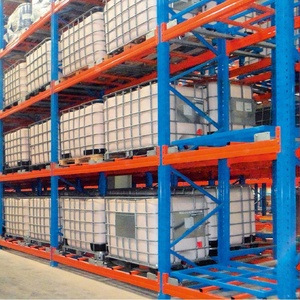
Heavy Duty Steel 5 Push Back Racking System High Capacity Powder Coated Custom Design
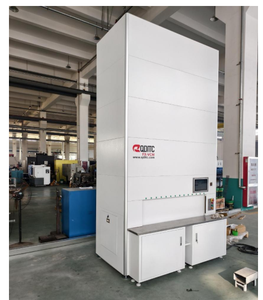
Wholesale Vertical Rotating Storage Rack Automated Inventory System Smart Storage Cabinet
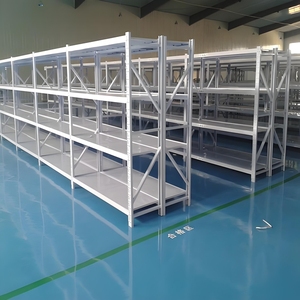
Medium Duty Industrial Metal Shelving Rack For Storage Warehouses Stacking Racks
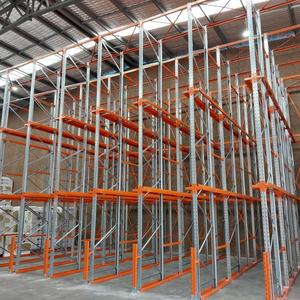
High-Capacity Steel Stacking Shelving Heavy Duty AU Standard Pallet Racking System
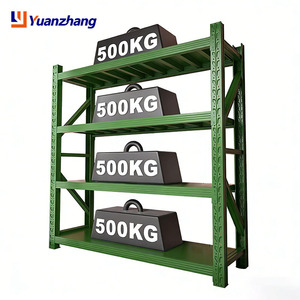
Boltless Adjustable Heavy Duty Load-Bearing 300kg/Layer Steel Racks Industrial Shelving
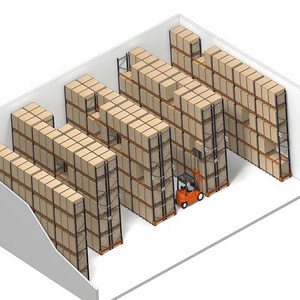
Heavy Duty Pallet Beam Racking Industrial Warehouse Storage Shelf Rack
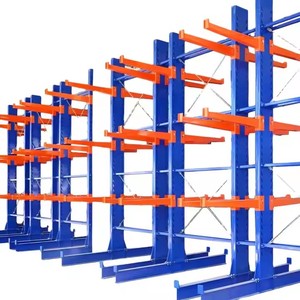
Industrial Heavy Duty OEM ODM Storage Racks Wall Mounting Galvanized Cantilever Rack
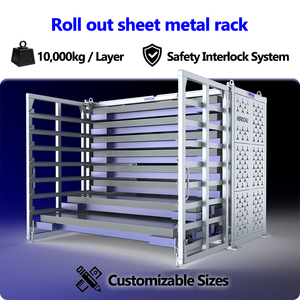
CE Certified Warehouse Storage Racks Steel Pallet Rack Heavy Duty Cargo Shelving System
The Engineering Architecture of Industrial Wire Mesh Pallet Cages
Modern industrial supply chains demand a seamless convergence between structural rigidity, ergonomic inventory accessibility, and space-saving reverse logistics. Wire mesh pallet cages—commonly known as collapsible wire containers, metal stillages, or steel retention cages—represent the benchmark solution for storing unpalletized cargo, high-density bulk mechanical components, and irregular goods within automated and conventional warehousing ecosystems.
Engineered using high-tensile cold-drawn low-carbon steel (Q235B or equivalent DIN EN 10025 standard), these containers utilize robotic multi-point resistance welding to create uniform 50×50mm, 50×100mm, or 100×100mm grid configurations. The base framework incorporates heavy-duty U-channel cold-formed structural steel stiffeners welded directly to drop-forged stacking feet. This precise metallurgical design eliminates buckling risks under extreme static loads up to 4,000 kg and dynamic forklift payloads of 1,500 kg.
- Self-Centering Interlocking Stacking Feet: Safely stack up to 4 tiers high when fully loaded, saving up to 75% of vertical cubic volume without requiring static racking beams.
- Drop-Gate Ergonomic Architecture: Half-drop front panel equipped with patented spring-loaded automatic latches facilitates manual pick operations even when units are tiered.
- Space Collapse Ratio of 4:1: Folds completely flat within 15 seconds by a single operator, minimizing empty backhaul transport expenditure in closed-loop supply chains.
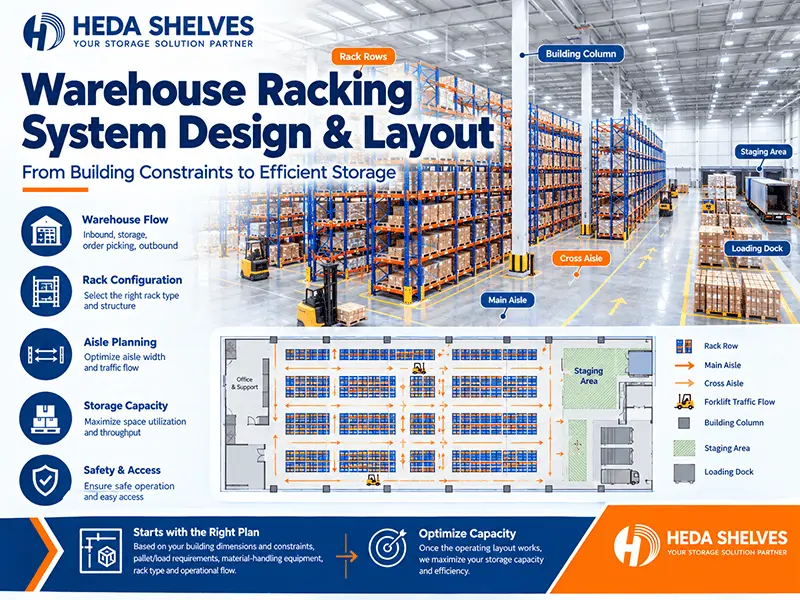
Engineering Matrix: Industrial Wire Mesh Pallet Container Series
Compare load capacities, dimensions, wire gauge specifications, and logistical footprint parameters across our standard and custom industrial wire mesh pallet cages.
| Model Code | Ext. Dimensions (L×W×H mm) | Mesh Pitch (mm) | Wire Dia. (Φ mm) | Dynamic Load (kg) | Stacked Tiers | Surface Treatment | Primary Industrial Application |
|---|---|---|---|---|---|---|---|
| HEDA-WMC-01 | 800 × 600 × 640 | 50 × 50 | 4.8 – 6.0 | 800 kg | 4 Levels | Hardware, Small Automotive Fasteners & Machining | |
| HEDA-WMC-02 | 1000 × 800 × 840 | 50 × 50 / 50 × 100 | 5.5 – 6.2 | 1,200 kg | 4 Levels | Retail Logistics, E-commerce Parcel Sortation, 3PL | |
| HEDA-WMC-03 | 1200 × 1000 × 890 | 50 × 100 | 5.8 – 6.4 | 1,500 kg | 4 Levels | Foundry Castings, Heavy Stamping & Agriculture | |
| HEDA-WMC-04 | 1200 × 1000 × 1250 | 100 × 100 | 6.0 – 6.5 | 1,800 kg | 3 Levels | Automotive Tier-1 Subassemblies & Stamped Parts | |
| HEDA-WMC-HD | Customized per Spec | Custom Dense Pitch | 6.5 – 8.0 | 2,500 kg | 3 Levels | Chemical IBC Containment, Mining & Cold Storage (-30°C) |
Future Procurement Trends for Industrial Wire Mesh Pallet Cages (2025–2030)
Global supply chain directors and warehouse operations managers are transforming bulk material handling strategies. Below are the transformative trends dictating procurement decisions over the coming decade.
1. Automated Guided Vehicle (AGV) & AMR Compatibility
Traditional manually maneuvered stillages are giving way to precision-dimensioned wire pallet cages engineered specifically for robotic material handlers. Tolerance variations on base runner profiles are strictly constrained to under ±1.5mm. Reinforced skid channels, optical sensor positioning flags, and standardized underclearances ensure unmanned forklifts and autonomous mobile robots (AMRs) can dock and lift cages without misalignments.
2. Circular Economy, Carbon Metrics & ESG Traceability
Global environmental mandates are penalizing single-use packaging, wooden pallets prone to splintering and fumigation costs, and non-recyclable plastic containers. In contrast, 100% recyclable low-carbon steel wire mesh cages deliver an operational lifecycle exceeding 10 to 15 years. Enterprise buyers now calculate Scope 3 greenhouse gas offsets via closed-loop returnable stillage deployment, radically reducing municipal landfill burdens.
3. IoT Integration: RFID & Low-Power BLE Asset Tracking
High-value industrial stillages are evolving into smart data nodes. Enterprise procurement contracts increasingly demand welded steel protection brackets designed to shield active RFID chips, LoRaWAN beacons, or ultra-wideband (UWB) sensors. This enables instant yard visibility, autonomous cycle counts across multi-facility operations, automated billing in returnable packaging pools, and proactive loss prevention.
Emerging Technology Trends in Wire Mesh Container Manufacturing
From micro-alloyed metallurgical compositions to eco-friendly trivalent passivation coatings, cutting-edge factories are redefining warehouse asset longevity.
Advanced Zinc-Nickel & Duplex Surface Treatments
Traditional zinc electroplating typically achieves 72 to 96 hours of ASTM B117 salt spray neutral resistance before red rust initiation. Next-generation wire mesh pallet cages incorporate specialized zinc-nickel alloy plating with organo-mineral passivations or hot-dip galvanizing with aluminum additions (Galfan). This yields over 750 to 1,200 hours of salt spray endurance, enabling deployment in aggressive coastal distribution hubs, high-salinity agricultural fertilizers, and humid tropical logistics centers.
High-Yield Cold-Drawn Micro-Alloyed Steels
To reduce container tare weight while elevating dynamic payload limits, leading manufacturers are shifting from plain Q195 wire to high-tensile micro-alloyed carbon rods. Through controlled reduction passes in multi-die wire-drawing machines, yield strengths surpass 550 MPa. This technological transition lowers shipping weight per cage by up to 18%, translating directly into substantial freight fuel savings during empty backhaul transport.
Robotic Multi-Point Resistance Grid Welding
Manual manual stick welding has been rendered obsolete by fully automated CNC mesh welding lines. Simultaneous multi-spot resistance systems apply micro-processor controlled current and pneumatic clamping pressure to guarantee 100% molecular fusion at every single intersection. This prevents shear fractures during abrupt forklift braking or dynamic vehicle transit shocks over corrugated roads.
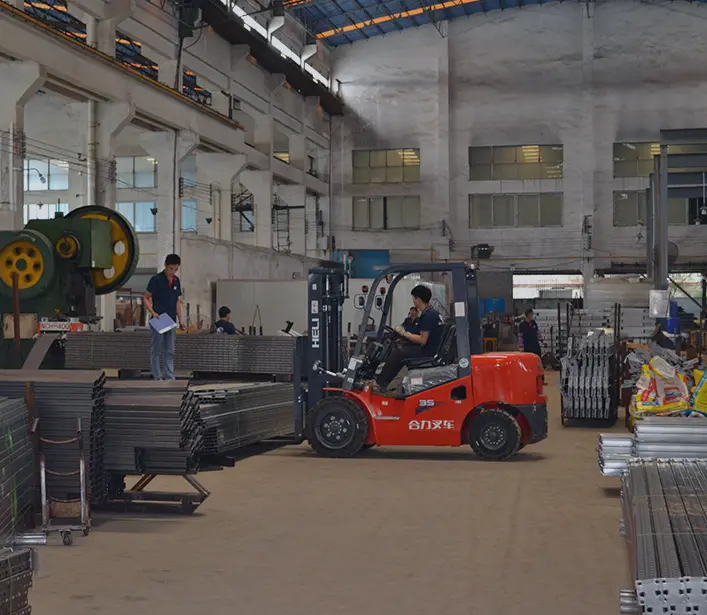
Guangzhou HEDA Shelves Co., Ltd.: 25 Years of Global Storage Engineering
Founded in 2001, Guangzhou HEDA Shelves Co., Ltd. has stood at the forefront of intralogistics infrastructure for a quarter of a century. Our 30,000-square-meter advanced manufacturing facility in Guangzhou, China, operates with over 300 skilled technical personnel, senior mechanical engineers, and production specialists. With a monthly capacity exceeding 30,000 tons of precision-engineered racking and steel containers, we supply end-to-end warehousing systems to over 120 countries across Europe, North America, Southeast Asia, the Middle East, Central and South America, and Africa.
As a single accountable factory-direct partner, HEDA Shelves manages the entire product lifecycle—from raw steel coil slitting, cold roll-forming, automated column punching, and robotic resistance welding, to phosphating, electrostatic powder coating, and international seaworthy container packing.
- Free Tailored 3D & CAD Layouts: Our layout team supplies complimentary 3D visualizations, spatial simulation, and seismic structural load calculations within 24 hours.
- Stringent In-House QC Laboratory: Every production batch undergoes destructive weld shear tests, salt-spray anti-corrosion assays, and static stack deflection validation.
- International Export Logistics Expertise: Master container load optimization algorithms to pack up to 400 collapsible units per 40ft HQ container, minimizing ocean shipping freight.
Certified 4-Phase Quality Control & Production Flow
From certified steel billet intake to finished container dispatch, HEDA Shelves adheres to strict operational parameters governing dimensional precision and mechanical integrity.
Metallurgical Sourcing & Drawing
Certified Q235B low-carbon hot-rolled steel wire coils undergo multiple cold-reduction stages, drawing wire to precise diameters (±0.05mm) while boosting tensile resilience above 520 N/mm².
CNC Grid Welding & Bending
Automated multi-point mesh welding machines ensure absolute orthogonal uniformity. Precision hydraulic presses form structural channel reinforcements and drop-gate hinge hinges.
Base Channel & Foot Stamping
Heavy-duty U-channel profiles and drop-forged stacking feet are robotic welded to base mesh grids with full penetration fillets to prevent deformation under 4,000 kg static loads.
Surface Finishing & Test Rig
Components pass through ultrasonic degreasing, acid pickling, electro-zinc plating or thermoset powder curing, followed by rigorous 4-tier live stacking and deflection tests.
Officially Certified International Quality Benchmarks
Present verifiable documentation to your compliance directors, civil engineers, and insurance auditors with certificates registered directly under international auditing databases.
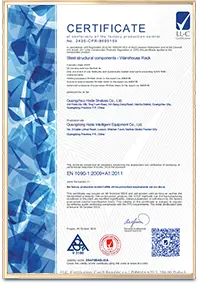
CE European Standard
Certificate No. 2435-CPR-8605159 (EN 15512 & EN 13626 Compliance)
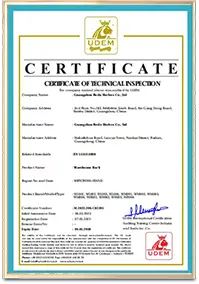
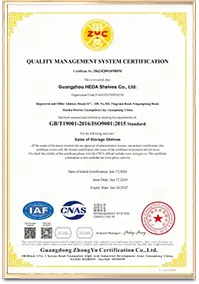
ISO 9001:2015 Standard
Certificate No. 18624Q00169R0M (Valid Through June 2027)
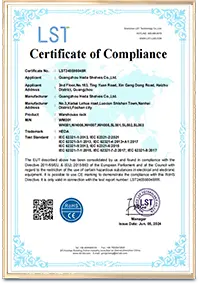
RoHS Directive Certified
Environmentally Compliant Non-Hazardous Surface Plating & Curing
Structural Load Verification
Factory Load Deflection & Seismic Integrity Documentation
Frequently Asked Questions: Wire Mesh Pallet Cages & Racking Integration
Get authoritative answers regarding structural load parameters, anti-corrosion finishes, logistics optimization, and warehouse racking interoperability.
What is the critical difference between static, dynamic, and racking load capacities for wire mesh pallet cages?
Static load refers to the maximum gross weight permissible when the bottom cage rests stationary on a reinforced flat concrete slab with additional loaded cages stacked directly on top (typically tested up to 4,000 kg for a 4-tier stack). Dynamic load is the maximum weight the cage can safely carry while being maneuvered by a forklift or pallet truck (normally 1,000 kg to 1,500 kg). Racking load denotes the rating when the cage is positioned on standard pallet racking step beams or box beams across an open unsupported span. For pallet racking, wire mesh cages require dedicated bottom runner bars or skid plates to prevent deflection.
How should buyers choose between Electro-Galvanizing, Hot-Dip Galvanizing, and Powder Coating?
Electro-galvanizing (zinc electroplating) provides a smooth, aesthetically bright finish with a 10–15 micron layer, ideal for general indoor climate-controlled warehousing and retail replenishment at the lowest unit cost. Hot-Dip Galvanizing (HDG) deposits a robust 60–100 micron metallurgical zinc-iron alloy coating that withstands extreme moisture, outdoor coastal storage yards, high-salinity fertilizers, and sub-zero blast freezers (-30°C) without peeling or oxidizing. Electrostatic powder coating offers superior color coding for visual SKU segmentation, high abrasion resistance, and chemical splash containment for indoor assembly plants.
Can foldable wire mesh pallet cages be safely placed on selective pallet racking systems?
Yes, provided the cage base is properly configured. While standard mesh containers are designed with cupped stacking feet for floor-to-ceiling block stacking, putting them on open beam racking requires either: (a) adding welded bottom full-length steel skid runners that span across both the front and rear beam flanges; or (b) equipping the pallet racking level with heavy-duty wire mesh decking or steel support crossbars. Our engineering team calculates beam deflection under EN 15512 codes to deliver a tailored, hazard-free warehouse design.
How do collapsible wire mesh containers reduce total cost of ownership (TCO) in closed-loop logistics?
Collapsible cages fold flat with a 4:1 collapse ratio, allowing freight logistics operators to return up to four times as many empty units in a single return truck or shipping container compared to rigid fixed stillages or wooden boxes. Furthermore, unlike wooden pallets that splinter, rot, require heat treatment phytosanitary certification (ISPM 15), and degrade within 12 to 18 months, heavy-gauge steel cages feature an operational lifespan exceeding 12 years. Maintenance is practically negligible, eliminating recurring packaging waste and dramatically slashing per-cycle storage costs.
What critical data does HEDA Shelves require to engineer a customized wire pallet cage quotation?
To deliver an itemized technical proposal and complimentary 3D layout, provide: (1) internal or external dimensional constraints (L×W×H mm); (2) gross payload per unit (both static and forklift transport weight); (3) stacking height requirement (e.g., 3-high, 4-high, or rack storage); (4) product characteristics (size of smallest item, deciding mesh pitch like 50×50mm or 50×100mm); (5) handling equipment (forklift tine dimensions, manual walkie pallet jacks); (6) working environment (cold room, indoor distribution, outdoor exposure); and (7) destination seaport for CIF/FOB freight calculation.
How does HEDA Shelves ensure quality control and structural safety prior to ocean dispatch?
Every production run is monitored under certified ISO 9001:2015 and CE procedures. Standard testing protocols include: ultrasonic testing for steel flaw detection; weld intersection shear resistance verification; 150% static overload deflection tests maintained for 24 hours; drop-latch cycle testing; coating thickness measurement using magnetic induction gauges; and 72-hour salt-spray sampling. Finished units are bundled on specialized pallets, strapped with high-tensile steel banding, wrapped in stretch film, and documented with transparent container packing sheets for rapid customs clearance.
Accelerate Your Storage Efficiency with Factory-Direct Engineering
Partner with Guangzhou HEDA Shelves Co., Ltd.—over 25 years of proven excellence, 30,000 square meters of production power, and thousands of warehouses optimized worldwide. Contact our engineering team today for custom CAD drawings, load calculations, and wholesale factory pricing.