Featured Industrial Storage Systems & High-Bay Solutions
Engineered from premium structural-grade cold-rolled steel (Q235B/Q355B). Tested rigorously to comply with international RMI, FEM 10.2.02, and EN 15512 safety protocols.
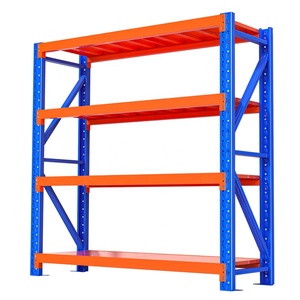
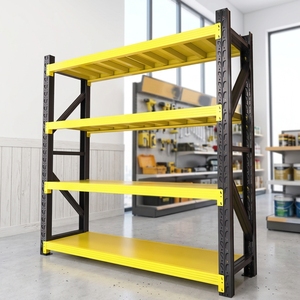
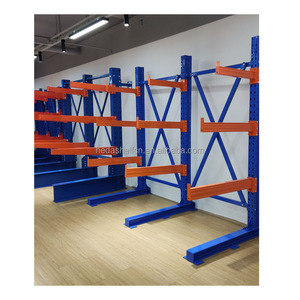
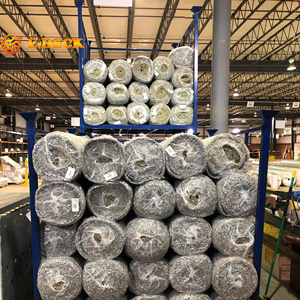
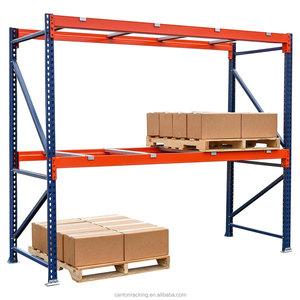
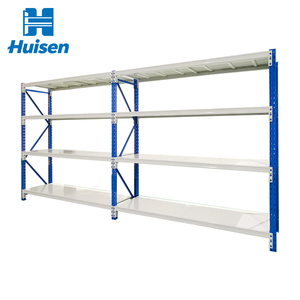
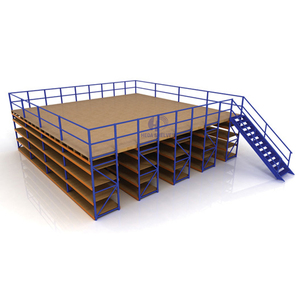
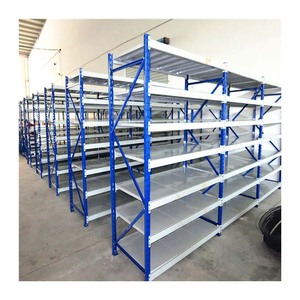
Global Structural Integrity Built on 25 Years of Engineering
Originating in Guangzhou, China, HEDA Shelves maintains a production powerhouse driven by automated robotic lines, 10 continuous cold-roll forming systems, and certified seismic analysis validation.
Seismic-Grade Structural FEA
High-bay installations (exceeding 12–30 meters) demand stringent mechanical engineering. We perform rigorous finite element structural analysis (FEA) calibrated to regional seismic zones (UBC/IBC/Eurocode 8), assessing dynamic sway, torsional deflection, and slab loading tolerances.
Automated Precision Manufacturing
Upright profile punching and step-beam shaping are handled across 10 in-house automated production sequences. With ultra-tight tolerances under ±0.5mm, every column interlocks smoothly, eliminating load eccentricity and reducing structural fatigue.
Certified Corrosion Resistance
Equipped with acid pickling, automated phosphating, and electrostatic epoxy-polyester powder polymer coating cured at 200°C. For sub-zero cold-storage (-30°C) or humid marine zones, hot-dip galvanizing per ISO 1461 prevents corrosion breakdown over decades.
Future Strategic Procurement Trends in Tall Racking Systems
Modern intra-logistics requires moving past static shelving toward dynamic, vertical storage optimization. Engineering teams must adapt procurement strategies to four key structural vectors.
1. Cubic Optimization & Vertical Expansion
Industrial land acquisition costs have pushed average clear ceiling heights from 8m up to 14m–24m. Enterprise procurement centers on tall selective, VNA (Very Narrow Aisle), and multi-tier rack-supported platforms to multiply cubic utilization without footprint expansion.
2. AS/RS & Shuttle-Ready Engineering
Procurement strategies increasingly demand future-proof structures. Standard selective tall racking is giving way to high-density 2D/4D radio shuttle lanes and automated storage and retrieval system (AS/RS) integration to run lights-out warehouse loops.
3. High-Strength Low-Alloy (HSLA) Steels
Procurement engineers favor micro-alloyed, cold-formed steels that reduce overall dead-load weights while preserving high yield strengths (355–420 MPa). This optimizes floor slab load distribution and decreases raw container freight costs.
4. Carbon Footprint & Circular Supply
Global ESG mandates require documented Life Cycle Assessments (LCA). Procuring completely demountable, modular, re-profilable racking coated with non-VOC thermoplastic powder is becoming a standard prerequisite for tier-one project bids.
Technological Advancements in Modern Tall Storage Architecture
Modern tall warehouse racking operates as an active structural system. Integration of sensor technologies, robotics, and advanced cold-bending profiles is redefining industrial storage performance.
IoT Structural Deflection Monitoring
Tall racks over 15 meters face cumulative eccentric vertical loads. The integration of continuous IoT laser-inclinometers and fiber-optic strain gauges along the upright columns gives warehouse operations real-time deflection alerts, helping prevent progressive collapse before impact damage escalates.
Closed-Box Robotic Roll-Forming
Older open-profile configurations are transitioning to continuously welded closed-profile box beams and heavy-gauge multiform omega uprights. This boosts torsional stiffness by 200% to 350%, maintaining structural squareness during high-speed VNA turret truck operations.
Dynamic Energy-Dissipating Base Plates
Modern seismic design leverages ductile, sacrificial seismic base isolators. By absorbing kinetic energy at the slab anchorage interface during harmonic tremors, these connections mitigate bending moments along the base of tall upright columns.
Frequently Asked Technical Questions (FAQ)
Critical mechanical, geological, and compliance questions answered directly by our senior structural logistics engineering desk.
What are the vital slab tolerance specifications for tall racking (>12m)?
How are earthquake ratings and seismic loads factored into upright design?
What surface treatment should be specified for humid, coastal, or sub-zero installations?
What documentation is required to generate an accurate 3D CAD proposal?
How does HEDA guarantee manufacturing quality and traceability?
Request a Custom CAD Layout & Structural Feasibility Study
Connect directly with our senior racking engineering specialists. Receive an itemized structural proposal, 3D spatial utilization rendering, and factory-direct project pricing within 24 operational hours.